





 Portuguese
  English
  Spanish
  4 min of reading
  0 comments


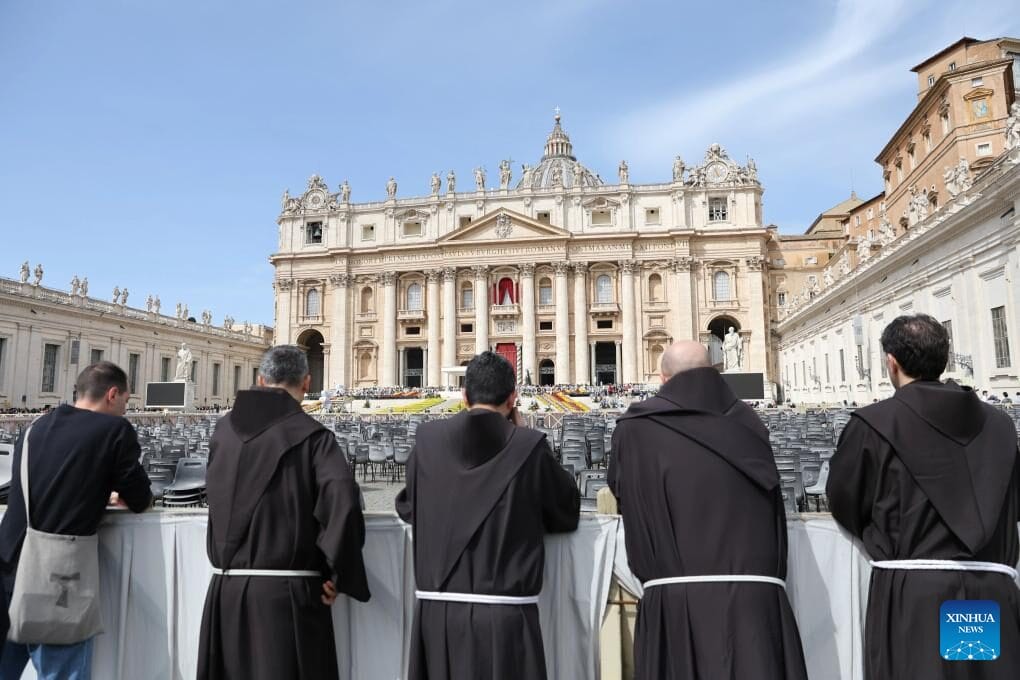
Death Of Francis Opens Way For New Conclave And Reignites Debate On Representativity In The Papacy
Pope Francis passed away at the age of 88 on the morning of this Monday, April 21, according to an official statement from the Catholic Church. The death was confirmed at 2:35 AM Brasília time, or 7:35 AM in Italy. He had held the position since 2013 and died after suffering a severe stroke.
The information was disclosed by the Italian newspaper Corriere della Sera, based on internal sources from the Santa Casa.
Francis had faced serious health problems in recent months. With his death, a new conclave begins — the name given to the process of choosing the new leader of the Catholic Church.
-
These living root bridges and ladders are over 700 years old and help indigenous people survive in one of the rainiest regions in the world.

-
From sertanejo star to international investor: Ana Castela invests millions in a mansion in the USA, creates a themed accommodation in Orlando, and shows that the “boiadeira” also wants to grow away from the stage.

-
The 10 most stunning motorhomes in the world: a $3 million trailer with a rooftop nightclub and garage for a Ferrari, “palaces on wheels” with Italian marble, private cinema, and five-star hotel luxury for billionaires.

-
Trump wanted to spend $400 million on the White House, but the courts prohibited the million-dollar construction.


The election takes place behind closed doors, with the exclusive participation of cardinals eligible to vote, all under 80 years old. The selection of the next pope reignites a historical question: has there ever been a black pope?
African Popes In The History Of The Church
The Catholic Church has had three African popes in its more than 2,000 years of existence. The first was Victor I, who held the position between the years 189 and 198.
Next came Melchiades, who was pope from 311 to 314. The last of them was Gelasius I, who led the Church between 492 and 496. All assumed office at a time when North Africa had a strong influence on Christendom.
Alexandria, Carthage, and Hippo were important religious centers close to Italy, facilitating exchange.
Bishop Zeno Hastenteufel, a specialist in Church history and author of several books, explains that there was an intense connection between Italy and North Africa until the 5th century.
Leadership roles were held by men from these regions, including the papacy. However, according to the bishop, these African popes were not black.
Ethnic Origins And Symbolic Representation
Although they were of African origin, the cited popes did not have distinct features as black individuals. The region was composed of a diverse ethnic makeup and, according to scholars, it is likely that they were mestizos — which today, in Brazil, might be classified as brown. However, there are no reliable visual records from the time.
The theologian Fernando Altemeyer from the Pontifical Catholic University of São Paulo (PUC-SP) emphasizes that the first popes were only portrayed centuries after their deaths. Therefore, the known images are merely symbolic representations, not committed to the physical reality of historical figures.
Since then, the leadership of the Catholic Church has almost always been European. Of the 269 popes elected so far, 212 have been Italian. The election of Jorge Mario Bergoglio, Pope Francis, marked an exception: he was the first pontiff from Latin America.
Francis Arinze: The Cardinal Who Came Close
The man who came closest to becoming the first black pope in modern Church history was Nigerian Cardinal Francis Arinze. In 2013, when Pope Benedict XVI resigned, Arinze was considered one of the favorites for the papacy. At the time, he already had decades of experience in the Vatican.
Arinze was born in Nigeria in November 1932. He was baptized at nine after spending his childhood in a traditional African religion. In 1955, he traveled to Rome to study theology. He graduated with a master’s and doctorate from the Pontifical Urban University and was ordained a priest in 1958.
At just 32 years old, he became the youngest Roman Catholic bishop in the world in 1965. During his tenure as archbishop, he faced the Nigerian civil war and lived as a refugee.
Even so, he continued to provide religious services to the population. His dedication caught the attention of Pope John Paul II.
Trajectory Within The Vatican
Recognized for his work with Muslims in precarious situations, Arinze was appointed pro-President of the Vatican Secretariat for Non-Christians in 1979.
Years later, he took over the Pontifical Council for Interreligious Dialogue. In 1984, he was unanimously chosen as president of the Nigerian Bishops’ Conference.
When Pope John Paul II passed away in 2005, Arinze was once again considered a strong candidate to take the throne of St. Peter. However, the chosen one was German Cardinal Joseph Ratzinger, who became Pope Benedict XVI.
After the conclave, Arinze continued to hold positions in the Vatican. He was prefect of the Congregation for Divine Worship and later appointed cardinal bishop of Velletri-Segni. Now 92 years old, he has surpassed the maximum age to participate in a new conclave and can no longer be elected pope.
New Conclave Will Determine The Future Of The Church
With Francis’s death, the Catholic Church is preparing to elect a new pontiff. Meanwhile, Francis Arinze’s name remains a symbol of representativity that almost materialized.
His legacy is still remembered in discussions about diversity and inclusion in the Church’s leadership. The story now awaits the next steps.
With information from Aventuras na História.






-

Uma pessoa reagiu a isso.