





 Portuguese
  English
  Spanish
  6 min of reading
  0 comments


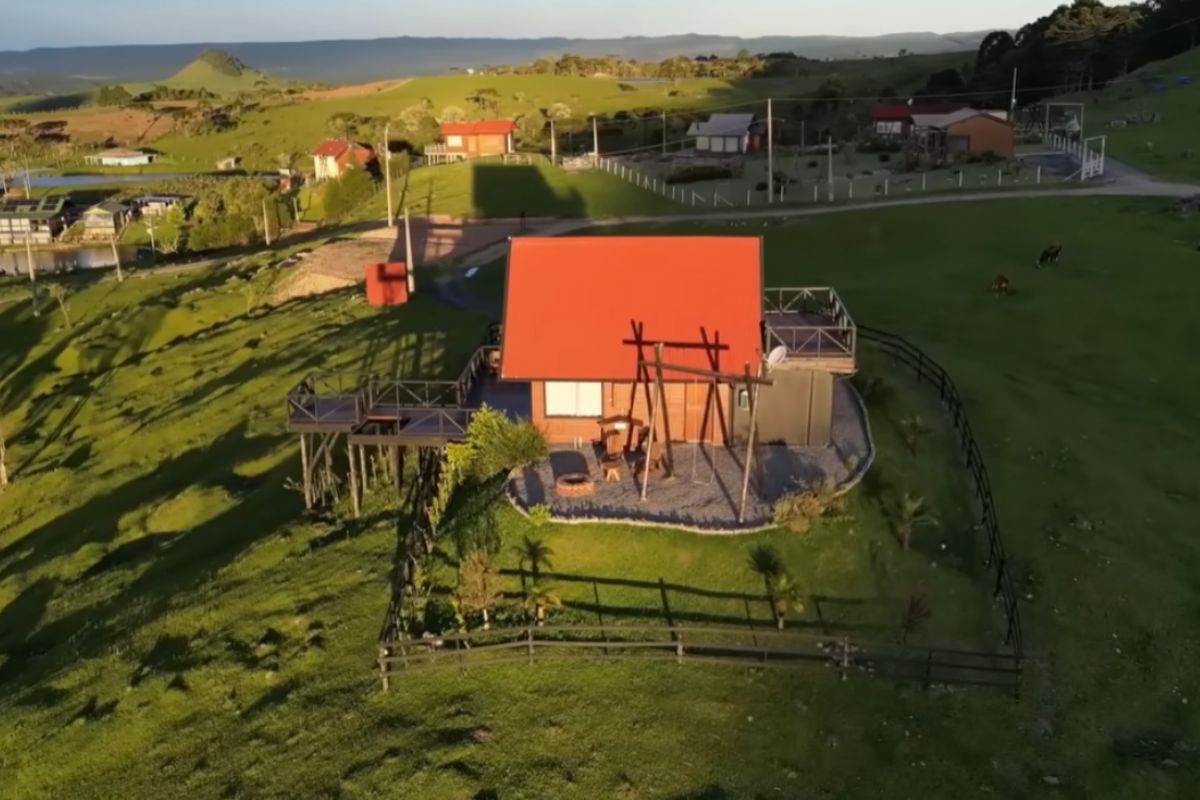
After Decades Living Almost Exclusively from Agriculture, Alfredo Wagner Establishes Itself as a Tourist Hub in the Serra Catarinense, Multiplying Cabins in Santa Bárbara, Attracting Visitors in Search of Scenery, Rural Experience, and Changing the Income of Families Who Now Live off Tourism.
The recent history of Alfredo Wagner, in Santa Catarina, is a portrait of a silent turnaround in the countryside. A region that for decades relied on corn, onions, beans, and cattle, with a routine marked by hard work in the fields, has begun to be seen as a tourist hub in the Serra Catarinense, thanks to the mountains, rock formations, and landscapes that many outsiders only discovered in the last five years.
In this interval, what was merely the backdrop for family agriculture has turned into the setting for chalets, glass cabins, countryside houses with views of the valley, and experiences like strawberry pick-your-own and visits to gardens filled with roses. The residents who used to rely solely on agricultural production now supplement or even replace their income with lodging and services related to tourism, reinforcing day by day the new status of a tourist hub in the region.
From Agricultural Municipality to Tourist Hub in the Serra Catarinense
Until recently, the most commonly heard phrase in Santa Bárbara, in the interior of Alfredo Wagner, was simple: “it was only agriculture”. The economy revolved around the planting of corn, onions, beans, and cattle raising. The land was seen as a place for production, not contemplation.
-
India announces a plan of $3.06 billion to bring aviation to forgotten regions: 100 new airports, $1.07 billion in subsidies, and regional routes guaranteed for 10 years, from 2026 to 2036, away from the centers.
-
Brazil blocked a proposal from the United States at the WTO that would make the exemption from tariffs on digital products like streaming and ebooks permanent, favoring American tech giants at the expense of developing countries.

-
IPTU exemption for seniors in 2026: see how to secure the benefit.

-
The institute that trained the greatest aerospace engineers in Brazil has just opened its first campus outside São Paulo after 75 years: ITA Ceará will have R$ 445 million, new courses in energy and systems, and classes are expected to start in 2027.

The turnaround began when visitors from other regions started seeking refuge in the mountains during the pandemic. Families from the city bought land, built countryside houses, and gradually realized there was a constant demand for lodging. What started with three or four rental cabins has evolved into a map with about 75 to 80 cabins scattered throughout the region, pushing Alfredo Wagner onto the radar of those looking for a tourist hub in the Serra Catarinense with a rural atmosphere and postcard-like scenery.
The municipality is part of the Serra Catarinense, in an area marked by mountain ranges and rock formations from the Serra Geral, one of the most important geological structures in southern Brazil. This scenery, which was previously just the background to farm life, has become the protagonist in promoting the destination.
Farmers Who Switched from Fields Only to Cabin Tourism
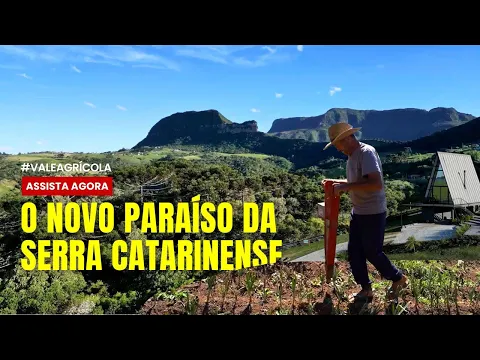

The transformation is evident in the story of Mr. Alvarino and his sons, Fabiano and Salesiano. Born and raised in the fields, they worked their entire lives planting onions and raising cattle. About 20 years ago, the family bought 15 hectares at the foot of Morro da Tartaruga for around 45 thousand reais. At the time, it was “just stones and brush,” seen only as an area for cattle.
Over time, that rocky area transformed into a treasure. Today, the sons are onion producers and owners of eight chalets that receive visitors year-round. The first house was built as the family’s countryside home, with no plan for rental. But the inquiries from friends and acquaintances to rent the space on weekends and special dates made them realize: there was a business there.
From that point on, the chalets began to appear, always maximizing the view of the hill and the mountains. The rentals evolved from mere lodging to “life experiences”, focusing on those seeking silence, nature, intimate celebrations, and direct contact with rural life.
Santa Bárbara: Cabins, Cliffs, and Views of Nearly 1,000 Meters

In addition to the native residents, the new phase of Alfredo Wagner as a tourist hub in the Serra Catarinense has also attracted investors from outside. One example is João, who spent vacations in the region as a child and, as an adult, decided to buy a plot of land to have a countryside house.
What started as a family retreat became a sought-after lodging: Casa do Penhasco, perched on slopes with an open view of the valley. The area is nearly 1,000 meters above sea level, ensuring spectacular sunsets and sunrises, clear skies on many days of the year, and the feeling of being in a permanent natural viewpoint.
The cabins blend comfortable structure, a touch of luxury, and privileged views, attracting an audience seeking both romance and contact with trails, forests, and iconic rock formations like Morro da Tartaruga.
From Strawberry Pick-Your-Own to Gardens with Over 150 Roses

If in any tourist region visitors are now seeking experiences, in Santa Bárbara this has become the norm. One highlight is the strawberry pick-your-own, which has grown rapidly: the family in charge had about 3,000 plants in 2019 and has now reached 7,000 plants, with plans for more.
The flow of guests from the cabins directly feeds this new branch. Customers return multiple times to the same place to pick strawberries, participate in rural breakfasts, and even use the fruit in romantic decorations for marriage proposals and anniversaries. The strawberry stops being just an agricultural product and becomes part of the tourist experience.
Another point that reinforces Alfredo Wagner as a tourist hub in the Serra Catarinense is a garden designed with over 150 varieties of roses. The project, named Magnólia Garden Center, was created to develop highly floral landscaping, saturated with colors. The combination of altitude, climate, and light of the region favors rose cultivation, which adapts very well to winter and summer variations.
For tourists, this means walking through a space where almost everything has been designed for contemplation, complementing the package of trails, cabins, and gastronomic experiences.
Organized Community to Grow with Tourism
The advancement of Alfredo Wagner as a tourist hub in the Serra Catarinense did not happen entirely spontaneously. The Santa Bárbara Residents’ Association began to act to organize growth, seek legal and structural security, and, primarily, ensure that tourism does not destroy what makes it attractive: simple country life and preserved landscapes.
The idea is clear: to make the neighborhood grow in an orderly manner, focusing on tourism without abandoning agricultural identity and local traditions. Residents note that, in many cases, the cabins today are better equipped than the families’ own houses, and that there is still much to learn in terms of service, management, and marketing.
Even so, the prevailing sentiment is that the community is on the right track, with more income, increased economic activity, and new opportunities for young people who would previously likely leave the region in search of jobs in cities.
From Planting to Hospitality: A New Income for the Interior

In the final analysis, the transformation of Alfredo Wagner shows how a region can shift from an exclusive focus on agriculture to becoming a tourist hub in the Serra Catarinense, without severing its roots. Agriculture continues to exist, but now shares space with chalets, gardens, guided experiences, and hospitality services.
The land that was once viewed solely as a place for planting is now also a stage for rest, celebrations, and contemplation. What seemed like a worthless piece of rock has become a sought-after area, capable of purchasing tractors, supporting families, and opening doors to a future less dependent on the fluctuations of harvests and agricultural prices.
For those who live there, tourism is not just visitation: it is a source of income, an opportunity for entrepreneurship, and a way to give new meaning to the territory where they were born and raised.
And you, if you had a small property in a mountainous region like this new tourist hub in the Serra Catarinense, would you first invest in cabins, in experiences like pick-your-own, or in a big garden to attract more visitors?





Seja o primeiro a reagir!