





 Portuguese
  English
  Spanish
  3 min of reading
  0 comments


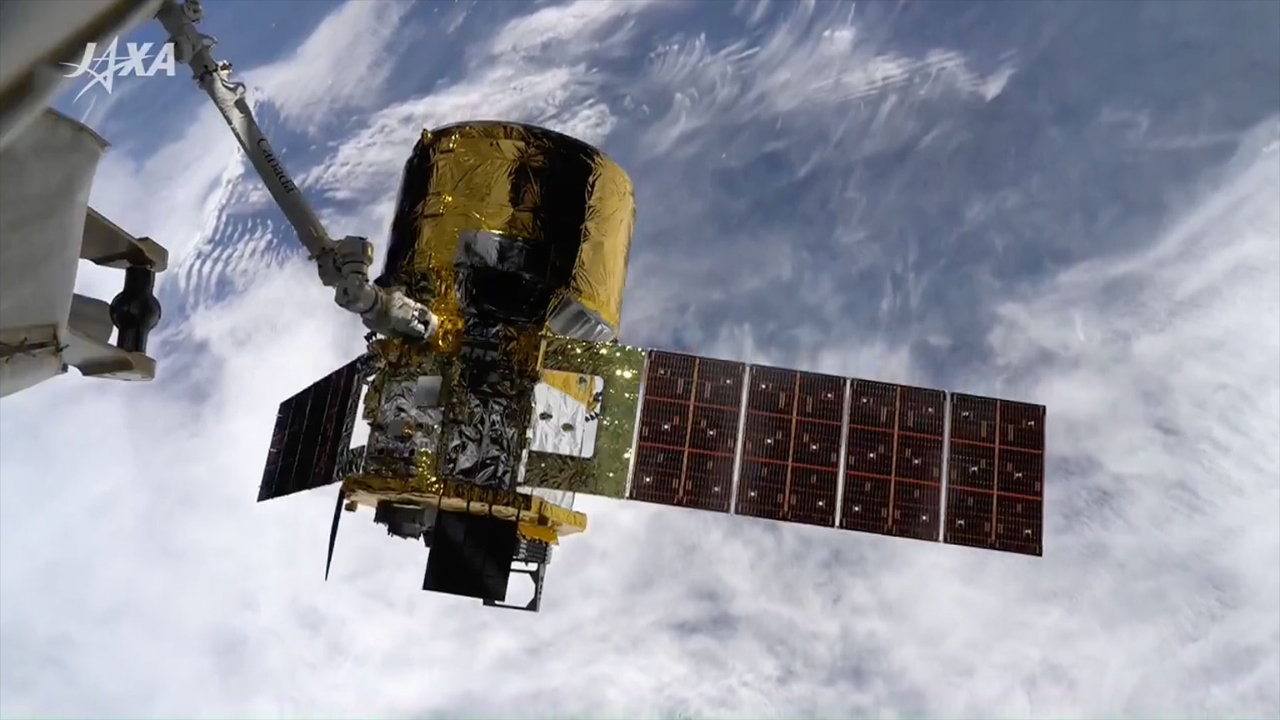
HTV X1 Delivers 5,470 Kg of Scientific Supplies to the International Space Station and Leaves Orbit After 128 Days of Mission
A Japanese cargo spacecraft that spent months docked with the International Space Station is about to take center stage in a significant moment of space cooperation.
After 128 days in orbit, the HTV X1 spacecraft is preparing to leave the station this Friday, March 6, concluding a mission that delivered tons of scientific supplies to the orbital laboratory.
The operation marks another step in the complex logistics system that keeps the station operational in space.
-
Airbus and Mercedes take the G-Class to the skies: the ACH145 helicopter priced at R$ 78 million debuts in São Paulo, unit goes to Brazilian, AMG cabin, 5-blade rotor, and a 2-year wait.

-
New material could change everything: it is the thickness of an atom, 200 times stronger than steel, and 100,000 times thinner than a human hair.

-
A new study published in Nature reveals that the SLIT3 protein can increase calorie burning by activating brown fat in the body, functioning as a kind of “biological switch.”

-
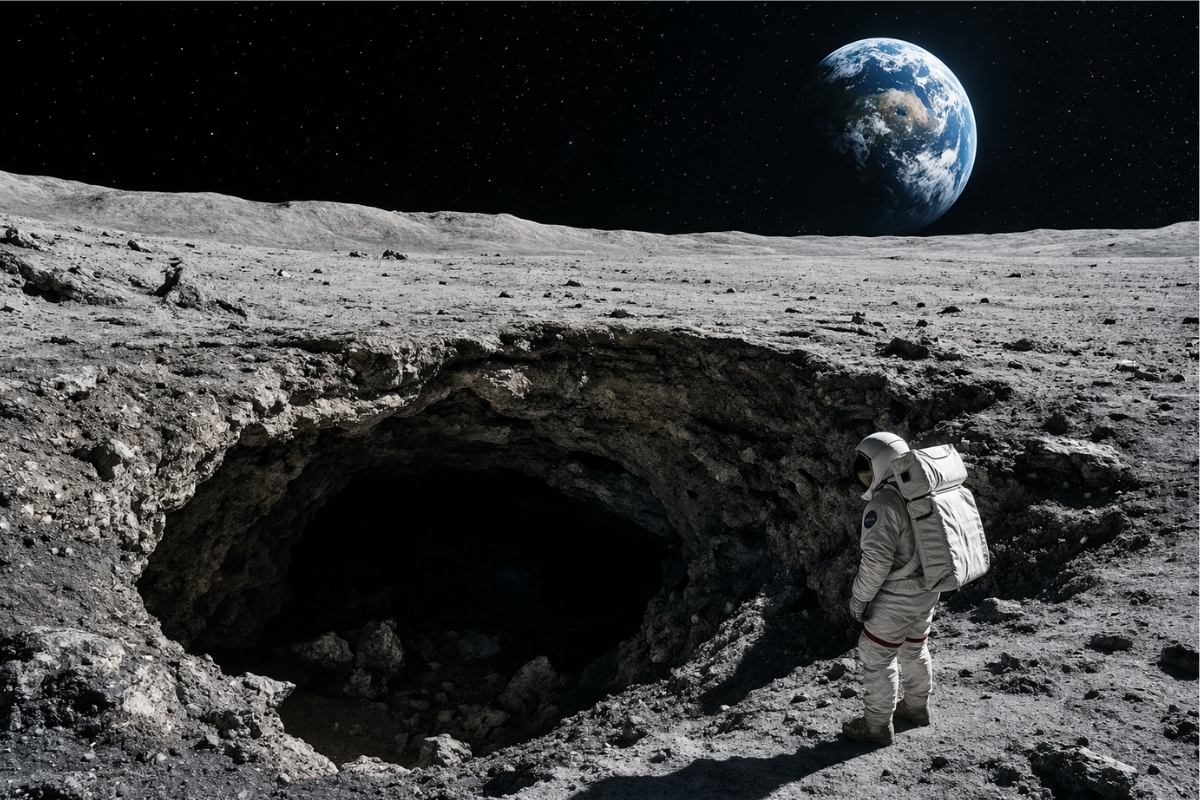
New signals detected by NASA suggest that the Moon may hide accessible underground cavities, after data from Mini-RF indicated a conduit over 60 meters beneath a lunar pit.

Mission Delivered 5,470 Kg of Equipment and Research
The HTV X1 spacecraft, developed by the Japanese space agency, transported about 5,470 kg of supplies, scientific experiments, and technical equipment.
This material was sent to support research conducted within the International Space Station.
Much of this experimentation relies on the microgravity environment to produce results that would not be possible on Earth.

Launch Took Place in Japan in October
The mission began on October 25, when the spacecraft was launched by an H3 rocket from the Tanegashima Space Center in Japan.
Four days later, on October 29, the spacecraft arrived at the International Space Station and began its operational phase.
During this period, astronauts and engineers used the transported equipment for various scientific experiments.
Decoupling Operation Uses the Station’s Robotic Arm
The release process of the spacecraft involves the use of the Canadarm2, one of the station’s most important systems.
This equipment will be employed to remove the HTV X1 from the Harmony module and position it for final release.
According to NASA, the civil space agency responsible for the United States’ space program, the operation will be supervised by astronaut Chris Williams.

Spacecraft Will Remain in Orbit for Three More Months
After leaving the station, the HTV X1 will continue in orbit for over three months.
During this period, the spacecraft will serve as a scientific platform for experiments conducted by the Japanese space agency.
Only after this phase will the deorbit maneuver be executed.
Reentry Will Eliminate Space Debris
When the mission concludes, the spacecraft will receive the order for controlled return.
During the re-entry into the atmosphere, the spacecraft will destroy several thousand kilograms of waste and discarded equipment from the station, burning up before reaching the ground.
This procedure is used to eliminate materials that do not need to return to Earth.
Event Will Be Streamed Live
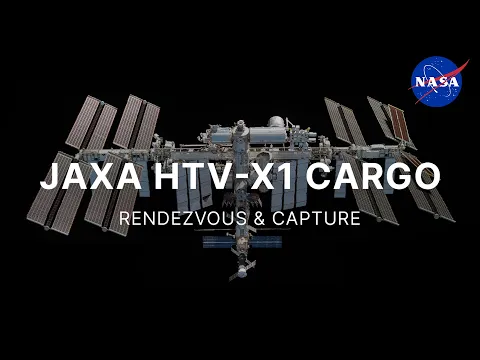
The decoupling of the spacecraft will be streamed live on March 6 at 11:45 AM in New York, equivalent to 5:45 PM in Spain.
The broadcast can be followed on the NASA Plus, YouTube, and Amazon Prime platforms.
The operation will also be followed on the agency’s social media.
The mission underscores the role of the International Space Station, which for over 25 years has functioned as an orbital laboratory for scientific research.
Additionally, the experiments conducted there help prepare for future human missions to the Moon and Mars, part of the long-term space strategy.









-

-

-

-

12 pessoas reagiram a isso.