





 Portuguese
  English
  Spanish
  6 min of reading
  0 comments


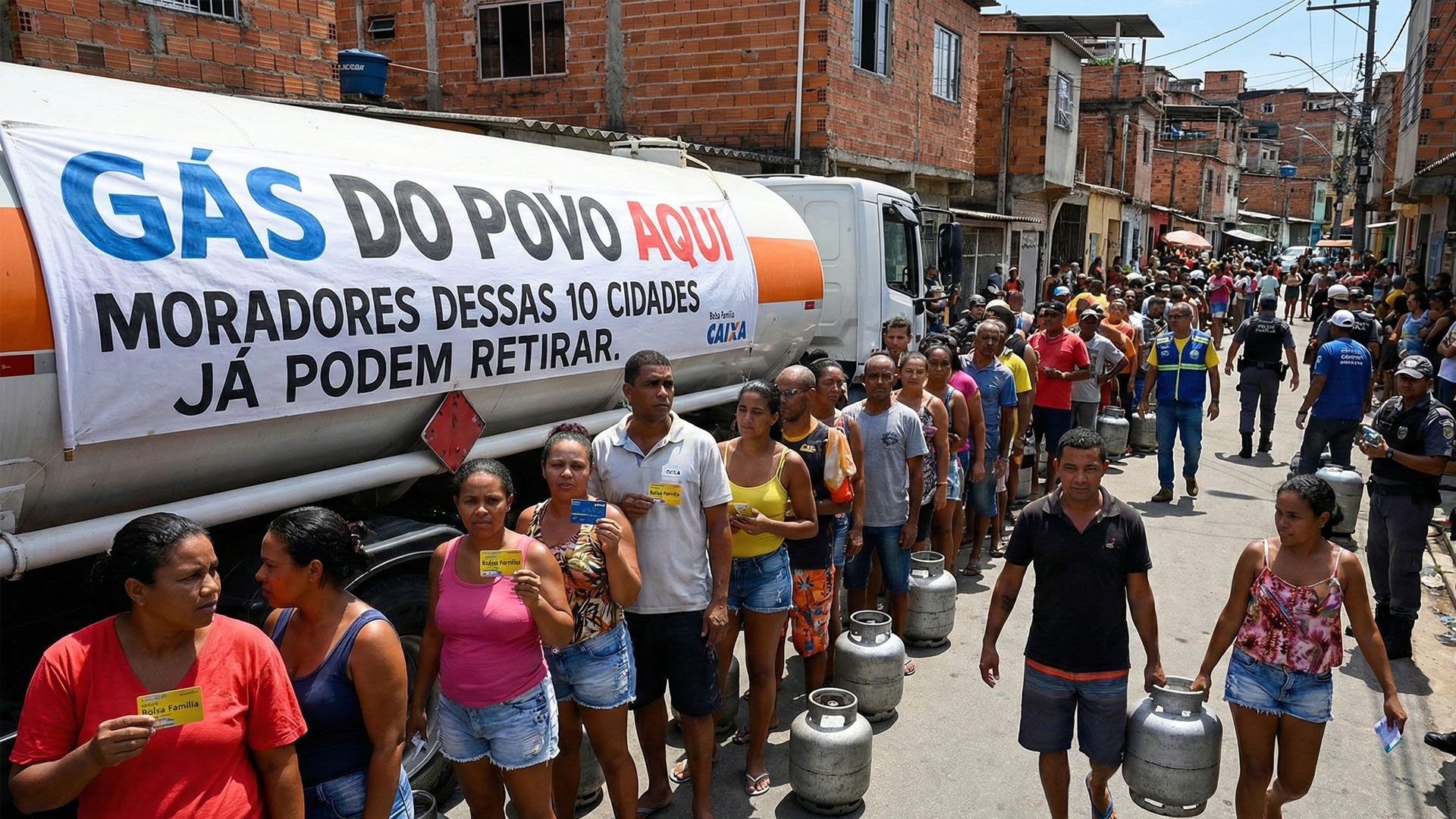
Program Replaces Old Gas Aid and Promises to End Misuse of Benefit, Ensuring Full Tanks for 1 Million Families in This First Phase of Implementation.
Monday, November 24, 2025, marks a historic change in Brazilian social assistance policy. The Caixa Econômica Federal officially launched the distribution and validation of the gas recharge voucher from the People’s Gas Program, a complete overhaul of the old Gas Aid. The main novelty is the end of direct financial transfers to beneficiaries’ accounts, which are now replaced by the physical guarantee of the product: the recharged 13kg gas tank.
In this inaugural phase, about 1 million families in extreme vulnerability can already go to accredited points of sale to make the exchange. The measure aims to ensure food security, preventing the amount previously deposited in cash from being eroded by inflation or used to cover other urgent debts, leaving the kitchen empty.
According to information released by Caixa, the transition to the direct free recharge model eliminates intermediaries and ensures that the state subsidy fulfills its primary objective: to allow low-income families to cook their food. The new system uses banking technology to validate the gas delivery instantly at partner resellers.
-
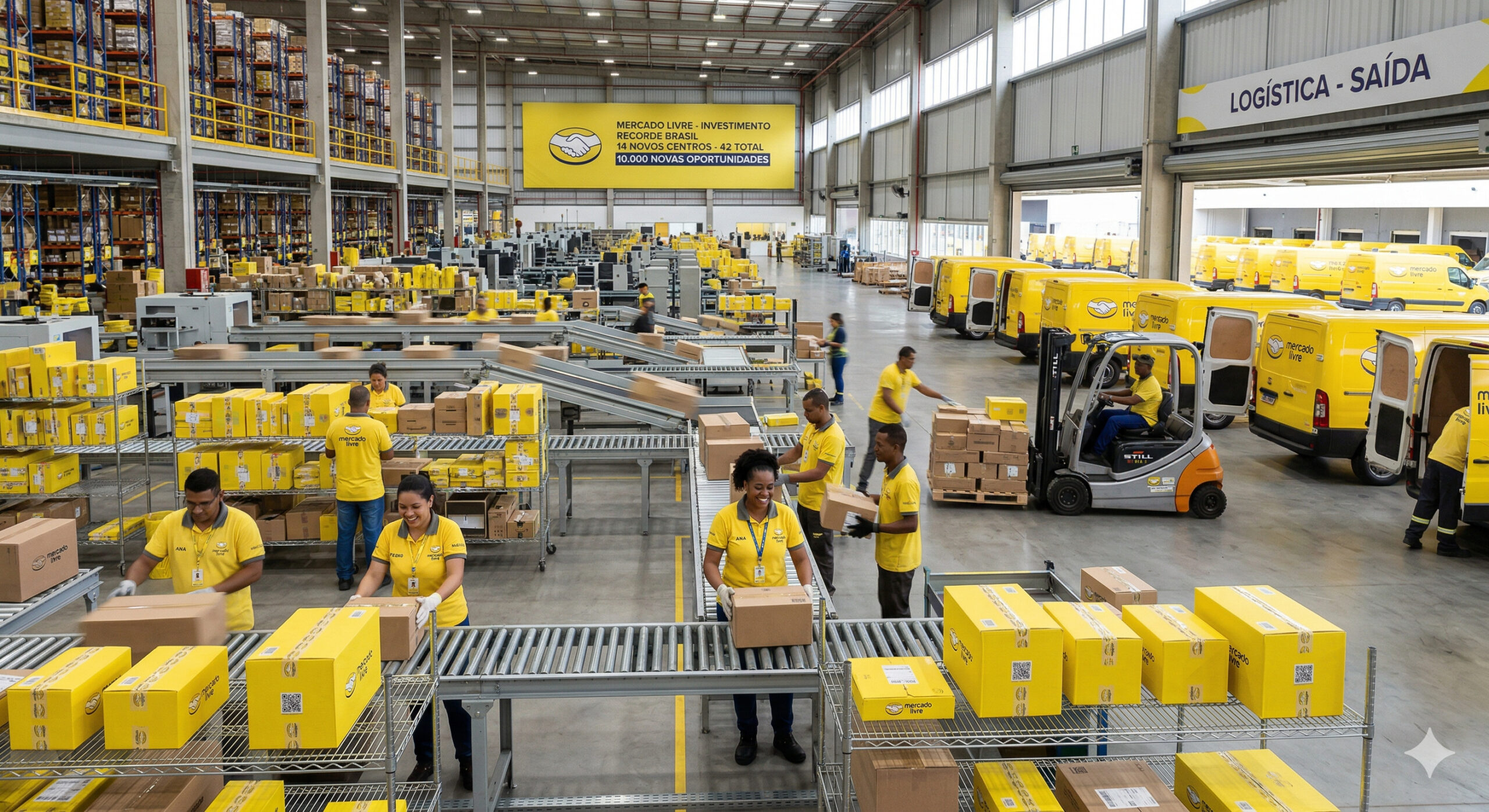
Mercado Livre “opens the vault” and announces a record investment of R$ 57 billion in Brazil in 2026, a value 50% higher than the previous year, with an expansion plan that includes 14 new logistics centers, totaling 42 units in the country and hiring an additional 10,000 employees.
-
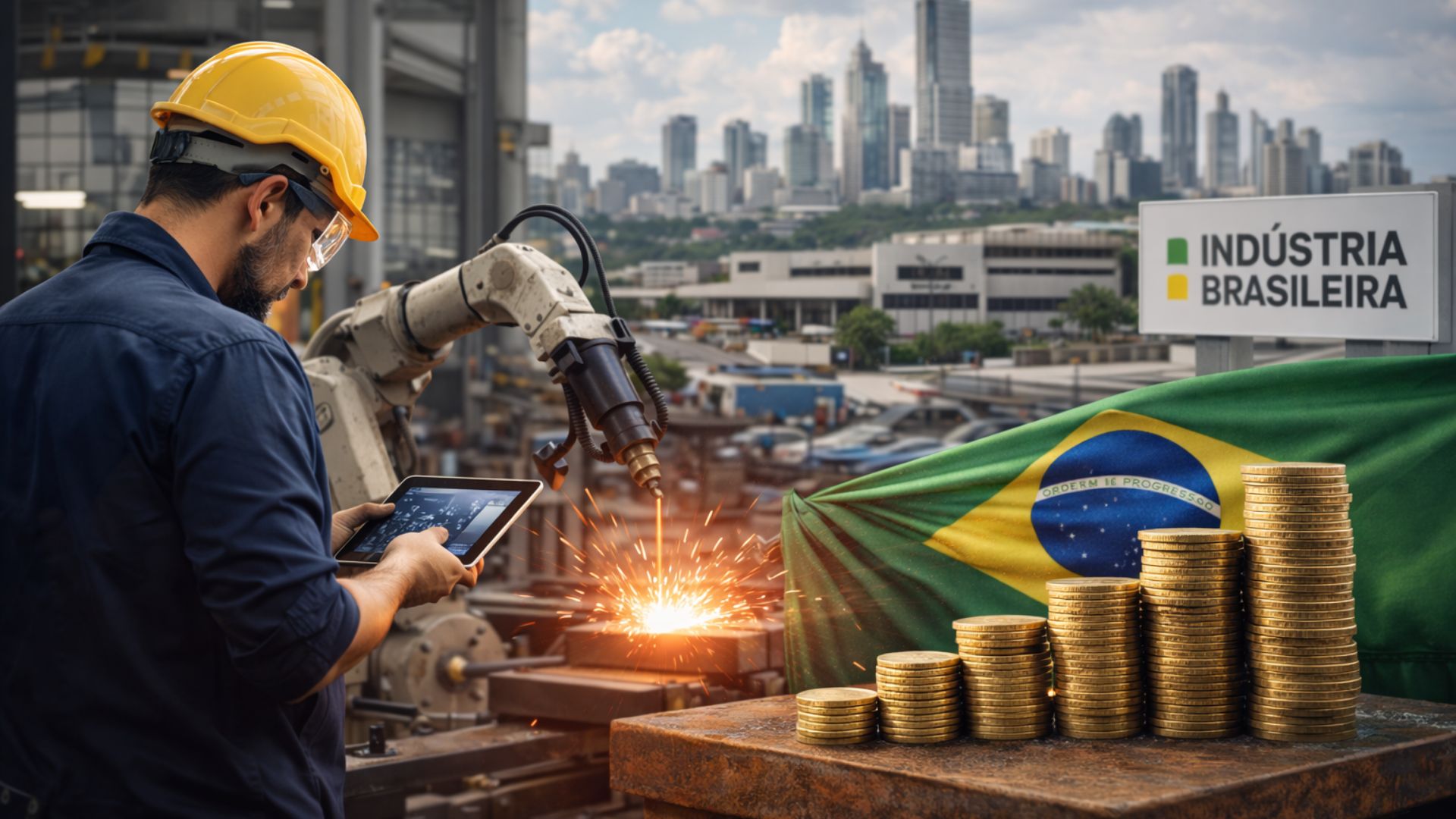
How investment in technology can revolutionize the national economy and enhance industrial gains, according to a study that highlights the direct impact on productivity, innovation, and wealth retention within Brazil.
-
The largest food company on the planet, JBS, has just opened a 4,000 square meter laboratory in Florianópolis to develop customized proteins that modulate muscle mass gain, immune response, and metabolic performance.

-
After nearly 30 bids and competition among industry giants, a Spanish company purchases one of the largest airports in Brazil for almost R$ 3 billion and takes over the management of Galeão in a concession that will last until 2039.


For many Brazilians who have been facing difficulties with the average price of gas, which hovers around R$ 130 in various regions of the country at the end of 2025, the news comes as immediate relief. The federal government projects that the physical distribution logistics of the People’s Gas will bring, in addition to the guarantee of the product, greater transparency in the use of public resources aimed at eradicating hunger.
Covered Capitals and Expansion Schedule
The operation starts in a strategic and focused manner. The list of cities included in this first stage encompasses ten capitals, covering all regions of the country.
They are:
- Salvador (BA)
- Fortaleza (CE)
- Goiânia (GO)
- Belo Horizonte (MG)
- Belém (PA)
- Recife (PE)
- Teresina (PI)
- Natal (RN)
- Porto Alegre (RS)
- São Paulo (SP)
Residents of these locations who meet the criteria can seek the benefit today.
The planning of the Ministry of Development and Social Assistance, Family, and Fight Against Hunger (MDS) is ambitious. According to the official schedule, the expectation is that the program will gradually expand to the interior and other states, reaching a total of 15.5 million families by March 2026. This would represent a direct impact on the lives of approximately 50 million Brazilians.
Who Is Eligible for the New Gas Voucher?
To access the People’s Gas, bureaucracy has been simplified, but income criteria remain strict to focus on those most in need. Families registered in the Unified Registry (CadÚnico) with a monthly per capita income of less than or equal to half a minimum wage (currently set at R$ 759) are eligible.
Priority in the concession queue is given to beneficiaries of the Bolsa Família, whose income per person is even lower, at up to R$ 218. This prioritization rule aims to first serve those who are in a more severe food insecurity situation.
It is crucial to highlight a point that often leads to blocks: the registration update. Caixa emphasizes that it is essential that the data in CadÚnico has been updated or confirmed in the last 24 months. Families with outdated data risk not having their benefit validated in the reseller’s system.
Moreover, the benefit is not automatic for everyone at once; it depends on budget availability and the monthly validation of the government’s database. Therefore, keeping the registration up to date is the only way to ensure continuous eligibility throughout the distribution cycles.
Social assistance experts warn that many families lose benefits simply by forgetting to report changes in address or family composition at the CRAS (Social Assistance Reference Center). Verification is done digitally at the time of purchase, cross-referencing the CPF with the updated database.
Amount of Tanks and Validity of Vouchers
The new model of the People’s Gas introduces a distribution logic based on family size, correcting a distortion of the old model that paid the same amount for a couple or a large family. Now, smaller families, with two or three people, are entitled to four free tanks per year.
For these smaller family units, each voucher issued has a validity of three months. This means that the beneficiary has a window of 90 days to make the exchange before the benefit expires.
For larger family units, composed of four or more people, the concession increases to six tanks annually. In this case, the turnover is higher, and the vouchers are valid for two months after the distribution date.
It is important to emphasize that the benefit is not cumulative. If the family does not make the recharge within the established validity period (two or three months, depending on the profile), they lose that specific tank. The unused voucher does not carry over to the next cycle, a measure created to encourage regular use and prevent the parallel trade of accumulated vouchers.
How to Identify Resellers and Make the Exchange
The operationalization of the exchange has been designed to be technological and secure. Unlike old programs that used paper coupons, the People’s Gas is 100% digital. The beneficiary must go to an accredited reseller — which can be identified by the official program’s visual identity on banners and stickers at the entrance — and validate it on the spot.
The validation process occurs through Caixa’s card machine, popularly known as the “Azulzinha”. The beneficiary can use the Bolsa Família card, the Caixa debit card, or, if not carrying the cards, present the CPF and a temporary validation code that is sent to the official program’s app or via SMS to the registered mobile phone.
To facilitate location, Caixa has provided a feature in the Caixa Tem app and in the official program app, where it is possible to see a map with the nearest accredited resellers to the citizen’s residence. This avoids unnecessary trips and ensures that the beneficiary goes to a location able to accept the digital voucher.
Requirements for Merchants and the Gas Market
It’s not just families that need to follow rules; gas resellers also underwent a rigorous selection process. To accept the People’s Gas, the establishment must have an active authorization from the National Petroleum Agency (ANP) and be in good fiscal standing with the Federal Revenue Service.
Moreover, it is mandatory for the merchant to have a legal current account at Caixa and to use the “Azulzinha” system to process payments subsidized by the government. This requirement aims to centralize financial transactions and prevent fraud in the transfer of amounts to merchants.
The points of sale that joined the program have committed contractually to remain accredited for at least three months. During this period, charging any extra fee for the gas recharge is strictly prohibited. The amount transferred by the government fully covers the cost of LPG, leaving the consumer only to bring the empty tank for the exchange.
What do you think about this change? The new model takes the money out of the beneficiary’s hands and delivers the product directly, ensuring that the aid translates into food on the plate, but it removes the freedom of those who used the amount for other emergencies. Is this “tutelage” by the government necessary to ensure food security or is it a setback to families’ autonomy? Leave your opinion in the comments.








-

Uma pessoa reagiu a isso.