





 Portuguese
  English
  Spanish
  4 min of reading
  0 comments



Vice President Geraldo Alckmin Forecasts High Oil Exports in 2026 Driven by Pre-Salt; He Also Comments on the Influence of the Venezuelan Situation and the Dynamics of Global Oil Markets.
Vice President Geraldo Alckmin forecasts high oil exports in 2026 driven by the pre-salt; he also comments on the influence of the Venezuelan situation and the dynamics of global oil markets.
The Vice President of the Republic and Minister of Development, Industry, Commerce and Services, Geraldo Alckmin, stated that Brazilian oil exports are expected to increase in 2026, mainly due to the rise in production in the pre-salt. The declaration was made during the presentation of the trade balance data for 2025, which showed robust performance of the country’s external sales and kept oil among the main products in the national export agenda.
According to Alckmin, the growth expectation is not associated with the exploration of the equatorial margin, a project that has been under discussion for years, but rather with the expansion of oil fields that are already in operation. For him, oil will continue to be one of the main drivers of Brazilian exports next year, sustained by the progress of the pre-salt, despite challenges in the external scenario.
-
A study confirms that the natural gas sector will reduce greenhouse gas emissions in Brazil by 0.5% and accelerate the energy transition by 2026.

-
Petrobras implements a severe adjustment and confirms a 55% increase in the price of aviation kerosene with a proposal for installment payments for the companies.

-
The rise in oil prices could ensure an extra revenue of R$ 100 billion for the Federal Government, indicates a recent economic study.

-
Naturgy begins an investment of R$ 1.6 million to expand the gas network in Niterói and benefit thousands of new residences and businesses.

During the press conference, the Vice President emphasized that “the first is oil, and it should grow, not by the equatorial margin, but by the pre-salt. So there is an expectation of growth for oil regarding the pre-salt.”
Trade Balance Registers Surplus and Oil Leads Exports
Recent numbers from the trade balance indicate that Brazil closed 2025 with a surplus of US$ 68.3 billion, despite the total being lower than the 2024 record. This result was driven by strong exports across various sectors, including oil, which continues to lead the external sales agenda, surpassing traditional products such as soybeans.
Last year, oil exports accounted for about 12.8% of the total exported by Brazil, consolidating the sector as one of the pillars of the external economy. Even though the price of a barrel in the international market has decreased, the volume shipped abroad has increased, maintaining the product’s performance at the top.
Crisis in Venezuela and Impact on Brazilian Oil Trade
When addressing the possible effects of the crisis in Venezuela on the Brazilian oil market, Alckmin adopted a cautious tone. He highlighted that Venezuela has vast oil reserves, but he points out that the recovery of production in the neighboring country requires significant investments and will not happen immediately.
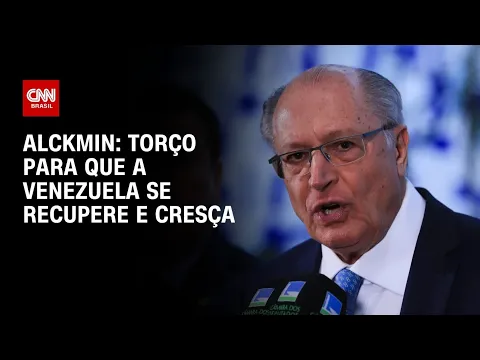

The Vice President pointed out that “these things are not done in 24 hours, investment is necessary,” while commenting on the Venezuelan situation and its influence on the global oil dynamics. He also emphasized that the price of a barrel is heavily influenced by external factors such as wars, conflicts, and geopolitical tensions, stressing that it is beyond the direct control of domestic economic policies.
According to Alckmin, Venezuela currently has a limited role in Brazilian foreign trade, reflecting the small participation of the neighboring country in direct commercial transactions with Brazil.
International Prices and Geopolitical Factors Influence Export
In his analysis, the Vice President reminded that the price of oil is influenced by geopolitical issues that are beyond the scope of domestic policies. Therefore, elements such as armed conflicts and tensions between major producers have a direct impact on markets and, consequently, on export revenues.
Brazil remains attentive to these variables while strengthening its own production. According to projections, even with the decline in international prices in 2025, the increase in produced and exported volume compensated part of the revenue loss, which fuels the expectation of a new record in 2026, especially if production in the pre-salt continues to grow.
Global Market and Commercial Agreements in Focus
In parallel to the energy agenda, the Brazilian government has also been reinforcing trade negotiations with various international partners to expand access to consumer markets. Alckmin has highlighted the importance of reducing tariff barriers and expanding free trade agreements that benefit the Brazilian trade balance as a whole.
The growth of oil exports fits into this broader context of destination diversification, strengthening trade relations, and negotiating agreements that can further boost external sales in the coming years.
Role of Pre-Salt and Environmental Challenges
The pre-salt segment, responsible for a significant portion of national production, emerges as a protagonist in this strategy. In addition to fueling exports, the increase in oil production in this segment can generate positive effects in related sectors, such as specialized refineries and logistical chains linked to the sector.
However, this advancement also raises debates about environmental sustainability and climate responsibility, as the expansion of oil extraction requires counterbalances in terms of impact mitigation and energy transition.
Alckmin pointed out that the country “hopes for the economic recovery of neighboring countries” like Venezuela, noting that historically, this nation was one of the most relevant economies in South America in the past.
Expectations for 2026 and the Role of Oil Exports
With production in the pre-salt expanding and a still resilient trade balance, Brazil projects positive perspectives for oil exports in 2026. The leadership of oil in Brazilian external sales reinforces the strategic importance of the sector, which should remain at the top of the export agenda.
Experts and authorities see this moment as an opportunity to consolidate positions in traditional markets and open new export channels, focusing on economic strengthening and maintaining Brazil’s relevant role in the global energy scenario.








Seja o primeiro a reagir!