





 Portuguese
  English
  Spanish
  5 min of reading
  1 comment





A Great Earthquake in Japan Revealed Deep Structures Incompatible with Classical Earth Models, According to Seismology Studies Published in Science Advances.
A strong earthquake that occurred in Japan not only shook cities and infrastructure but ended up revealing something even more surprising beneath the feet of the population: deep structures of the crust and upper mantle that simply should not exist in that location, according to traditional geological models. The discovery, confirmed by advanced analyses of deep seismology and published in high-impact scientific journals such as Science Advances, reignited debates about how the planet’s interior actually functions and how little we still know about it.
Japan is one of the most monitored countries in the world when it comes to seismic activity. Located on the convergence of several tectonic plates — Pacific, Philippine, Eurasian, and North American — the archipelago serves as a true natural laboratory for studying the Earth’s internal dynamics. It was precisely this dense network of seismic sensors that allowed for the identification of unexpected anomalies after the passage of the waves generated by the earthquake.
What scientists observed was not just the normal propagation of seismic waves but clear alterations in speed, refraction, and behavior of these waves at depths where, theoretically, the material should be homogeneous and predictable.
-
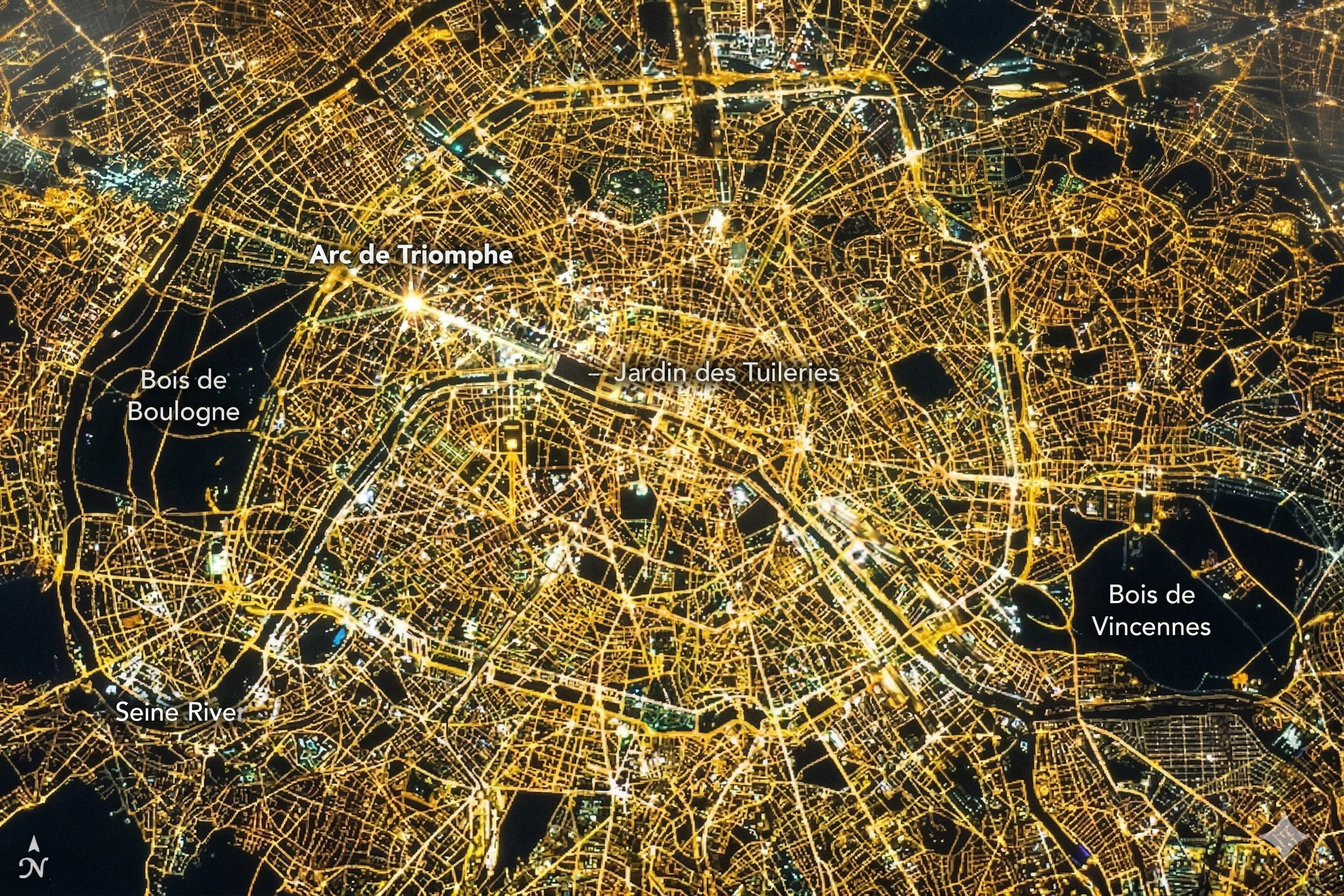
At an altitude of 400 km by astronauts from the International Space Station, Paris transforms at night into a golden mesh so precise that it reveals the outline of the Seine River, avenues, and entire neighborhoods like a luminous map drawn over the Earth.
-
iPhone 17 reaches historic low price with 256 GB, 120 Hz display, and drops to R$ 5,703 on Shopee, featuring A19 chip, dual 48 MP cameras, battery life of up to 30 hours, and advanced AI features.

-
Trip to Mars getting closer: Pulsar Fusion, from the UK, advances with plasma ignition in fusion engine and could drastically reduce space travel time, making crewed missions faster, safer, and economically viable.

-
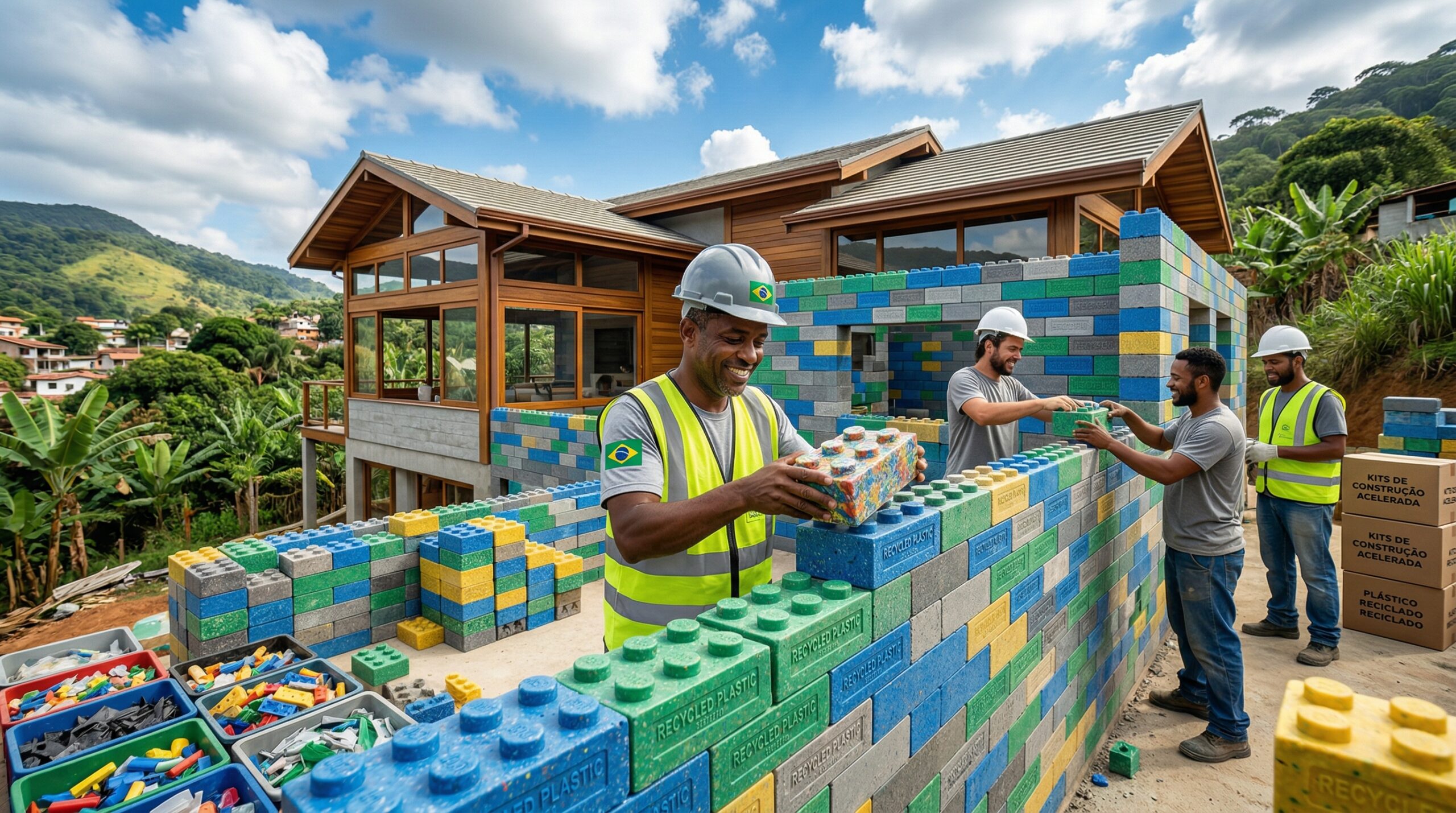
Made with recycled plastic, a Lego-inspired brick builds a 180 m² house in 15 days, providing thermal comfort, preventing moisture, and turning waste into income, kits, and accelerated construction in the country.

How Earthquakes “See” the Interior of the Earth
Seismology functions as a type of planetary tomography. When an earthquake occurs, seismic waves spread in all directions and pass through different layers of the planet. Depending on the density, temperature, and composition of the rocks, these waves accelerate, decelerate, deflect, or even dissipate.
In the Japanese case, seismographs detected deep zones where the waves behaved in ways inconsistent with what is expected from the crust and upper mantle in that region.

Rather than a relatively continuous profile, clear signatures of rigid, cold, and dense structures emerged in locations where, according to classical models, the material should be warmer and partially ductile.
These “seismic anomalies” indicate the presence of ancient rock blocks, possibly remnants of subducted oceanic crust or fragments of tectonic plates preserved at unexpected depths.
Structures That Should Not Be There
The most intriguing aspect of the discovery is precisely the location of these structures. Data indicates that they are positioned at depths and in geological contexts where traditional subduction models did not predict their existence.
In simple terms, the accepted theory states that oceanic plates, when sinking beneath continental plates, tend to heat up, deform, and eventually mix with the Earth’s mantle. However, what scientists observed beneath Japan was the presence of relatively intact, cold, and mechanically resilient blocks, surviving far beyond what would be expected.


Some of these structures are estimated to span dozens of kilometers, functioning almost like “geological islands” trapped within the mantle. This type of preservation suggests that the Earth’s interior may be much more heterogeneous than previously thought.
The Role of Deep Subduction in Japan
The Japanese region is marked by extremely active subductions, especially of the Pacific Plate, which sinks beneath the archipelago at relatively high speeds. This context creates ideal conditions for complex geological phenomena, including deep folds, accumulation of material, and poorly understood transition zones.
Studies indicate that some of these hidden structures may be the result of ancient episodes of subduction that occurred tens or even hundreds of millions of years ago, that remained “frozen” in the planet’s interior. Instead of being fully recycled by the mantle, these fragments would have remained stable, altering the thermal and mechanical dynamics of the region.
This helps explain why Japan experiences such deep and complex earthquakes, some occurring more than 600 kilometers deep — something that still challenges simple explanations.
Why This Challenges Classical Earth Models
The most commonly used geological models today are based on a relatively simplified view of the Earth’s interior: well-defined layers, gradual transitions, and continuous recycling of material over geological time. The structures detected beneath Japan suggest a different scenario.
Instead of a “well-mixed” mantle, the data points to a compartmentalized interior, with regions that preserve geological memory for much longer periods than expected. This has direct implications for understanding mantle convection, magma generation, volcano formation, and even the origin of extreme earthquakes.
If rigid, cold blocks persist at depth, they may alter heat flow, concentrate stresses, and influence where and how large earthquakes initiate.
What the Studies Published in Science Advances Say
Research published in Science Advances uses modern three-dimensional seismic imaging techniques, combining thousands of records of local and distant earthquakes. These studies clearly show that the observed anomalies are not measurement artifacts, but real, coherent, and extensive structures.
The authors emphasize that these formations directly challenge isotropic and homogeneous models of the upper mantle, suggesting the need for deep revisions in the geodynamic simulations currently used.
Furthermore, researchers point out that similar phenomena may exist in other subduction zones around the planet, such as in the Andes, Alaska, and Southeast Asia, but have not yet been detected with the same level of detail due to a lack of seismic networks as dense as Japan’s.
Implications for Seismic and Volcanic Risks
Understanding these hidden structures is not just an academic issue. They may have a direct impact on the prediction of natural hazards. Rigid zones at depth may act as barriers or amplifiers of stress, influencing the size, depth, and frequency of earthquakes.
In Japan, where millions of people live atop one of the most complex tectonic systems in the world, this type of knowledge is crucial for improving seismic risk models, urban planning, and disaster mitigation strategies.
Additionally, these structures may affect the path of magma, helping to explain irregular patterns of volcanic activity observed across the archipelago.
A Reminder That the Earth Still Holds Secrets
The discovery made after the earthquake in Japan reinforces an uncomfortable yet fascinating idea: despite centuries of study, the planet’s interior still holds fundamental secrets. Each major earthquake is not merely a destructive event but also a rare opportunity to “illuminate” inaccessible regions of the Earth.
By revealing structures that should not exist according to textbooks, Japan once again places itself at the center of global geological science, compelling researchers to rethink basic concepts about how the planet functions internally.
And the question remains unavoidable: if these anomalies exist beneath one of the most studied regions in the world, what else may be hidden beneath continents and oceans where we have hardly enough seismic eyes to see?







I stopped most of my Parkinson’s disease medications due to severe side effects and I started on herbal treatments from Limitless Herbs Centre (Limitlesshealthcenter. com), the treatment has made a very huge difference for me. My symptoms including body weakness and Swallowing difficulties disappeared after few months on the treatment. I am getting active again since starting this treatment.