





 Portuguese
  English
  Spanish
  4 min of reading
  0 comments


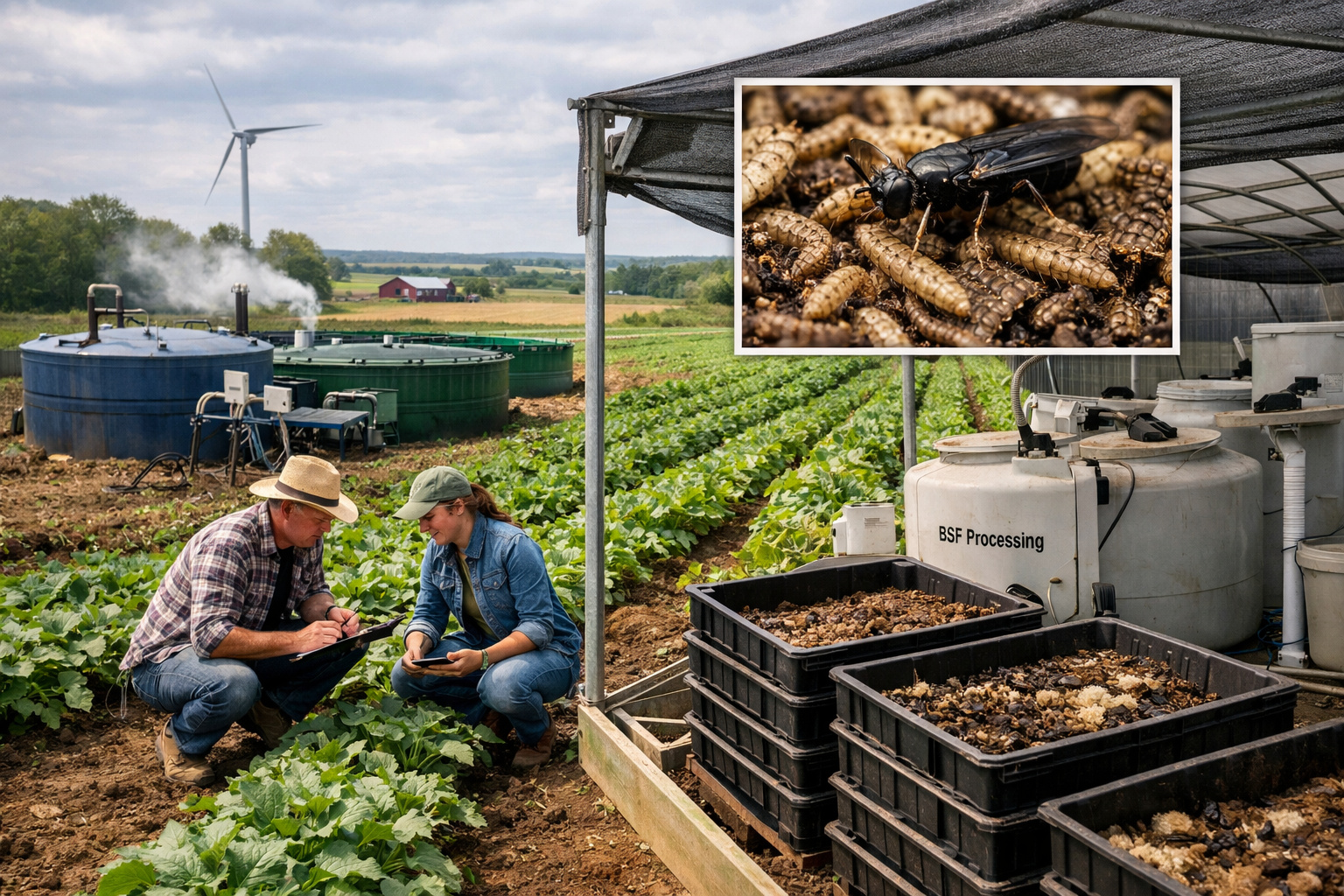
Larvae That Transform Waste Into Natural Fertilizer Gain Support From The U.S. Government And Promise To Restore Depleted Soils While Reducing Emissions And Agricultural Costs
For decades, the world has sought solutions to two problems that seem to grow side by side: the increase in organic waste and the accelerated degradation of soil. Now, surprisingly, the answer may lie in a small insect with an impressive appetite.
The information was released by “BBC Future,” in a report by Miranda Lipton on February 10, 2025, showing how the black soldier fly larva (BSFL) may become one of the most promising tools for restoring soil fertility and reducing waste.
With over 33% of the planet’s soil currently degraded and depleted, the need for sustainable solutions has never been more urgent. In this scenario, BSFL emerges as a key player by transforming organic waste into a highly nutritious biofertilizer known as frass.
-
Embrapa’s discovery reveals an unexpected advancement by allowing the production of seedlings from the caatinga using brackish water, opening a new frontier for farmers to face drought more efficiently.
-
6 sources of free fertilizer that you are throwing away every day and can transform your garden without spending anything.
-
With a water crisis on the radar, Sabesp invests in reclaimed water for data centers and transforms sewage treatment into a solution that saves millions of liters and protects public supply.

-
Foresea achieves 100% offshore waste reuse in 2025, eliminates landfill disposal, and consolidates sustainable strategy with 1,500 tons recycled.

Furthermore, the larva consumes virtually any type of organic matter. Food scraps, agricultural by-products, and various waste make up its diet. And the most impressive part: it can devour up to four times its body weight in waste every day.
Accelerated Process And Efficiency That Surpasses Traditional Composting
Unlike conventional composting, which can take up to 10 months, the process carried out by BSFL occurs in a fraction of that time. Therefore, the biological efficiency of the insect accelerates the conversion of waste into sustainable fertilizer.
Companies like Chapul Farms, based in Oregon, utilize this voracious appetite to process large volumes of food waste. As a result, they create a circular system: neighboring farms supply waste and receive nutrient-rich frass to regenerate the soil.
Additionally, the larvae reproduce rapidly. According to Shankar Ganapathi Shanmugam, assistant professor in the Department of Soil and Plant Sciences at Mississippi State University, BSFL grows on dead and decaying material, which enhances its survival capacity.
Meanwhile, the U.S. Department of Agriculture granted funding in May 2024 for three projects focused on the use of black soldier fly. One of them benefited Chapul Farms through the Fertilizer Production and Expansion Program (FPEP).
This bipartisan support signals something bigger: the growing recognition that frass can reduce waste, strengthen soil health, and also stimulate domestic fertilizer production.
Environmental, Economic, And Strategic Impact


Unlike synthetic fertilizers, which often deplete the soil over time, frass introduces a diverse microbial community. Consequently, it increases water retention, strengthens plants’ natural defenses, and reduces the need for pesticides.
Moreover, chemical fertilizers require high consumption of fossil fuels and reduce the soil’s capacity to store carbon. Therefore, replacing part of these inputs with biological solutions could represent a strategic advance for food security.
The numbers reinforce this urgency. Between 2021 and 2022, fertilizer prices more than doubled. As the United States is the third-largest global importer of these products, American farmers suffered severe impacts. In the two years leading up to 2023, global consumption fell by 8% as many producers were priced out of the market due to high costs.
In this context, frass emerges as an economic alternative. The FPEP will fund BSFL facilities in Oregon and North Dakota, with an expectation of producing 10,000 tons of frass per year at each location and generating 59 jobs. The opening is scheduled for 2026.
Billion-Dollar Market And Accelerated Growth
The global insect protein market was valued at US$ 1 billion (approximately R$ 5.76 billion) in 2022. Meanwhile, the global frass market was estimated at US$ 96 million (approximately R$ 553 million) in 2023. However, experts point out that the projected growth of frass is substantially higher.
Interestingly, insect farms produce twice as much frass as larvae. Nevertheless, protein has received greater commercial attention, while fertilizer remains underutilized.
Despite this, farmers who have already adopted frass report promising results. Vineyard owner Mimi Casteel claims she observed faster production and better cellular structure in the plants. According to her, the leaves have higher cellular density and more resilient membranes, indicating greater structural integrity from the early stages.
Regulatory Challenges And The Future Of Regenerative Agriculture
However, regulation still poses an obstacle. The U.S. National Organic Program does not include insects as an acceptable additive, which limits their adoption in certified organic practices. Therefore, teams like those at Chapul Farms engage with regulatory bodies to expand the recognition of the technique.
At the same time, researchers highlight that less than 1% of soil microbes have been cultivated. Thus, frass represents a promising frontier for microbial regeneration and rebuilding agricultural biodiversity.
Ultimately, experts argue that it is impossible to maintain healthy ecosystems without insects. Therefore, integrating the biology of these organisms into the agricultural model could profoundly transform global food production.
If the trend holds, this small insect could not only reduce waste and emissions but also help recover some of the 33% of degraded soil on the planet and spur a new sustainable fertilizer market.
Would you bet on insect-produced fertilizers as a real solution for soil recovery and reducing costs in agriculture?









-

-

-

-

5 pessoas reagiram a isso.