





 Portuguese
  English
  Spanish
  5 min of reading
  5 comments





Understand Why the Offshore Career Gains Momentum in 2026, with Entry-Level Positions, High Demand for Embarked Professionals, Attractive Salaries, and Real Opportunities for Those Seeking Stability and Growth in the Oil and Gas Sector
The offshore oil and gas sector in Brazil ends 2025 at a strong pace of expansion and projects an even more promising scenario for 2026. Information from the National Agency of Petroleum, Natural Gas, and Biofuels (ANP), public reports from Petrobras, and analyses from the Brazilian Institute of Oil and Gas (IBP) indicate a consistent increase in demand for operational labor on maritime platforms. This movement creates a concrete opportunity for those looking to start an offshore career, with quick entry into the market, salaries above the national average, and high employability depending on the region.
Offshore Career in 2026 Driven by Pre-Salt
The advancement of projects in the pre-salt, coupled with the ongoing maintenance of offshore production units, keeps the hiring of professionals willing to work offshore robust, including in positions that do not require higher education. For many Brazilians, this reality represents a real chance for financial and professional change, consolidating offshore as a new career in 2026 with high growth potential.
The expansion of production in the pre-salt is the main driver of growth in the Brazilian offshore market. Official data from Petrobras show that most of the national oil production already comes from maritime fields, requiring continuous drilling, maintenance, logistics, and operational support operations.
-
Gran Services announces offshore job openings for various positions in the oil and gas sector.
-
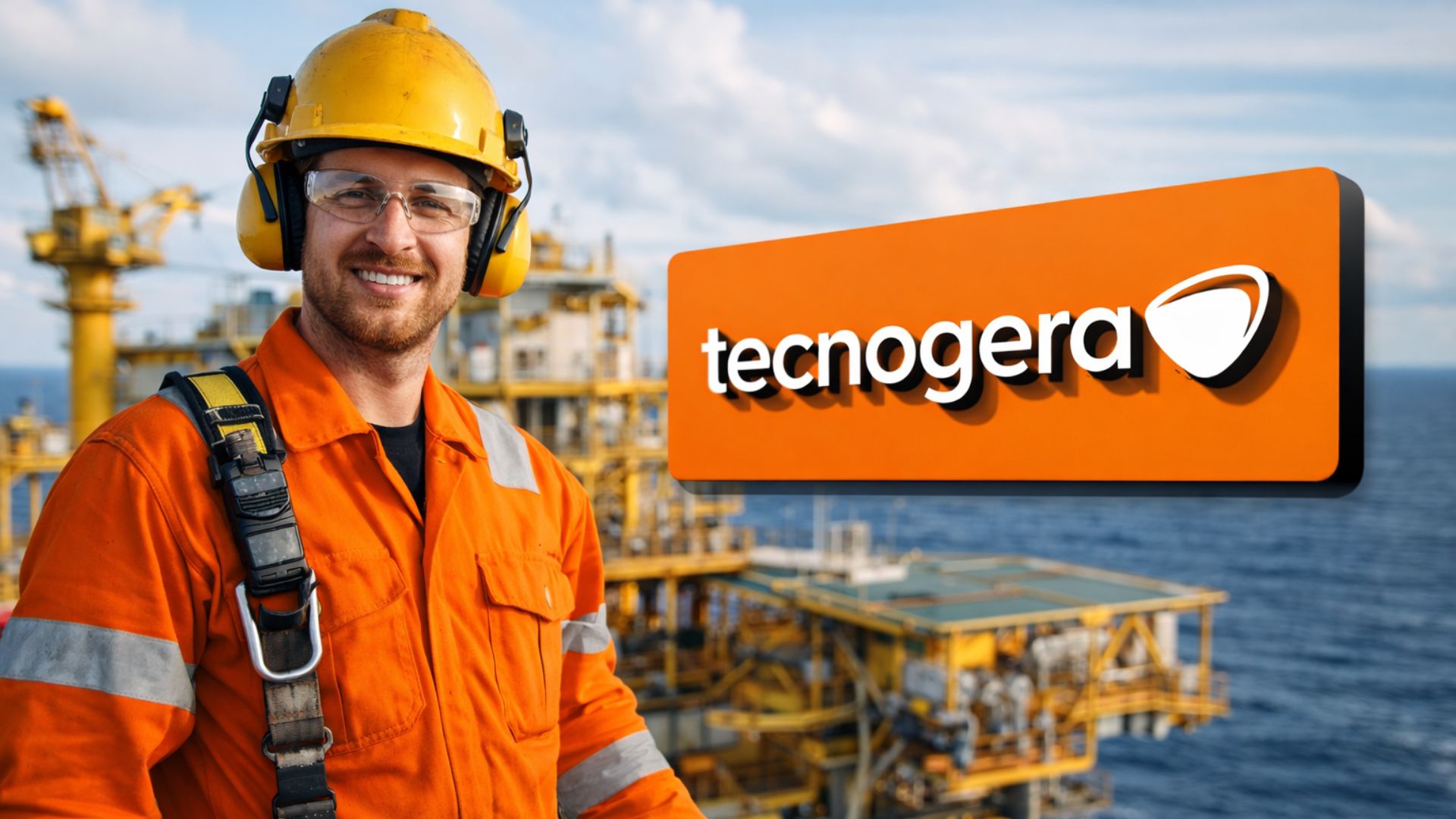
Tecnogera opens an offshore position with a mixed schedule for those who want to work on board in Macaé (RJ) with benefits including Meal Voucher, Transportation Voucher, Life Insurance, and more.
-
The Macaé City Hall starts the week with job openings that promise to boost hiring and open doors for qualified professionals and newcomers to the market, with a focus on offshore positions.

-
Grupo Bravante offers an offshore position on a 14×14 schedule for those who want to work on board in SP.

This scenario favors the offshore career, especially in essential roles for the functioning of the platforms. Even in periods of economic fluctuation, these activities cannot be interrupted, which can guarantee stability and a steady flow of hiring. Moreover, the shift and schedule model reduces turnover, increasing the appreciation of qualified and committed professionals.
Working Offshore: Why the Sector Hires Without Requiring Higher Education
One of the main characteristics of the offshore market is the appreciation of practical training and mandatory certifications. To work offshore, the candidate needs to meet the requirements of the Brazilian Navy and workplace safety standards but does not necessarily need to have advanced academic training.
Maritime hospitality, industrial maintenance, and operational support companies frequently recruit professionals for entry-level roles. In these areas, in many cases, part of the training occurs in the work environment itself, which accelerates the integration of new workers into the offshore career.
Another relevant factor is the confinement regime. Not everyone adapts to the routine offshore, which reduces competition and increases the chances of hiring for those who are physically and psychologically prepared.
Entry-Level Positions with the Highest Employability Chances Offshore
Among the most accessible roles for those seeking a new career in 2026, the Maritime Steward position stands out. This professional is responsible for food, cleaning, and organizing common areas and cabins on the platform. The minimum requirement is usually elementary education, along with basic safety and offshore hospitality courses.
The Platform Assistant, also referred to as the Cargo Handling Assistant, performs support activities on the deck, assisting with logistics and material organization. This is a manual job but has great internal growth potential for those who demonstrate discipline and attention to safety standards.
The offshore Industrial Painter occupies a strategic position in the maintenance of metal structures. Corrosion caused by the marine environment requires constant maintenance, which keeps the demand for this professional high. With a short-term qualification course, the worker ensures high employability within the offshore career.
Offshore Salaries and Bonuses That Increase Monthly Income
Salaries in the offshore sector attract attention not only for the base amount but mainly for the mandatory bonuses provided by law. Hazard pay, danger pay, night shifts, and confinement bonuses are part of the remuneration for those who choose to work offshore.
In practice, these bonuses can double the monthly earnings, especially in common schedules such as 14×14 or 21×21. According to surveys conducted by the sector itself and information disclosed by labor unions, the remuneration package positions many offshore workers above the national average salary.
Additionally, benefits such as health plans extended to family members, full meals during offshore work, and food vouchers during time off make the offshore career even more attractive from a financial perspective.
Salary Estimates for Positions in the Offshore Career
Based on market data, collective agreements, and information from service-providing companies, it is possible to estimate the total monthly remuneration for entry-level positions in the offshore sector:
- Maritime Steward or Cabin Attendant typically earns between R$ 3,500 and R$ 5,500, including bonuses.
- Offshore Industrial Painter reaches values between R$ 4,500 and R$ 7,000, depending on the schedule and certifications.
- Cargo Handling Assistant earns, on average, between R$ 3,800 and R$ 6,000.
- Offshore Kitchen Assistant shows earnings between R$ 3,200 and R$ 5,000.
These salaries reinforce the sector’s potential as a new career in 2026, especially for those seeking financial independence in the medium term.
How to Start an Offshore Career Without Previous Experience
The first mandatory step to enter the sector is the Basic Platform Safety Course (CBSP). Required by the Brazilian Navy, the training covers survival at sea, firefighting, and emergency evacuation. Without the CBSP, it is not legally permitted to work offshore.
Another important differentiator is the HUET course, which simulates the escape from submerged aircraft. Although not required in all contracts, it significantly increases the chances of being hired by offshore companies.
Certifications such as NR-33 and NR-35 are also highly valued. These are short courses, low-cost, and that expand the functions that the professional can perform onboard, strengthening their position within the offshore career.
Strategies to Accelerate Hiring in 2026
The most effective way to enter the sector is to seek positions in outsourced hospitality, industrial cleaning, and maintenance companies. These companies have active contracts with operators such as Petrobras and conduct frequent recruitment.
Keeping your profile updated on specialized platforms, as well as participating in professional groups in the sector, increases the candidate’s visibility. The offshore market values professionals who are available, with documentation up to date and willing to start in operational roles.
Investing in courses such as Rigger or Hydrojetting also opens doors for quick promotions, broadening horizons within the new career in 2026.
What Makes Offshore a Strategic Choice for Your Professional Future
The resumption of investments in the pre-salt, confirmed by public data released throughout 2025, indicates that the sector will continue to absorb labor in the coming years. For those seeking stability, good salaries, and structured growth, the offshore career presents itself as a solid and realistic alternative.
By understanding the dynamics of working offshore, investing in mandatory certifications, and starting with entry-level positions, the professional significantly increases their chances of success. The time to prepare is now, as the market organizes for a new cycle of hiring in 2026.







Tenho curso de operador de produção em petróleo e gás EAD, plataformista e noções de salvatagem, curso em petróleo e gás. Tenho interesse em trabalhar na área offshore, mas não tenho o curso cbps completo e nem o t- huet.
Estou interessado na vaga ,onde me escrevo
Nunca vi com arrogância autoestima nunca querer ser o teu comportamento melhor do que alguém que ninguém é melhor do que ninguém e o principal sempre emprestar o ouvido para escutar e não julgar quem sou eu para julgar alguém humildade é o único passo para você dar conseguir subir os drives um por um