





 Portuguese
  English
  Spanish
  3 min of reading
  0 comments


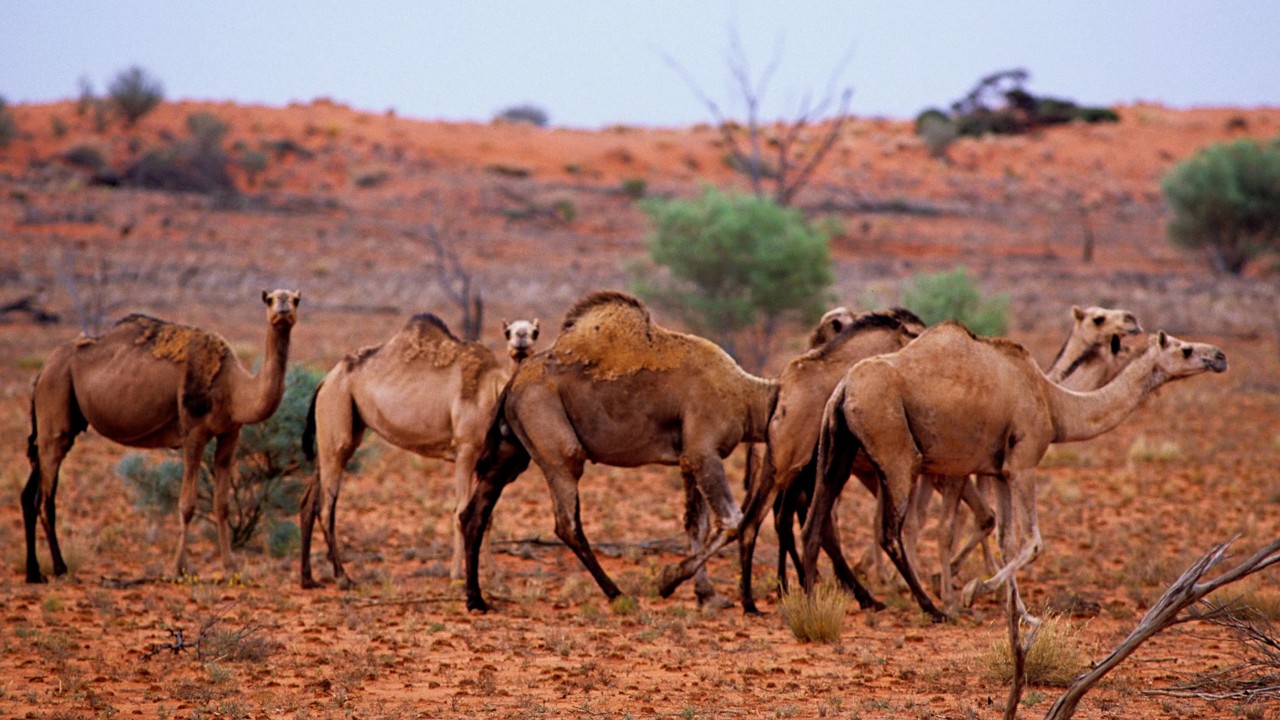
Research Shows That Camels And Other Herbivores, When Used In A Controlled Way, Can Improve Degraded Soils In Arid Regions
For decades, some animals were seen only as an environmental problem in Australia. Species considered “pests,” such as wild camels, donkeys, and introduced herbivores, have been associated with soil degradation and loss of vegetation. Now, scientific studies and environmental projects are showing an unexpected path: these animals are being used to help recover degraded areas.
Research conducted by CSIRO, the country’s main scientific agency, indicates that the controlled management of these animals can improve water infiltration in the soil and reduce processes linked to desertification.
Why Animals Seen As A Problem Have Been Tested As A Solution
In arid regions, the soil often becomes so compacted that rainwater simply runs off instead of infiltrating. Studies from the University of Queensland show that the controlled trampling of animals can break this hardened layer, allowing water to penetrate the soil and favor the return of vegetation.
-
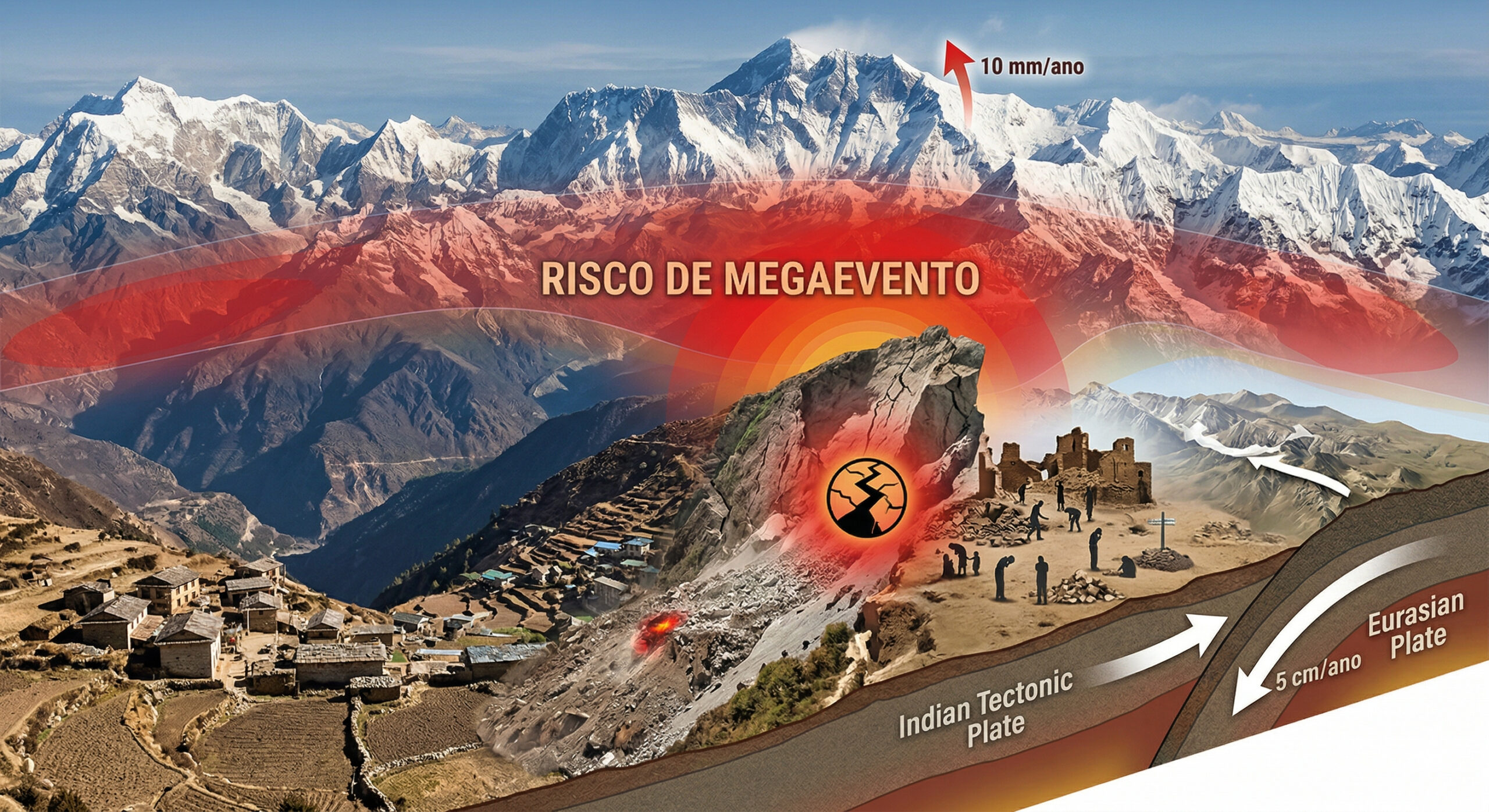
The Himalayas continue to grow to this day, with tectonic plates advancing 5 cm per year, mountains rising up to 10 mm annually, and the 2015 earthquake that killed 9,000 people may have increased the risk of an even larger seismic mega-event.
-
At an altitude of 400 km by astronauts from the International Space Station, Paris transforms at night into a golden mesh so precise that it reveals the outline of the Seine River, avenues, and entire neighborhoods like a luminous map drawn over the Earth.

-
iPhone 17 reaches historic low price with 256 GB, 120 Hz display, and drops to R$ 5,703 on Shopee, featuring A19 chip, dual 48 MP cameras, battery life of up to 30 hours, and advanced AI features.

-
Trip to Mars getting closer: Pulsar Fusion, from the UK, advances with plasma ignition in fusion engine and could drastically reduce space travel time, making crewed missions faster, safer, and economically viable.


The effect does not happen by chance. Animals are used during short periods and in designated areas, always under technical supervision.
Wild Camels Enter Environmental Recovery Projects
Australia has one of the largest populations of wild camels in the world, historically treated only as an environmental threat. In pilot projects, these animals have begun to be used strategically in degraded areas.
The goal is not to maintain large populations permanently, but to take advantage of the natural behavior of camels to:
- incorporate organic matter into the soil,
- reduce surface erosion,
- create conditions for plant regeneration.
What Studies Have Observed In Practice
Articles report that areas subject to this type of management showed improvement in moisture retention, increased vegetation cover, and less soil loss after heavy rains.
Researchers make it clear that the technique does not solve desertification on its own but can be an important tool where other solutions have failed.

Why This Impacts Real Life In Dry Regions
Desertification directly affects food production, access to water, and the permanence of people in the countryside. By recovering the soil’s capacity to retain water and support vegetation, these projects help to:
- reduce agricultural losses,
- improve landscape resilience,
- lessen the advance of aridity in vulnerable regions.
According to CSIRO, strategies like this may become increasingly relevant as extreme drought events become more frequent.
Controlled Management Is The Key — Not Indiscriminate Release
Researchers emphasize that positive results only appear when there is rigorous planning, animal density control, and continuous monitoring. Uncontrolled release could, on the contrary, further aggravate environmental degradation.
For this reason, the projects follow protocols defined by environmental agencies and Australian universities, always based on scientific data.
When The Problem Becomes Part Of The Solution
The Australian experience shows an important shift in the way to deal with degraded areas. Instead of completely eliminating animals considered problematic, science has begun to investigate how to use them intelligently to restore fragile ecosystems.
It is an approach that does not romanticize the problem but recognizes that, in certain contexts, nature can help correct imbalances created by humans.






-

-

-

-

24 pessoas reagiram a isso.