Portuguese
  Spanish


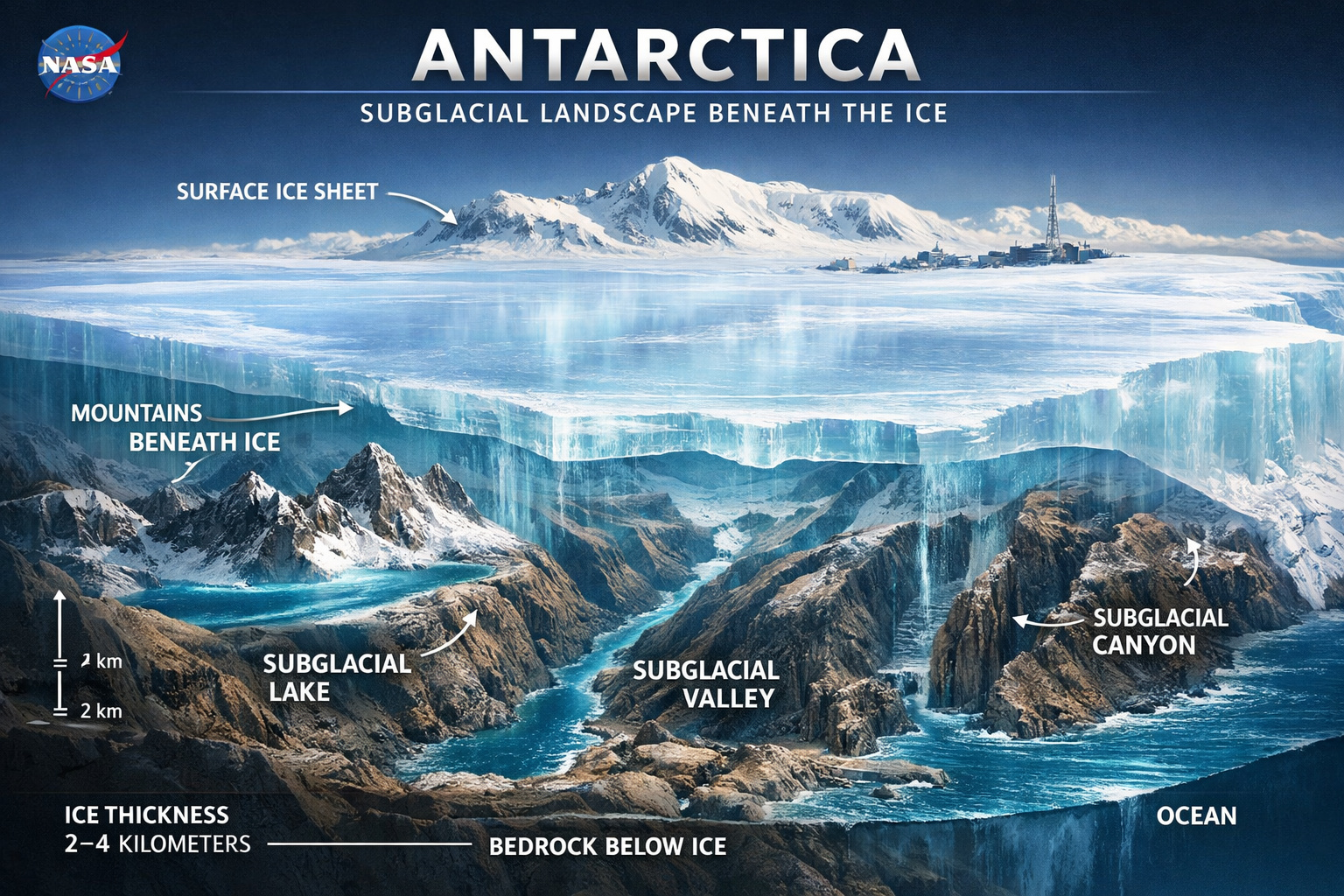


The landscape beneath the ice of Antarctica began to be revealed with unprecedented accuracy thanks to a scientific study that utilized high-resolution space technology. Early in the study, scientists were able to identify what the subglacial topography of Antarctica looks like, one of the least known environments on Earth. This discovery helps understand not only the geological past of the continent but also how it may respond to global climate change in the coming decades.
The information was released by Science in an article published last Thursday (15). According to researchers, the new mapping allows visualization of what Antarctica would look like if all continental ice were to melt, even though this scenario is merely hypothetical. Nevertheless, the data provide crucial information for more accurate climate predictions.
-
World’s Largest Particle Accelerator Begins Four-Year Hiatus for Magnet Overhaul, Aiming to Hunt Dark Matter by 2030

-
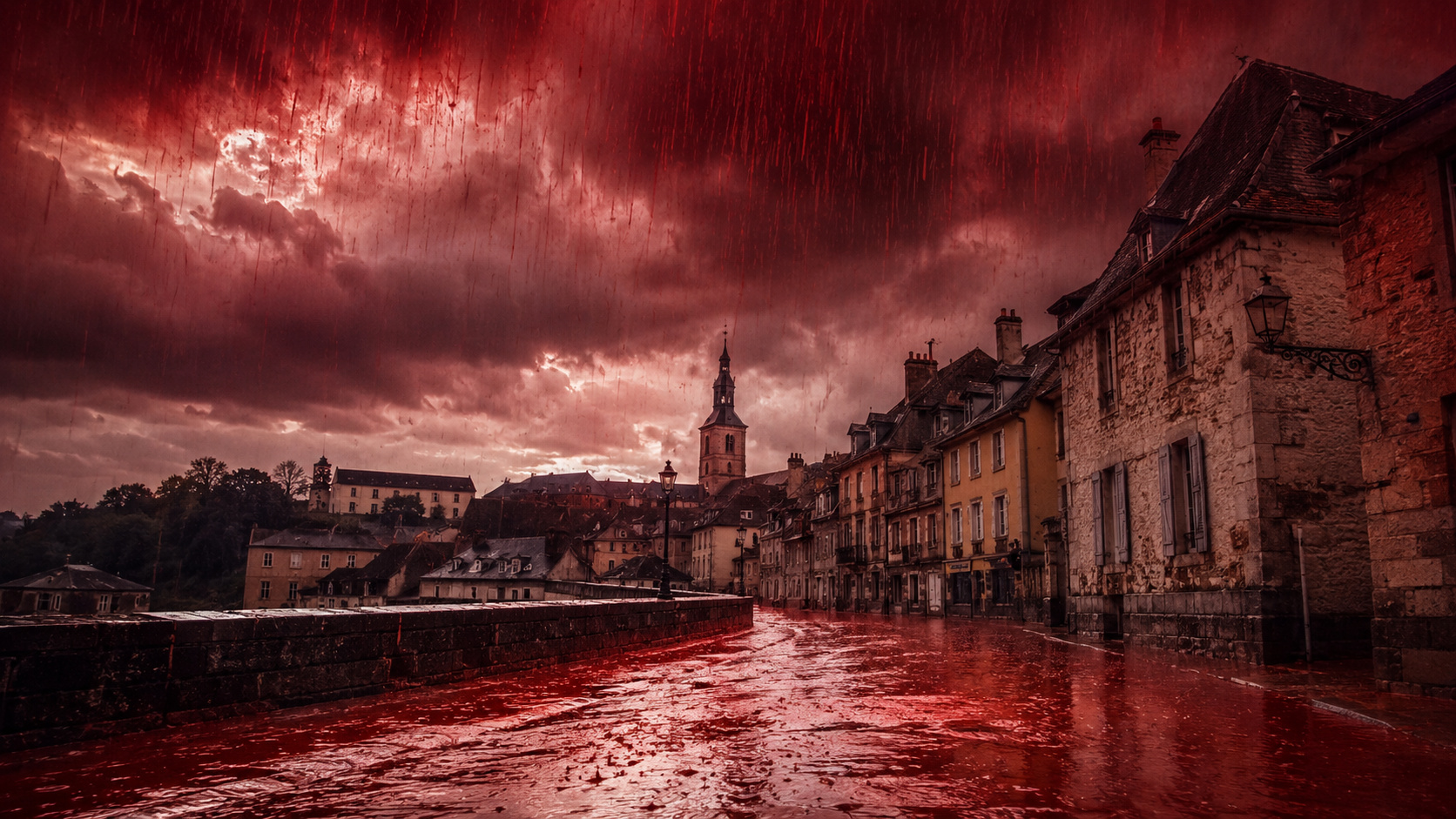
“Sahara Dust Turns Rain Red, Startling Residents Across Europe”
-
Stanford Scientists Develop 20-Cent Paper Centrifuge Inspired by Ancient Toy, Spins at 125,000 RPM Without Electricity, Separates Plasma in 1.5 Minutes, Aiding Diagnostics in Remote Areas

-
World’s Largest Vaccine Manufacturer, Immunizing Two-Thirds of Global Infants, Originated in a Pune Horse Farm




Space Technology Reveals What Exists Beneath the Ice Shelf of Antarctica
To achieve this result, scientists used high-resolution satellite data combined with a method called ice flow disturbance analysis. This way, it was possible to observe how the ice behaves as it slides over bedrock, revealing the shape of the hidden terrain below.
As a result, the study identified a surprisingly diverse landscape. Beneath kilometers of ice, extensive plains, deep valleys, winding canyons, and mountain ranges emerge. This scenario contrasts with the previous idea that the Antarctic terrain would be simpler and more homogeneous.
Moreover, researchers highlight that the topography of Antarctica is less known than the surface of some planets in the Solar System. Therefore, this advancement represents a significant leap in understanding the continent.
Antarctica Remains One of the Greatest Geographical Mysteries of the Planet
With about 40% more area than the Europe, almost half the size of the African continent, and approximately 50% larger than the United States, Antarctica remains largely unexplored. Currently, less than 1% of its surface is ice-free, which complicates direct observations of the terrain.
The research was led by glaciologist Helen Ockenden from the Institut des Geosciences de l’Environnement, in France, and Robert Bingham from the University of Edinburgh, Scotland. According to them, the new topographic model at mesoscale allows for analysis of previously invisible regions, including areas that directly influence glacier flow.
As a consequence, scientists can now better understand why some glaciers advance faster than others. This behavior directly depends on the shape of the bedrock beneath the ice.
New Data Help Predict the Future of Glaciers and Global Climate
In addition to revealing the geological past, the study has direct implications for the future. By understanding the subglacial landscape of Antarctica, researchers can improve models that simulate glacier melting and their contribution to rising sea levels.
Thus, detailed knowledge of the rocky terrain helps predict how the ice may respond to global warming. This allows for more accurate analyses of the formation of new glaciers, the collapse of ice shelves, and global climate impacts.
In summary, uncovering what exists beneath the ice is not just a scientific curiosity. It is an essential tool for anticipating climate scenarios and guiding global decisions about the future of the planet.
If all this landscape is hidden beneath the ice, what else does the planet still hold that could change our view of Earth’s climatic future?