





 Portuguese
  English
  Spanish
  5 min of reading
  0 comments


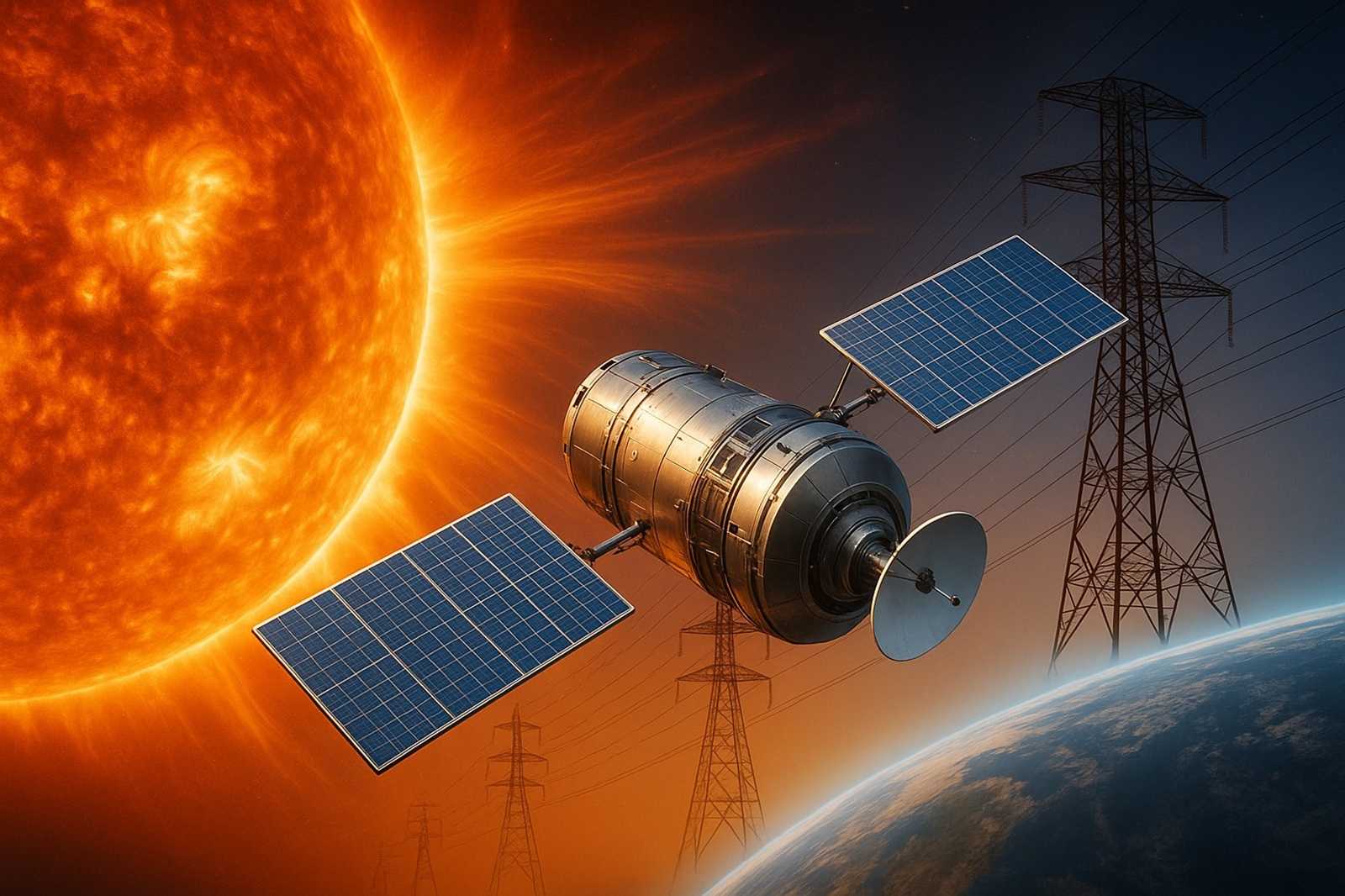
AI Developed at NYU Abu Dhabi Achieves 45% Higher Accuracy in Solar Wind Forecasting, Enabling Alerts Up to Four Days in Advance and Enhancing Protection for Satellites, Electric Grids, and Navigation Systems Against Solar Storms
Researchers at NYU Abu Dhabi have developed an artificial intelligence system capable of predicting solar wind up to four days in advance, indicating a direct impact on the protection of satellites, electric grids, and communications amid the increasing global technological dependency.
The new artificial intelligence technology developed by NYU Abu Dhabi provides solar wind forecasts up to four days in advance, outperforming existing models by 45% and allowing for quicker responses to protect satellites and electric grids against solar storms. The system uses high-resolution ultraviolet images from NASA’s Solar Dynamics Observatory to identify patterns that anticipate changes in the flow of charged particles released by the Sun.
More Accurate Forecasts Improve Responses to Technology Risks
Solar wind forecasting represents a historical challenge for space science because the flow of particles can damage satellites, interfere with communications, and affect electric grids. The new AI model can predict the speed of this flow with an extended lead time, allowing for prior planning of protective measures. This capability reduces vulnerabilities and enables quick responses to events that could cause operational disruptions.
-
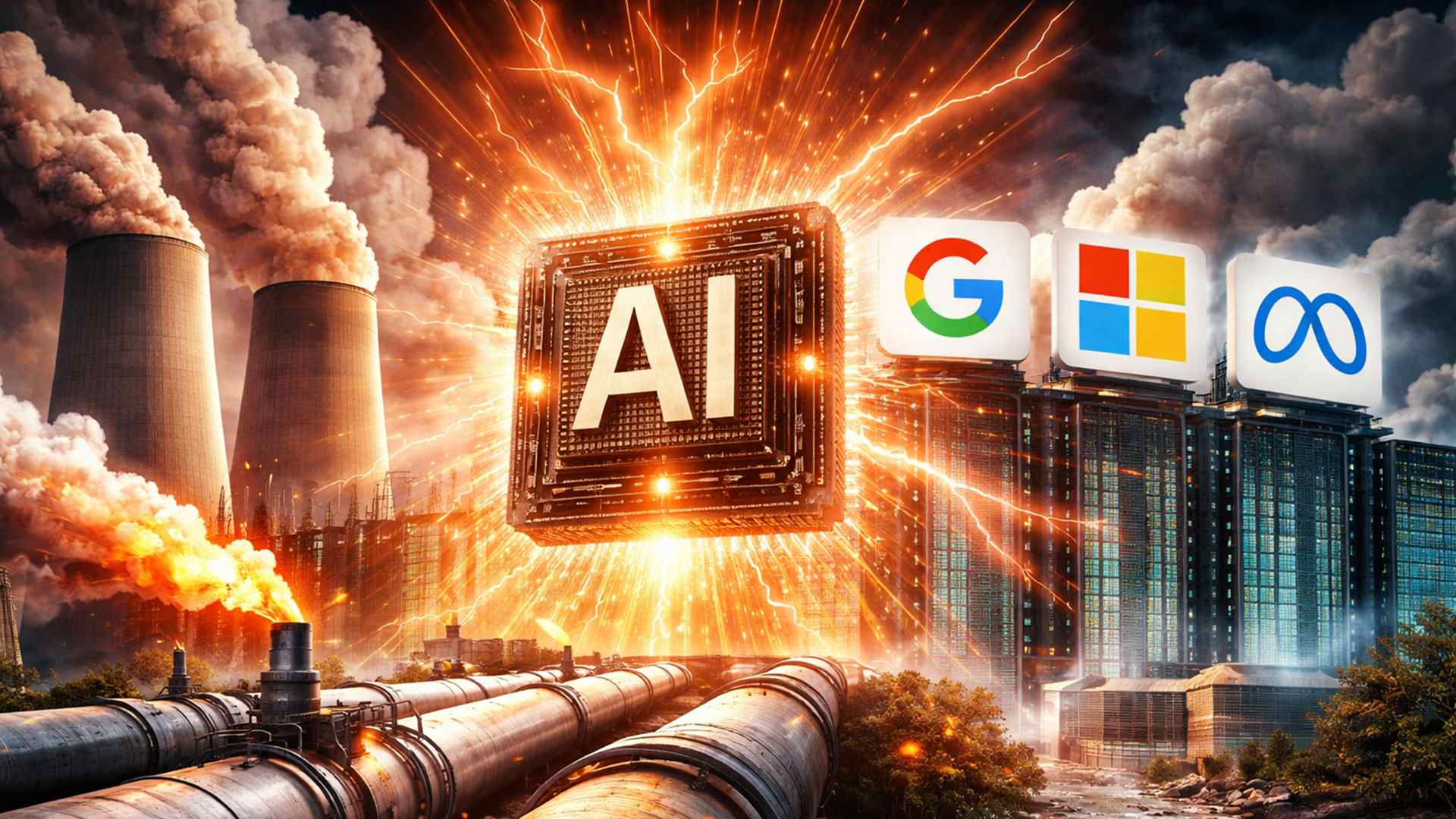
Artificial intelligence is skyrocketing energy consumption, raising emissions from tech giants and pushing Google, Microsoft, and Meta closer to natural gas.
-
Mercor paid $1.5 million per day for doctors, lawyers, and former Goldman Sachs bankers to teach artificial intelligence to do their jobs, and in 17 months, it went from zero to $500 million in annual revenue while its own contractors accelerated the replacement of their own work.

-
Casio Unveils Moflin, Robotic Pet With Artificial Intelligence Designed To Provide Emotional Comfort And Simulate A Permanent Affectionate Bond

-
Google Maps Revolutionizes GPS Navigation With Gemini Artificial Intelligence, Ask Maps Feature, and Advanced 3D Visualization for Route and Travel Planning

The study published in The Astrophysical Journal Supplement Series shows that the achieved accuracy results from a combination of machine learning techniques and detailed solar imagery. These resources allow for the early identification of signs of solar wind intensification, which can displace satellites from orbit or compromise essential electronic equipment during geomagnetic storms.
The loss of 40 Starlink satellites in 2022 highlighted the significant impact of such events, reinforcing the importance of more reliable forecasts.
The AI system allows space agencies to issue early alerts, adopting maneuvers or operational adjustments to avoid substantial losses. According to Dhuri, the lead author, this is a significant step toward protecting navigation systems and energy infrastructure dependent on space weather.
Tool Enhances Safety for Satellites, Astronauts, and Ground Networks
Intensified solar wind can damage panels, heat electronic components, and compromise satellite orientation systems, creating significant operational risks. The new method offers forecasts that allow for the safe repositioning of equipment and the adoption of preventive controls. This approach reduces potential damage and reinforces the continuity of communication and observation services in orbit, avoiding unexpected failures.
In addition to impacts in space, solar storms can affect electric grids and navigation systems on the ground, causing significant instabilities.
The ability to predict phenomena further in advance ensures that operators can implement technical adjustments before disturbances intensify. This process includes load redistribution or isolation of vulnerable segments, a crucial measure to prevent large-scale blackouts.
The combination of advanced AI and detailed solar observations allows for early alerts, providing additional time for critical technologies to be adjusted. This integration makes it possible to anticipate risks that were previously only detected at advanced stages, reducing error margins and strengthening the resilience of affected systems.
The method helps to minimize occurrences similar to the loss of satellites in 2022, an episode widely cited in the space community.
Understanding the Behavior of Solar Wind and Its Global Effects
Solar wind consists of a continuous flow of charged particles from the Sun’s atmosphere, capable of traversing the solar system and interacting with the Earth’s magnetic field.
Although generally harmless, this flow can intensify and generate solar storms that impact GPS systems, electric grids, and satellites.
Severe events have already caused significant damage, such as the blackouts in Canada in 1989 resulting from an intense geomagnetic storm.
The intensification of solar wind occurs when the solar magnetic field reorganizes and releases particles at high speeds. When these particles reach the Earth’s magnetosphere, they can induce electric currents that overload equipment and cause failures.
The new AI system offers an expanded understanding of these variations, allowing for anticipation of impacts and potential reduction of adverse effects.
Enhanced forecasts enable more effective strategic planning, especially for operators relying on satellites for communication, navigation, and observation.
The ability to identify intensification signals allows for reduced failures and more systematic protection of technological infrastructure. This advancement provides a detailed view of solar behavior, mitigating risks and ensuring continuity of sensitive operations.
Results Reinforce Advancement for Space and Terrestrial Safety
The system’s performance shows that the combination of machine learning and ultraviolet observations offers significant gains in interpreting space weather. This interpretation results in early alerts that can be decisive in preventing operational failures.
Dhuri states that the progress marks a crucial stage in strengthening the protection of satellites and energy grids in light of increasing technological dependence. A passage in the study refers to the integrated use of sophisticated techniques, although a small error in a description did not compromise the analysis.
The 45% improvement in accuracy compared to previous models represents a key indicator for areas requiring reliable forecasts. This index allows engineers and scientists to adopt precautionary measures with greater confidence, expanding the margin of prevention against solar storms. The alerts provided by the system also help coordinate teams and define appropriate protection routines.
Additional Information on Recent Events and Backgrounds
Past events, such as the geomagnetic storm of 1989 and the loss of dozens of SpaceX satellites in 2022, demonstrate that solar wind can generate significant effects when not correctly anticipated.
These episodes reinforce the importance of tools capable of interpreting solar changes in advance.
The AI-based system helps reduce uncertainties and enhance operational safety across various sectors.
The continuous behavior of solar wind maintains a permanent interaction with the Earth’s magnetic field, requiring constant monitoring to avoid damage to navigation systems and energy grids.
Detailed forecasts allow for understanding how solar variations propagate and impact the Earth. This understanding aids in developing more robust protection policies aligned with the growing needs of modern technological infrastructures.
The advancement achieved by researchers at NYU Abu Dhabi establishes an important milestone in space weather forecasting, indicating the potential to reduce future impacts and ensure greater stability for operations dependent on orbiting and ground systems. With the incorporation of artificial intelligence, solar monitoring gains a new perspective and elevates the accuracy of analyses, consolidating an essential step toward strengthening global technological resilience.
The results of this study are published in The Astrophysical Journal Supplement Series.










Seja o primeiro a reagir!