





 Portuguese
  English
  Spanish
 5 min of reading
  2 comments


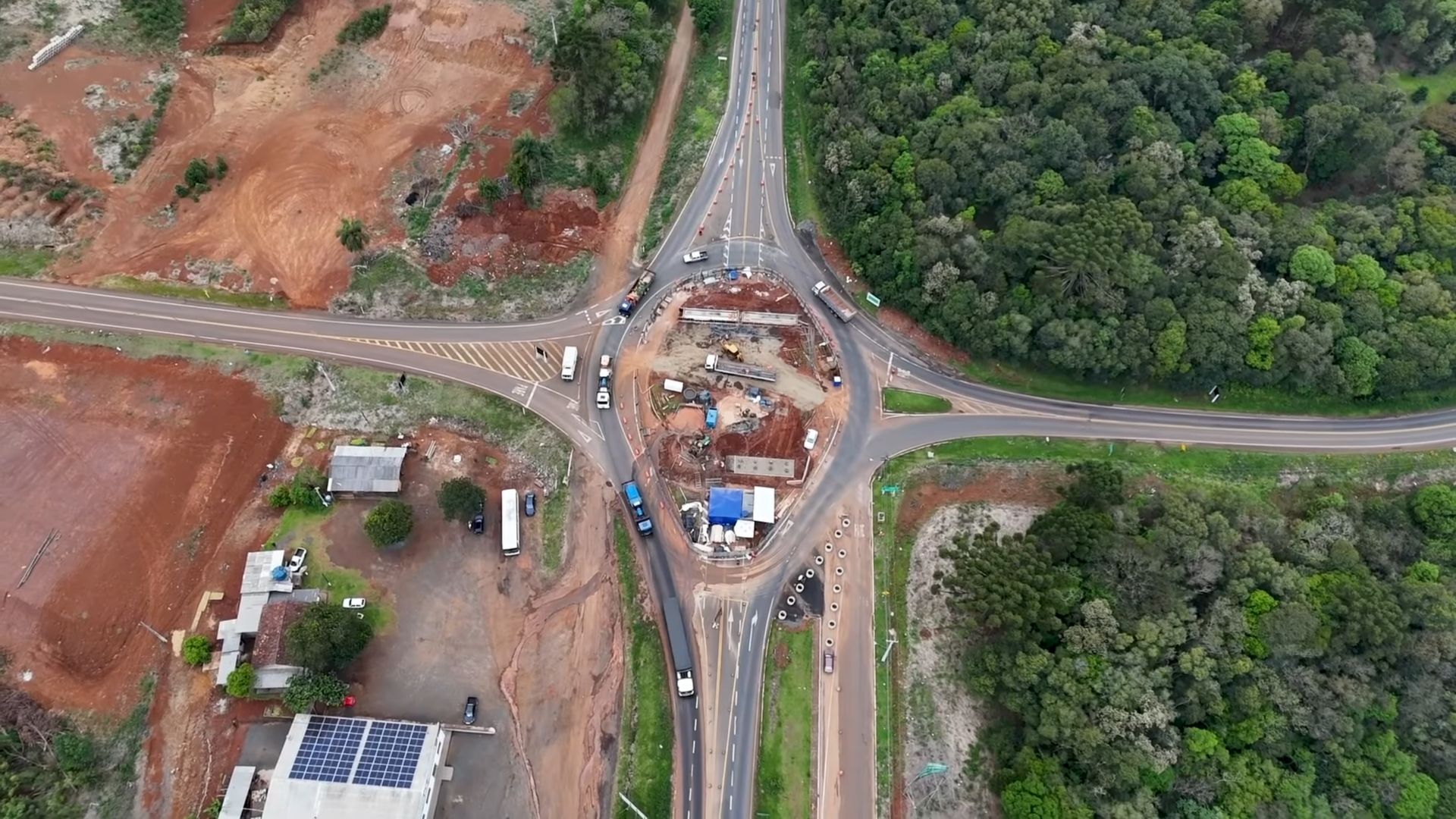


Paraná Program Expands Use of Rigid Pavement and Bets on Technology to Reinforce the Durability of Roads Focusing on Heavy Traffic and Reducing Public Costs Over the Years.
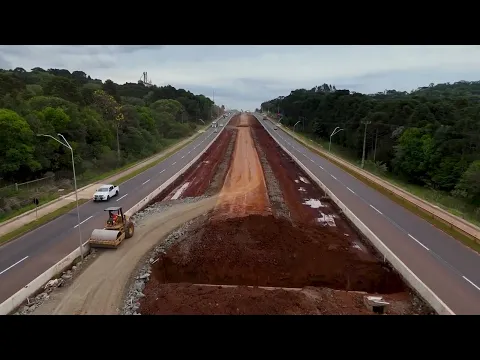
Paraná has expanded its concrete highway program and now has about 500 kilometers with this type of pavement in 18 segments, at different execution phases – planning, construction, and sections already completed.
According to the state government, the goal is to ensure a more durable and economical network, following the model adopted decades ago in countries like the United States and Germany, where concrete is standard on heavy traffic corridors.
Although the initial cost is higher than asphalt, rigid concrete pavement is considered a long-term investment.
-
Brazil Ignores Trump’s threats to BRICS, Buys 42 tons of gold and reduces the Dollar’s share by 6.45% in international reserves.

-
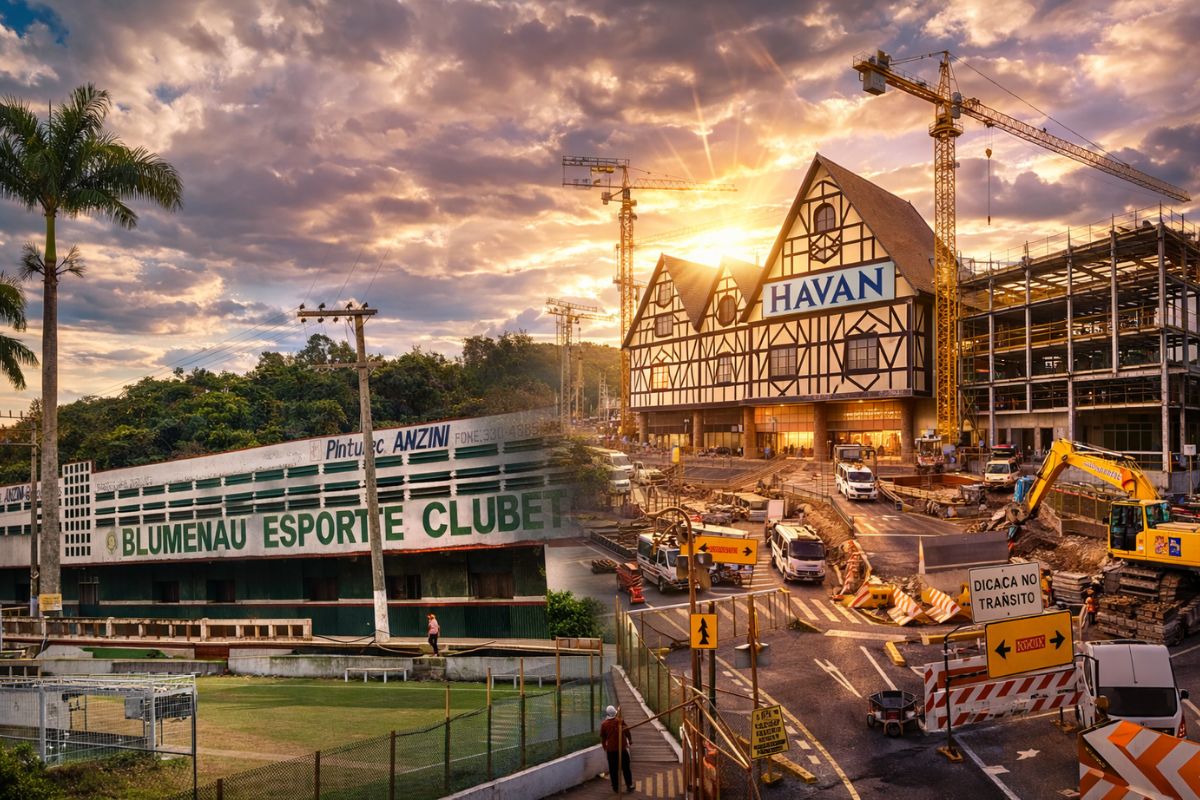
Havan buys historic football land in Blumenau for a million-dollar amount protected by a confidentiality clause and is already planning to change even the layout of streets to build a megastore in half-timbered style costing 80 million reais.
-
Mercado Livre “opens the vault” and announces a record investment of R$ 57 billion in Brazil in 2026, a value 50% higher than the previous year, with an expansion plan that includes 14 new logistics centers, totaling 42 units in the country and hiring an additional 10,000 employees.

-
How investment in technology can revolutionize the national economy and enhance industrial gains, according to a study that highlights the direct impact on productivity, innovation, and wealth retention within Brazil.

The Paraná Infrastructure Secretariat itself states that the typical lifespan is about 20 years, double the estimated average for flexible asphalt pavement, which is around 10 years before requiring major interventions.
This difference reduces the need for recurring maintenance contracts and decreases the time the road is partially blocked for repairs.
At the same time, state environmental agencies point out another advantage: concrete has been used in strategic corridors and is seen as an alternative with less climate impact over the project’s life cycle.

The absence of petroleum derivatives in the mix and the higher reflectivity, which helps reduce surface temperature, are considered positive factors.
A balance released in April 2025 by the Water and Earth Institute highlighted 13 segments of concrete highways totaling about 340 kilometers among completed, ongoing, or licensed projects, with an investment exceeding R$ 1 billion.
This set integrates the broader program that today reaches 500 kilometers.
The Paraná government states that the adopted solutions were sought from highways considered efficient in the United States and Germany, especially in regions with strong agricultural and industrial production.
The logic is to prioritize concrete on sections subject to intense truck, bus, and commercial vehicle traffic, where flexible pavement suffers deformations more quickly.
Strategic Segments of Concrete Highways in Paraná
In practice, the 500 kilometers of concrete highways are distributed across different regions.
In the Southwest, the PRC-280 concentrates about 140 kilometers with this type of pavement, in revitalization and whitetopping works between General Carneiro, Palmas, and the connection to BR-153.
In the central region, the PRC-466 is being duplicated between Guarapuava and Pitanga, with 84 kilometers of concrete planned in three segments aimed at improving local agribusiness flow.
Meanwhile, on the Coast, the duplication of the connection between Matinhos and Praia de Leste is also being executed with rigid pavement.

In Greater Curitiba, the program includes the duplication of the Rodovia dos Minérios and the concrete paving of the connection between Mandirituba and São José dos Pinhais.
The Metropolitan Corridor that will form a new bypass in the capital region is also part of the package.
These segments are in addition to works on highways such as PR-151, between Ponta Grossa and Palmeira, and the Western Bypass of Cascavel, forming corridors where the option for concrete was defined as a long-term strategy for cargo logistics and regional mobility.
TSDd Technology for Rapid Pavement Assessment
To monitor the quality of the pavement, Paraná introduced the use of the Traffic Speed Deflectometer Device (TSDd), equipment that measures pavement deflections in motion at traveling speed.
Tests conducted on PRC-280, between Clevelândia and Palmas, analyzed a segment of approximately 60 kilometers in a few hours, allowing for evaluating the structural response of the road without long interferences.
According to the Paraná Department of Highways (DER/PR), the results confirmed the robustness of the installed rigid pavement to withstand heavy traffic.
Whitetopping as a Quick Revitalization Solution
One of the techniques that gained prominence is whitetopping, where a layer of concrete is applied over an existing asphalt pavement.
The solution was employed on PRC-280, between General Carneiro and Palmas, in a project completed in 2023 that revitalized about 59.5 kilometers.

According to DER/PR, the method shortens the execution time, reduces demolition waste, reuses the original structure, and delivers a more durable pavement.
Economic and Operational Benefits of Concrete
From an economic standpoint, the state government argues that concrete becomes more advantageous when considering the entire life cycle of the highway.
With less need for frequent repairs, this option reduces the pressure for permanent maintenance contracts and frees up budget space for other investments.
Internal analyses cited by DER/PR indicate that, on axes with heavy truck traffic, the combined cost of implementation and maintenance tends to favor rigid pavement after a few years of operation.
There are also safety and comfort aspects.
Concrete, being lighter in color, absorbs less heat, helping to reduce the temperature of the road compared to asphalt.
Environmental studies state that this characteristic mitigates heat islands and improves nighttime visibility.
The texture of rigid pavement increases tire grip, which can reduce the risk of aquaplaning on days of heavy rain.

Brief History of Concrete on Brazilian Highways
Brazil has experience with concrete highways for over a century.
Since the construction of Brasília and the consolidation of Petrobras, asphalt gained predominance in the highway network.
The combination of a more competitive cement price, new dosing technologies, and pressure for more durable solutions has put concrete back on the radar of states with strong agricultural and industrial presence, such as Paraná.
Future Expansion and Impact on the National Scenario
In this context, Paraná has been observed by other state governments as a laboratory for paving policies.
There is a program that has already reached 500 kilometers of concrete, with projections for expansion to new sections.
At the same time, the challenge remains to balance the higher initial costs, schedules, and regional environmental and logistical impacts.
Do you believe that other Brazilian states will follow suit and migrate part of their main highways from traditional asphalt to concrete in the coming decades?







Aleluiah vamos economizar o dinheiro público!!!
Não muito, em estados onde o PT manda não sobrará margens para roubos. Isto só acontece no sul.