





 Portuguese
  English
  Spanish
  4 min of reading
  0 comments


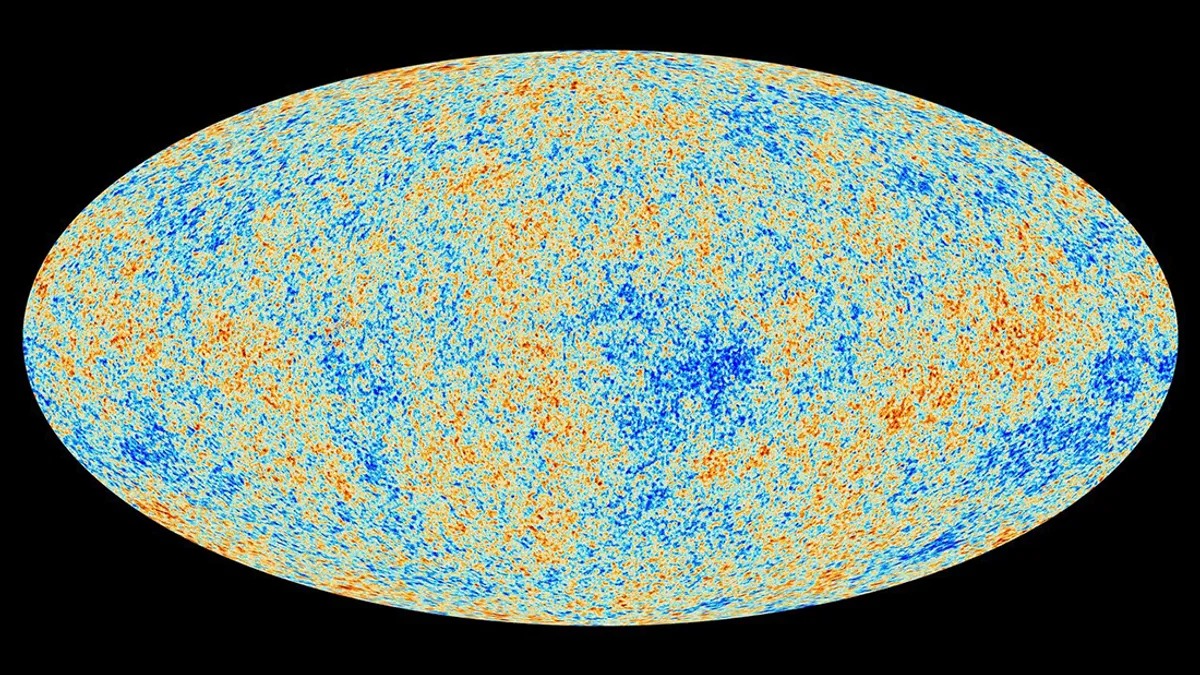
Recent Studies Conducted by Astronomers Analyzing Cosmic Background Radiation Indicate the Presence of Cosmic Birefringence, a Phenomenon That Causes Small Rotation in the Polarization of Primordial Light Emitted About 380 Thousand Years After the Big Bang, Raising Questions About the Limits of Current Physics Models
Astronomers analyzing cosmic background radiation have found new evidence of cosmic birefringence, a phenomenon that may challenge current models of physics. The rotation detected in the polarization of primordial light reaches 0.215 degrees, according to recent data.
Astronomers and Physics Investigate Signals in Cosmic Background Radiation
Astronomers studying cosmic background radiation, known by the acronym CMB, have identified additional evidence of a phenomenon called cosmic birefringence. The discovery raises questions about current physics models that describe the evolution of the universe.
Cosmic background radiation is considered the oldest light observable with telescopes. It represents the residual brightness released about 380,000 years after the Big Bang, when the universe cooled enough for protons and electrons to form atoms.
-
Airbus and Mercedes take the G-Class to the skies: the ACH145 helicopter priced at R$ 78 million debuts in São Paulo, unit goes to Brazilian, AMG cabin, 5-blade rotor, and a 2-year wait.

-
New material could change everything: it is the thickness of an atom, 200 times stronger than steel, and 100,000 times thinner than a human hair.

-
A new study published in Nature reveals that the SLIT3 protein can increase calorie burning by activating brown fat in the body, functioning as a kind of “biological switch.”

-
New signals detected by NASA suggest that the Moon may hide accessible underground cavities, after data from Mini-RF indicated a conduit over 60 meters beneath a lunar pit.

At this moment, the formation of atoms allowed light to propagate freely through the cosmos. Before that, the universe was opaque, preventing any radiation from traveling long distances.
Astronomers Analyze How the Polarization of Light May Indicate New Physics
According to the European Space Agency, cosmic background radiation is the most distant and oldest light that can be detected by telescopes. Therefore, it offers astronomers one of the best opportunities to investigate the birth and evolution of the universe.
This radiation is extremely weak and almost uniform, but it spreads throughout the known universe. For the most part, its characteristics align with predictions from the cosmological models currently used by physics.
Still, some anomalies have been recorded for decades in the cosmic background radiation. Among these are phenomena known as the cosmic dipole and the structure nicknamed the axis of evil.
These irregularities indicate that certain aspects of cosmic background radiation are still not fully understood. For this reason, astronomers continue to investigate whether new interpretations of physics may be necessary.
Cosmic Birefringence Reveals Unexpected Rotation of Light Polarization
In 2020, scientists reported evidence for the first time of a phenomenon called cosmic birefringence. The discovery arose from the analysis of the polarization of light from cosmic background radiation.
Polarization is the process in which the oscillations of a light wave are confined to a single plane perpendicular to the direction of propagation. Under normal conditions, this plane remains stable as the light travels through space.
However, when comparing cosmic background radiation with light scattered by dust from the Milky Way, researchers identified signs that the polarization experienced a slight rotation throughout the history of the universe.
The first study estimated this rotation to be approximately 0.3 degrees. Although it is an extremely small value, it is not predicted by the standard model of physics.
New Measurements Reinforce the Phenomenon Studied by Astronomers
A preliminary article published in September 2025 provided a new estimate for this rotation. Using polarization data collected by the Atacama Cosmology Telescope, scientists calculated an average rotation of 0.215 degrees.
Even though it is smaller than the initial estimate, the new measurement is still considered unexpected. According to the researchers, any systematic rotation in the polarization of cosmic background radiation could indicate still unknown physical phenomena.
The team responsible for the study explained that the polarized light of the CMB may be sensitive to processes that violate the so-called parity symmetry. This type of effect is not predicted by traditional descriptions of cosmological physics.
According to the scientists, interactions between photons and still poorly understood components of the universe could produce this effect. Among the candidates mentioned are fields associated with dark matter and dark energy.
Hypothesis Involves Particles Called Axions
In a new preprint article, researchers suggest that particles called axions may help explain the phenomenon. These hypothetical particles are considered promising candidates for composing dark matter.
According to the study, axion-like particles possess properties that could generate the observed rotation in the polarization of cosmic background radiation. The proposal involves the interaction between fields associated with these particles.
The team claims that the superposition of two fields of axion-like particles with different masses could circumvent limitations known as washout effect. This combination would allow aligning the observations with theoretical calculations.
Despite the hypothesis, the researchers themselves state that more studies will be necessary. Future analyses should confirm whether cosmic birefringence truly exists and what the exact magnitude of the detected rotation is.
Only with additional measurements will it be possible to determine the impact of this phenomenon on physics and on the standard model that describes the universe. The most recent study was published on the preprint server arXiv and has not yet undergone peer review.









-

-

-

-

-

-

35 pessoas reagiram a isso.