





 Portuguese
  English
  Spanish
  6 min of reading
  1 comment





Impressive Trajectory in Agriculture Begins in a Snack Bar and Becomes a Powerhouse with Over 100 Thousand Heads of Cattle in High Efficiency System.
Those who cross the gates of Fazenda Jaçanã, in Bonópolis, in the Goiás Valley of Araguaia, encounter a high-precision agricultural operation.
Trucks transport tons of inputs, harvesters operate guided by GPS, and the cattle, with refined genetics, fatten in rotational pastures that challenge the traditional logic of the region.
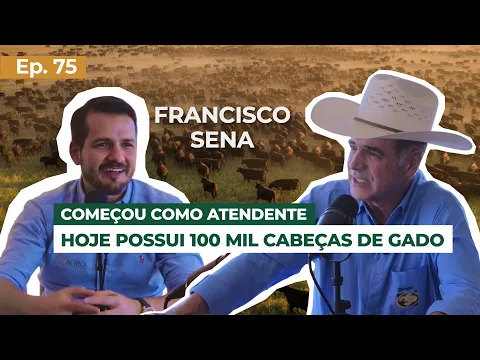
The rural empire, which now manages around 100 thousand heads of cattle — between its own herd and on leased land — is run by Francisco Sena.
-
The water that almost everyone throws away after cooking potatoes carries nutrients released during the preparation and can be reused to help in the development of plants when used correctly at the base of gardens and pots, at no additional cost and without changing the routine.

-
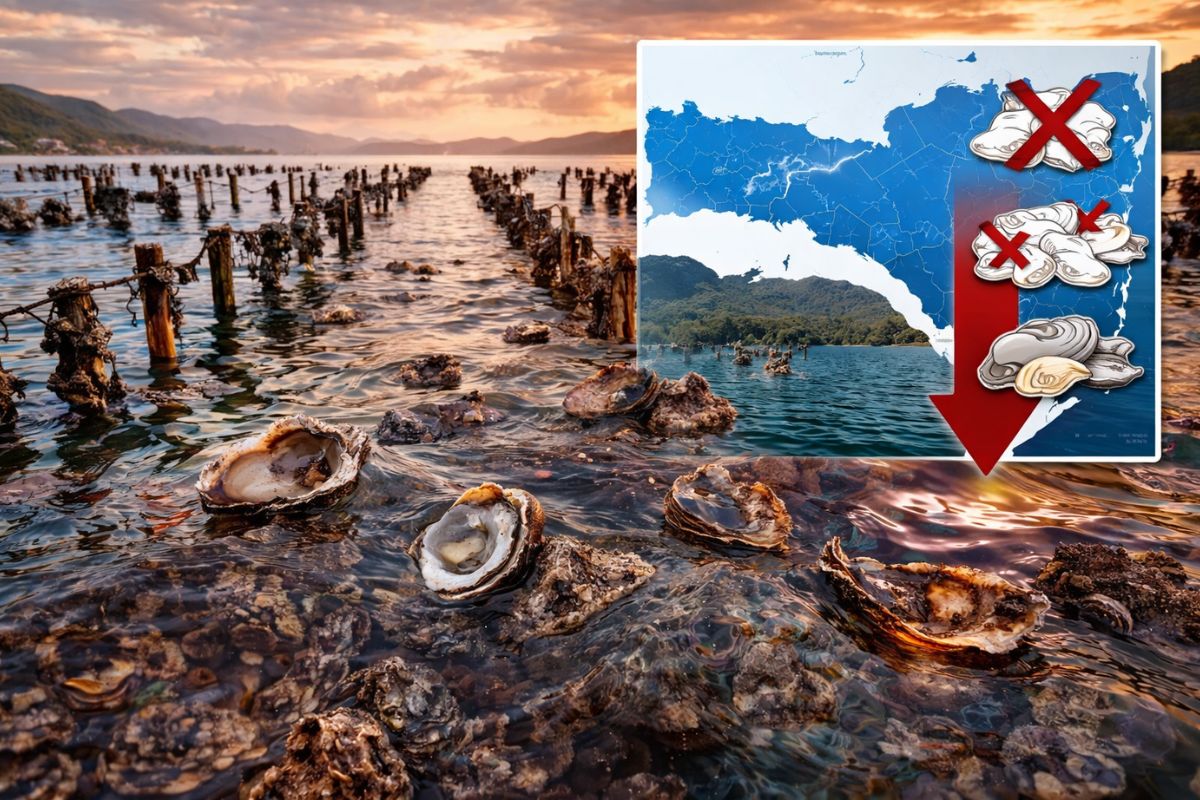
The sea water temperature rose from 28 to 34 degrees in Santa Catarina and killed up to 90% of the oysters: producers who planted over 1 million seeds lost practically everything and say that if it happens again, production is doomed to end.
-
An Indian tree that grows in the Brazilian Northeast produces an oil capable of acting against more than 200 species of pests and interrupting the insect cycle, gaining ground as a natural alternative in soybean, cotton, and vegetable crops.

-
The rise in oil prices in the Middle East is already affecting Brazilian sugar: mills in the Central-South are seeing their margins shrink just as ethanol gains strength.

From Service to Top-Notch Agriculture
At 58 years old, the lawyer and cattleman embodies one of the most notable rises in agriculture in the Midwest.
Far from being an heir to large estates, his trajectory began serving tables and frying pastries in a snack bar in Anápolis, 380 km from where he now concentrates his lands.
“I will never forget the first batch of cattle we sold; it was 45 heads. I was 18 years old. Today, we have the capacity for 20 thousand heads per confinement cycle and we do up to four cycles a year”, Sena reports during his participation in the Agro em Debate podcast, illustrating the leap of four decades.
The “School” of the Counter
The Sena family’s origins trace back to the simplicity of Pirenópolis.
His father, a school doorman, and his mother, a street vendor, fought to ensure their children’s education.
Francisco humorously recalls his childhood days selling everything from oranges to live chickens on the street to supplement the family income.

“I never liked selling chickens because once one of them got away. I was scared my dad would beat me, so I ran after the chicken on the street. I had to use my savings to cover the loss,” he recalls.
The turning point in the family’s financial situation came when his father made a risky decision: selling the 70 heads of cattle he owned on the family’s small farm to buy a snack bar in downtown Anápolis, where his eldest son already worked.
The bet on the hard work of his children paid off quickly.
According to Francisco, the establishment, located across from a traditional hospital in the city, became a management school.
The pursuit of quality — reflected in the perfect pastry dough and personalized service — made the business thrive.
“The business exploded. When my brother passed the medical entrance exam in São Paulo, we had already bought the cattle back and tripled the herd,” he shares.
Law as a Leverage for Capital
While working in the snack bar, Francisco studied Law. He graduated at 20, in 1987, maintaining a grueling routine that started at 4 AM and ended at 11 PM.
His mastery of languages and self-taught approach led him to work in recovering credit for consortium administrators, a sector that was experiencing the peak of delinquency during the hyperinflation years.
Sena developed aggressive and unprecedented collection methods for the time.
“I created an agreement to blacklist not the debtor but the wives who were co-signers or on the contracts. When the woman discovered that the credit card was blocked due to her husband’s or a friend’s debt, the pressure to pay was immediate,” explains the lawyer.
The efficiency in recovering assets earned Francisco substantial fees.
He recounts that, in a single month at the end of the 1990s, his earnings allowed him to purchase an area equivalent to 12 and a half acres.
“I would travel at night to work during the day. The volume of collections was monstrous and I got paid by results,” he states.
This capital, accumulated in the courts and on the roads of Brazil, financed the expansion into the Vale do Araguaia.
Investment in Technology in the Vale do Araguaia
When Francisco Sena arrived in the Bonópolis and São Miguel do Araguaia region, the area was seen as the “last agricultural frontier”, often doubted due to soil quality and climate.
The transition from urban investor to large-scale rural producer required a paradigm shift.
He recalls the skepticism of traditional producers when he decided to introduce large-scale agriculture in the region about 15 years ago.

“A big producer hugged me inside the bank and said: ‘When you were born, I was already working with cattle. Don’t plant soy here, I’ve seen crops ruin too many people.’ Today, some of those neighbors come to us for partnerships.”
The key to success was technology. In 1998, Sena met Professor Moacir Corsi from the Escola Superior de Agricultura Luiz de Queiroz (Esalq/USP), who introduced him to the concept of Integrated Crop-Livestock System (ILP).
The system consists of alternating the cultivation of grains (like soy and corn) with pastures in the same area, restoring the soil and intensifying production.
“Crops and livestock are table siblings. It’s a revolution because you increase the herd and production in the same area. That land where you plant crops for four months, then return with a vigorous pasture that can hold seven thousand heads of cattle, something that would never be possible in the extensive system,” details Sena.
Sustainability and Circular Economy
Currently, Grupo Sena operates under a circular economy logic. The confinement, which houses thousands of animals, generates a valuable byproduct: manure.
Instead of being an environmental liability, the waste is processed and transformed into organic fertilizer.
In the last year, the farm produced around 40 thousand tons of organic compost.
The material is used in 100% of the group’s soy crops, drastically reducing dependence on imported chemical fertilizers and protecting the crops against dry spells — dry periods during the rainy season.
“We plant all our crops with our own organic compost. Our average productivity for soy was 74 sacks per hectare, with some plots reaching 87 sacks. The confined cattle, in practice, pay for the fertilizer,” celebrates the producer.
Crises and Vision of the Future

Despite the superlative numbers — which include over 40 thousand hectares of owned land and another 30 thousand leased — Francisco remains cautious.
The current agricultural scenario, which he classifies as a “perfect storm”, combines low prices for cattle and soy with high-interest rates.
To navigate this moment, he draws on a lesson from his grandfather.
“He used to say there are the ‘years of just surviving’. It’s not a year to make money, it’s a year to survive. When a strong crisis hits, you have to focus on keeping the business afloat.”
A critic of the current economic policy, Sena warns of the sector’s indebtedness and the lack of resources for the Safra Plan at compatible interest rates.
“Rural credit with free resources has rates of 22% per year. This is unsustainable. Many producers are approaching me for guidance on Judicial Recovery, embarrassed. I tell them: it’s not just your fault, it’s an adverse macroeconomic situation.”
Family Succession and Legacy in Agriculture
Looking to the future, Francisco is preparing family succession.
His children, graduates in medicine and agronomy, are already integrated into the operation.
The challenge now is no longer clearing land or collecting consortium debts, but mastering artificial intelligence and data agriculture.
“We are moving from an analog to a digital era. Those who will remain in the market are those who can assimilate this transformation,” he assesses.
At the end of the interview, the businessman who has had guns pointed at his head during judicial collections and who started life counting coins to buy soda emphasizes that the greatest asset remains immaterial.
“My father, who couldn’t read or write, taught me that making a deal is not mandatory, but keeping it is. To this day, I close deals for thousands of cattle just on my word. Paper can hold anything, but it’s conduct that keeps us alive in the market,” he concludes.




Parabéns, por mais reportagens como esta!!!