





 Portuguese
  English
  Spanish
 5 min of reading
  13 comments


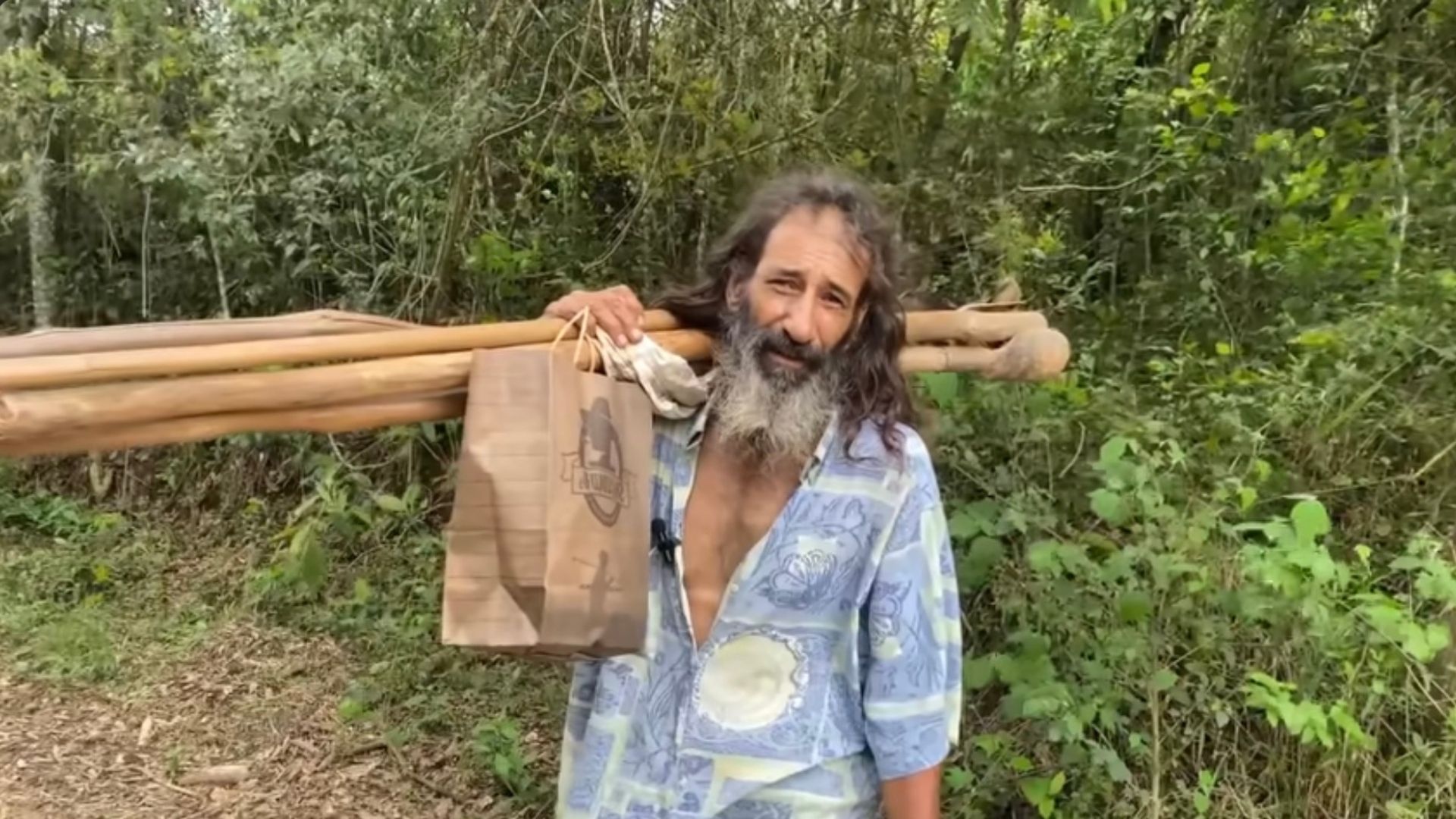


In A Secluded Corner Of Fortaleza De Minas, Simple Routine, Respect For Nature, And Living With Wild Animals Reveal An Ever-Rarer Way Of Life In The Brazilian Interior
Amid the dirt roads of Fortaleza de Minas, near the border with São Sebastião do Paraíso, Pratápolis, and close to the Rio Santana, lives Lázaro, a farmer of 60 years who decided to start over practically from scratch. He resides on a 15-acre property, where he keeps approximately 60% of the area as an environmental reserve, a decision that defines his relationship with the land.
The information was shared through an audiovisual recording made on-site, as shown by the images and reports recorded during the visit to the farm. Throughout the conversation, Lázaro presents his daily life, his choices, and the challenges faced by those who decide to stay in farming despite financial and structural difficulties.
Currently, he lives in the more organized part of the property, where there is electricity. Another house, located further up, belonged to his sister, who has passed away. Although the building is in good condition, it still lacks electricity, which prevents permanent residency. For this reason, Lázaro focuses his routine on the most structured part of the farm and makes improvements gradually.
-
He started running at 66 years old, broke records at 82, and is now a subject of study for having a metabolic age comparable to that of a 20-year-old, in a case that is intriguing scientists and inspiring the world.

-
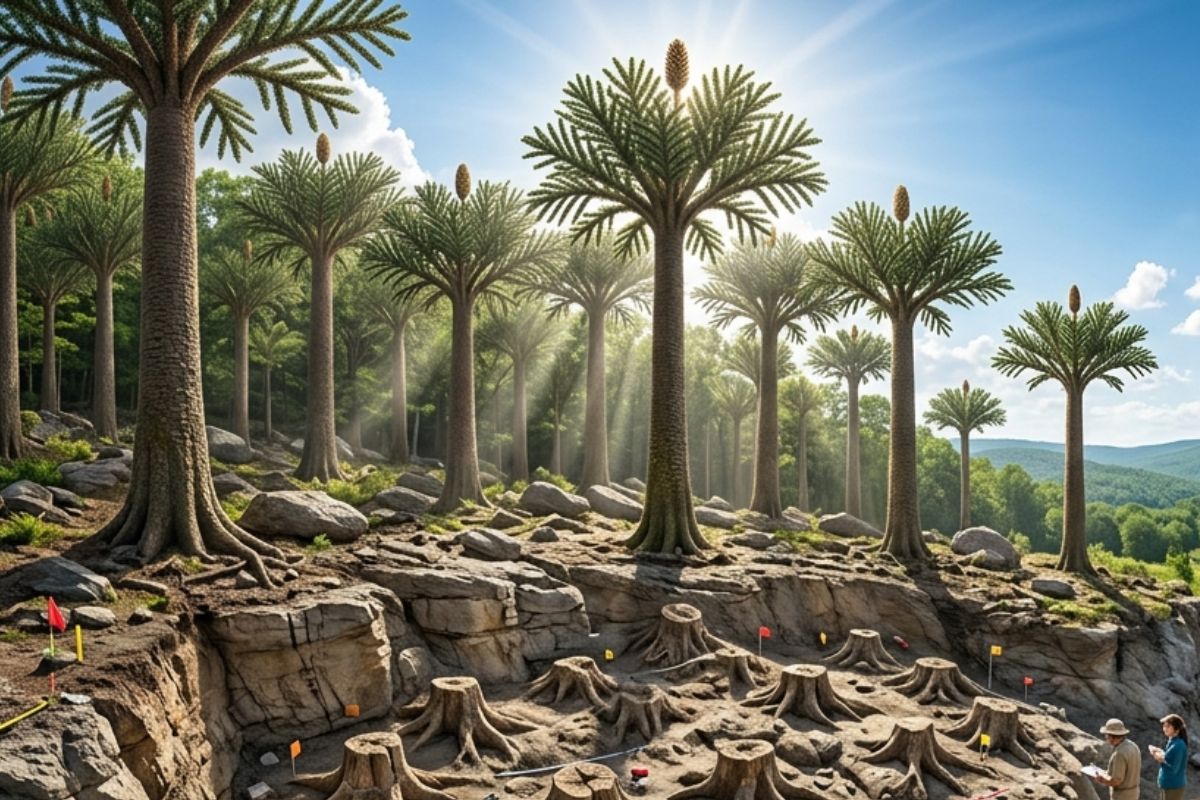
Oldest tree on the planet reappears after 130 years of searches: Wattieza, 385 million years old, was 10 meters tall and had no leaves or seeds; Gilboa fossils in New York solved the mystery in 2007.
-
A 48-square-meter house assembled in hours with 4,000 bricks made of recycled plastic that does not absorb moisture, has natural thermal insulation, and costs less than 90,000 reais in a complete kit.

-
Luciano Hang revealed that Havan’s air fleet has already accumulated more than 20,000 landings, 10,000 flight hours, and 6 million kilometers traveled, and he says that without the planes, the company would never have grown so quickly.


Planting For Consumption And Preserving For The Future
Starting over on the farm requires patience. Lázaro explains that the beginning always brings more expenses than returns. To support himself, he still does day labor outside the farm while building his own production. Even so, the goal remains unchanged: to plant for consumption and ensure food autonomy.
In recent months, he decided to rebuild fences that had been down for about four years. The priority now is to plant corn, mainly for personal consumption. If there is any surplus, he sells the excess in the region, which helps cover part of the farm’s expenses.
Environmental care guides all decisions. Lázaro does not clear land. He only uses wood from dead trees, found on his own property, to build pens and fences. No living trees are cut down. Native species, such as jacarandá, remain untouched.
Furthermore, he avoids disturbing sloped areas or those at risk of erosion. In these parts of the land, the vegetation remains intact. According to Lázaro, the land needs boundaries. For him, farming means abundance, but also responsibility.
Living With Rattlesnake And Wild Animals

One of the most surprising aspects of Lázaro’s routine is his direct interaction with wild animals. In the backyard of the house, there lives a rattlesnake estimated to be between 18 and 20 years old. The animal appeared when it was still small and ended up staying on the property.
Despite the natural fear, Lázaro claims he has never been attacked. At times, he even stepped on the snake in the dark, without aggressive reaction. According to him, the animal only acts out of defense instinct. Additionally, the rattlesnake helps control rats and other unwanted animals.
Curiously, the biggest concern is not with the snake, but rather with a dried pine tree, leaning next to the house. If it falls, it could damage the structure. Lázaro has tried to prop up the trunk and is considering alternatives to minimize the impact when the fall occurs.
Besides the rattlesnake, the farm receives wild monkeys daily, usually in the morning and late afternoon. Lázaro feeds the animals with fruits, such as bananas, and small portions of homemade lime candy, made on a wood stove, with little sugar.
According to him, the interaction has involved four generations of monkeys. As some die, others take their place. Some arrive with babies on their backs, while others bear marks of life in the wild, such as partially amputated tails. Still, the animals demonstrate gentle behavior and recognize the routine.
Lázaro explains that he always considers a natural loss of about 5% of the crops, designated for the animals. For him, nature also needs its share.
Simple Life, Improvisation, And Inventions From The Farm
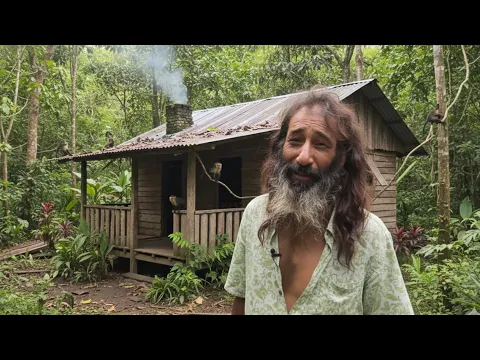

The daily life on the farm reflects a simple and functional life. Although there is a washing machine, Lázaro prefers to wash clothes in the creek, on stones. The clothesline is the wire fence itself. Everything follows the logic of practicality.
Among the highlights is a manual bean threshing machine, invented by Lázaro’s uncle about 60 years ago. The machine works with a crank that generates wind, separating the chaff from the grains. Residents of the region use the equipment to clean five bags or more of beans in a short time.
To prevent grain loss, Lázaro adapted the machine with a chamber of air, an improvised solution that solved the problem. Additionally, the farm hosts rescued dogs, many abandoned during the pandemic, and beehives of stingless bees, kept more for pleasure than for honey production.
In the future, he plans to expand the orchard, planting plums, jabuticaba, and other fruits. The aim is not only for human consumption but also to ensure food for the local fauna.
A Way Of Life That Insists On Existing
At 60 years, Lázaro could seek easier paths. However, he chose to stay on the farm, preserve the land, and live in harmony with nature. Amid rebuilt fences, planted corn, monkeys in the yard, and a silent rattlesnake, he builds daily a way of life that withstands the test of time.
More than a curious story, his routine shows that it is still possible to live with less haste, more awareness, and profound respect for natural cycles — something increasingly rare in the Brazilian interior.
Could you live like this, in direct contact with nature, giving up comfort to maintain this kind of balance with the land?
Source: É DU CAMPO and EDUARDO PÁDUA








Igual a esse senhor, meu esposo e eu estamos vivendo no sítio e também começamos do zero, depois de ele ter um AVC que quase matou ele, depois de um longo prazo de recuperação que deixou ele com sequelas, um lado do corpo sem nenhuma sencibilidade,na cidade tava já entrevando, andando de bengala e não conseguindo fazer nada com a mão esquerda.
Aí trocamos nosso caminhão por um sítio de cinco alqueires e estamos vivendo uma outra vida.
Agora ele já consegue fazer muita coisa no sítio.
Contamos com nossa aposentadoria e nosso esforço diário.
É difícil mais a terra devolveu a vontade de viver ao meu esposo.
Moramos em São Jerônimo da serra PR
Parabéns a vcs pela escolha e determinação. Também estou na busca pela natureza e vida mais simples. Muita saúde e vida longa.
Eu acho que o mais dificil é cara não ter uma parceria,e tbm tem que ter um certo conforto,como energia elétrica!
Assim… como uma pessoa comeca do ZERO com um sitio de 15 alqueires????
Tbm gostaria muito de começar desse zero ai… trabalho a 15 anos e nem um terreno eu consegui comprar
Sai daí invejoso e por isso que tu não tem e nem teve nada até hoje.
Rapaz, o cara querer ter um terreno não é inveja. Pelo contrário ele tá valorizando a ideia do amigo que já tem um terreno. Inveja é achar que a conquista do outro era pra ser sua.