





 Portuguese
  English
  Spanish
  5 min of reading
  2 comments


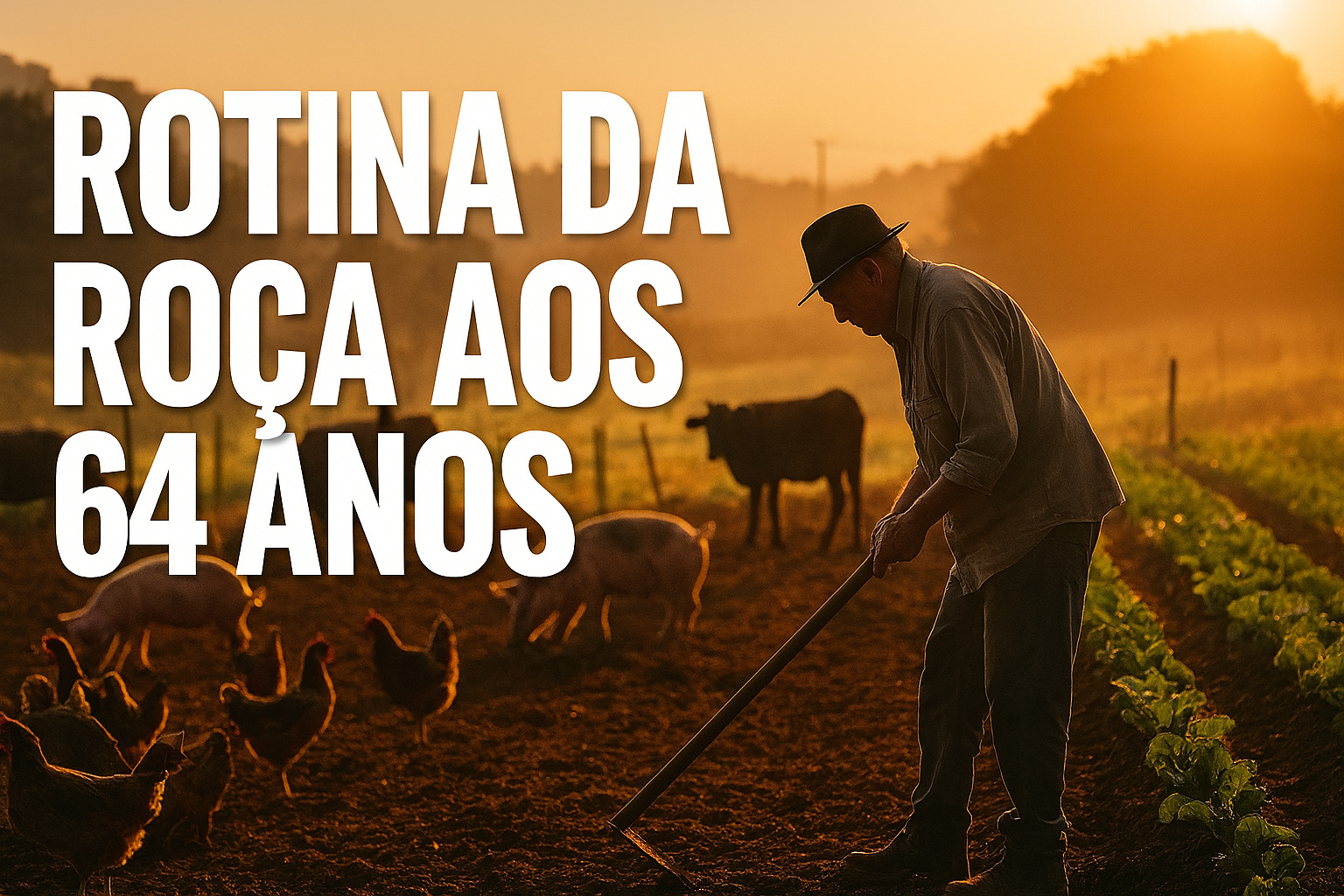


At 64, Farmer Wakes Up Early to Care for 200 Chickens, Pigs, Cows, and Crops, Transforming Rural Routine into an Emotional Portrait of Simple Life.
In an age where fast-paced life, urban noise, and constant technology shape the routine of most people, there exists a Brazil that begins before dawn, driven by land, silence, and discipline. It is in this universe that a 64-year-old farmer lives, who became prominent in a video published on YouTube showing, without filters, the daily routine on the farm where he lives with his family. The content went viral not for its eccentricity, but for the strength of real life: animals, mud, hard work, food made from scratch, and family ties preserved over the decades.
The video shows the day beginning on the porch of the farm, with a bunch of bananas hanging to ripen. The simple image opens a sequence of scenes that recall much of rural Brazilian life: homemade food, traditional recipes, the mother organizing the kitchen, the father taking care of the animals, and the entire family working to keep the property running. “I’ll show a bit of my father’s routine,” says the son who records the video, emphasizing that there is no staging, just the everyday life captured as it happens, without cuts and without artificial shine.
Routine in the Countryside: The Silent Discipline That Shapes Life in the Field
The farmer appears feeding the chickens with corn, surrounded by an impressive number of birds. The son asks how many there are, and the answer reveals the scale of the farm:
-
The rise in oil prices in the Middle East is already affecting Brazilian sugar: mills in the Central-South are seeing their margins shrink just as ethanol gains strength.

-
Rain gains strength in April, potentially exceeding 150 mm, placing the North, Northeast, and the coasts of the South and Southeast at the center of the heaviest forecast of the week.

-
A fish that survives out of water, crawls on land until it finds another river, and whose female lays 80,000 eggs at once is infesting rivers and lakes in Brazil, and no one can stop this invasion.

-
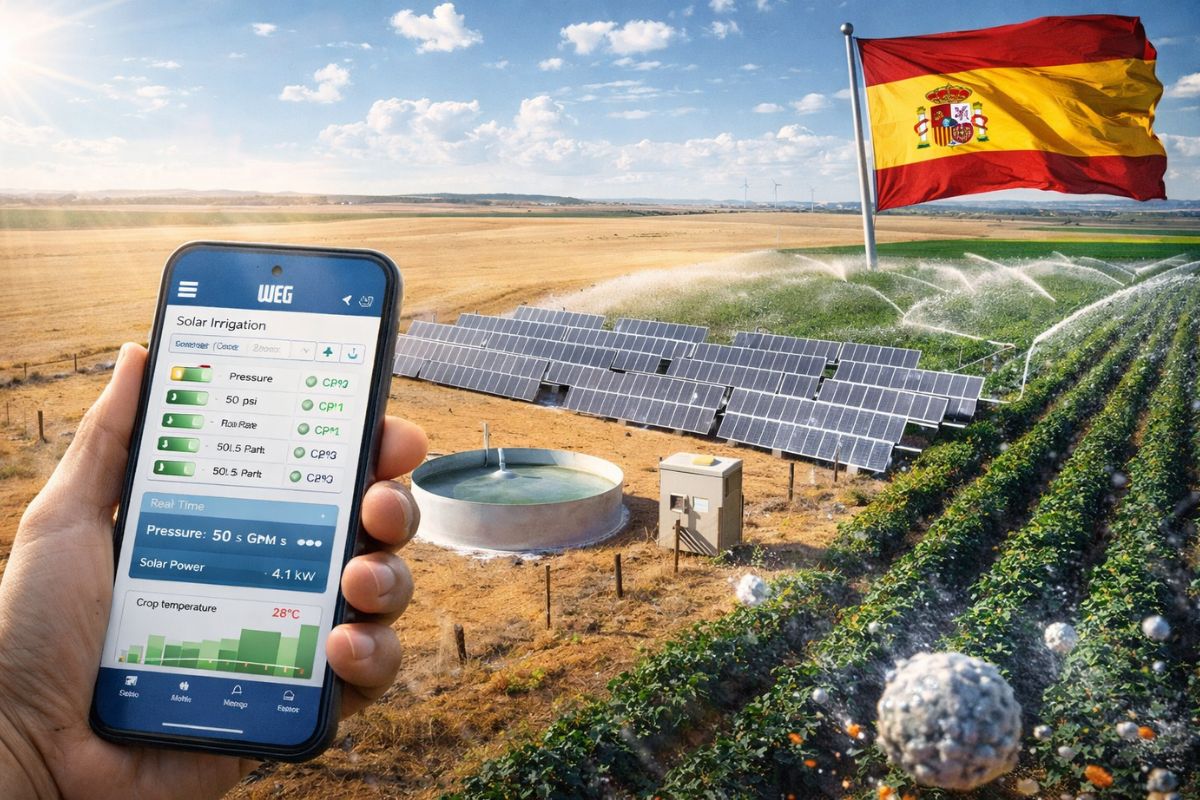
WEG took its technology to Spain to create a solar irrigation system that operates independently without needing an electrical grid, and now farmers control everything remotely via their mobile phones.

“There are more than 100.” In the video, the impression is that there are many more, dozens of free-range chickens, white ducks, and chicks circulating in the yard, all raised freely, in a spacious, shaded environment integrated with the house.
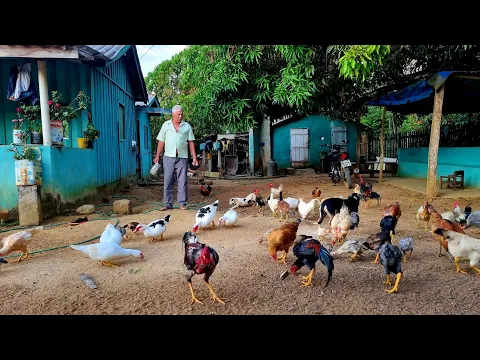

The management is simple but requires daily discipline. He wakes up early every day, grabs the feed, walks to the chicken coop, observes the birds, checks water, food, and behavior. The environment is clean and well-managed, with enough space for the animals to scratch and interact, which characterizes a rustic breeding model very close to family traditions in various regions of Brazil.
The corn-based diet, a common practice in small-scale farms, ensures the rusticity of the eggs and meat, characteristics valued in the countryside and in many cities.
Caring for the Pigs: Physical Strength, Patience, and Technique
After the chickens, the video shows the farmer moving on to the pigs. “There’s a nice group of pigs over there,” the son says while following his father. The images show strong, healthy piglets, well-fed and living in simple but clean pens.
The feed is prepared and tossed to the animals with a firm motion. It’s a job that requires physical strength and consistency: the pigs need fresh water, suitable food, and dry pens every day.
The animals’ behavior, attentive and energetic, indicates good health and proper management. In family farms, like the one depicted in the video, pigs have economic and food functions: providing meat for preservation, local sale, and personal consumption.
The father appears comfortable in the environment, showing familiarity with daily management acquired over decades of rural work.
The Cows and the Integration of Production: Milk, Cheese, and Canned Meat
Right at the beginning of the transcript, the family mentions preparing cheese, “canned meat,” and other traditional foods made on the property.
Canned meat, a centuries-old technique, involves cooking pork and storing it submerged in its own fat, creating a natural preservation method that can last for months. This type of practice reveals that the farm operates as a complete productive unit: raising chickens, pigs, ducks, cultivating bananas, producing cheese, and maintaining a continuous food supply.
The cows, mentioned at the beginning of the video and shown in the routine, represent the dairy base that ensures fresh cheese and derivatives consumed by the family. The production chain is self-sufficient: corn planted on the farm feeds the birds and pigs; manure from the animals fertilizes the garden; milk turns into cheese; pigs become preserves. It’s a continuous cycle that sustains the farm without relying on the urban market.
The Strength of Family as the Center of Rural Life
The presence of the mother, affectionate and smiling, gives the human tone to the recording. She appears in the kitchen, preparing mayonnaise, roasted chicken, and other dishes for the birthday lunch that will take place at the end of the day. The video features spontaneous remarks, like when the son asks: “Say hi to everyone.” She responds simply: “A hug to everyone around the world.”
This type of interaction is a faithful portrait of Brazilian rural families, where the house functions as a meeting point, food as an affectionate language, and coexistence as an emotional foundation. The routine recorded in the video shows that life in the countryside is built by the collective: the husband cares for the animals, the wife organizes the food, and the children help with management and participate in the work on the farm.
The Brazil That Begins Before the Sun
At 64, the farmer shows impressive vitality. He walks quickly, carries buckets, throws feed, checks pens, calls the animals, chats with the family. It’s the kind of life that demands a strong body, focused mind, and constant discipline.
But it also brings rewards: silence, clean air, real food, fertile land, open views, and the feeling of building something with one’s own hands.
The routine recorded in the video is more than just a curiosity. It is a document about a way of life that still sustains a good part of the interior of the country and that, in many places, is disappearing. For those who live in the city, this reality seems distant; for those who live in the countryside, it is just another ordinary day.





Desculpa mas o que mais tem pelo Brasil a fora são produtores com idade assima de 65 anos fazendo muito mais do que isto tirando leite, criando galinha, criando porcos, ovelha o Brasil ainda tem muito idoso produzindo para o sustento familiar alguns nem aposentadoria tem.
Maravilha !!! Por vários motivos: alegria com a vida que têm, são abençoados e recebem o retorno de como trabalham , com amor, com diposição. Lindo exemplo de uma vida com propósito. Parabéns ao canal por reportagens que valem a pena ver ! Esse é o verdadeiro povo do nosso Brasil. Parabéns.