





 Portuguese
  English
  Spanish
 7 min of reading
  6 comments


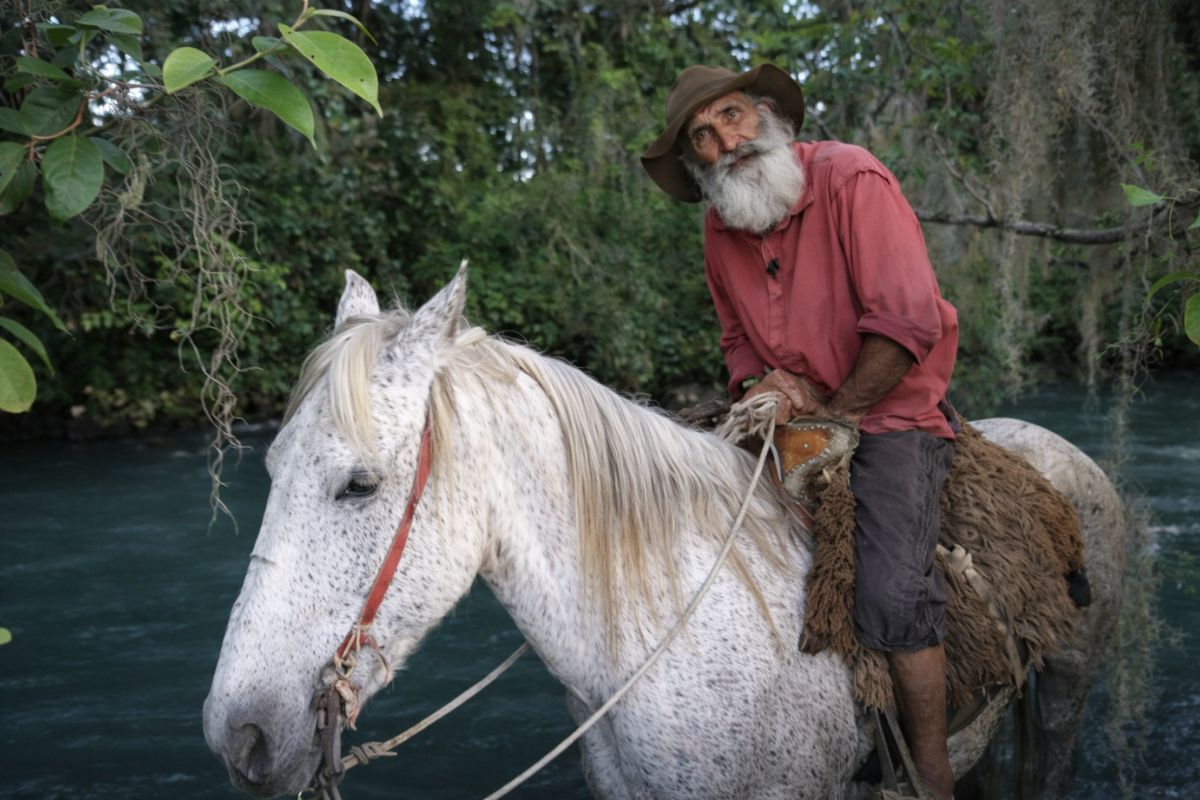


Simple Life in the Countryside in the Hills of Santa Catarina Tells the Routine in the Field of a 70-Year-Old Farmer and Inspires Those Seeking Simple Life.
In the hills of Santa Catarina, a 70-year-old farmer proves every day that simple life is not synonymous with lack, but with choice. Salomão lives in Lebon Régis with his mother, Dona Ernestina, who is 90 years old, and a sister. Without a cell phone, without hurry and without luxury, he divides his time between the horse, the cold river, the medicinal herbs, and working with cattle, maintaining a routine that seems to have stopped in time, but that for him is synonymous with fulfillment.
While many people chase after more consumption, more technology, and more haste, Salomão follows the opposite path. He speaks with pride about being born, raised, and aged in the same “holy place,” caring for the land, the animals, and the family. In his view, simple life is wealth when one has health, work, faith, and peace of mind.
Simple Life with His 90-Year-Old Mother in the Hills of Santa Catarina
Salomão is 70 years old and continues to live with his mother, Dona Ernestina, who is 90 and still active, firm, and present in every detail of the house and yard.
-
He started running at 66 years old, broke records at 82, and is now a subject of study for having a metabolic age comparable to that of a 20-year-old, in a case that is intriguing scientists and inspiring the world.

-
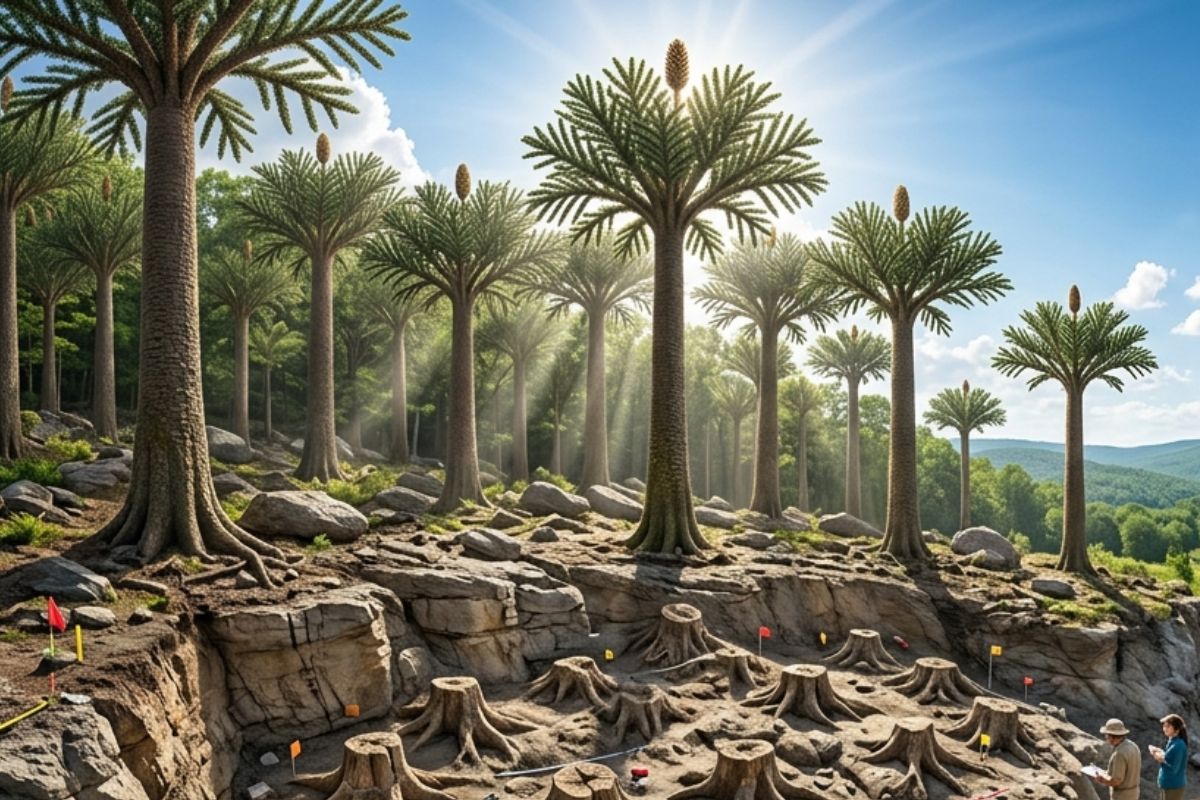
Oldest tree on the planet reappears after 130 years of searches: Wattieza, 385 million years old, was 10 meters tall and had no leaves or seeds; Gilboa fossils in New York solved the mystery in 2007.
-
A 48-square-meter house assembled in hours with 4,000 bricks made of recycled plastic that does not absorb moisture, has natural thermal insulation, and costs less than 90,000 reais in a complete kit.

-
Luciano Hang revealed that Havan’s air fleet has already accumulated more than 20,000 landings, 10,000 flight hours, and 6 million kilometers traveled, and he says that without the planes, the company would never have grown so quickly.


They live on a rural property in Lebon Régis, in the interior of Santa Catarina, in a setting of hills, rivers, and brush, where the routine revolves around what the land itself offers.
The house is old but full of life. Sister Fani, 62, also lives with them, helping with daily tasks.
The center of this simple life is family, with meals cooked on the household stove, shared coffee, visits received with gratitude, and a way of life that prioritizes community, long conversations, and honest work.
Salomão likes to repeat that, even without having “materially evolved” like many city dwellers, he feels “stuffed with happiness.” He doesn’t have a cell phone and doesn’t miss it.
The time that could be spent on screens is used to care for the horse, train animals, swim in the river, or just sit in silence, observing the nature around him.
The Yard That Is a Pharmacy, Garden, and Therapy

If simple life is the axis of the story, Dona Ernestina’s yard is the concrete proof of this philosophy. In front of the house, she maintains a large space where vegetables, fruits, flowers, and a true collection of medicinal herbs are mixed. There, everything serves a purpose: food, healing, or memory.
She carefully shows the plants she considers “medicine”: horsetail, fennel, balm, lemongrass, ora-pro-nobis, among others.
Many of these herbs have been used for decades to treat children, family, and even neighbors, at a time when doctors were far away and what was at hand was the knowledge of the land. For them, the yard is at the same time a garden, pharmacy, and place for daily therapy.
Dona Ernestina insists on continuing to care for the yard, even at 90 years old. She says she doesn’t ask for wealth, just health for herself, her family, and those in need.
The constant request is simple but profound: strength to keep working, cleaning, planting, and harvesting. The daughter helps, the son admires, but it is she who insists on maintaining the pace because “she can’t stand still.”
Horse, Brush, and Training in Tight Spaces
Another central piece of this simple life is the horse. For Salomão, the animal is not just transportation; it is a companion of history.
He learned early on to move “on the horse’s back” and has never abandoned this habit, even with the arrival of cars, motorcycles, and technology.
Salomão enjoys training horses in the brush, in tight spaces, between trees, branches, and stones. He argues that an animal that learns to navigate narrow trails gains balance, focus, and confidence without putting the rider at risk.
It’s as if the horse is also educated for a simple yet resilient life, adapted to the difficult terrain of the hills.
He cleans hooves, avoids shoes when possible, observes each reaction of the animal after trails on the stones, and gives rest whenever he deems necessary.
The care is artisanal, based on practice and observation, not on apps or manuals. Salomão talks about the horse as one talks about a friend: with respect, affection, and honesty about limits and capabilities.
Bath in Cold River and Exercises at 70 Years Old
While many avoid cold water, Salomão has turned the river behind the house into an essential part of his simple life.
He swims in cold water naturally, as if it were just another extension of the routine. Many times, he enters the river in the morning, stays there for a few minutes, breathes, exercises, comes out revitalized, and goes back to work.
It’s not just the horse that trains. Salomão also maintains a ritual of physical exercises, even at 70 years old.
He squats, stretches, touches his hands to his legs, brings his foot to his face, mounts the horse while only holding the mane, and tests his own strength and balance as if proving to himself that his body still responds.
For him, simple life includes taking care of the body with what is available, without a gym, without sophisticated equipment, just with the horse, the river, the slope, and the ground of his own house.
He knows that time passes, acknowledges the pains that arise, mentions an old knee injury, but prefers to focus on what he can still do instead of lamenting what he can no longer do.
Between the Cattle, the Cart, and the Crops That Sustain the House

In addition to the horse and the river, Salomão also works with beef cattle in partnership with a brother. They use both his land and his brother’s in a consigned system, adjusting management and care according to the resources they have.
It’s the economy of a simple life, based on land, work, and family cooperation.
A small cart, bought from an acquaintance, has already been used to haul corn, pigs, pumpkins, and whatever else was needed.
For him, these simple tools are part of the history and sustenance of the house, carrying not just load but memory.
Nothing there is “disposable.” Everything is used to the maximum, repaired, adapted, and when it no longer serves, it still becomes a reminder of some effort made in the past.
This perspective on work and objects reinforces the idea that simple life is also about respect for what one has, without waste and without ostentation.
Faith, Sobriety, and a Unique Way to Be Happy
Salomão says he once went through a phase where he overindulged in drinking, dancing, and partying. At a certain point, he felt he was “almost losing the good plan of his head” and decided to change course.
From then on, he started leaving alcohol behind, getting closer to the routine of the farm, the river, the horses, and the family.
Today, he is grateful for having found this balance. Faith is part of the foundation of the simple life he chose to live, just as honesty, work, and the desire to be an example for his nephews and those who are with him.
He acknowledges that he is not perfect, but insists on following a path that makes sense to his conscience.
Dona Ernestina also lives faith in her daily routine. At the end of the day, after weeding the yard and caring for the plants, she takes the moment of rest to pray, always asking for health and protection.
She doesn’t ask for great riches, doesn’t dream of parties, prefers a simple cake at home, surrounded by family and the tranquil rhythm of the farm.
When Simple Life Becomes an Inspiration for Millions
Salomão and Dona Ernestina’s routine, documented in a report, reached millions of views and caught attention for its authenticity.
Many people felt touched by the way they face time, aging, work, and happiness.
The simple life they lead is not romantic or perfect but is coherent with what they believe in. They deal with cold, physical effort, age limitations, and difficulties like any family in the countryside.
The difference lies in how they interpret each day: not as a burden but as a continuous opportunity to give thanks, work, and coexist.
Salomão says he wants to continue this way “until the day God permits,” riding horses, crossing hills, caring for the animals, and returning home, where his 90-year-old mother still waits for him with coffee, simple food, and a yard full of herbs and stories. For him, this is the best portrait of a life worth living.
And you, looking at Salomão and Dona Ernestina’s routine, what catches your attention most about this simple life in the hills of Santa Catarina: the care for family, the bond with nature, or the freedom to live without so much technology?








PAZ
Muito boa a reportagem, assisti o vídeo e é muito legal.
Que lindos! Acho que ficaria horas conversando com eles! Sr. Salomão é ótimo!