





 Portuguese
  English
  Spanish
  4 min of reading
  5 comments





Researchers Analyzed Thousands of Blood Plasma Samples and Identified Well-Defined Biological Cycles, Revealing That Human Aging Does Not Occur Linearly and Begins Much Later Than Commonly Believed
At what age can a person be considered old, according to science? This question often generates quick and intuitive answers, almost always based on social or cultural perceptions. However, modern science presents a very different scenario. A broad study conducted by researchers at Stanford University indicates that the onset of biological old age occurs only at 78, far beyond what many might think.
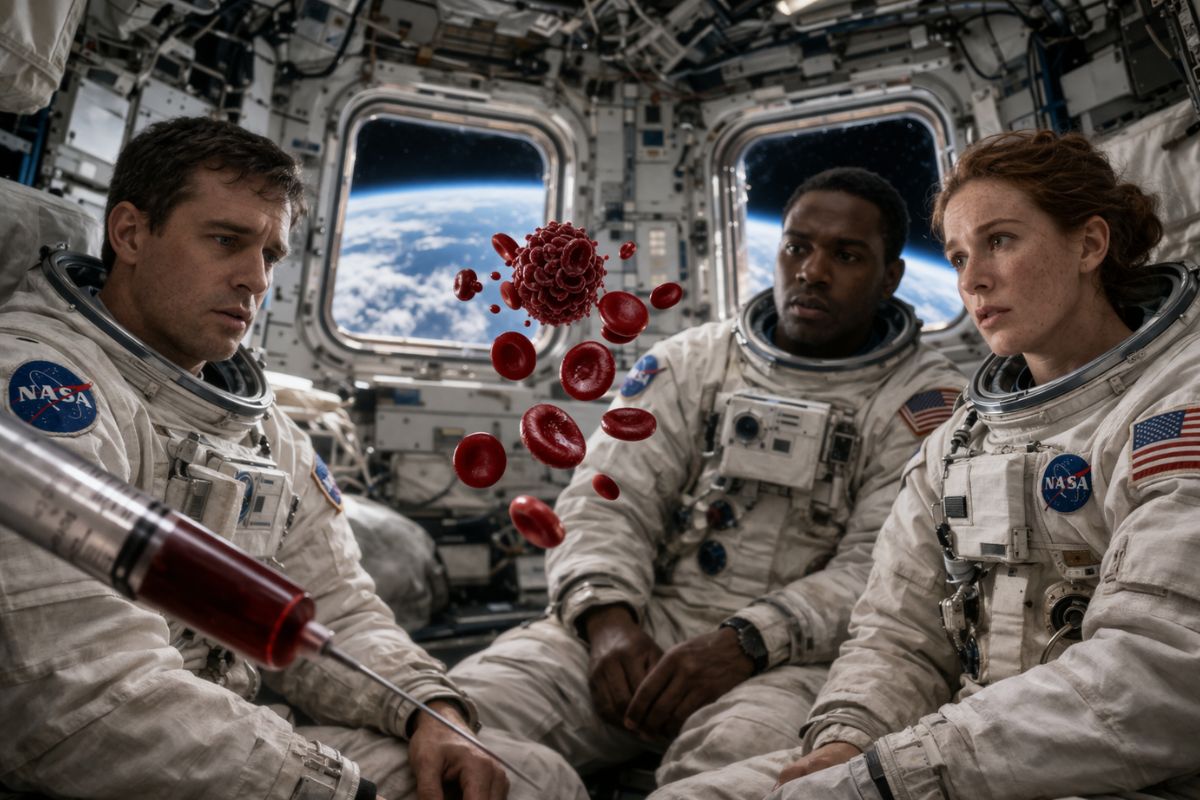
The information was disclosed in a scientific study published in the journal Nature Medicine, which analyzed blood plasma from thousands of volunteers. According to the article, researchers identified clear patterns of change in the human body throughout life, primarily based on the presence and variation of proteins in the bloodstream. These biological markers allowed for dividing human life into three major distinct biological cycles.
The Three Biological Cycles of Human Aging According to Science
According to Stanford scientists, life does not age in a continuous and uniform manner. On the contrary, the body goes through well-defined phases, separated by periods of relative stability and moments of more abrupt changes. The first phase corresponds to adulthood, which roughly spans from 34 to 60 years of age.
-
Giant from Germany will land in China with a record investment in a 4 km² complex, with up to 32 production lines and 70 products, targeting a market that could reach 70% of the world by 2030.

-
Brazilian regions will suffer from the heat: the first heatwave of 2026 raises temperatures to up to 38°C for 5 consecutive days, driven by a heat bubble between Paraguay and Argentina that blocks cold fronts and intensifies dry air.
-
Will Artificial Intelligence replace your job? 31 million are already at risk in Brazil, salaries are falling in technical roles, while AI specialists earn up to R$27,000 and companies are paying record bonuses.

-
Second Sphinx detected under Giza with 80% reliability: radar reveals giant structure, underground cavity, and network of tunnels aligned with the pyramids that could rewrite the history of Ancient Egypt.

During this interval, despite minor internal changes, plasma protein levels remain relatively stable. Nevertheless, researchers identified that around the age of 34 the first significant physical decline occurs, considered the landmark for the end of biological youth. This moment does not signify old age but rather the beginning of adulthood from a molecular perspective.
Next, the body enters the second phase, called late maturity, which encompasses the period from 60 to 78 years. At this stage, changes become more noticeable, although they do not yet characterize final aging. Only upon reaching 78 years, according to the study, does the body officially enter the final phase of aging, regarded by science as the onset of true old age.
Why Aging Does Not Occur Linearly
One of the central points of the research is the finding that human aging does not follow a straight line over time. Scientists observed that plasma protein levels remain stable for long periods and then suddenly undergo abrupt changes at specific moments in life.
These changes indicate that the body goes through true “biological leaps,” in which multiple systems are affected simultaneously. The analysis of blood samples revealed that these inflection points are directly linked to a reduction in cellular repair capacity, especially of DNA.
According to specialists, the decrease in this capacity triggers a cascade of reactions, affecting metabolism, tissues, and the overall functioning of the body. Thus, aging is no longer viewed merely as the passage of years but is understood as a biological process deeply connected to the molecular environment of the body.
What Physical Changes Mark Advanced Aging
The Stanford University study also detailed the most common changes associated with the final stage of aging. According to researchers, these transformations result from a decrease in the production of essential proteins and changes in the molecular balance of the body.
Among the most frequent manifestations, scientists list skeletal system weakening, progressive loss of muscle mass, and reduction of bone strength. In addition, changes in sleep patterns emerge, accompanied by decreased hearing and visual acuity.
Another important sign is the reduction of mobility speed, which directly affects the person’s autonomy. The appearance of wrinkles and skin spots also intensifies, reflecting structural changes in the tissues. Simultaneously, specialists noted that the brain begins to show greater difficulty in recalling daily information, an effect associated with biochemical changes of aging.
These symptoms, according to the study, do not arise in isolation. They represent a complete transformation of the individual, primarily signaled by variations in plasma proteins, which serve as a true reflection of overall health and the passage of time in different tissues of the human body.
What Science Concludes About the Age of Old Age
The research, led by scientist Tony Wyss-Coray, evaluated the cellular components of thousands of individuals to identify the exact moments when the internal biological clock accelerates. The detailed analysis of the samples allowed for precise mapping of periods of stability and points of structural change in the body.
According to the authors, aging does not merely mean accumulating years, but rather going through well-defined biological phases. In this way, science challenges the traditional idea that aging begins early and shows that, from a biological standpoint, it starts much later than most people imagine.
In light of these discoveries, an inevitable reflection arises: if science shows that old age begins only at 78, is society not prematurely labeling individuals and underestimating their potential throughout life?




Interessante! Fiz 70 agora em janeiro, então não tou tão velho assim, muito bom!!
Perdi o comentário q estava fazendo.
Gostei desse último item grifado de ****, parece que isso dá tempo para as pessoas que pensam que estão velhos demais para fazer tantas coisas inclusive recomeçar, ou realizar sonhos.