





 Portuguese
  English
  Spanish
  4 min of reading
  0 comments


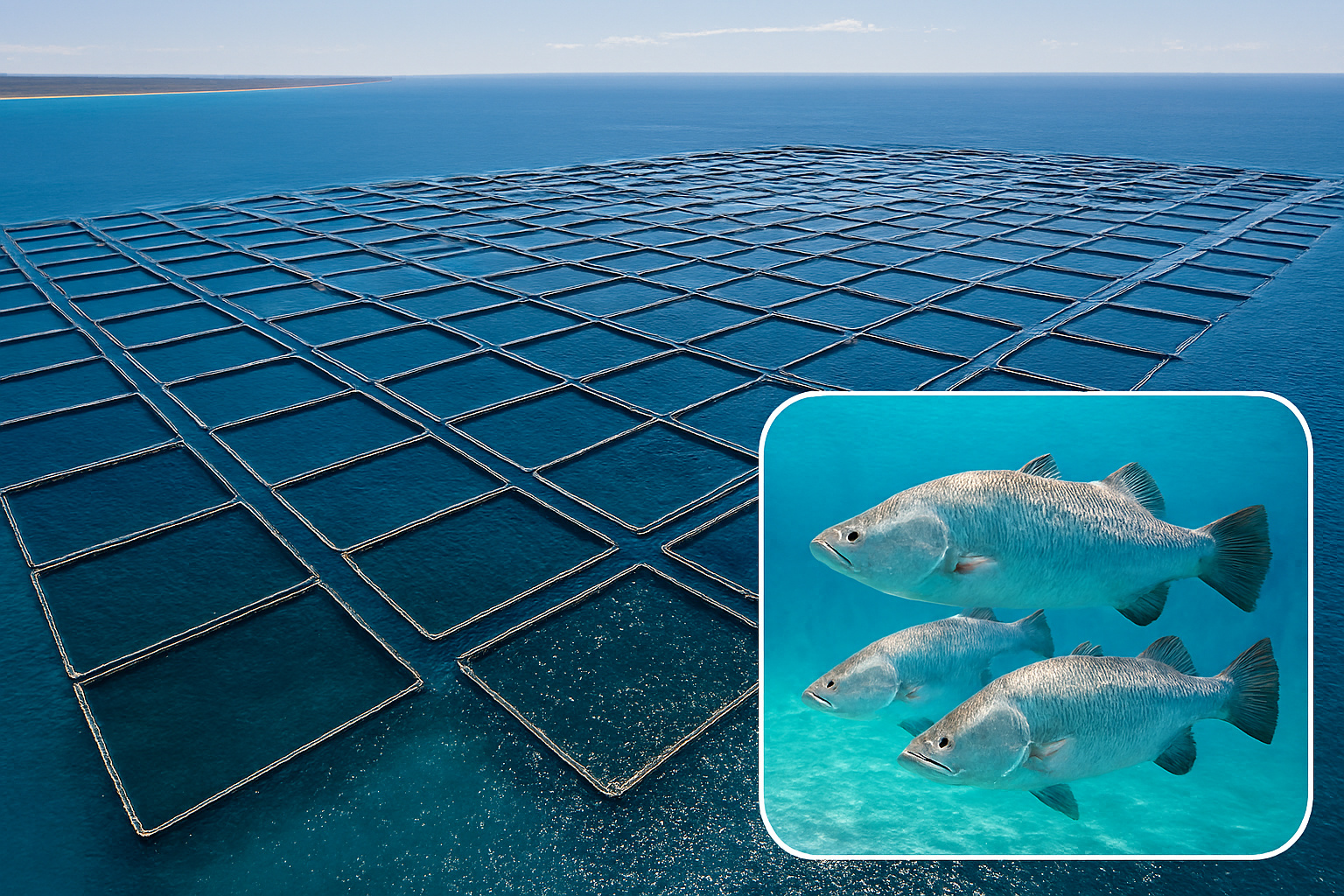
From Genetic Innovation to Recirculation Systems, Australia Elevates Barramundi to Global Icon, Uniting Sustainability, High Quality and Large-Scale Production That Redefines Global Standards of Aquaculture.
Australia has transformed a previously regional fish, barramundi (Lates calcarifer), into a true symbol of advanced aquaculture technology, industrial scale, and rigorous environmental certifications. With over 40 thousand tons produced annually, the country has reached a level that places it among the leading global powers in raising this premium species — a fish valued for its white flesh, low fat content, mild flavor, and high profitability in the international gastronomic market.
Today, Australian barramundi is more than a product: it is the result of a futuristic water engineering, mega-ocean farms, and recirculation systems that allow for continuous, controlled, and sustainable production. That is why the country has become a global reference — both in scale and quality.
The Engineering Behind the Leadership: How Australia Created a Production System That Became a Global Reference
Barramundi production in the country relies on two technological pillars:
-
The water that almost everyone throws away after cooking potatoes carries nutrients released during the preparation and can be reused to help in the development of plants when used correctly at the base of gardens and pots, at no additional cost and without changing the routine.
-
The sea water temperature rose from 28 to 34 degrees in Santa Catarina and killed up to 90% of the oysters: producers who planted over 1 million seeds lost practically everything and say that if it happens again, production is doomed to end.

-
An Indian tree that grows in the Brazilian Northeast produces an oil capable of acting against more than 200 species of pests and interrupting the insect cycle, gaining ground as a natural alternative in soybean, cotton, and vegetable crops.
-
The rise in oil prices in the Middle East is already affecting Brazilian sugar: mills in the Central-South are seeing their margins shrink just as ethanol gains strength.


- Recirculating Aquaculture Systems (RAS) — fully enclosed structures that constantly treat, filter, and reuse water.
- Open Ocean Farms — gigantic floating structures positioned in strategic areas of the Australian coast, where currents and temperature favor the rapid growth of the species.
These two formats allow what experts call hybrid aquaculture, combining extreme control of water quality with the natural strength of the ocean to improve nutrition, reduce disease, and increase growth performance.

Large companies in the sector — such as the Australian Barramundi Farmers Association and producers certified by the Aquaculture Stewardship Council (ASC) — invest millions in digital sensors, automatic oxygenation, and real-time monitoring of fish behavior. This is not just about letting the animals grow: it is a high-precision industrial operation.
From Laboratory to Ocean: How an Australian Barramundi is Born
The chain begins in specialized laboratories. Barramundi is born in controlled environments, where temperature, salinity, and density are adjusted daily. The juveniles then move to intermediate tanks and, finally, to ocean farms, which can accommodate hundreds of tons per cycle.
Within these marine farms, robots and camera systems observe behavior, breathing, school speed, and feeding patterns. This data helps calculate the ideal feed and the exact timing for harvest — with no waste and no unnecessary environmental impact.
40 Thousand Tons Per Year: Numbers That Explain Australia’s Strength in the Global Scenario
The Australian leap is impressive due to both scale and efficiency. On average:
– Over 40 thousand tons of barramundi are produced annually;
– Domestic consumption is growing over 10% each year;
– Exports are continuously increasing with demand from Asia, Europe, and the U.S.;
– Fish can gain 1 kg in less than a year, an accelerated pace for premium marine species.
While several countries still face sanitary challenges or lack of standardization, Australia has consolidated a chain that is moving toward modern industrial aquaculture — clean, traceable, and with animal welfare certification.
Why Barramundi Became a Premium Fish in the Global Market
In high-end restaurants, especially in the United States and Southeast Asia, barramundi is treated as a noble fish. This is explained by factors such as:
– Large fillets with no central bones;
– Mild and versatile flavor;
– Consistent and white meat;
– Excellent yield after cooking;
– Low fat content;
– High acceptance in markets dominated by salmon and cod.
Therefore, chefs consider barramundi a “natural substitute protein” in dishes that previously relied exclusively on imported species. The quality guaranteed by tracking and certifications allows the Australian fish to reach high prices in retail and wholesale, reinforcing the premium image of the product.

The Mega Ocean Farms: The Heart of a Giant Operation
The Australian ocean farms are monumental structures — true floating cities. There, high-strength nets form rings with diameters of dozens of meters, calculated depth, and protection against predators such as sharks and sea lions.
The operation functions like an advanced production line:
– Automated feeding;
– Oxygen control 24 hours a day;
– Satellite monitoring;
– Use of artificial intelligence to predict growth and adjust management.
These farms are strategically positioned in fjords, sheltered bays, or specific stretches of the coast where water flow improves natural exchange and reduces risks of disease.
The New Frontier of Premium Aquaculture
The trajectory of barramundi in Australia is pointed out by experts as the next great model for marine protein production. Instead of relying solely on the ocean or fully enclosed systems, the country combines the best of both worlds to ensure scale, quality, and sustainability — three factors that will determine the future of global aquaculture.
With growing demand, continuous investments, and technology embedded even in feeding sensors, Australian barramundi represents the new frontier of premium proteins. And all indications are that, in the coming years, production will grow even more.








-

-

-

10 pessoas reagiram a isso.