





 Portuguese
  English
  Spanish
  5 min of reading
  0 comments


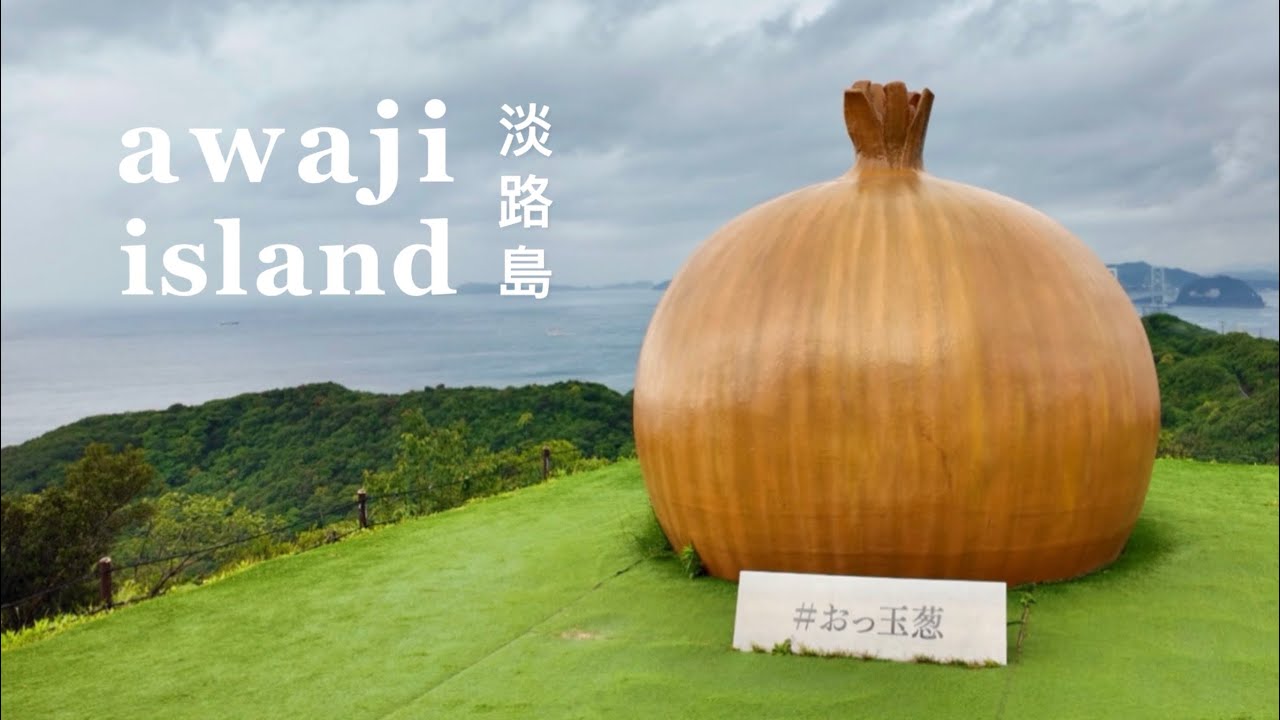
Japanese Island Produces More Than 200 Thousand Tons of Onion Per Year, Became Cultural Symbol, Local Economic Engine and Little-Known Agricultural Reference Outside of Japan.
A few kilometers from Japan’s main island, connected by bridges to the urban axis of Osaka and Kobe, there is a territory that built its identity, economy and even its tourist image around a single food. Awaji Island, located in Hyogo Prefecture, is officially known in the country as the “onion island.” This is not a folkloric nickname: the onion from Awaji accounts for hundreds of thousands of tons annually, supports entire cooperatives, sustains families for generations, and has become one of the most recognized agricultural products in Japan.
What draws attention is that, outside Asia, almost no one knows that this small island is a highly specialized agricultural powerhouse. While Japan is often remembered for technology, industry, and large cities, Awaji shows another side of the country: one of extremely efficient agriculture, territorially concentrated and deeply connected to local culture.
Where Is Awaji Island and Why the Place Is Ideal for Onions
Awaji Island is situated between the island of Honshu and Shikoku, in the Seto Inland Sea. The region combines three rare factors that explain its agricultural success: fertile volcanic soil, constant maritime influence, and a climate regime with mild winters and relatively dry summers.
-
Discovery of a 15-kilometer labyrinth beneath the buildings of Rome raises alarm for collapses and reveals the largest underground network ever found in the Italian capital.
-
A rare storm phenomenon in the United States alerts meteorologists worldwide due to four different forms of water falling from the sky, which freeze immediately upon touching the ground, poles, cars, or trees.

-
He has been using a wheelchair for almost 10 years, lives alone, is independent, and decided to become a delivery driver for an app: Samuel makes up to 6 deliveries a day, covering routes of 1 km in his wheelchair and has even managed to do 2.5 km in a single run.

-
An island of 7,500 people received 38,000 bananas by mistake, was left unsure where to store everything, and turned the error into a viral case with donations, hustle, and fruit overflowing everywhere.



These conditions favor the cultivation of low-pungency onions, high sugar content, and soft texture — characteristics that set Awaji onions apart from the more common varieties found in other parts of Japan and the world.
The result is a product that can be consumed raw, without intense spiciness, something highly valued in Japanese cuisine.
Moreover, the island’s gentle topography allows for large continuous farming areas, which is rare in a country marked by mountainous terrain and a scarcity of flat agricultural land.
More Than 200 Thousand Tons Per Year: The Numbers of Production
The annual production of onions on Awaji Island is around 200 thousand to 250 thousand tons, depending on the climatic conditions of each harvest. This volume places the island among the largest onion-producing hubs in Japan, despite its relatively small area.
A large part of this production directly supplies the Kansai markets, including Osaka, Kyoto, and Kobe, as well as national supermarket chains. Awaji onions are also widely used by restaurants, food industries, and manufacturers of processed products.
The cultivation follows a strict calendar, with planting in the fall, growth during the winter, and harvesting in the spring and early summer. This cycle allows Awaji onions to reach the market at a strategic time when the supply from other regions is still limited.
An Entire Economy Organized Around Onions
Unlike diversified agricultural regions, Awaji Island has built a highly specialized economy. Agricultural cooperatives coordinate everything from seed supply to storage, grading, transportation, and sale of the product.
The onion generates direct jobs in the fields, but also boosts sectors like logistics, packaging, processing, agricultural research, and tourism. Small factories produce dehydrated onions, sauces, instant soups, and even snacks made from the vegetable.
For many families, onion cultivation is not just an economic activity but a legacy. There are properties that pass from generation to generation, with planting techniques refined over decades to maximize quality, not just volume.
When a Food Becomes Cultural Identity
On Awaji, the onion has transcended its role as an agricultural commodity. It has become a cultural symbol. The island features giant onion-shaped statues, thematic food events, exclusive tourist products, and even museums and visitor centers dedicated to the vegetable.
Local restaurants have created specific dishes to highlight the sweetness of the onion, such as hamburgers, curries, tempuras, and even experimental desserts. Shops sell souvenirs, sweets, and condiments that reinforce the island’s territorial brand.
This phenomenon is taken seriously by the local government and cooperatives, which treat the onion as a regional branding element, strengthening tourism and adding value to the agricultural product.
Why Awaji Onion Is Different From Others
The difference lies not only in the soil or climate. Island farmers adopt cultivation practices that prioritize slow maturation, precise spacing between plants, and rigorous irrigation control.
The result is onions with:
– higher natural sugar content
– lower acidity
– softer texture
– mild flavor, low spiciness
These characteristics explain why Awaji onions tend to be more expensive than common onions in the Japanese market, even when competing with cheaper imported products.
An Example of How Japan Protects Its Local Agriculture
Awaji Island also illustrates Japan’s strategy of protecting and valuing regional productions. Instead of competing solely on price, the country bets on quality, territorial identity, and traceability.
Awaji onions are recognized as a distinct regional product, with their own standards and strong origin control. This ensures more stable income for farmers and reduces dependence on imports.
It is a logic opposite to mass agriculture based solely on volume: less land, more added value.
Why Almost No One in Brazil Knows Awaji Island
Despite its relevance in Japan, Awaji Island remains virtually unknown outside Asia. This happens because its production is primarily aimed at the domestic market, with limited exports, and because Japan rarely promotes its agricultural hubs abroad.
For the Brazilian public, used to associating agricultural power with continental countries, the idea of a relatively small island sustaining such concentrated and efficient production sounds almost unlikely.
Yet, Awaji shows how planning, specialization, and identity can transform a simple food into a lasting economic and cultural foundation.
Beyond the Onion: A Silent Lesson in Efficiency
Awaji Island is not just the “onion island.” It is an example of how agriculture, territory, and culture can strategically align. Without megaprojects, without aggressive global marketing, the island has built a solid reputation within Japan and supports thousands of people from a single crop.
While many countries seek to diversify at any cost, Awaji proves that, when done right, specialization can be a strength — silent, stable, and deeply rooted in the territory.
And perhaps that is precisely why it is so little known outside Japan.






-

-

3 pessoas reagiram a isso.