





 Portuguese
  English
  Spanish
  4 min of reading
  0 comments


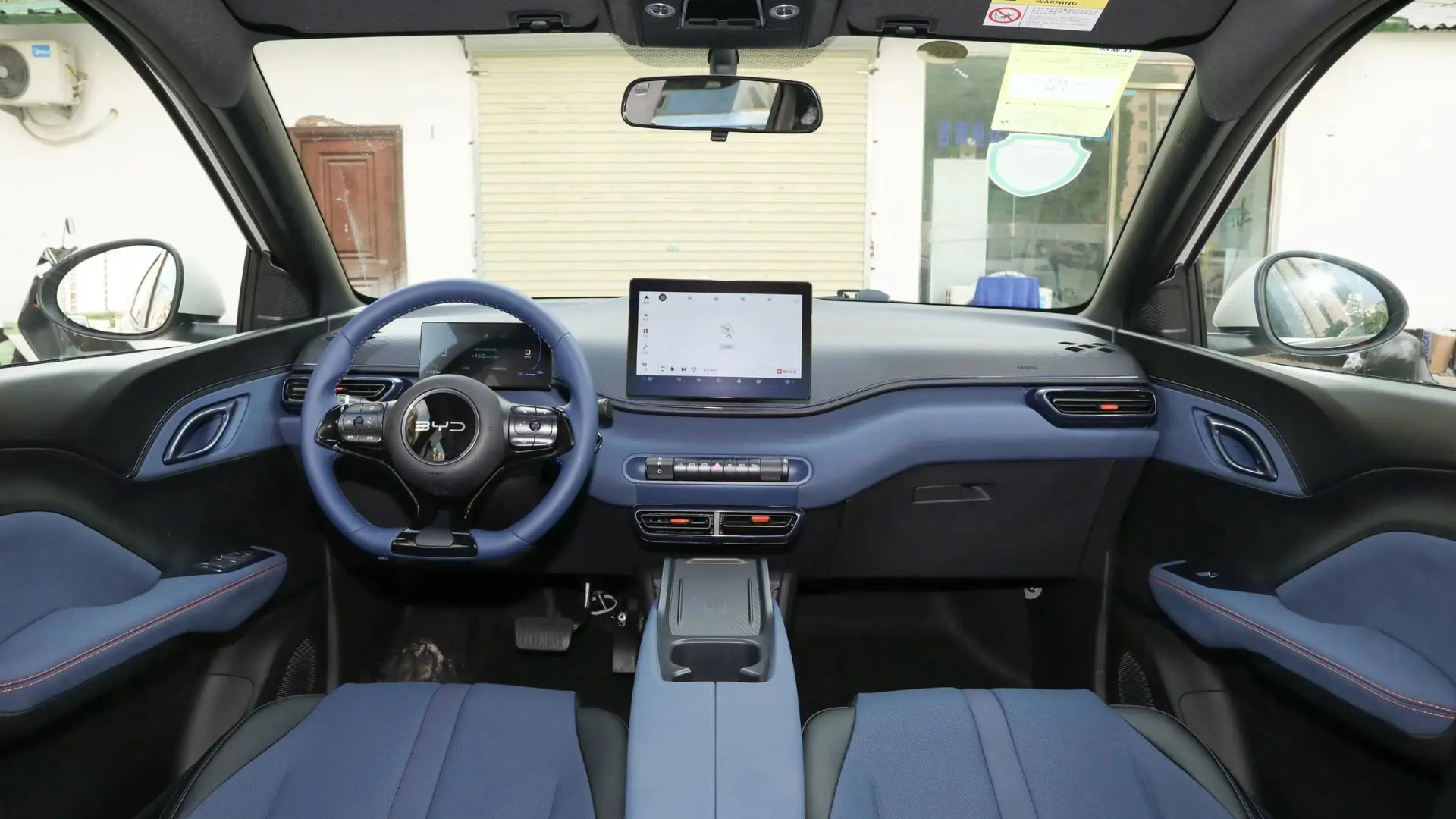
BYD’s Compact Electric Model Gains Global Traction And Stands Out For Extremely Low Price In China, While Foreign Markets Deal With Higher Prices Due To Taxes And Tariffs.
The compact electric Seagull, known in Brazil as Dolphin Mini, has become one of the main drivers of BYD’s global advancement.
The model, which costs less than R$ 54 thousand in the Chinese market, features current design, competitive autonomy, and urban focus, but the low price remains restricted to the country of origin due to taxes and tariffs applied in other markets.
Launched to meet the growing demand for affordable EVs, the Seagull has accumulated impressive results.
-
The car stored for 38 years: when opening the barn door, what appears is breathtaking and looks like a scene from a movie!

-
Fiat works miracles in the Brazilian market, lowers the price of its 0 km hatch to R$ 69,990, reestablishes the model as the cheapest car in the country, and reignites the battle against Kwid and C3.
-
Chevette with cooking gas: How the gas cylinder ends up being used in cars clandestinely and why this makeshift solution can result in leaks, explosions, damaged engines, and seized vehicles.

-
Fiat launches the new 2027 Toro hybrid with 48V, 176 hp, an electric motor of 15.5 hp, a 0.85 kWh battery, up to 7% fuel savings, 8% fewer emissions, and possible exemption from IPVA.

In April, it surpassed 55 thousand units sold just in China, consolidating itself as the most sold electric vehicle of the brand that month.
This performance reinforces BYD’s strategy to expand its presence in more popular price ranges without compromising on technology.
Global Growth Driven By The Seagull

The Seagull integrates BYD’s Ocean and Dynasty families and has played an important role in the company’s global performance.
In April 2025, the automaker recorded 380,089 electrified vehicles sold worldwide, a result that represents a 21% increase compared to the same period last year.
In this mix, fully electric models surpassed hybrids for the first time in over a year, totaling 195,740 units.
While maintaining domestic leadership, the Seagull also strengthens exports.
In the same month, 79,089 vehicles from the brand were shipped abroad, marking the fifth consecutive monthly increase.
Between January and April, more than 285 thousand units had already been exported, more than double the volume recorded at the beginning of 2024.
BYD attributes part of this leap to the growing interest in compact and cheaper models.
Autonomy, Versions, And Measures Of The Compact Electric

Designed for circulation in dense urban areas, the Seagull measures 3.78 meters in length and 1.54 meters in height.
Despite its compact dimensions, the model was built to deliver adequate autonomy for daily use.
The base version comes with a 30.08 kWh battery, with a range of up to 305 kilometers in the Chinese CLTC cycle.
On the other hand, the Flying configuration adopts a larger 38.88 kWh battery, extending the autonomy to 405 kilometers.
These numbers have contributed to making the model more attractive to consumers who need a range above the average for compact EVs.
In China, prices range from 69,800 to 85,800 yuan, amounts equivalent to approximately R$ 54,900 to R$ 67,900.
However, the same competitiveness does not repeat in foreign markets.
In Brazil, where the model is imported, prices start at around R$ 118 thousand for the four-seater version and reach R$ 122 thousand for the five-seat option.
International Expansion And Arrival In New Markets
Even though it is not produced outside China, the Seagull has begun to gain traction in different regions.

Mexico, Colombia, Philippines, and Brazil have already received the model, always under the name Dolphin Mini.
Europe is also part of the brand’s plans for 2025, where it is expected to be marketed as Dolphin Surf, with an estimated price below £20,000.
Analysts from S&P Global Mobility evaluate that BYD’s aggressive pricing strategy can keep the Seagull competitive even with tariffs imposed by the European Union on vehicles coming from Chinese manufacturers.
This is because, in addition to the reduced cost, the car offers a technological package and energy efficiency considered advantageous for consumers concerned about usage economy.
Signed Design And Strong Visual Appeal

The design of the Seagull is another central element for public interest.
Signed by German designer Wolfgang Egger, who has worked with brands like Audi and Lamborghini, the model has gained the informal nickname of “Mini Lamborghini” among Chinese consumers.
The angular lines and futuristic proposal helped distance the car from the traditional image of basic urban vehicles.
This combination of striking aesthetics and competitive value has reinforced BYD’s image as a reference in accessible electric mobility.
By expanding its portfolio beyond SUVs and larger sedans, the automaker also seeks to occupy the entry segment, particularly relevant in emerging markets.
Challenges To Keep Low Price Outside China


Although commercial performance is impressive, BYD faces significant hurdles.
In markets such as Brazil and Europe, import taxes and tariff policies raise the final price, distancing the model from the cost range that made it so competitive in its country of origin.
The company claims to bet on increasing exports and improving the production chain to reduce costs over time.
The brand also sees an opportunity in consumers who wish to transition to electric mobility, but who still consider high prices a barrier.
With models like the Seagull, they hope to expand their user base and accelerate the transition to zero-emission vehicles. Even so, the central doubt remains for the Brazilian public.
Will a car that costs less than R$ 54 thousand in China ever be sold in the country for a similar value or will the tax difference continue to prevent this price approach?








-

-

-

-

-

6 pessoas reagiram a isso.