





 Portuguese
  English
  Spanish
  4 min of reading
  0 comments


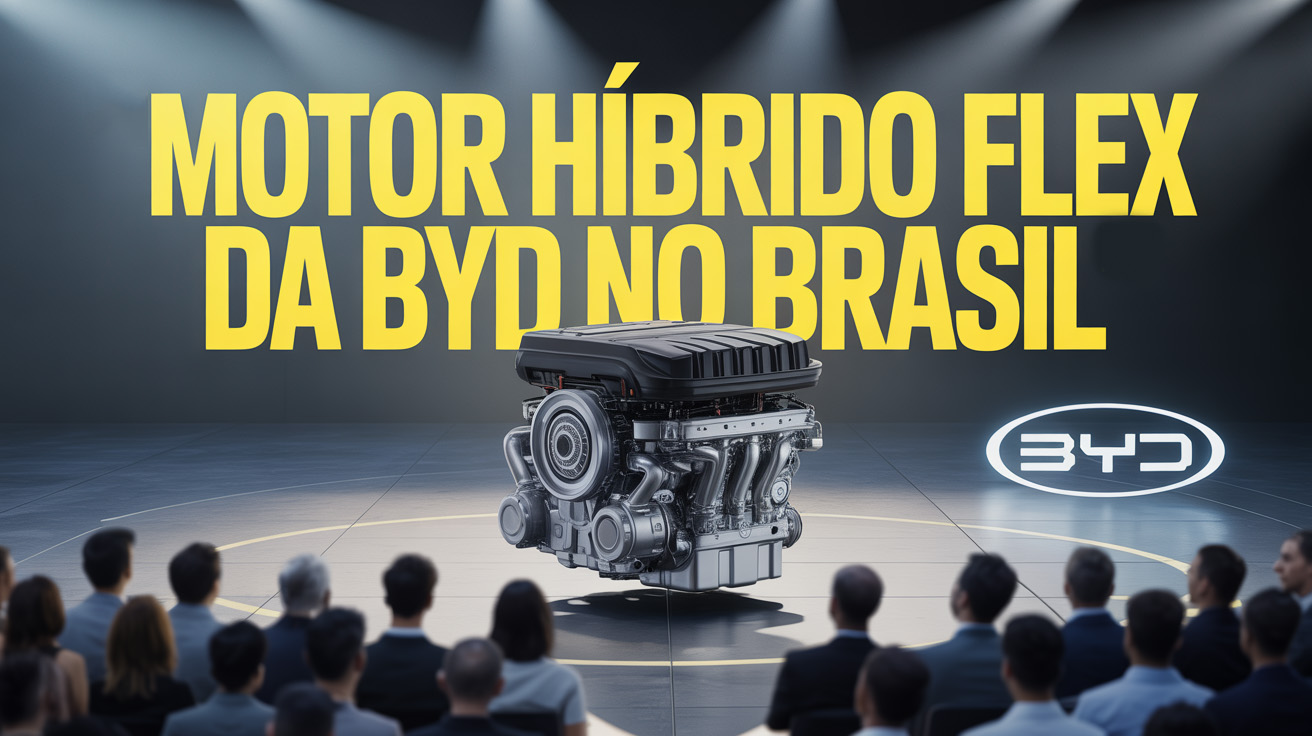
Chinese Manufacturer Silently Introduces A New Flex Hybrid System Focused On The Brazilian Market, Associating Electric Technology And Ethanol. Production Will Be National, And The Strategy Directly Targets Established Models In The Mid Hybrid SUV Segment.
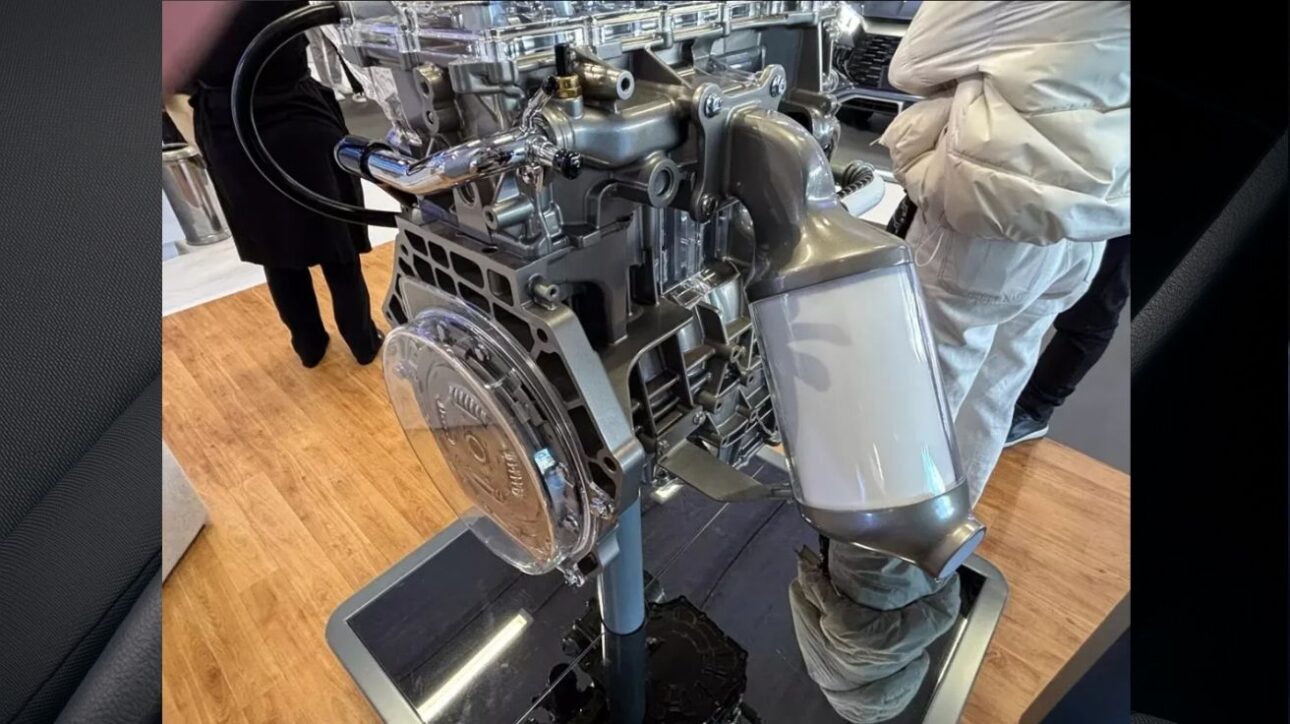
During the Interlagos Festival 2025, the Chinese manufacturer BYD showcased, at its booth, the prototype of a new 1.5 Aspirated Flex Hybrid Engine, aimed at the Brazilian market.
The company chose not to hold a press conference but confirmed that the displayed system integrates an aspirated 1.5 combustion engine, now adapted to flex technology, combined with an electric motor.
The manufacturer has not officially announced which model will debut this engine, but there is an expectation that the launch will occur with the SUV Song Plus, with national production scheduled to start between late 2025 and early 2026, at the new manufacturing unit in Camaçari (BA).
-
In France, a group of artisans spends 28 years building a medieval castle with 13th-century tools, without machines, without measuring tapes, and with almost zero carbon footprint, and the rediscovered techniques helped in the reconstruction of Notre-Dame.

-
The heatwave in Brazil that hit in March is set to end as a cold front arrives between Good Friday and Easter Sunday, causing a temperature drop of up to 6 degrees and rain in the Central-South region, according to the Easter weather forecast.

-
The U.S. Army has introduced its first new lethal grenade since the Vietnam War: the M111 kills using pressure shock waves that bounce off walls and can explode the enemy’s lungs without producing a single shard.

-
Engineers are replacing pressure valves with hydraulic microturbines within drinking water networks and are generating up to 1,100 MWh per year with in-pipe hydropower technology that harnesses energy previously wasted in urban pipelines.

Performance Of The 1.5 Aspirated Flex Hybrid Engine
The new system combines a 1.5 Flexible Aspirated Engine, compatible with gasoline and ethanol, with an integrated electric motor.
In the brand’s current models, the combustion engine produces 110 horsepower and 13.7 kgfm of torque, while the electric motor delivers 179 horsepower and 32.2 kgfm.
The total power of the system varies between 209 hp and 235 hp, depending on the model and configuration.
This type of system, based on BYD’s DM-i technology, is primarily characterized by prioritizing electric motor use in urban trips, activating the combustion engine in specific situations, such as higher energy demand or battery recharging while in motion. This helps reduce liquid fuel consumption.
The batteries used also vary based on the model. In the case of the Song Pro, current versions use a 12.9 kWh battery, with an estimated range of around 87 km in electric mode.
The Song Plus may come equipped with a 26.6 kWh battery, allowing it to travel up to 150 km solely on electricity, according to the NEDC cycle.
With the introduction of flex technology, the system now incorporates the possibility of refueling with ethanol, a fuel with high penetration in the Brazilian market and lower CO₂ emissions compared to gasoline.
Market Strategy And Competitive Positioning
BYD has been expanding its operations in Brazil through the nationalization of electrified models and bets on the launch of the flexible hybrid system as a way to compete with models that already use similar technology, such as the Toyota Corolla Cross Hybrid and the Jeep Compass 4xe.
The Song Pro is currently one of the most affordable models from the brand among electrified vehicles. During promotional activities conducted in June 2025, it was announced with prices starting from R$ 179.800.
For comparison, the Corolla Cross Hybrid starts from prices close to R$ 190 thousand, while the Compass 4xe is sold for prices above R$ 270 thousand.
Local manufacturing, scheduled to take place at the BYD unit in Camaçari, should help reduce logistical costs and allow access to tax incentives aimed at the national production of hybrid vehicles. This combination could result in more competitive final retail prices.
Characteristics And Comparison With Models In The Same Segment
In comparisons already made between the Song Pro and the Corolla Cross, some objective data point to differences between the models.
The trunk of the Song Pro offers 520 liters of capacity, while the Corolla Cross has 440 liters. Regarding interior finish, technical analyses highlight differing materials and internal space, but without consensus on superiority.
In terms of safety, the Corolla Cross Hybrid comes with seven airbags and driving assistance systems, such as adaptive cruise control, in certain versions.
The Song Pro, in the currently available versions, comes equipped with six airbags, without official confirmation regarding the inclusion of advanced assistance in future versions with the new flex hybrid engine.
In performance, the numbers released by BYD indicate up to 235 combined horsepower in the hybrid system, a figure higher than the 122 hp of the Corolla Cross Hybrid and close to the Compass 4xe, which presents 240 hp.
The official consumption, based on gasoline tests, ranges from 14.8 km/l to 15.2 km/l in the city and 13.2 km/l on the highway, according to Inmetro data.
Technological Expansion And Scenario For 2025 And 2026
For experts, the introduction of a 1.5 Aspirated Flex Hybrid Engine reinforces BYD’s movement to offer solutions adapted to the conditions of the Brazilian market.
The presence of flex technology, combined with the electric system and the possibility of national production, positions the brand’s models in a competitive range both in terms of price and alignment with local environmental and economic requirements.
According to industry analysts, there is a trend of growth in the sales of SUVs with some form of electrification in Brazil.
The addition of fuel flexibility tends to broaden the target audience, especially among consumers interested in sustainable technologies but still reliant on traditional refueling infrastructure.
This nationalization of models, as planned for Camaçari, according to industry analysts, also represents a strategic step for BYD to consolidate its local operations with greater independence from imports.
The brand plans to scale its presence in dealerships and authorized maintenance centers by 2026, alongside the expansion of the national portfolio.
Given The Integration Of Energy Efficiency, Flexible Refueling, And Local Production, The Launch Of The New Hybrid System Raises A Central Question For The Sector: Will BYD’s National Flex Hybrid Model Have Sufficient Competitiveness To Shift The Balance Among The Electrified SUVs Available In Brazil?




-

-

7 pessoas reagiram a isso.