





 Portuguese
  English
  Spanish
  6 min of reading
  0 comments



Price reduction boosts real tests of Starlink in Brazil, with high performance in rural areas and practical reports indicating speeds well above the national average, reigniting the debate on the cost-benefit of satellite internet.
The reduction in the price of Starlink in Brazil has reignited interest in Elon Musk’s satellite internet service, especially in remote areas where the lack of traditional infrastructure limits access to high-speed internet.
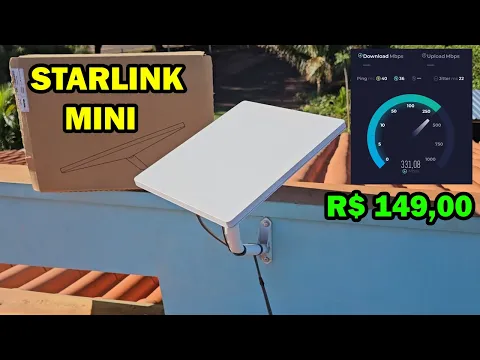
With a promise of high speed and broad coverage, the technology is beginning to be tested in real scenarios, as shown by Daniel Wagner in an analysis made last Wednesday (26) on the DW Tech channel, presenting the compact version of the equipment and evaluating its performance.
Right at the beginning, Wagner contextualizes the purchase and the costs involved, highlighting that he bought the equipment on sale and saw the technology as a viable alternative given the limitations faced in daily life.
-
Lingyi iTech, a supplier of components for iPhone factories, is setting up a super factory in Beijing that will produce 10,000 humanoid robots by 2026 and half a million per year by 2030, marking the biggest industrial shift in China since the smartphone.

-
ESA is preparing LISA, a colossal space observatory with three spacecraft forming a triangle of 2.5 million km, lasers crossing the void, and a launch on Ariane 6 to capture ripples in spacetime and reveal an astronomy invisible to Earth’s telescopes.

-
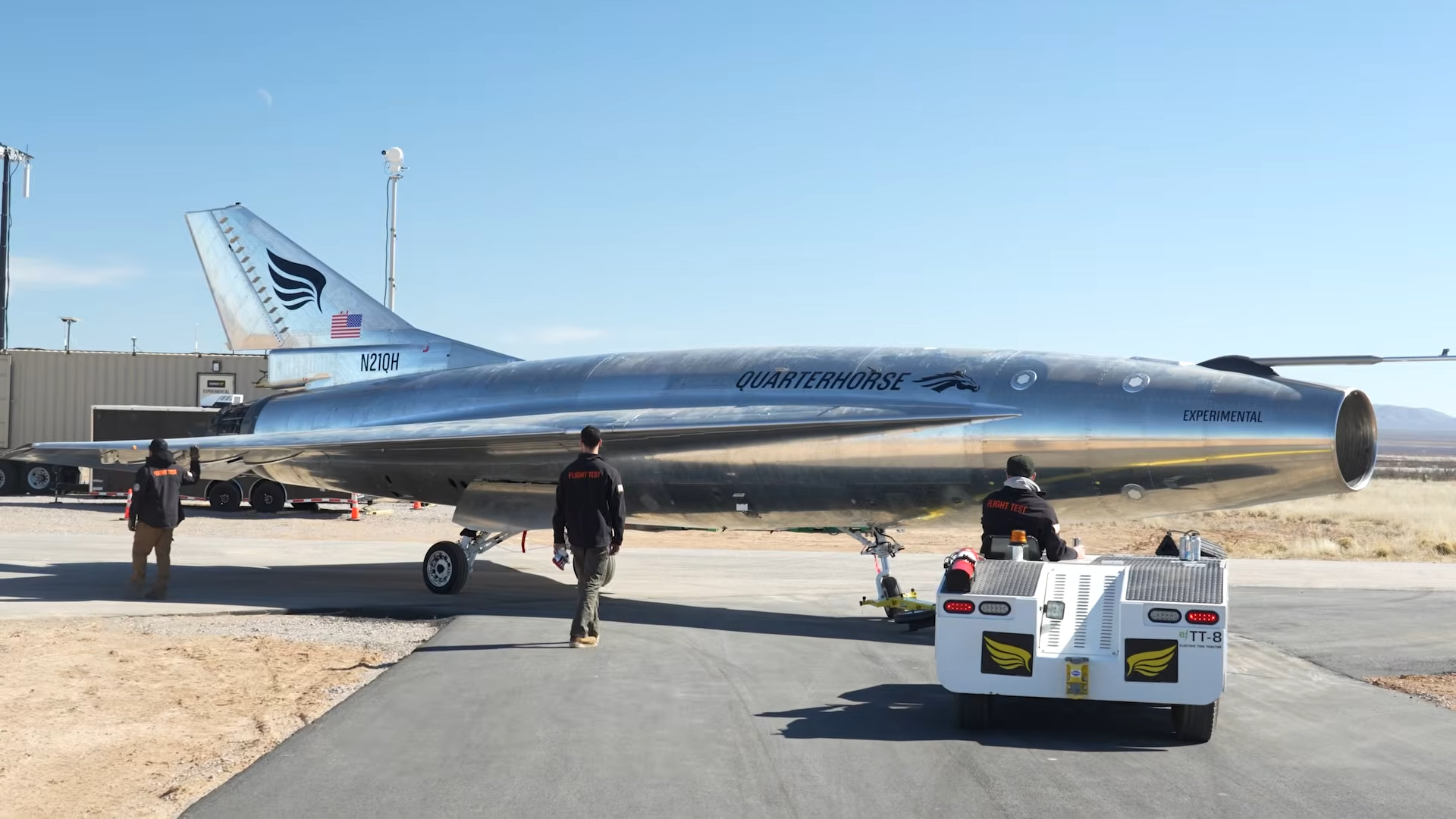
Four times faster than the Concorde, capable of taking passengers from New York to London in less than an hour at Mach 5.5, and with an engine that switches from turbojet to ramjet mid-flight at Mach 3.5, the Hermeus Quarterhorse went from paper to its first flight in just 19 months.

-
NASA researchers test new material capable of withstanding contact with melted lunar dust, one of the biggest challenges of space missions: technology may help astronauts produce oxygen, fuel, and structures using resources found on the lunar surface itself.



“I bought mine, it’s on sale, I paid R$ 800 for the equipment,” he stated. Additionally, he drew attention to the monthly fee, which also influenced his investment decision in the service. “The monthly fee is R$ 164.”
According to the creator, the main motivation was the precariousness of the connection available in the area where he lives, which compromised basic and professional activities. “I live in the countryside… here it only comes via radio,” he said.

Before Starlink, he used a very limited connection, with speed below the current market standard. “I was paying R$ 80 for 10 megabytes on radio internet,” he added.
Starlink in Brazil: first speed tests
The initial installation took place simply, done directly on the lawn of the residence, without the need for complex adjustments or advanced technical knowledge to start the equipment’s operation.
According to Daniel Wagner, it was enough to connect the system to the power supply and follow the steps indicated in the official app for activation.
“It was pretty easy to turn it on, I just plugged it in and followed the first steps in the app,” he reported.
Still during this initial stage, the speed test revealed performance well above expectations, especially when compared to the previous connection used by the creator. “It’s already hitting over 250 megabytes,” he stated during the measurement.
In addition to the numbers, he also highlighted the favorable conditions of the location, which directly contributed to the good functioning of the satellite technology. “Here the signal will probably be good because there isn’t much obstruction,” he explained.
Installation of Starlink in a rural area
After the initial tests, the antenna was installed on the roof of the residence, a strategy adopted to reduce interference and ensure better alignment with the satellites responsible for signal transmission.
While presenting the environment, Wagner reinforced the context of isolation of the region, where conventional internet solutions are not available.
“It’s a completely rural area, there’s no access to fiber optic,” he said while showing the location.

During the process, he also evaluated the fixation of the equipment, highlighting the stability of the structure even in an outdoor environment. “It’s well secured,” he stated.
Despite this, he chose not to immediately complete the full installation of the cables, prioritizing a more appropriate finish later. “I haven’t run the cable yet because I want to use the network cable,” he explained.
According to Wagner, the idea is to carry out the final installation only after the necessary materials arrive, ensuring greater durability and organization. “I’ll wait for the network cable to arrive to do it all at once,” he added.
Speed and latency of Starlink in practice
With the system already installed and functioning inside the residence, new tests were conducted to evaluate performance under real usage conditions, including browsing, downloads, and connection stability.
The results reinforced the initial impression, indicating consistent performance even after the final installation of the antenna. “It’s practically hitting 300 megabytes,” said Wagner while showing the download speed.
Additionally, the upload also showed stable results, although lower than the download, within a range considered adequate for domestic use. “It stays in that range between 30 to 40,” he explained.
Another relevant aspect was the latency, which remained low during the tests, favoring applications that require quick responses. “Very low latency,” he stated.
He also drew attention to the energy consumption of the equipment, pointing out an advantage of the more compact model. “This mini version consumes much less,” he said.
Performance of Starlink in real use
Beyond technical tests, Wagner evaluated performance in everyday situations, such as playing high-resolution videos, seeking to identify possible failures or instabilities in the connection.
During playback, browsing remained smooth, without interruptions or loss of quality, even with rapid changes in resolution. “You change it, it doesn’t freeze,” he stated during the test.
According to him, the content loaded quickly, indicating good delivery capacity of the advertised speed. “The video is already loaded… it plays smoothly,” he said.
The experience was summed up directly by the creator, highlighting the agility of the service. “Everything is instant,” he stated.
Use of external router with Starlink

Even with the good performance of the integrated router, Wagner intends to improve the structure of the home network by using external equipment, aiming for greater control and efficiency.
According to him, this change could expand usage possibilities, especially for wired connections and more efficient signal distribution.
“I want to use an external router to get the most out of the internet,” he stated.
He also explained a limitation of the current system, related to the use of devices via cable.
“The integrated router is bad for using some devices via cable,” he said. Still, he acknowledged that the standard equipment meets most users well. “It’s not a bad router, by the way,” he pointed out.
Is it worth hiring Starlink?
At the end of the analysis, Wagner presented a positive evaluation of the initial experience with the technology, highlighting performance and ease of use as strong points.
“I approved it, the first impressions are the best possible,” he stated.
He also indicated that he intends to deepen the tests in different scenarios, including adverse weather conditions and more demanding uses. “I want to test it on a rainy day, I want to test it while gaming,” he said.
Given the results presented, Starlink proves to be a relevant alternative for regions without access to traditional infrastructure, although factors such as cost and location are still decisive in choosing the service.
As Wagner highlighted throughout the video, the performance observed corresponds to what is promised by the company under suitable usage conditions. “Really, this speed shown in the tests, it delivers in practice,” he concluded.


Be the first to react!