





 Portuguese
  English
  Spanish
  4 min of reading
  1 comment


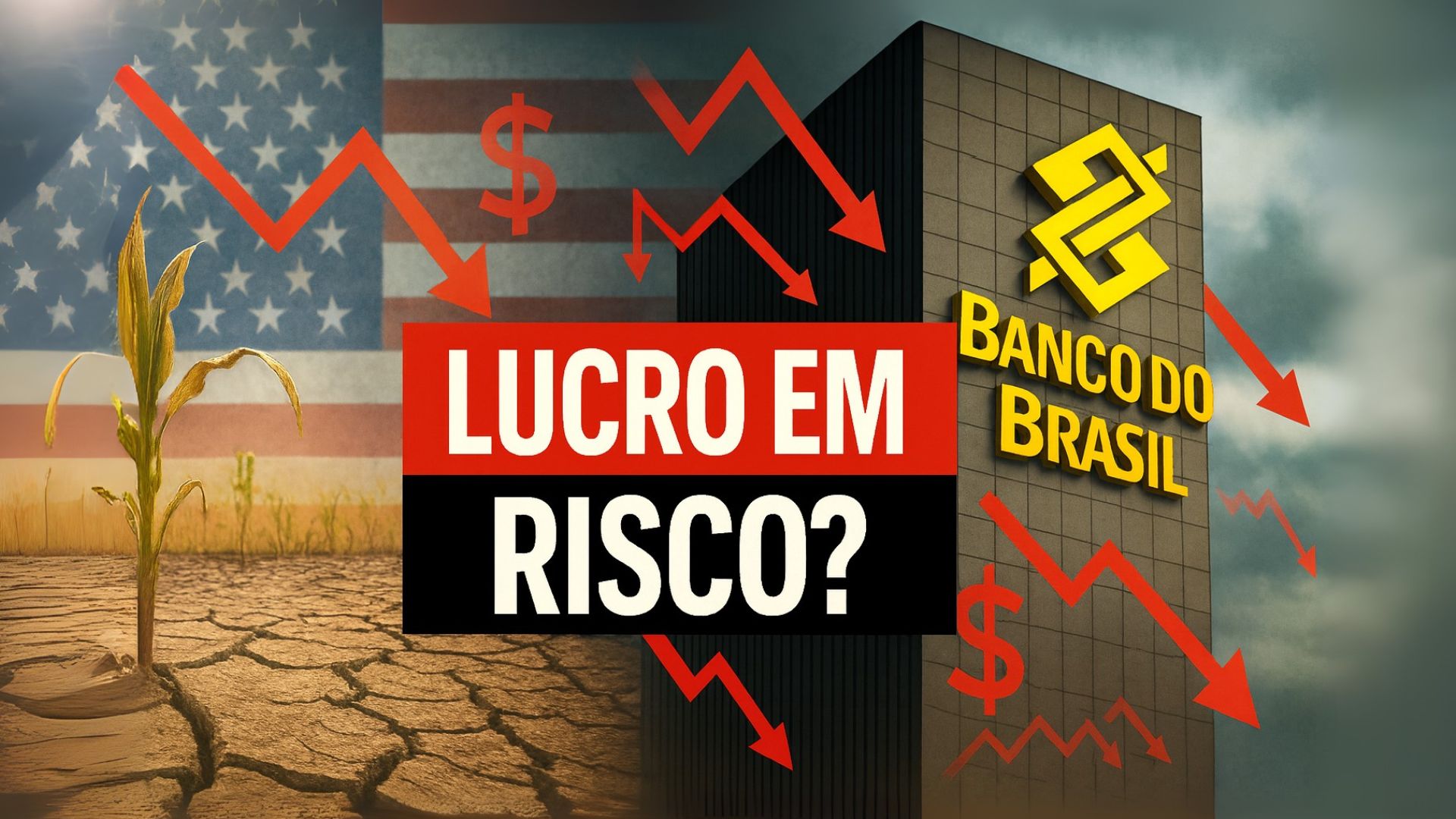


State Bank Faces Uncertain Scenario with High Default Rate in Agriculture, Billion-Dollar Provisions and Possible Foreign Sanctions. Projections from XP Investments Indicate Lower Profits and Slow Recovery Until 2026, with Direct Impact on Profitability.
The Banco do Brasil is expected to face pressured results over the coming quarters, according to a report from XP Investments, which cut the target price of its shares from R$ 32 to R$ 25 and maintained a neutral recommendation.
The assessment considers the combination of external regulatory risk, high default rates — particularly in agriculture — and the need for additional provisions, factors that, according to analysts, are likely to affect profits until 2026.
XP Revises Target Price and Profit Projections
The analysis team formed by Bernardo Guttmann and Matheus Guimarães states that the recovery trajectory will be slow.
-
Ports like Santos and Paranaguá are operating at their limits and may block containers as early as 2030, warns a study by Macroinfra; bottlenecks increase costs and delays and push cargo to Rio, Salvador, Pecém, and Suape across Brazil.

-
Lula reveals in an interview that he asked President Xi Jinping three times to invest in a major project in Brazil, the Salvador-Itaparica bridge, which is set to begin in June with the participation of a Chinese consortium and is expected to be extraordinary, according to the president.

-
Neighboring city of Belo Horizonte has properties starting at R$ 139,000 with 90 m² and a price per square meter much lower than the capital, even concentrating automotive, petrochemical, and logistics hubs.

-
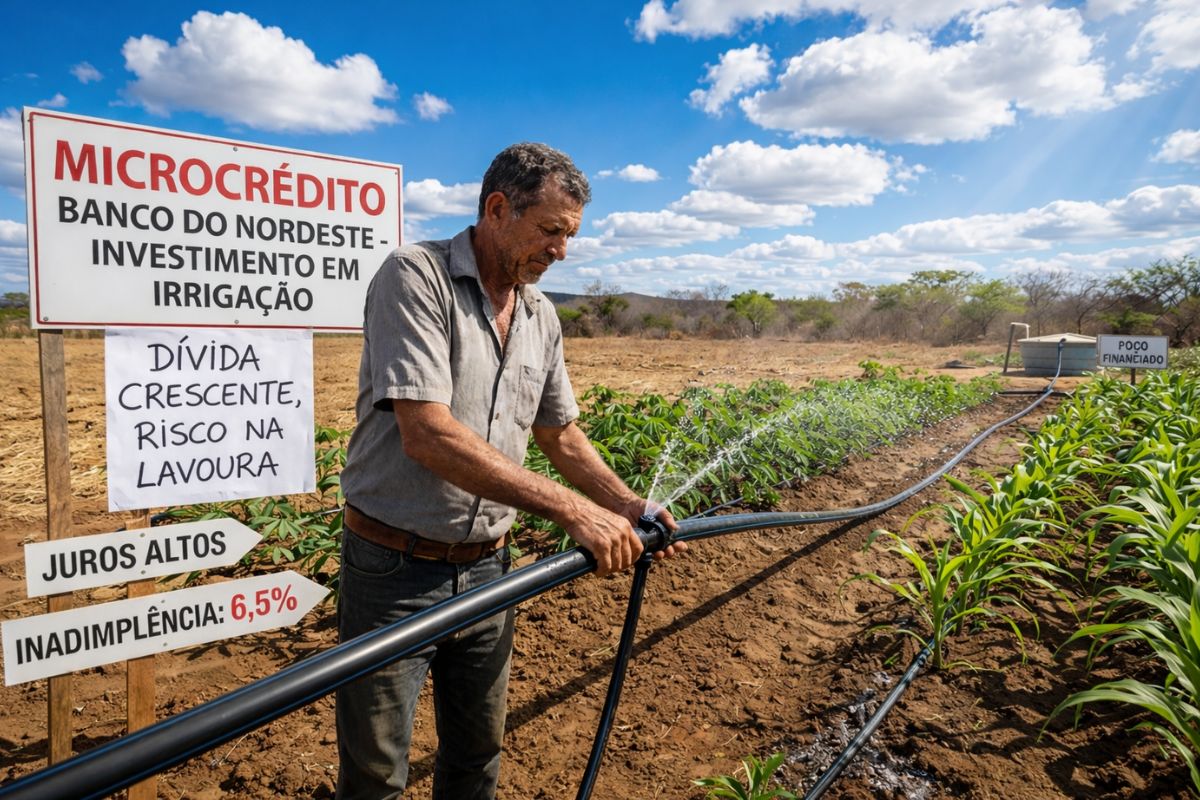
Drought in northern Bahia forces family farmers to invest in expensive irrigation and seek microcredit from Banco do Nordeste; with high interest rates and a default rate of 6.5%, the debt becomes a threat to the crops.

Given the anticipated obstacles, the institution will have little room to accelerate profitability in the short term.
For this reason, in addition to cutting the target price, XP also revised down its profit and return on equity (ROE) estimates for the coming years.
The document also mentions possible U.S. sanctions as an additional uncertainty factor, which reinforces the conservative tone of the report.
Agricultural Default Pressures Results
XP points to the default rate in the agricultural sector as the “big villain” of performance in the second quarter and predicts that normalizing the portfolio will take time.
Even with some signs of improvement, compressed margins still affect smaller or more leveraged producers, which tends to keep pressure on delays and renegotiations.
In addition to agriculture, other lines of credit are expected to contribute to the increased risk.
XP’s assessment is that the aggregate default rate will remain high in the short term, requiring increased provisions and caution in origination.
Billion-Dollar Provisions and Rising Risk Cost
According to XP, the combination of credit risk and a more challenging macro environment will require additional coverage efforts.
“Consequently, in the second half, we project a provision for expected losses of R$ 33 billion,” the report states, which would take the annual total above the upper limit of guidance of R$ 51 billion to R$ 56 billion.
At the same time, the risk cost associated with credit is expected to rise.
XP estimates an increase in the indicator from 3% observed in 2024 to 4.5% in 2025.
This movement, if confirmed, is likely to reduce margins and delay the recovery of results.
Financial Margin and Efficiency Without Advances
In the document, analysts also highlight barriers to net interest margin (NII).
The expectation is for continued pressure on spreads and less room for volume expansion in the most profitable segments.
The efficiency ratio, in turn, is expected to remain stable, with no significant productivity gains capable of offsetting the worsening credit risk.
These factors underpin the repricing of the bank in the XP model, with lower organic capital generation and results weaker than those recorded in 2023.
Profit Estimates and ROE Decline
With the new assumptions, the projections have been recalibrated.
XP reduced its estimate for net profit in 2025 by 21%, to R$ 20.6 billion.
For 2026, the forecast dropped 16%, to R$ 23.3 billion.
In 2024, Banco do Brasil had reported a profit close to R$ 38 billion.
“As a result, we now expect an ROE of 11% for 2025, with returns approaching the cost of capital (Ke) only in the coming years,” analysts record.
Limited Dividends and Expensive Valuations
In the field of shareholder remuneration, XP is working with a 30% payout this year, which would imply a dividend yield of 4.8% at the prices considered in the report.
Analysts also highlight that current multiples indicate a less attractive valuation.
According to XP, in the new projections, Banco do Brasil trades at 6.1 times P/E and 0.7 times P/B for 2025, and at 5.4 times P/E and 0.6 times P/B for 2026.
“In our view, these P/E levels still seem expensive, with a premium over recent years’ averages,” the report says.
Recent Behavior of Shares
In the session mentioned in the report, around noon, Banco do Brasil shares were up 0.27%, at R$ 22.28.
Year-to-date, the stock was down 6.86%, bringing the market value to R$ 128.1 billion.
These numbers help contextualize the gap between the current price and the new target price.
Main Risks Mapped by XP
Among the mapped risks, XP highlights the evolution of the agricultural portfolio as the main point of attention.
The realization of additional losses or a slower normalization could require revisions of provisions.
Also on the radar are the net interest margin, stability of the efficiency ratio, and potential impacts from external regulatory decisions — including possible U.S. sanctions.
A quicker improvement in the credit cycle, coupled with a favorable macro environment and operational gains, is also considered by analysts, but with lower probability in the short term.
Thus, XP maintains the assessment that the bank will face a prolonged period of pressured results.
With this scenario, the lingering question is: to what extent are the risks already reflected in the stock prices, or is there still room for further adjustments by the market?







Fui diagnosticada com doença de Parkinson há quatro anos. Por mais de dois anos, dependi da levodopa e de vários outros medicamentos, mas, infelizmente, os sintomas continuaram piorando. Os tremores se tornaram mais perceptíveis e meu equilíbrio e mobilidade começaram a declinar rapidamente. No ano passado, por desespero e esperança, decidi experimentar um programa de tratamento à base de ervas da NaturePath Herbal Clinic.
Sinceramente, eu estava cética no início, mas, poucos meses após o início do tratamento, comecei a notar mudanças reais. Meus movimentos ficaram mais suaves, os tremores diminuíram e me senti mais firme ao caminhar. Incrivelmente, também recuperei grande parte da minha energia e confiança. Tem sido uma experiência transformadora. Me sinto mais eu mesma novamente, melhor do que me sentia há anos. Se você ou um ente querido está lutando contra a doença de Parkinson, recomendo muito que você considere a abordagem natural deles. Você pode visitar o site deles em www. naturepathherbalclinic .com.