





 Portuguese
  English
  Spanish
  6 min of reading
  0 comments


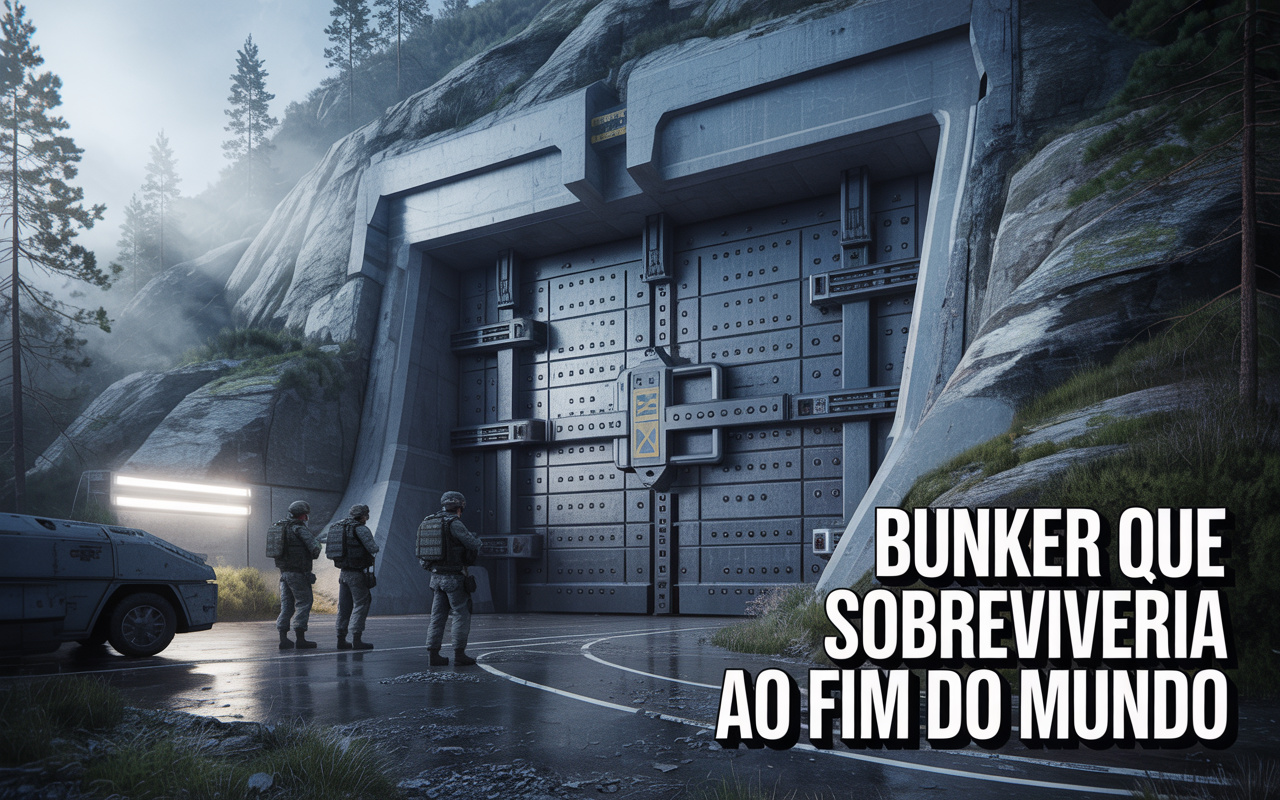
Under 600 Meters of Granite, With 25-Ton Doors and NBC Filters, the Cheyenne Mountain Complex Was Built to Operate After a Nuclear Attack and Remains a Key Piece of U.S. Defense Resilience.
At the height of the Cold War, when the doctrine of “mutual assured destruction” guided military decisions, the United States needed to ensure that the country’s command would continue to operate even after an attack. From this context, the Cheyenne Mountain Complex was born in Colorado, becoming operational in April 1966. Dug deep into the Rocky Mountains to ensure depth and natural protection, the project was designed to provide continuity of government and command of North American airspace under any critical scenario, including nuclear war.
The site housed for decades the command centers of NORAD (North American Aerospace Defense Command) and the Space Defense Center, monitoring missiles, aircraft, and objects in orbit.
Extreme Engineering: 693,000 Tons of Rock Removed and 15 Buildings on Springs
The numbers reveal the scale of the work. Approximately 693,000 tons of rock were removed to open galleries and internal chambers. The “heart” of the complex is not a single hall, but a set of 15 three-story steel buildings mounted on a system of over a thousand dampers and steel springs.
-
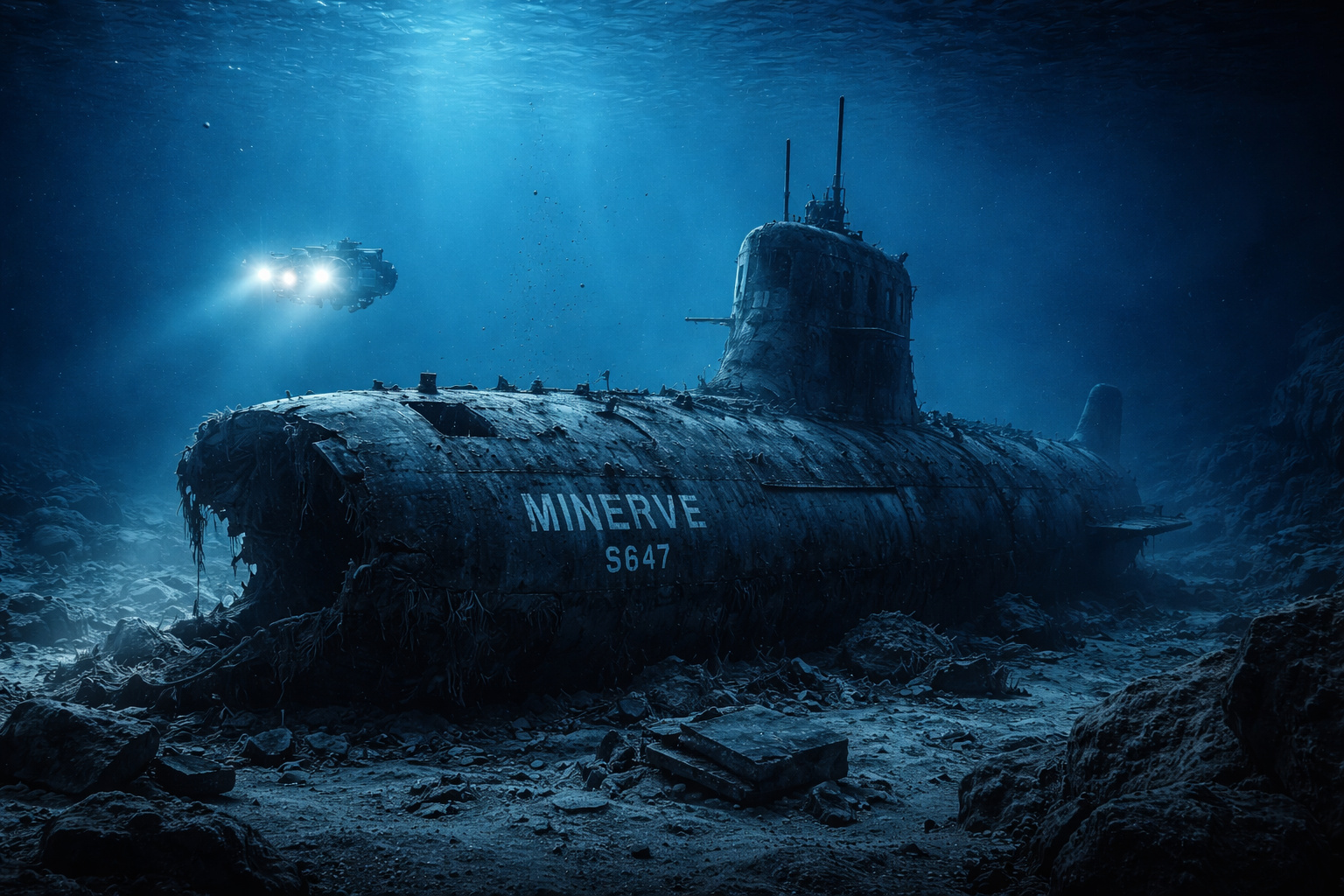
Few remember, but the submarine that disappeared in 1968 with 52 crew members was found after 51 years at the bottom of the sea at more than 2,000 meters, intriguing the entire world.
-
With 1,200 tons suspended, the Japan mega-structure in a grid shape with a floating sphere from Fuji TV features two 25-story towers connected by elevated walkways, titanium panels, and impresses the world with its ability to reduce wind impact.

-
The village where two rivers run side by side without mixing in Santarém and Alter do Chão reveals some of the most beautiful freshwater beaches on the planet.

-
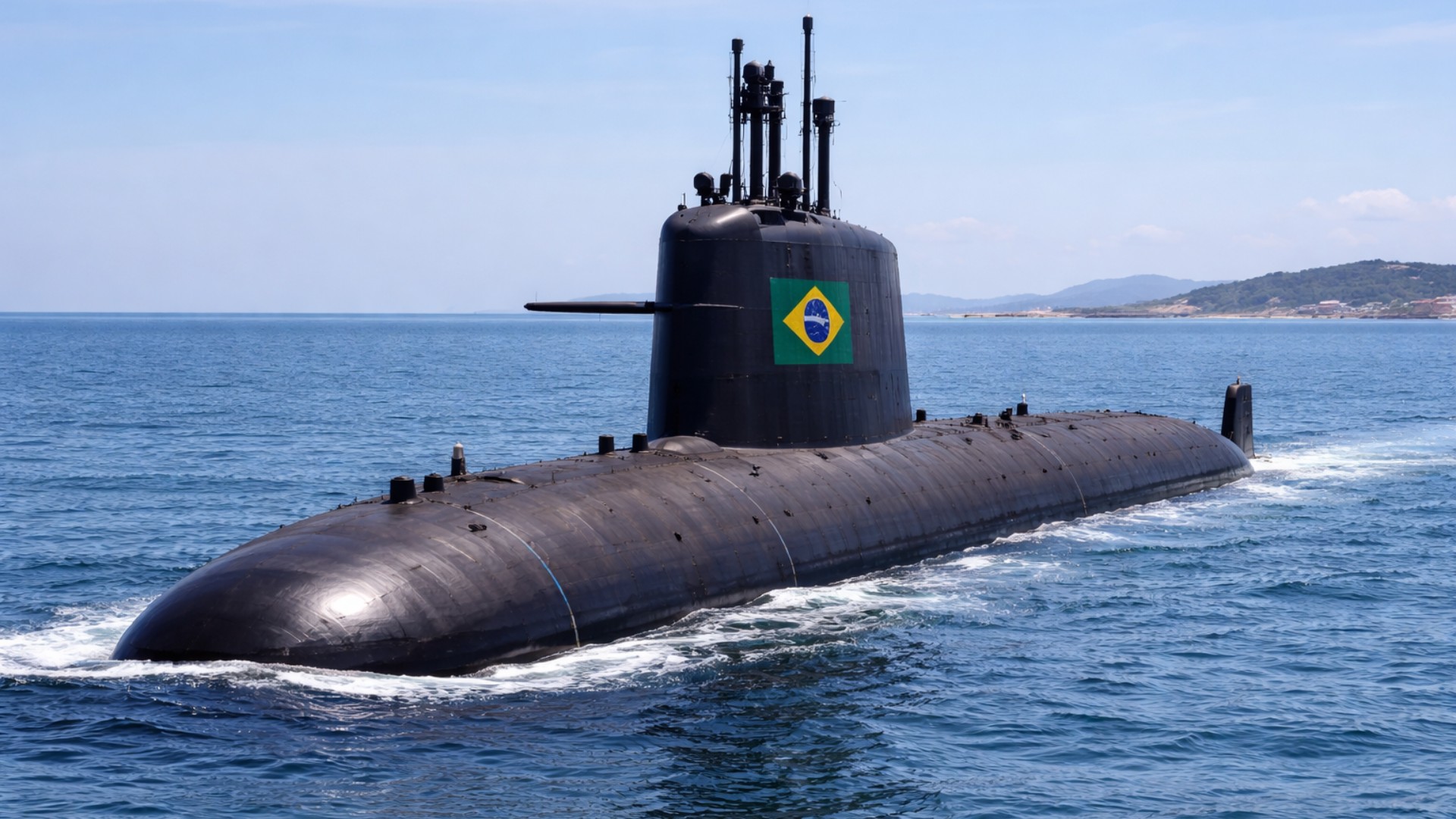
Brazil’s nuclear submarine with a speed 5 times greater than normal advances after nearly 50 years and R$ 40 billion spent.

This solution isolates vibrations and absorbs shock waves so that, in the event of a nearby explosion, each block “floats” a few millimeters relative to the rock mass, preserving the structure and sensitive equipment.
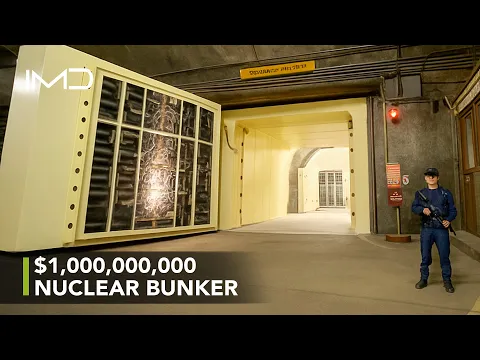

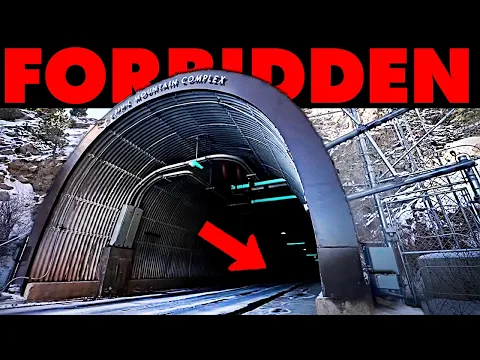
The mountain functions as a natural “super shell”: there are about 610 meters of granite above the critical rooms, creating shielding against impact, radiation, and electromagnetic pulse (EMP). The security doors, two “blast doors” of approximately 25 tons each — close in tens of seconds and seal the complex.
The structural envelope was calculated to survive shocks equivalent to a ~30 megaton detonation a few kilometers away, a scenario used as a design reference during the arms race.
NBC Protection and Autonomy: Energy, Water, Air, and Isolated Operation for Weeks
In addition to the granite shell, the complex integrates layers of NBC (nuclear, biological, and chemical) protection in the ventilation system, with specific filters and shut-off valves that allow for hermetic sealing. The infrastructure includes:
- Self-generated electricity, with redundancies and emergency arrangements.
- Reservoirs and internal sources totaling tens of millions of liters of water, ensuring human consumption, industrial processes, and fire fighting.
- Air conditioning and cooling systems designed to dissipate heat from critical processing centers even without external support.
- Dormitories, cafeterias, medical areas, technical workshops, and a gym, allowing for confinement for weeks.
- Redundant networks of cables, ducts, and galleries for telecommunications and data, constructed with alternative routes within the mountain.
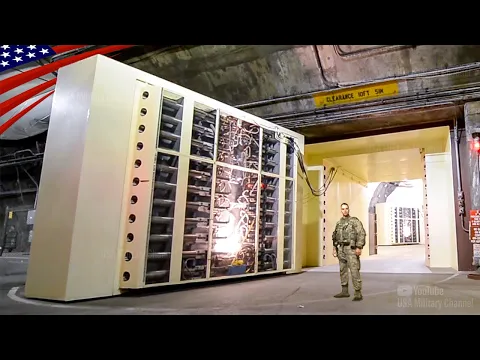
The philosophy is simple: if everything outside fails, the inside keeps going. The internal architecture prioritizes maintenance, repositioning of racks, rapid module replacement, and parallel routes to avoid “single points of failure.”
Operational Mission: Aerospace Surveillance and Command Continuity
For decades, the Cheyenne Mountain Complex was the main NORAD center, monitoring ballistic missile launches, strategic air traffic, and detections from radar networks and satellite constellations.
It integrated aerospace defense alerts for North America and tracking of objects in orbit, with real-time decision cells. From the mid-2000s onward, some functions were transferred to another base, but the complex remained as an alternative facility and contingency center.
In readiness exercises, the chain of command resumes operations from the mountain to validate continuity plans in scenarios ranging from large-scale cyberattacks to nuclear contingencies.
Layers of Redundancy: From Cable to Algorithm
Resilience is not just in concrete and granite. It extends to operational protocols, physical and logical backups, link duplication, and testing routines. Critical systems often operate in “N+1” or “2N,” with duplicated hardware and routes, power banks sized for peaks, and processing islands capable of taking over tasks if a segment fails.
The environment has been designed to withstand surges, EMPs, and instabilities in the national grid. This reduces the chance of cascading failures when decisions matter most: in the first minutes of a real incident.
Materials, Physics, and Layout: What Makes the Mountain a Shield
Dense granite provides attenuation of ionizing radiation and protection against overpressures. By embedding critical modules hundreds of meters deep, engineering drastically increases the arrival time and intensity of the effects of a shock wave, turning the mountain into a natural dissipator.
The internal layout separates hot areas (high-heat equipment), cold areas (command centers), sterile zones (with particle control), and technical corridors. Fire doors and pressurized ante-rooms create “compartments” that limit the spread of incidents.
The set of dampers beneath the buildings is calculated to limit displacements to a few centimeters even in severe events, protecting servers, racks, and consoles.
Design Lessons: How the Mountain Shaped the 21st Century
In a world of combined risks — nuclear, cyber, orbital, and climatic — the logic behind the Cheyenne Mountain Complex remains current: design for the worst, operate for the best. Two recent trends have reinforced its relevance:
- Algorithm and Sensor Warfare: aerospace defense has migrated from radar screens to data meshes with satellites, ground sensors, and commercial constellations. A “data bunker” with physical and electrical protection remains a strategic asset.
- Systemic Risk: the rise of geopolitical tensions and the sophistication of cyberattacks make the need for isolated command centers plausible, with independent energy, water, and air capable of taking control when the rest of the infrastructure is compromised.
Comparisons and Myths: What Is Assumption and What Is Verifiable
Much speculation surrounds secret capabilities, the actual range of protection, and exact personnel numbers. What is publicly verifiable: depth of rock around 600 meters; doors of ~25 tons; a set of 15 internal buildings on springs; resistance design against explosive reference orders on the scale of tens of megatons; dedicated NBC systems; operational autonomy with internal utilities; historical role in NORAD and current function as an alternative readiness facility.
Personnel data, a complete gallery diagram, contingency protocols, and specific capabilities remain classified or are only disclosed in general terms — as is expected of a strategic defense facility.
What Explains the Longevity of the Complex
Three factors sustain the relevance of the Cheyenne Mountain Complex:
- Redundant Architecture: it’s easier to evolve networks and systems within an extremely protected shell than to rebuild “digital shields” in ordinary buildings.
- Geology as Shielding: dense rock does not become obsolete. It increases costs, deflects, delays, and attenuates effects that attack technologies attempt to produce.
- Continuity Doctrine: any country with global command ambitions maintains plans to operate in the worst-case scenario. The mountain meets this doctrine.
Symbolic and Technical Impact: The Idea of a “City That Withstands”
The public image of the complex as tunnels, internal rails, closed rooms, consoles, and maps has crystallized an archetype of a technological fortress that withstands when the surface fails. This archetype has inspired everything from government shelters and hyper-protected data centers to civil projects of “luxury bunkers.”
On the technical side, the legacy lies in standards, redundancy arrangements, environmental segmentation, NBC filtration, and structural damping calculations that still influence critical energy, telecom, and defense designs today.
Although the daily operations of NORAD have largely migrated, the complex remains in “warm standby”: manned, maintained, tested, and prepared to take over command functions as per contingency protocol.
In exercises, command and monitoring layers are reactivated to validate response time, system stability, and integration with modern networks. The central concept remains unchanged: if a crisis requires a decision cell under maximum protection, the mountain closes its doors and operates.
Closure: The Logic of Resilience Materialized
The Cheyenne Mountain Complex is the materialization of a simple and costly principle: in national security, redundancy is not a luxury, it is a requirement. Hidden under hundreds of meters of granite, with 25-ton doors, NBC filters, buildings on springs, and self-sufficient utilities, the complex was designed for an extreme scenario and, for that reason, remains relevant in any scenario.
The engineering created there an organism capable of deciding and operating when the rest of the body weakens. That is what makes it — still — one of the most resilient military environments on the planet.






-

2 pessoas reagiram a isso.