





 Portuguese
  English
  Spanish
  6 min of reading
  1 comment





The Qinghai-Tibet Railway, considered the highest railway in the world, traverses deserts, plateaus, and mountains over 5 thousand meters above sea level. An achievement of Chinese railway engineering that operates with punctuality and precision.
In one of the most hostile regions on the planet, where temperatures can plummet to -40°C and oxygen is 40% thinner than at sea level, China built the highest railway in the world. The impressive Qinghai-Tibet Railway, which connects the city of Xining in Qinghai province to the Tibetan capital of Lhasa, is a feat of modern railway engineering, crossing frozen deserts, permafrost terrain, and snow-capped mountains at over 5 thousand meters above sea level.
Known as Tibetan Train, the daily railway service that runs along this line revolutionized transportation in the region by making accessible one of the most remote and geopolitically sensitive areas of China. The highest point of the railway — the Tanggula Station, located 5,068 meters above sea level — solidified its title as the highest railway in the world and marked a new era for railway transportation at extreme altitudes.
A Monumental Project of Chinese Railway Engineering
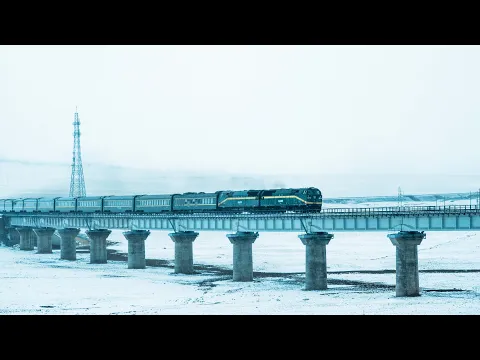

The construction of the Qinghai-Tibet Railway took five years and demanded unprecedented solutions in the field of railway engineering. Most of the 1,956 km stretch was completed by 2006, but the most difficult sections — especially those crossing unstable permafrost of the Tibetan plateau — required additional investments in technology, infrastructure, and specialized labor.
-
Beneath Mexico City lies an entire buried Aztec capital, and it all began when workers discovered a 3.25-meter stone disk featuring a dismembered goddess, revealing temples, skulls, and palaces beneath 22 million people.
-
How to build a 35,000-liter cistern with 60 by 50 cm panels and rainwater for drinking and cooking without relying on water trucks or the city hall.
-
A woman went out for a regular walk and ended up finding a treasure buried for over 900 years, with more than 2,000 medieval silver coins compared by archaeologists to a lottery prize and considered one of the most significant finds in recent years in the country.

-
Scientists revealed 11 signs that very intelligent people exhibit in their daily lives, and most people have no idea that some of these common behaviors are directly linked to an above-average brain.


Engineers had to develop suspended foundations to avoid direct contact of the tracks with the frozen ground, which expands and contracts with seasonal variations. Refrigerated tracks with systems of tubes filled with liquid nitrogen, temperature sensors, and ventilated structures were incorporated along hundreds of kilometers of the route. All this to ensure that the railway remained stable and safe, even when nature threatened to give way.
Besides the physical structures, the trains used were also modified. The locomotives and cars operate with pressurization systems similar to those of airplanes, allowing passengers and crew to breathe comfortably. All compartments feature supplemental oxygen, especially useful at points over 4,000 meters above sea level.
Precise Operation: One of the Most Punctual Railway Systems in the World
Despite the adverse conditions, the Tibetan train maintains a level of punctuality that rivals the most advanced global railway systems. According to the China Railway Corporation, trains on the Qinghai-Tibet Railway operate with timing precision, even at extreme altitudes and under rapidly changing weather conditions.
This performance is only possible thanks to a real-time monitoring system that inspects tracks, bridges, tunnels, and weather. Highly trained maintenance teams are positioned along the line for immediate responses to any anomalies. Each trip is planned with safety margins and operational redundancies to face snowstorms, landslides, and unexpected freezing.
The reliability of the system not only represents a technical triumph but has also radically transformed the logistics of the region. Before the railway, access to Tibet was limited to hard-to-maintain roads, often blocked by snow or landslides. Today, thanks to the Tibetan train, supplies, food, medicine, and people can circulate safely and regularly year-round.
Journey to the Top of the World: The Unique Experience of the Tibetan Train
Traveling the Qinghai-Tibet Railway is more than a simple geographical crossing. For passengers, it is a true journey to the roof of the world. On board the trains, which depart from Xining and take about 20 hours to reach Lhasa, one can observe absolutely unique landscapes, such as salt deserts, glacial lakes, and snow-capped mountains.
The trains feature panoramic windows, reclining seats, sleeper cars, onboard services, and even monitors that inform in real-time about altitude and oxygen levels. The pressurized climate control system and individual oxygen supply make the journey comfortable, even at altitudes over 4,500 meters.
For tourists and adventurers, the route is one of the most spectacular — and safest — ways to acclimatize to the altitude before exploring the Tibetan capital. The experience not only attracts travelers from mainland China but also international visitors wishing to experience one of the most iconic railway lines on the planet.
The Geopolitical and Cultural Impact of the Qinghai-Tibet Railway
More than a technical achievement, the Qinghai-Tibet Railway is also an instrument of geopolitical integration. Tibet is an autonomous region of China, with a history of ethnic and religious tensions. By establishing a direct railway link with the rest of Chinese territory, Beijing not only facilitates transport but also reinforces its physical and symbolic presence in the Tibetan plateau.
The arrival of the railway accelerated the migration of Chinese workers and entrepreneurs from other regions to Tibet, transforming the urban, demographic, and economic landscape of the area. New neighborhoods, shopping centers, modern stations, and hotels have sprung up around the line, increasing capital circulation and consolidating state presence.
On the other hand, international organizations warn of the risk of cultural and religious erosion due to the increasing Han presence in Tibet. For the Chinese government, the railway is a pathway for development; for critics, it is also a pathway for assimilation.
The Economic Boost from the Highest Railway in the World
Regardless of the political debate, the economic effects of the Qinghai-Tibet Railway are evident. According to data from the Chinese government, the cost of transporting goods to Tibet was reduced by over 50% after the line’s inauguration. Products that previously took weeks to arrive are now delivered in just a few days, with more regularity and safety.
The tourism sector was one of the most benefited. In just five years after operations began, the number of visitors to the region tripled. This movement generated direct and indirect jobs in sectors such as hospitality, gastronomy, local transportation, and handicrafts.
The Tibetan train has also boosted the export of typical regional products, such as medicinal herbs and wool and leather goods. For the first time, Tibetan rural producers gained access to larger markets in urban centers across China without relying solely on road transport.
Future Expansions and Ambitions
Since 2014, the railway has been extended to Shigatse, the second largest city in Tibet. Future projects are already underway to extend the line toward the border with Nepal, where Beijing hopes to create a strategic railway connection with Kathmandu. This expansion is part of the Belt and Road Initiative (BRI), China’s initiative to connect Asia, Europe, and Africa through logistical corridors.
These new lines not only reinforce the reach of the Qinghai-Tibet Railway but also the country’s role as a dominant player in regional infrastructure. Railway integration with neighboring countries may, in the near future, transform Tibet into a transit point for international cargo and passenger routes.
The Balance Between Technological Advancement and Environmental Preservation
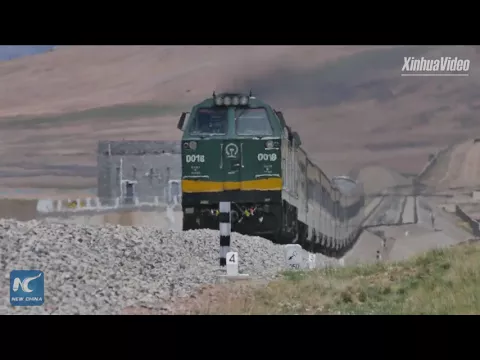
The construction of the highest railway in the world also raised environmental concerns. The Tibetan plateau is one of the most sensitive ecosystems on the planet, home to endangered species such as the Tibetan antelope and the snow leopard. To minimize impacts, engineering projects incorporated underground passages for wildlife, real-time environmental monitoring, and ecological support stations along the line.
Still, environmentalists argue that increased human traffic and urban occupation could disrupt the delicate ecological system of the region. The Chinese government claims it is closely monitoring the situation and that the railway has brought more benefits than environmental harm.
The Qinghai-Tibet Railway is not just the highest on the planet. It is, above all, a symbol of how technology can overcome geography. The Tibetan Train transformed the reality of one of the most isolated regions on Earth, bringing not only transport and goods but also progress, debate, and influence.
Built over frozen deserts and icy mountains, it daily challenges the extremes of nature and continues to operate with impressive punctuality. In an increasingly divided world between tradition and innovation, this railway shows that it is possible, albeit controversially, to connect even the most unreachable points on Earth.






Absolutamente fantástico!!!