





 Portuguese
  English
  Spanish
  5 min of reading
  2 comments


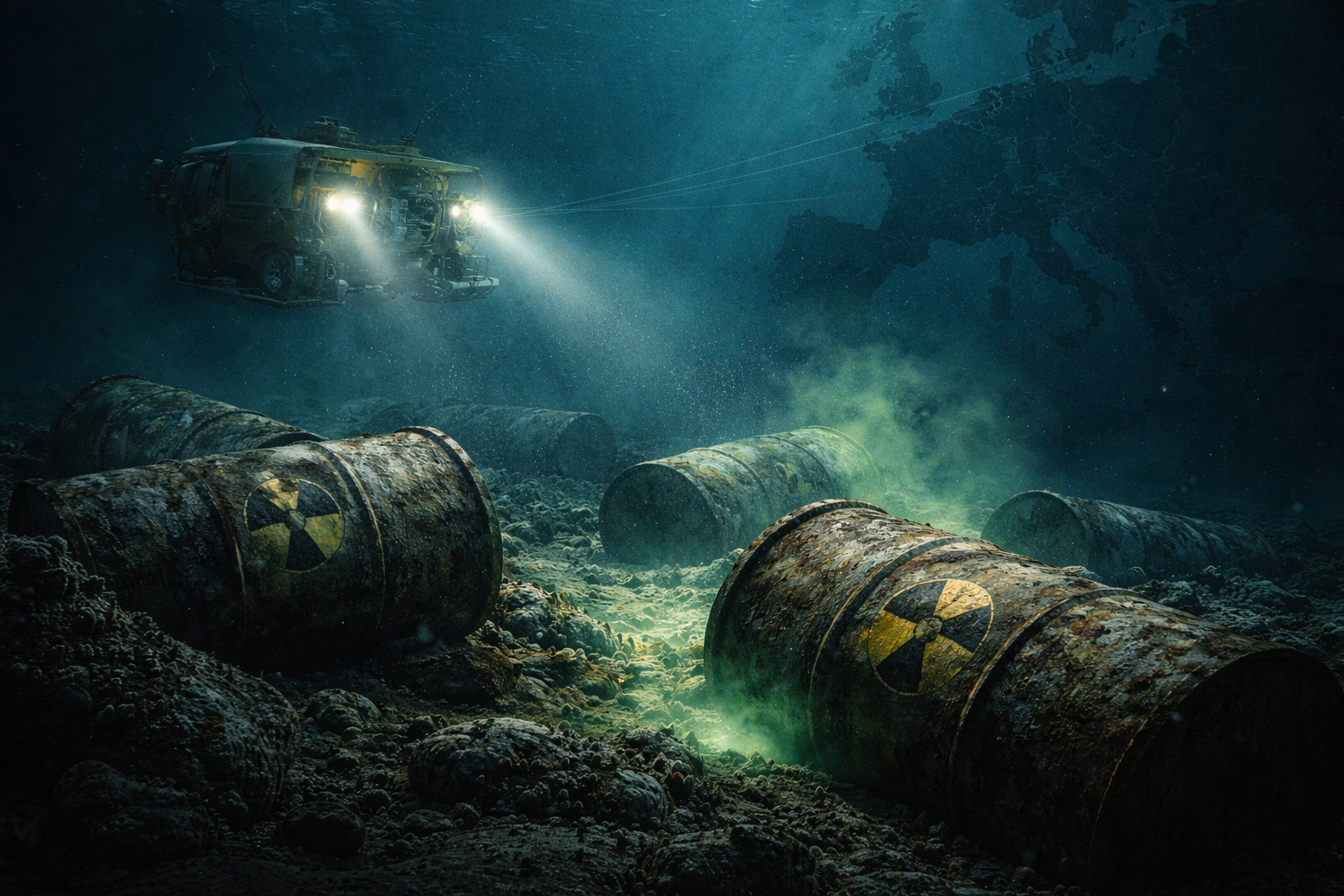


Between 1950 and 1980, European countries dumped thousands of radioactive barrels in the Atlantic; scientists are only now able to map this submerged nuclear waste.
For more than three decades of the 20th century, the bottom of the Atlantic Ocean was treated by European powers as a silent and definitive destination for nuclear waste. Between the 1950s and 1980s, France, the United Kingdom, Belgium, the Netherlands, Germany, and Switzerland participated in official operations for the disposal of radioactive waste at sea, throwing thousands of metal barrels containing nuclear waste into deep areas of the Northeast Atlantic. At the time, the practice was considered legal, technically safe, and aligned with the scientific knowledge available. Today, it is seen as one of the greatest environmental liabilities of the nuclear era.
The problem remained off the public radar for decades. The exact dumping sites were not widely disclosed, the barrels were released at great depths, and it was believed that the ocean would dilute any risk. Only recently, with the advancement of underwater mapping technologies and a new generation of environmental studies, have scientists begun to locate, count, and assess the actual condition of these submerged containers.
European Nuclear Disposal in the Atlantic During the Atomic Era
After World War II, the accelerated expansion of nuclear power plants and research programs generated a growing volume of low- and intermediate-level radioactive waste.
-
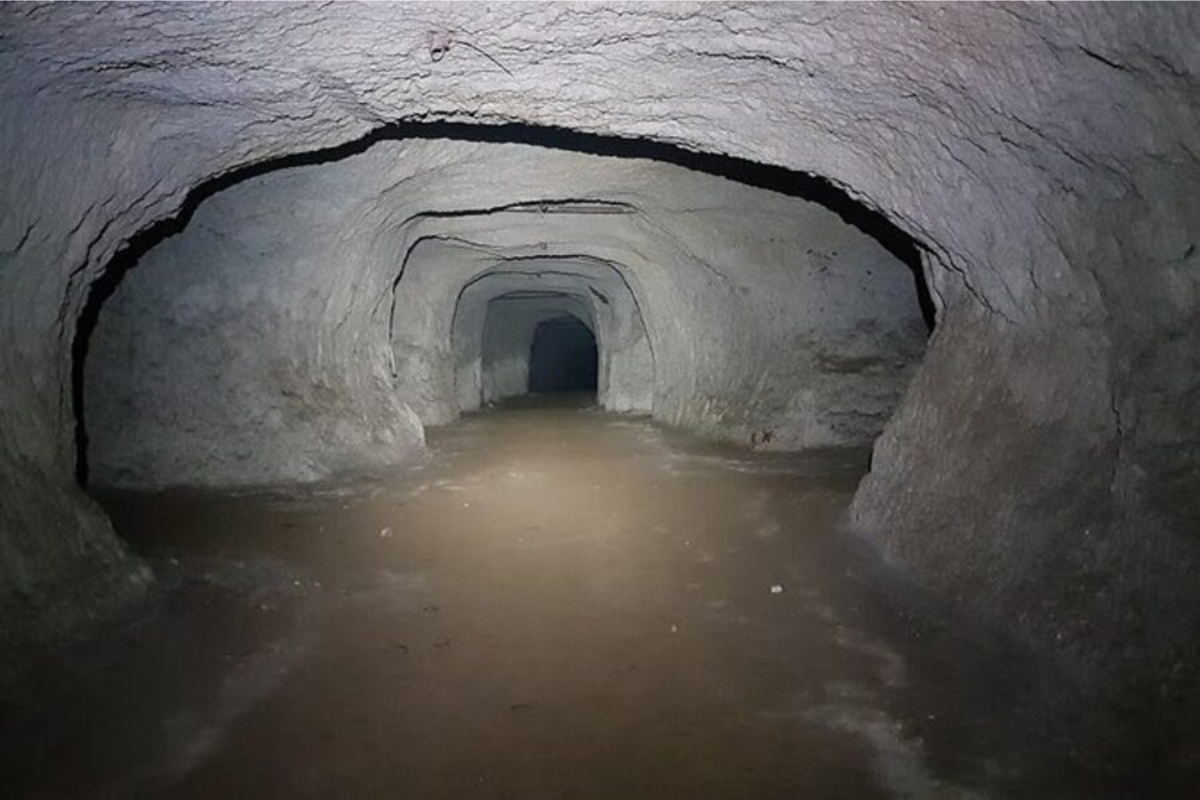
Discovery of a 15-kilometer labyrinth beneath the buildings of Rome raises alarm for collapses and reveals the largest underground network ever found in the Italian capital.
-
A rare storm phenomenon in the United States alerts meteorologists worldwide due to four different forms of water falling from the sky, which freeze immediately upon touching the ground, poles, cars, or trees.

-
He has been using a wheelchair for almost 10 years, lives alone, is independent, and decided to become a delivery driver for an app: Samuel makes up to 6 deliveries a day, covering routes of 1 km in his wheelchair and has even managed to do 2.5 km in a single run.

-
An island of 7,500 people received 38,000 bananas by mistake, was left unsure where to store everything, and turned the error into a viral case with donations, hustle, and fruit overflowing everywhere.

With no definitive solutions on land and facing the high cost of secure storage, the ocean began to be seen as a viable alternative. Between the 1950s and 1980s, European countries organized joint disposal operations, dumping sealed barrels in deep ocean areas, far from the coast and busy shipping routes.
These operations took place under governmental supervision and, in many cases, with scientific backing of the time. It is estimated that more than 200,000 barrels were dumped in the Northeast Atlantic, mainly in areas known as dumping sites, located at depths ranging from 3,000 to 5,000 meters.
Which Countries Participated in the Dumping of Radioactive Waste
The practice was neither isolated nor clandestine. France and the United Kingdom led the volume of disposals, but Belgium, the Netherlands, Germany, and Switzerland also officially participated. In some cases, landlocked countries like Switzerland used international agreements to send their waste to European ports and integrate it into maritime operations.
The waste included contaminated materials from laboratories, filters, clothing, tools, and solidified liquid waste. Although classified as less hazardous compared to used nuclear fuel, these materials contained radionuclides with half-lives of decades or centuries, such as cobalt-60, cesium-137, and trace plutonium.
Why Was the Ocean Chosen as a “Solution”
In the logic of the time, the deep ocean offered three advantages considered decisive: geographical isolation, low water circulation, and enormous dilution volume.
The prevailing belief was that the barrels would remain intact long enough for radioactivity to decay to harmless levels.
This reasoning is now widely questioned. Modern studies show that deep ocean environments are not static. There are currents, biological activity, extreme pressure, and chemical processes capable of accelerating the corrosion of the metal containers.
What Has Changed and Why Scientists Have Returned to the Topic
Scientific interest in submerged nuclear waste has resurfaced since the 2000s, driven by three main factors: technological advancements, increased environmental concern, and climate change.
Autonomous underwater vehicles, high-resolution sonars, and radiation sensors have allowed, for the first time, to accurately map disposal areas that were previously only estimated on old maps.
Institutes like IFREMER (France) and international programs linked to the International Atomic Energy Agency (IAEA) have begun conducting expeditions to locate barrels, assess their structural condition, and measure potential leaks.
Initial results indicate that many containers are already severely corroded, although there is still no consensus on the extent of radioactive release.
What Has Been Found at the Bottom of the Atlantic
Scientific missions have located barrels partially buried in sediment, others collapsed, and some covered by colonies of marine organisms.
In specific locations, elevated levels of radioactivity have been detected in the immediate surroundings, although quickly diluted in the ocean volume.
The greater risk is not a sudden event, but a slow and continuous release of radionuclides into the marine environment. These elements can be absorbed by microscopic organisms, enter the food chain, and, over time, reach larger fish.
Environmental Impact and Concerns About Fishing
The Northeast Atlantic hosts economically relevant fishing areas for Europe. Although there is currently no evidence of large-scale contamination, scientists warn that monitoring needs to be continuous and long-term. The fear is that the progressive degradation of the barrels will generate cumulative impacts that are difficult to detect in the short term but significant over decades.
In addition to environmental impact, there are concerns about international responsibility. Many of the disposals occurred under legal standards that no longer exist today. In 1993, the London Convention began to completely prohibit the dumping of radioactive waste at sea, officially ending this practice.
Why Has the Problem Been Hidden for So Long
For years, submerged nuclear waste has been treated as a closed issue. The lack of adequate technology, the high cost of investigation in deep waters, and the political discomfort of revisiting past decisions contributed to the silence. Only now, with greater scientific transparency and environmental pressure, has the topic returned to public debate.
Reopening this discussion means facing an uncomfortable legacy: decisions made by previous generations continue to produce risks that fall on the present and future.
A Nuclear Liability That the Ocean Did Not Wipe Away
The dumping of radioactive waste in the Atlantic by European countries is a clear reminder of how solutions deemed acceptable in a certain historical context can turn into long-term global problems. The ocean, far from “solving” the problem, merely hid it temporarily.
Today, scientists are trying to understand the real extent of this submerged nuclear liability. The big question is not just what has already leaked, but what may still leak as time and corrosion progress.
And you, reader: should the cost of this historical nuclear waste be paid collectively by the international community or individually by the countries that chose to dump it at sea?






Por cada pais. Eles são os principais responsáveis
Acompanho com frequência as matérias publicadas nesse site. São interessantes. Especificamente nessa matéria de suma importância, embora os termos “lixo nuclear”, “resíduo nuclear”, “resíduo radioativo” tenham maior potencial de compreensão pelo leitor, sugiro humildemente que junto com eles seja utilizado o termo correto sempre que é rejeito radioativo. Há significado na nomenclatura correta. Rejeito e não resíduo. Rejeito se deve ao fato de ser rejeito mesmo, não há ainda destino definitivo consistente e economicamente viável, como a própria matéria destaca. O resíduo tem a possibilidade de descarte adequado, reutilização e outros processos. Rejeito não, rejeitado verdadeiramente pelos processos definitivos praticados usualmente. E parabéns pela matéria!