





 Portuguese
  English
  Spanish
  5 min of reading
  0 comments


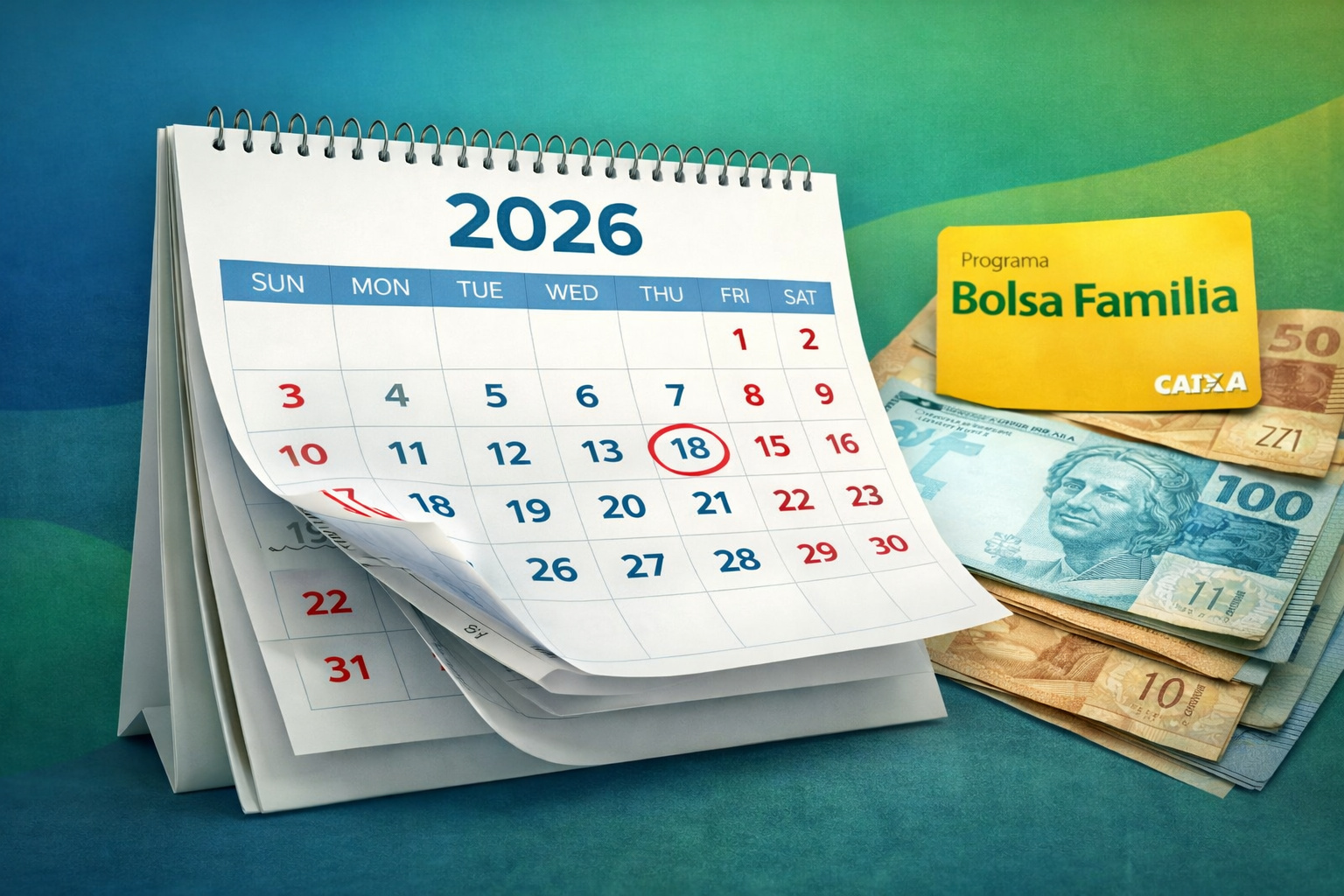
2026 Bolsa Família Calendar Has Not Yet Been Released, But It Is Expected to Follow the 2025 Model; See Anticipated Dates, Amounts, Rules, and Who Is Eligible.
As the turn of the year approaches, millions of Brazilian families are closely following the definition of the 2026 Bolsa Família calendar. The official schedule, which organizes payment dates according to the end of the NIS, has not yet been released by the Federal Government, but the expectation within the technical area is to maintain the same model adopted in 2025, both in the payment method and in the basic amounts of the program.
The logic of the calendar follows a pattern already known to beneficiaries and aims to avoid queues, reduce congestion in the systems of Caixa Econômica Federal, and ensure predictability in receiving the benefit, which today is the primary source of income for millions of households in vulnerable situations.
When Is the Official 2026 Bolsa Família Calendar Released?
So far, the Ministry of Social Development and Assistance has not published the official 2026 Bolsa Família calendar. Traditionally, this schedule is released between the end of December and the beginning of January, before the first payment of the year.
-
The institute that trained the greatest aerospace engineers in Brazil has just opened its first campus outside São Paulo after 75 years: ITA Ceará will have R$ 445 million, new courses in energy and systems, and classes are expected to start in 2027.

-
Luciano Hang, owner of Havan, goes to Juiz de Fora after the tragedy in February, brings R$ 1 million, hands out R$ 2,000 cards, and donates up to R$ 15,000 to victims in the region.

-
The Brazilian passport allows legal residence in dozens of countries without the need for a prior visa, and most Brazilians are unaware that they can apply for residency directly upon arriving in nations in South America, Africa, and even Europe.

-
Petrobras sends a message to Brazilian truck drivers after fuel collapse and reveals plan to have 100% domestic diesel.


In the meantime, the government itself indicates that the format is expected to replicate that of 2025, with deposits occurring in the last ten business days of each month, organized according to the last digit of the NIS (Social Identification Number).
This division is essential to maintain an organized flow of payments and avoid congestion in applications, ATMs, and lottery houses.
How the Calendar Should Function in January 2026
Even without official confirmation, the projection for January 2026 is already circulating among beneficiaries and social sector technicians, following exactly the logic of previous years. If the standard is maintained, payments should occur as follows:
- Last digit of NIS 1: 01/20/2026
- Last digit of NIS 2: 01/21/2026
- Last digit of NIS 3: 01/22/2026
- Last digit of NIS 4: 01/23/2026
- Last digit of NIS 5: 01/26/2026
- Last digit of NIS 6: 01/27/2026
- Last digit of NIS 7: 01/28/2026
- Last digit of NIS 8: 01/29/2026
- Last digit of NIS 9: 01/30/2026
- Last digit of NIS 0: 01/31/2026
This staggered model tends to repeat throughout the year, except in December, when payments are usually brought forward so that families receive them before the year-end festivities.
Is There a Possibility of Anticipation of Bolsa Família in 2026?
Yes. Bolsa Família may have early payments in specific situations outlined in the program’s regulations. This occurs when there is a public calamity or emergency officially recognized by the Federal Government, such as floods, severe droughts, landslides, or other natural disasters.
In these cases, beneficiaries in affected municipalities receive the amount on the first day of the monthly calendar, regardless of the last digit of the NIS. This measure aims to ensure quick access to money for food, temporary housing, and other basic needs.
This mechanism has been widely used in recent years and is expected to continue in 2026 whenever there is an official emergency decree.
Which Bolsa Família Amounts Should Be Maintained in 2026
The minimum amount of Bolsa Família remains at R$ 600 per family, as indicated by the government. Additionally, the additional benefits that increase the total amount based on family composition remain in effect.
The main additional benefits are:
- The Early Childhood Benefit, which pays R$ 150 per child up to 6 years old, recognizing the higher cost during this phase of life.
- The Variable Family Benefit, worth R$ 50 for each pregnant woman, nursing mother, child, or adolescent between 7 and 18 years old.
- The Nursing Benefit, which guarantees R$ 50 for each baby up to 6 months, focusing on appropriate nutrition in the first months of life.
In practice, this means that many families receive amounts above the R$ 600 floor, depending on the number and age of the members.
Who Can Receive Bolsa Família in 2026
The main rule for access to the program remains the income limit. To be eligible for Bolsa Família, a family must have a monthly income of up to R$ 218 per person.
The calculation is simple: add up all the household income and divide by the number of residents. If the result is below this amount, the family is eligible.
A common example helps to understand: if a family has seven people and only one member receives a minimum wage of R$ 1,518, the income per person will be R$ 216.85, which guarantees eligibility for the benefit.
In addition to income, the program requires the fulfillment of social commitments, such as school attendance for children and adolescents, prenatal care for pregnant women, and updating vaccination records.
How to Register to Receive Bolsa Família
The first step to joining Bolsa Família is to be registered in the Single Registry for Federal Government Social Programs (CadÚnico). Registration is done in person at the References Centers for Social Assistance (Cras) of the municipalities.
It is important to note that being in CadÚnico does not automatically guarantee the receipt of Bolsa Família. The registration serves as a database that allows the government to analyze who meets the program’s criteria.
Keeping information updated in CadÚnico is crucial to avoid blocking, suspending, or canceling benefits.
How to Withdraw and Manage Bolsa Família in 2026
Beneficiaries do not need to go to a bank branch to access the money. The amount can be managed through the Caixa Tem app, where it is possible to pay bills, make transfers, shop with a virtual card, and even generate a code for withdrawal.
It is also possible to withdraw the benefit at Caixa ATMs, lottery houses, and bank correspondents, in addition to the agencies themselves, using the physical card or the app.
While the official 2026 calendar has not been published, the government emphasizes that the current model remains valid and that any changes will be communicated in advance. For those who depend on Bolsa Família, tracking these dates is essential for budgeting and avoiding surprises at the beginning of the year.










-

-

-

-

-

18 pessoas reagiram a isso.