





 Portuguese
  English
  Spanish
  4 min of reading
  0 comments


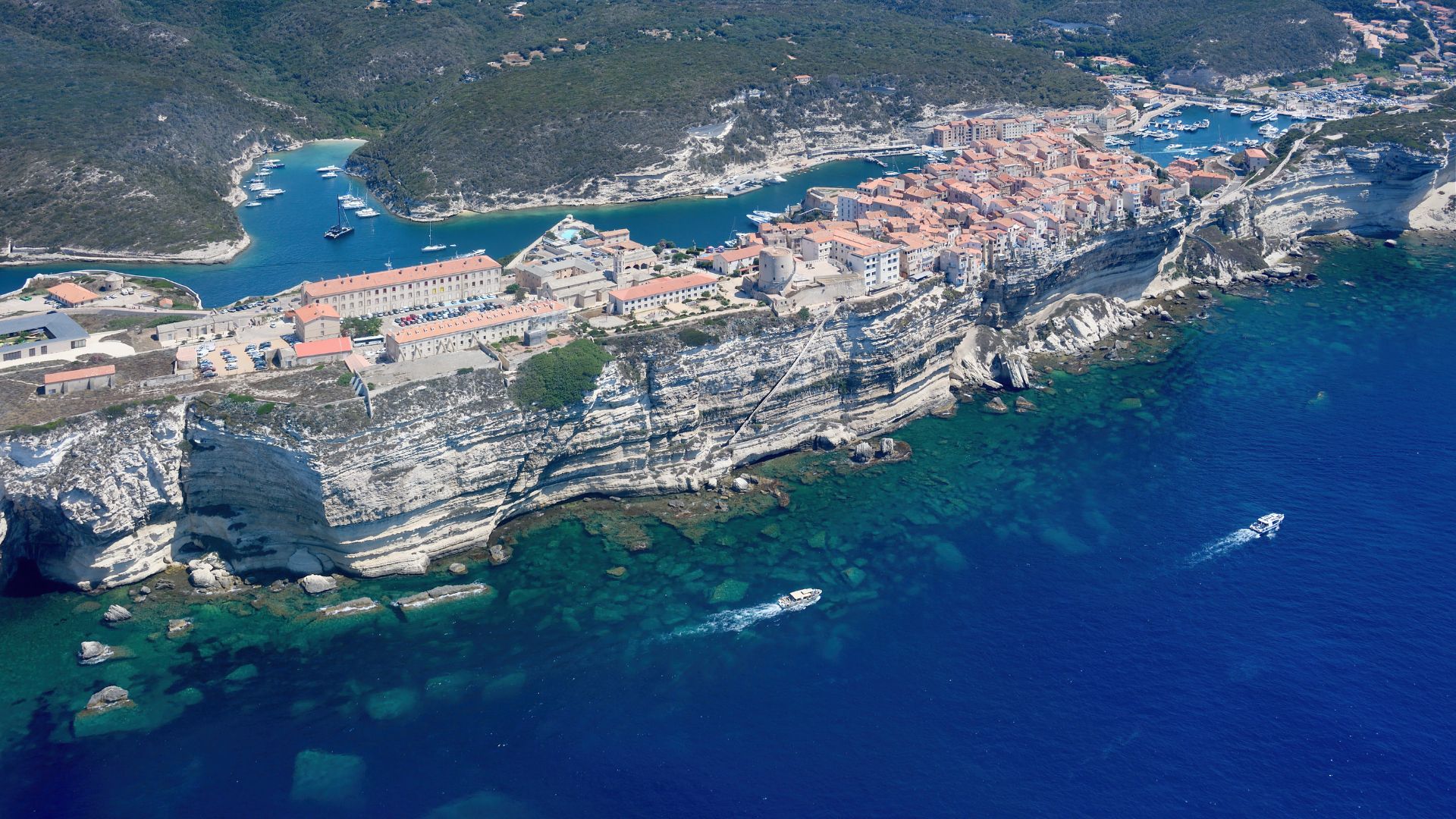
With Cliffs That Seem to Defy Gravity, the City Combines 1,200 Years of History, Preserved Medieval Center, Dramatic Landscapes, and Views Reaching Sardinia in the Heart of the Mediterranean
Bonifacio, or Bunifaziu in Corsican, is one of those places that seems to have been sculpted to defy the logic of geography. Located at the southern tip of Corsica, this French commune covers 138.36 km², is home to only 2,658 residents, and stands out for being perched atop 70-meter cliffs, in one of the most dramatic and photographed scenes in the entire Mediterranean.
Moreover, it holds the title of the southernmost commune of Metropolitan France, marking the country’s extreme limit before the sea makes way for the Italian island of Sardinia, located just 12 kilometers on the other side of the Strait of Bonifacio. This information was highlighted by National Geographic Traveler, which describes the city as one of the most impressive and visually striking settings in Europe.
Between Calcareous Cliffs and Natural Walls: How Bonifacio Was Born to Withstand
Founded in 828 A.D. by Count Bonifacio II of Tuscany, the city emerged as a strategic military post capable of controlling navigation between Corsica and Sardinia. At the time, the calcareous cliffs served as natural walls, providing protection against invasions and solidifying Bonifacio as a virtually impregnable fortress.
-
The simplest swap at home can reduce energy consumption by up to 90% without changing habits, using a technology that lasts up to 25 times longer and consumes only a fraction of the electricity.

-
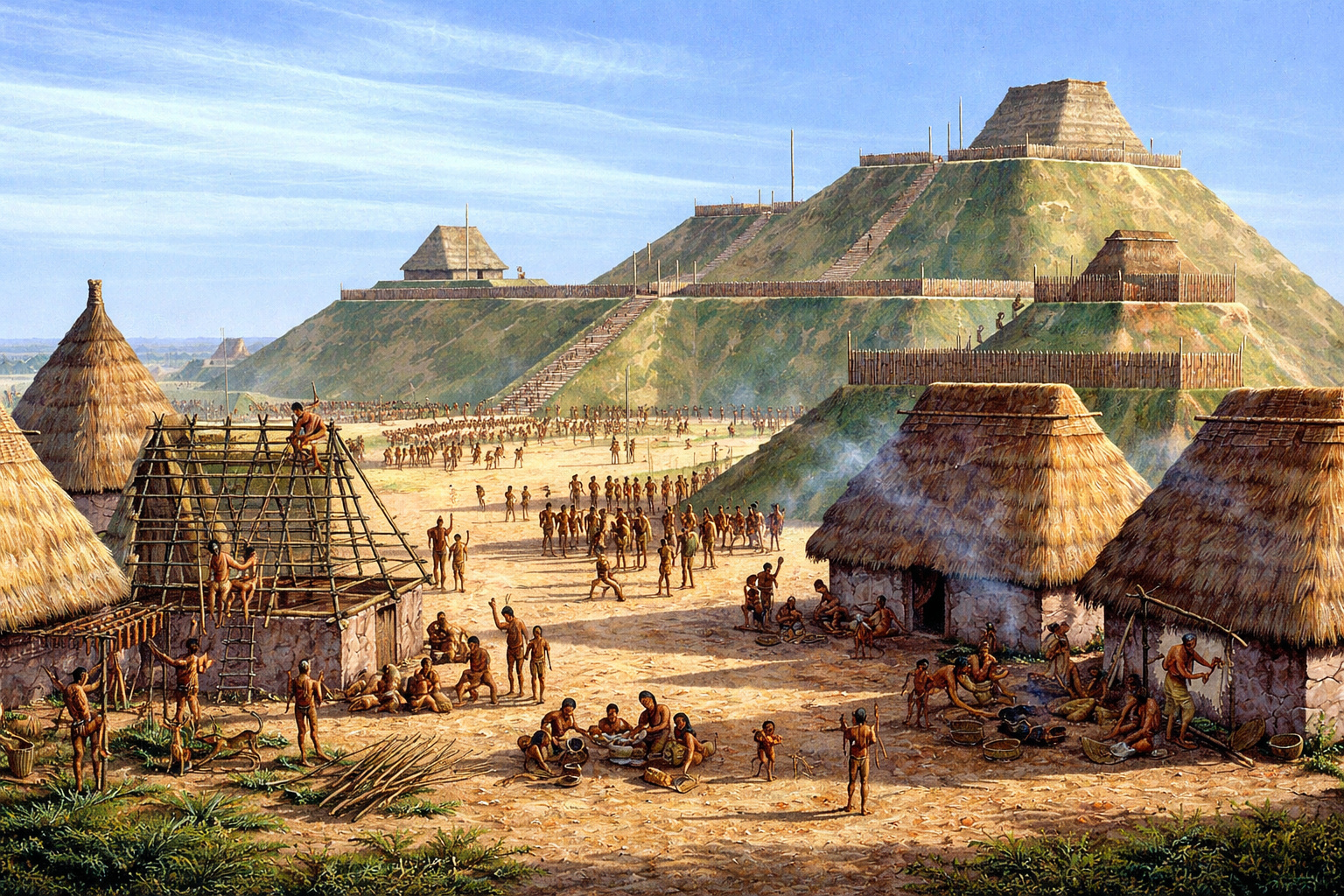
With over 14 million baskets of earth moved, an ancient North American metropolis built a monumental pyramid of 30 meters and established a city with 20,000 inhabitants nearly a thousand years ago.
-
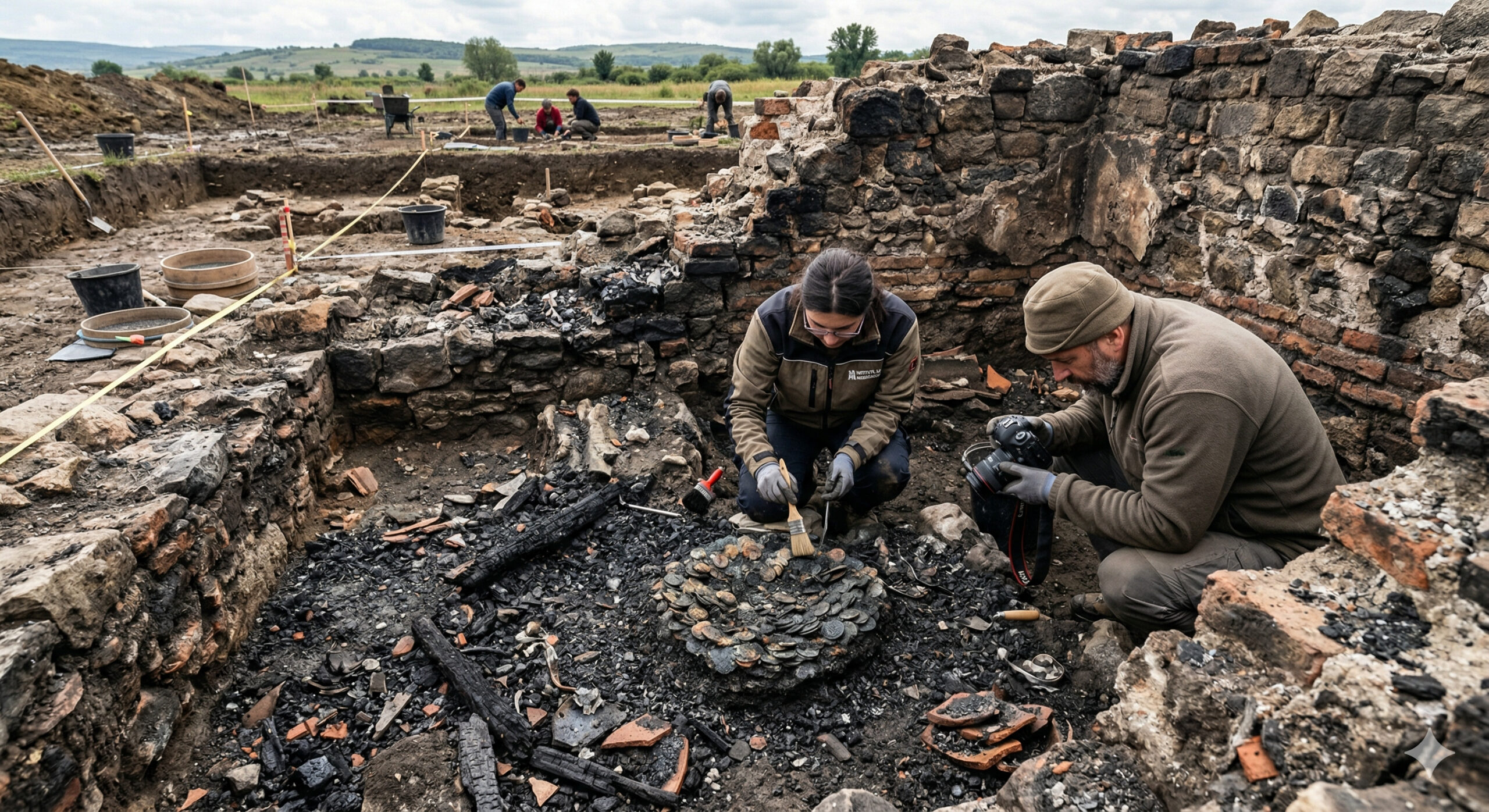
A 1,900-year-old treasure emerges from a Roman house destroyed by fire and sealed since antiquity in Romania, with coins and metals fused among the ashes.
-
The Brazilian colonial city that stopped in time and shares territory with a rocket launch base.


As described by Le Monde, the very geography transformed Bonifacio into a medieval labyrinth over the sea. Among narrow streets, steep staircases, and calcareous buildings that seem to sprout from the cliffs, the old town preserves deep marks of coexistence among various Mediterranean peoples, from Genoese to French, while also reflecting the visible Italian influences in culture and even in the local dialect.
The city, despite its small size, attracts thousands of visitors each year, especially between May and September — a period considered ideal by Lonely Planet due to the turquoise sea, pleasant temperatures, and the typical dry climate of the Mediterranean.
The Staircase Carved Into the Rock and the Citadel That Dominates the Horizon

Among the most famous symbols of Bonifacio is the Staircase of the King of Aragon, an impressive construction with 187 steps carved directly into the calcareous cliff face. Legend says it was opened during the siege by the troops of Alfonso V in the 15th century, although studies suggest an even earlier origin, related to access to fresh water sources.
Well above it, the Citadel of Bonifacio dominates the landscape and offers one of the widest views of the Mediterranean, revealing the meeting of white cliffs, deep blue sea, and routes connecting Corsica to Sardinia. The location serves as a natural viewpoint where one can understand why the city has been so coveted and strategically vital for centuries.
Between the Vibrant Harbor and the Lavezzi Islands: A Scene That Blends Nature, Culture, and Historical Paths

Right below the medieval walls, the harbor of Bonifacio creates a fascinating contrast with the upper part of the city. While the top of the cliff bears centuries of battles and stories of resistance, sea level reveals a vibrant environment, filled with cafes, boats, restaurants, and shops catering to both residents and visitors. It is from there that boats depart for the Lavezzi Islands, a protected archipelago famous for its crystal-clear waters, monumental rock formations, and preserved biodiversity.
In addition, the region is surrounded by historical trails, such as Cabo Pertusato, which offers some of the most impressive spots to observe the extent of the calcareous cliffs, as well as the Mediterranean vegetation that envelops the region. For this reason, Lonely Planet emphasizes that Bonifacio can be visited year-round, although the experience between May and September provides the ideal combination of climate, sea color, and brightness.
This information has also been disseminated by various European travel guides, placing Bonifacio among the most photogenic and best-preserved destinations in the southern Europe, reinforcing its cultural, historical, and environmental significance.
Access, Climate, and What Makes Bonifacio One of the Most Photographed Scenes in the Mediterranean
For those looking to visit, access is relatively simple: just arrive in Corsica by plane or ferry and drive to the southern tip of the island. The combination of monumental cliffs, a medieval city structured on a calcareous peninsula, and proximity to Sardinia make Bonifacio a constant feature on lists of iconic Mediterranean destinations.
Furthermore, the meeting of dramatic landscape, well-preserved historical heritage, and unique architecture transforms the commune — even with its 2,658 inhabitants — into one of the most sought-after places by photographers, tourists, and nature lovers. Therefore, it is no exaggeration to say that Bonifacio seems to defy the sea, balanced at 70 meters high, as if suspended above the deep blue of the strait that bears its name.
A Destination That Unites History, Extreme Geography, and a Unique Atmosphere

Finally, Bonifacio stands out not only for its numbers — its 138 km², its nearly 1,200 years of existence, its unique geographic position, and its small population — but also for its atmosphere. It combines the strength of the medieval walls with the gentleness of the sea, creating a visual and emotional contrast rare to find in Europe.
The result is a city that preserves its historical essence while embracing tourism with personality. Among fortresses, trails, cliffs, transparent waters, and a view that reaches as far as Sardinia, Bonifacio reaffirms its position as one of the most impressive scenes in the Mediterranean — a city that literally defies the sea for over a millennium.





-

Uma pessoa reagiu a isso.