





 Portuguese
  English
  Spanish
  4 min of reading
  0 comments


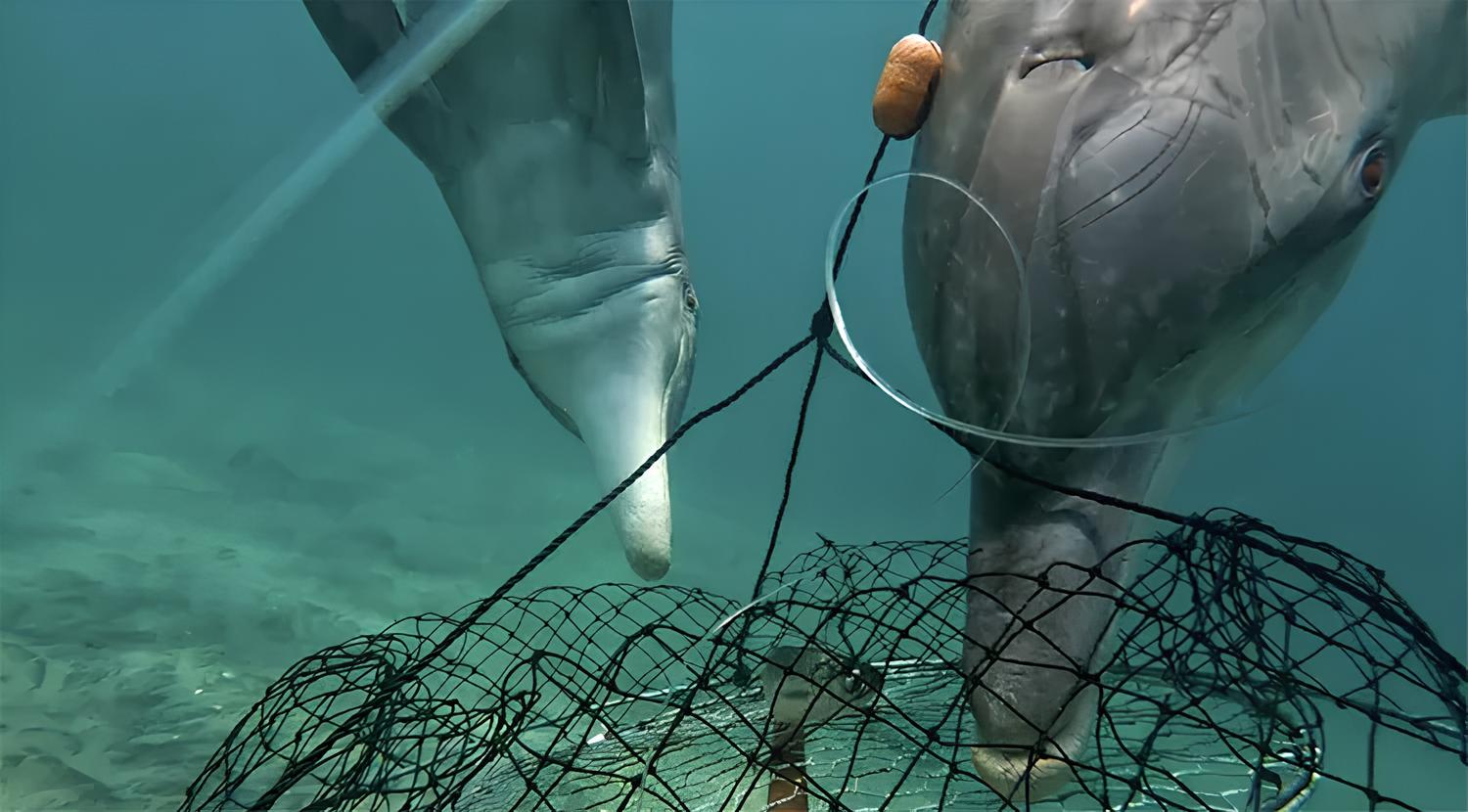
Bottlenose Dolphins Have Been Cooperating With Fishermen for Over a Century in Santa Catarina, Increasing Catches and Revealing a Rare Animal Culture Now Threatened.
Few people imagine that on the southern coast of Brazil, there is one of the most impressive examples of cooperation between humans and wild animals ever documented by science. On shallow beaches and coastal channels, bottlenose dolphins not only hunt near artisanal fishermen, they lead the fishing, indicate the right moment to throw the net, and thereby transform a traditional activity into a refined cooperative system passed down through generations.
The phenomenon is real, ancient, and scientifically proven. It occurs mainly in Laguna and has historical records dating back to the 19th century, involving a specific group of bottlenose dolphins (Tursiops truncatus) that has developed learned behavior, not instinctive, recognized today as animal culture.
A Silent Partnership Between Dolphins and Artisanal Fishermen
The scene is repeated every winter during the mullet (Mugil liza) migration. Fishermen line up on the shore, paying close attention to the water. In the shallow sea, dolphins begin to push the school of fish toward the coast. At a certain moment, one of them performs a precise signal—a sudden dive, a quick spin, or a tail slap. This gesture is not random. It is the warning.
-
He started running at 66 years old, broke records at 82, and is now a subject of study for having a metabolic age comparable to that of a 20-year-old, in a case that is intriguing scientists and inspiring the world.

-
Oldest tree on the planet reappears after 130 years of searches: Wattieza, 385 million years old, was 10 meters tall and had no leaves or seeds; Gilboa fossils in New York solved the mystery in 2007.

-
A 48-square-meter house assembled in hours with 4,000 bricks made of recycled plastic that does not absorb moisture, has natural thermal insulation, and costs less than 90,000 reais in a complete kit.

-
Luciano Hang revealed that Havan’s air fleet has already accumulated more than 20,000 landings, 10,000 flight hours, and 6 million kilometers traveled, and he says that without the planes, the company would never have grown so quickly.




When the fisherman throws the net at the exact second indicated, the school of fish becomes disorganized. Part of the fish gets trapped, ensuring human capture. Another part escapes towards the dolphins, who feed with much less energy expenditure than in conventional hunting. The result is a gain for both.
Field studies show that fishermen who correctly follow the dolphins’ signals can quadruple their productivity compared to attempts without cooperation. For the cetaceans, the strategy reduces caloric expenditure and increases the success rate.
Animal Culture Passed Down From Dolphin to Dolphin
The most fascinating point is not the technique’s efficiency but how it remains alive. Not all dolphins in the area know how to cooperate. Only a specific subgroup masters the behavior, and it is not genetically inherited.
Research conducted by Brazilian universities and published in journals such as PNAS has demonstrated that calves spend years observing cooperative adults before attempting to mimic the signals. Dolphins that grow up outside this environment do not learn the technique, even living in the same area.
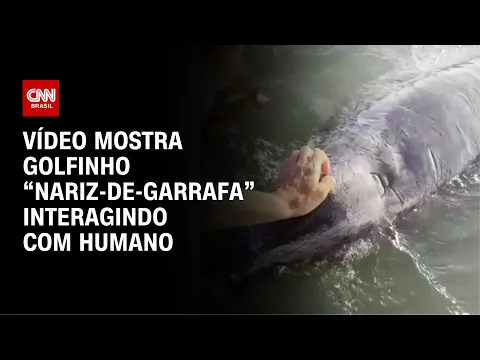
This places the phenomenon in a rare category: it is an animal cultural tradition, comparable to tool use by primates or the regional songs of whales. If experienced individuals disappear, the knowledge could be lost forever.
Why This System Began in Brazil
Cooperation emerged in a very specific context. The coast of Santa Catarina combines shallow waters, natural channels, predictable mullet migration, and artisanal fishing with manually thrown nets. This combination created the ideal conditions for an initial opportunistic behavior to become stable over time.
Historical records indicate that fishermen recognized the “partner dolphins” in the 19th century, long before any scientific study. They could distinguish cooperative individuals, respected their signals, and passed this knowledge down through human generations—a rare case of local behavioral coevolution between two intelligent species.
A Delicate Balance That Is Beginning to Crumble
Despite being frequently cited as an example of harmonious coexistence, the system faces increasing threats. The main one is breaking the synchronization. When the fisherman throws the net outside the correct moment, the dolphin gains no benefit. Repeated failures may cause the animal to abandon cooperation.
Factors putting the practice at risk include the intensification of motorboat traffic, the presence of industrial nets near the traditional area, the reduction of mullet stocks, and the generational replacement of fishermen who have not learned to “read” the dolphins’ signals.
Researchers have already observed individuals that have stopped cooperating, indicating cultural erosion—a type of loss that is much more difficult to reverse than simple population recovery.
Scientific Recognition and Global Value
The case of Laguna is cited internationally as one of the clearest examples of social intelligence in cetaceans and spontaneous interspecific cooperation. It is studied by Brazilian and foreign teams and appears in discussions about biocultural conservation, a field that recognizes that preserving nature also means preserving learned behaviors.
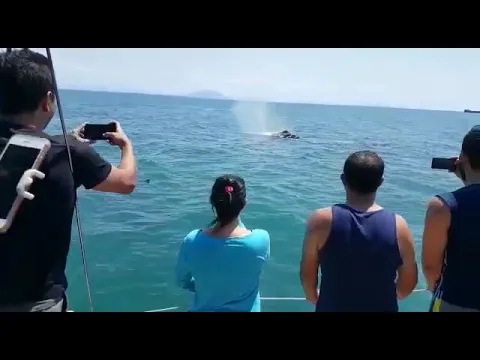
There are ongoing discussions for this practice to be recognized as intangible cultural heritage, not only human but shared among species. This would require public policies that protect both artisanal fishermen and the environment and dolphins that sustain the tradition.
What Is Really at Stake
If this cooperation disappears, it will not just be a fishing technique that is lost. It will be one of the rare examples that humans and large marine predators can learn from each other, share benefits, and maintain a stable relationship for over a century without domestication, fences, or commands.
In a world marked by conflicts between conservation and human activity, the dolphins of Laguna show that another path is possible—but only as long as there is respect, cultural continuity, and space for nature’s intelligence to continue manifesting.









-

-

2 pessoas reagiram a isso.