





 Portuguese
  English
  Spanish
  5 min of reading
  0 comments


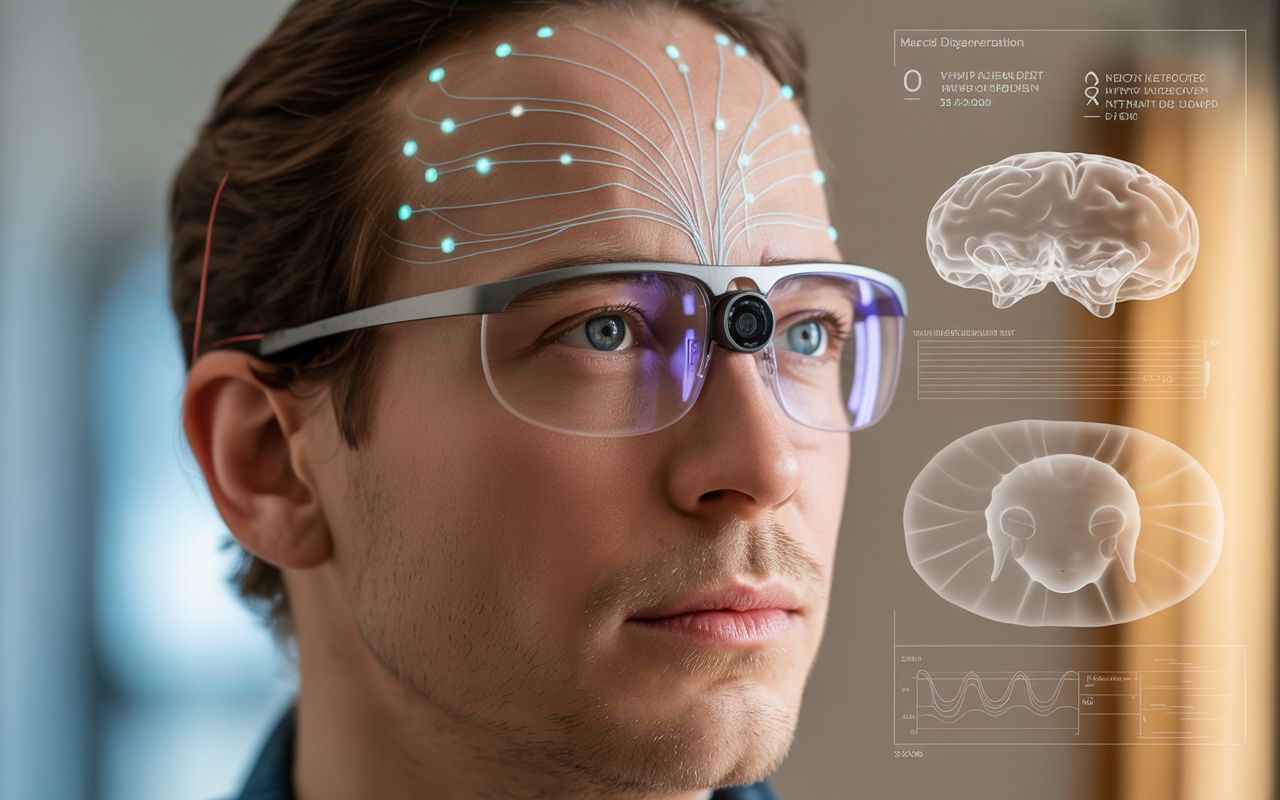
Photovoltaic Ocular Implant Linked to Glasses with Camera Restored Functional Vision in Patients with Macular Degeneration and May Reach the Market After Historic Clinical Trials.
For decades, severe vision loss caused by age-related macular degeneration has been treated as a one-way street. Millions of people around the world have progressively lost central vision, retaining only peripheral perception, with no therapeutic options capable of restoring the ability to read, recognize faces, or identify objects accurately. This scenario began to change with the clinical results of an innovative implant that combines microelectronics, neuroscience, and computer vision.
The system, tested in humans and described as one of the most significant advancements in modern ophthalmology, has managed to restore functional vision to patients considered almost blind. More than just detecting light or shadows, some participants were able to recognize letters, words, and shapes, something that until recently was considered unfeasible.
What Is the Implant That Is Changing Artificial Vision
The technology is known as PRIMA System, a sub-retinal photovoltaic implant developed for people with advanced dry macular degeneration, especially those with geographic atrophy.
-
With a cost per shot close to zero, the DragonFire laser could change naval warfare in 2027 and provide British ships with nearly unlimited defense against drones.

-
A British startup creates tires that generate electricity in electric vehicles when passing over potholes, speed bumps, and cracks.

-
Scientists have created robots made with living cells that have their own nervous system, swim on their own, explore the environment, and self-organize without any genetic engineering, and now they want to do the same with human cells.

-
Students create a solar-powered ambulance that operates without a plug, without fuel, and still keeps medical equipment running in remote areas.


Unlike older ocular prosthetics, which relied on external cables or large electrodes, the PRIMA is a microchip just a few millimeters in size implanted directly beneath the retina.

This chip does not work alone. It is integrated with a pair of glasses equipped with a camera and an infrared light projector. The camera captures the image of the environment, digitally processes the visual content, and projects the signal directly onto the implant.
The chip converts this light information into electrical stimuli that activate the remaining retinal cells, allowing the brain to start interpreting visual signals again.
How Vision Is Partially Restored in Practice
It is important to emphasize that the implant does not restore “normal” vision. What it provides is functional vision, sufficient for specific daily tasks. In clinical trials, patients were able to identify large letters, read isolated words, recognize geometric patterns, and distinguish high-contrast objects.
The system allows for adjustments in contrast, brightness, and magnification, which is essential to adapt the image to each patient’s biological limitations. In some cases, the combination of the implant and ongoing visual training led to progressive improvements over the months, indicating that the brain is capable of relearning to interpret these new stimuli.
Clinical Results That Surprised the Medical Community
The most relevant data came from clinical studies published in high-impact scientific journals. In one of the follow-ups, patients with advanced macular degeneration who had completely lost central vision showed measurable gains after the implant.
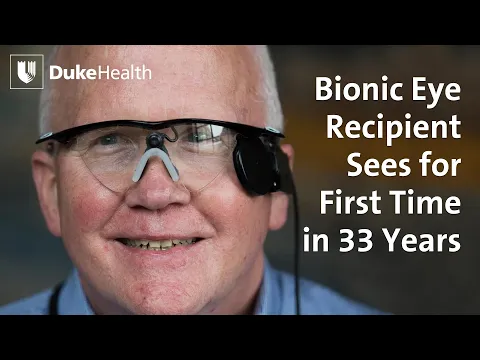
A significant portion of the participants was able to read letters and words that were previously completely invisible. Others began to recognize geometric shapes and simple objects on a table. These results are considered historic because, until then, no treatment had managed to restore functional central vision in advanced cases of dry macular degeneration.
The studies also showed that the implant was well tolerated, with no serious adverse events directly related to the device, something fundamental for any technology that aims to reach the market.
Why Macular Degeneration Has Always Been Such a Great Challenge
Age-related macular degeneration affects the macula, the part of the retina responsible for central vision and fine detail perception. In the advanced dry form, photoreceptor cells progressively die and do not regenerate. Unlike the wet form of the disease, there were no therapies capable of stopping or reversing the structural damage.
This led millions of patients to be informed that their visual loss would be permanent. The implant arises precisely in this therapeutic void, exploring the fact that even when photoreceptors are destroyed, other layers of the retina remain functional and can be stimulated artificially.
Engineering, Neuroscience, and Computer Vision in the Same System
What makes this technology possible is the convergence of different areas. From an engineering perspective, the photovoltaic chip needs to be small, efficient, and biocompatible. It has no internal battery and is powered by the light projected by the glasses, reducing risks and complexity.
In neuroscience, the challenge is to correctly stimulate the retinal cells in a way that the brain recognizes the signals as coherent visual information. Computer vision comes into play in processing the images captured by the camera, adjusting contrast, and simplifying patterns to maximize brain interpretation.
This integration is what sets PRIMA apart from previous attempts at visual prosthetics, which often failed by generating confusing or non-useful stimuli.
Who Can Benefit from This Technology
So far, the implant has primarily been tested in patients with advanced dry macular degeneration, a group that had no effective therapeutic alternatives. It is not a solution for total blindness caused by damage to the optic nerve or in brain areas responsible for vision.
Even so, the potential audience is vast. Macular degeneration is one of the leading causes of blindness in people over 60, especially in countries with aging populations. The possibility of restoring part of the visual autonomy to these patients has profound implications for quality of life and functional independence.
Regulatory Pathway and Market Entry
With positive clinical results, the technology has entered a decisive phase. Developers are working to obtain regulatory approvals, expecting that the implant may reach the market in the near future, depending on the requirements of each country.
There are still challenges, such as cost, patient training, and large-scale clinical adaptation. However, experts point out that the advancement already represents a paradigm shift: for the first time, medicine is not just trying to delay vision loss but is returning visual function where it had been lost.
What This Advancement Says About the Future of Artificial Vision
The implant is not an endpoint, but a milestone. It demonstrates that the human visual system can be partially “reconnected” even after severe damage. This paves the way for even more sophisticated technologies, with higher resolution, better neural integration, and applications for other eye diseases.
More than restoring vision for some patients, this advancement redefines what medicine considers possible.
If nearly blind individuals can return to reading and recognizing shapes with the help of a chip the size of a fingernail, how far can biomedical engineering go in the coming years?
The boundary between irreversible loss and functional recovery has just become much thinner.








-

Uma pessoa reagiu a isso.