





 Portuguese
  English
  Spanish
  5 min of reading
  0 comments


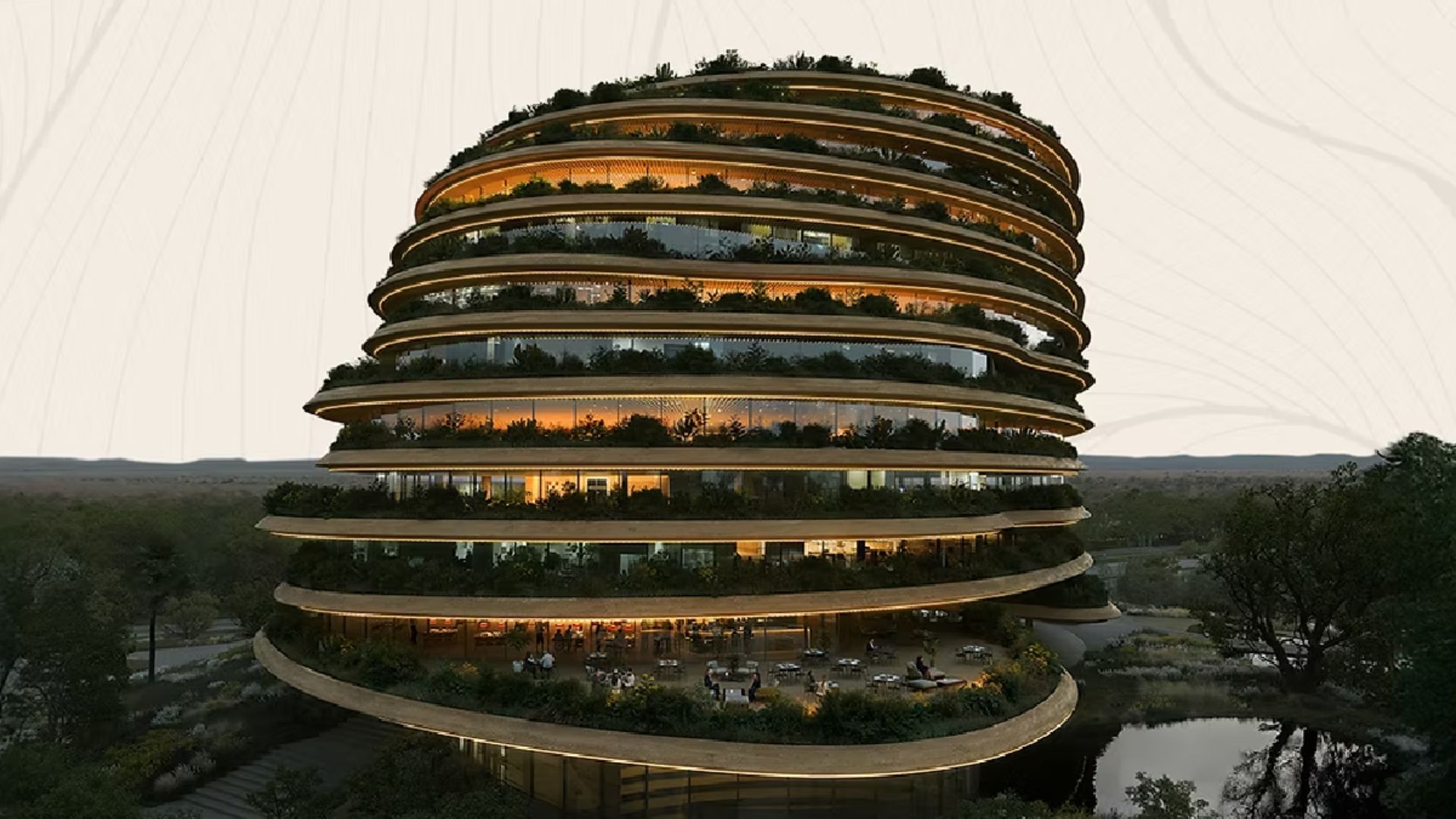
Innovative Structure In Cuiabá Combines Biomimetic Architecture, Abundant Vegetation, And Natural Ventilation To Create Thermal Comfort Even Under Extreme Heat, Catching Attention For Aesthetics And Environmental Performance Of The Building.
In one of the hottest cities in the country, a corporate building is drawing attention both for the photos circulating on social media and for its engineering.
In Cuiabá (MT), the Solum Hub was designed to remain comfortable even on days when the thermal sensation approaches 50 °C, primarily using natural ventilation and strategies inspired by termite mounds to minimize the need for air conditioning.
While a good portion of commercial buildings in the region relies on powerful air conditioning systems, the hub bets on a set of biomimetic architecture, abundant vegetation, and water features to create a milder internal microclimate.
-
A rare storm transformed part of the Gulf into an unlikely scene of hail, extreme rain, and tornado risk in the middle of the desert, with volumes that exceeded the annual average in a single day.

-
Brazil catches the world’s attention with ships powered by ethanol and biodiesel that have lower emissions, an unprecedented certification with advantages in chartering, and a revolution in cabotage.

-
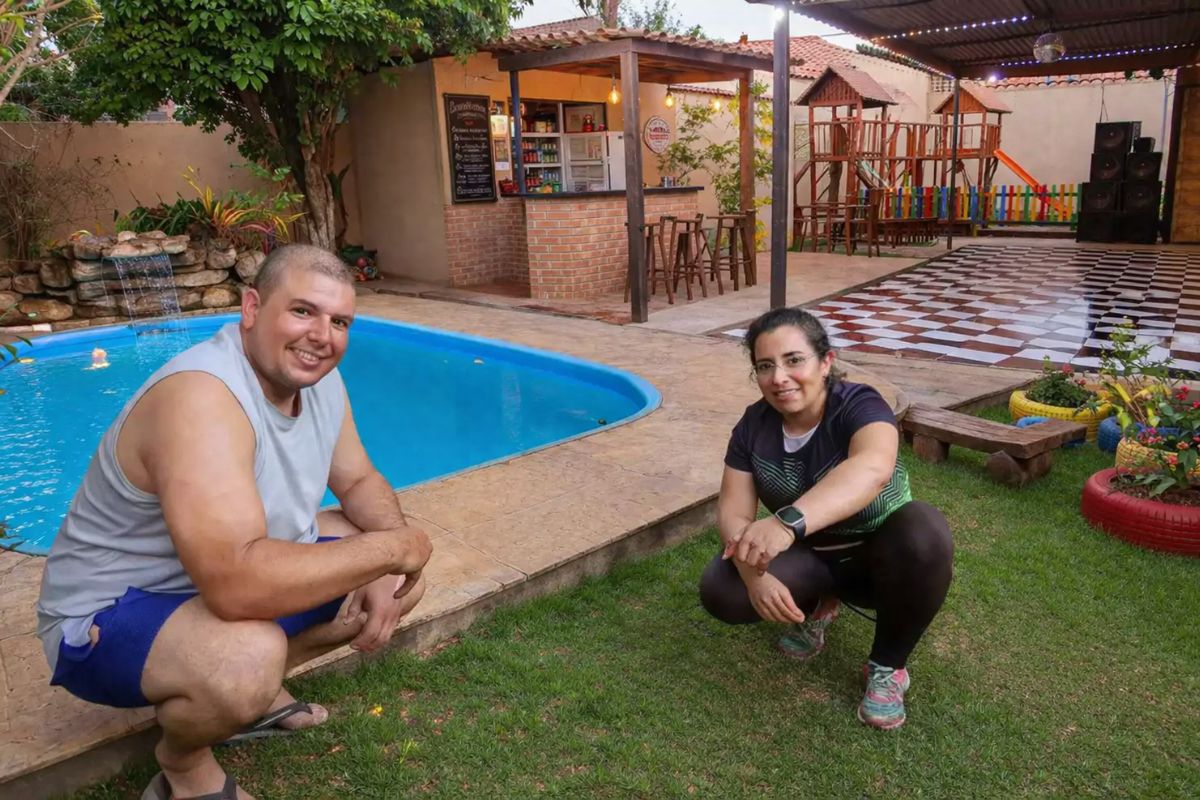
A couple who only has Sundays free has built a hand-dug pool, a hamburger joint, a dance hall, and a playground in their own home without hiring a mason, and even with breaks due to accidents and the pandemic, the work has never truly stopped.
-
Furniture made with aluminum and glass does not warp and has become an alternative to replace MDF in Brazil.
At the same time, it combines spacious corporate floors, services, and common areas designed for the work routine.
Solum Hub Unites Business, Nature, And Thermal Comfort
Located in the capital of Mato Grosso, the Solum Hub is a business venture designed to function as a large business hub integrated into the city, yet in dialogue with the landscape of the cerrado.
The building was conceived to offer thermal comfort, natural lighting, and constant visual contact with green areas, without compromising the typical infrastructure of high-standard corporate buildings.
With 11 floors, the project concentrates commercial spaces ranging from approximately 100 to 2,000 m², in addition to an auditorium, gym, restaurant, event hall, parking lot, and rooftop.

The organization of the floors seeks to blend work areas with social spaces, so that movement within the building is not limited to enclosed corridors and fully air-conditioned environments.
Aesthetics also stand out. Instead of conventional straight lines, the building adopts a predominantly circular shape, with curved balconies and multiple facade planes.
On these balconies, gardens and pots with different species of plants appear on practically every floor, reinforcing the feeling of a building enveloped by vegetation.
Indoors, gardens, tree-lined terraces, and water features reinforce the idea of an oasis amid the city’s intense heat.
The presence of natural elements was designed to integrate the thermal comfort system, contribute to air quality, and create pause areas for those working on-site.
Architecture Inspired By The Termite Mounds Of The Cerrado
The conceptual basis of the Solum Hub lies in the observation of termite mounds, structures that manage to maintain stable internal temperatures even under extreme heat.
Inside, these nests function like mazes, with tunnels and chambers that organize airflow and help control humidity.
In termite mounds, warm air rises through internal ducts, loses heat as it approaches the walls, and descends cooled through narrower channels.
The very mass of earth serves as thermal insulation, protecting the interior from more drastic temperature variations.
This natural mechanism inspired the overall design of the Cuiabá building.
At Solum Hub, the idea was translated into a passive ventilation system that exploits strategic openings, internal voids, and integrated balconies.
Like in the termite mounds, the goal is to direct the warm air outside and facilitate the entry of cooler currents, maintaining a stable environment for longer.

Natural Ventilation And Reduction Of Air Conditioning Use
Instead of primarily relying on air conditioning units, the project bets on natural ventilation and passive cooling solutions.
The shape of the building, solar orientation, and positioning of openings were calculated to capture prevailing winds, protect facades more exposed to direct sunlight, and minimize thermal gains throughout the day.
In practice, warm air tends to be directed to upper areas and expelled through exits designed for this purpose, while cooler air circulates through the floors.
The presence of internal voids, open terraces, and balconies creates airflow pathways between different zones of the building.
Indoor gardens, green areas, and water features complement the system.
The plants help filter the air and create shade, while the evaporation of water contributes to reducing the temperature around.
With these strategies, Solum Hub was designed to not continuously depend on air conditioning, especially in common areas.
There is no public confirmation that the entire complex operates entirely without any mechanical cooling, but the rational use of these systems is part of the proposal.
Cuiabá And The Challenge Of Extreme Heat
Cuiabá is frequently mentioned among the hottest cities in Brazil.
In summer, temperatures above 40 °C and thermal sensations close to 50 °C are not uncommon, especially during periods of low humidity.
In this context, maintaining offices and common areas in pleasant conditions often requires large energy consumption.
Solum Hub was designed precisely to respond to this scenario.
The building’s orientation takes into account the sun’s path throughout the day.

More critical facades receive greater protection, while balconies and openings are positioned to take advantage of indirect natural light without excessively raising internal temperatures.
The combination of vegetation, shade, and airflow seeks to alleviate thermal sensations in the corporate floors.
The proposal is that even on extreme days, the interior remains within an acceptable comfort range with a more rational use of mechanical cooling.
Photogenic Architecture That Became A Showcase
The set of technical solutions has ended up transforming the building into a visual business card.
Images of the Solum Hub, with curved facades and balconies filled with plants, have started to circulate on architecture profiles and curiosity pages on the internet.
The contrast between the building’s light volume, the green of the balconies, and the sky of Cuiabá reinforces this aesthetic perception.
In photos, the building often appears isolated in the frame, highlighting its circular shape and the design of the floors.
At the same time, the venture was designed to function as a business hub, bringing together companies of different sizes in a single address, with shared services and a structure geared towards corporate activities.
The presence of green areas and open spaces seeks to bring the work routine closer to the idea of well-being in the professional environment.
In a city where extreme heat shapes daily life, solutions that combine energy efficiency and comfort tend to stand out.
How far can projects inspired by nature transform work environments in such challenging climate regions?






-

-

-

-

14 pessoas reagiram a isso.