





 Portuguese
  English
  Spanish
  5 min of reading
  27 comments





The New Highway In Guyana Promises To Change Regional Logistics, Unite Borders, And Drastically Shorten Access From The Amazon To The Atlantic, Connecting Strategic Infrastructure, Deep-Water Port, And A Growing Market.
Guyana Has Placed A Highway Of About 500 Km At The Center Of Its Infrastructure Strategy, With Approximately 50 Bridges And An Estimated Investment Of R$ 5 Billion, To Connect Georgetown To The Border With Roraima And Shorten Access To A Market Of 20 Million Consumers In Northern Brazil.
The Official Goal Is To Reduce Routes That Today Can Take Up To 21 Days To A Window Of 48 Hours Between The Brazilian Amazon And The Atlantic.
The Initiative Advances In Parallel With The Deep-Water Port In Palmyra, In The Berbice Region, Designed To Receive Larger Ships And Serve As An Exit For Loads Sent Through The Highway Corridor.
-
After nearly 30 bids and competition among industry giants, a Spanish company purchases one of the largest airports in Brazil for almost R$ 3 billion and takes over the management of Galeão in a concession that will last until 2039.

-
The Federal Revenue Service now automatically cross-references everything you declare with data from banks, credit cards, brokerage firms, and insurance companies, and any discrepancy between your income and your expenses triggers an alert in seconds.

-
Amid global tensions, Brazil blocks the United States’ proposal at the WTO and paves the way for a trade crisis and possible retaliations.

-
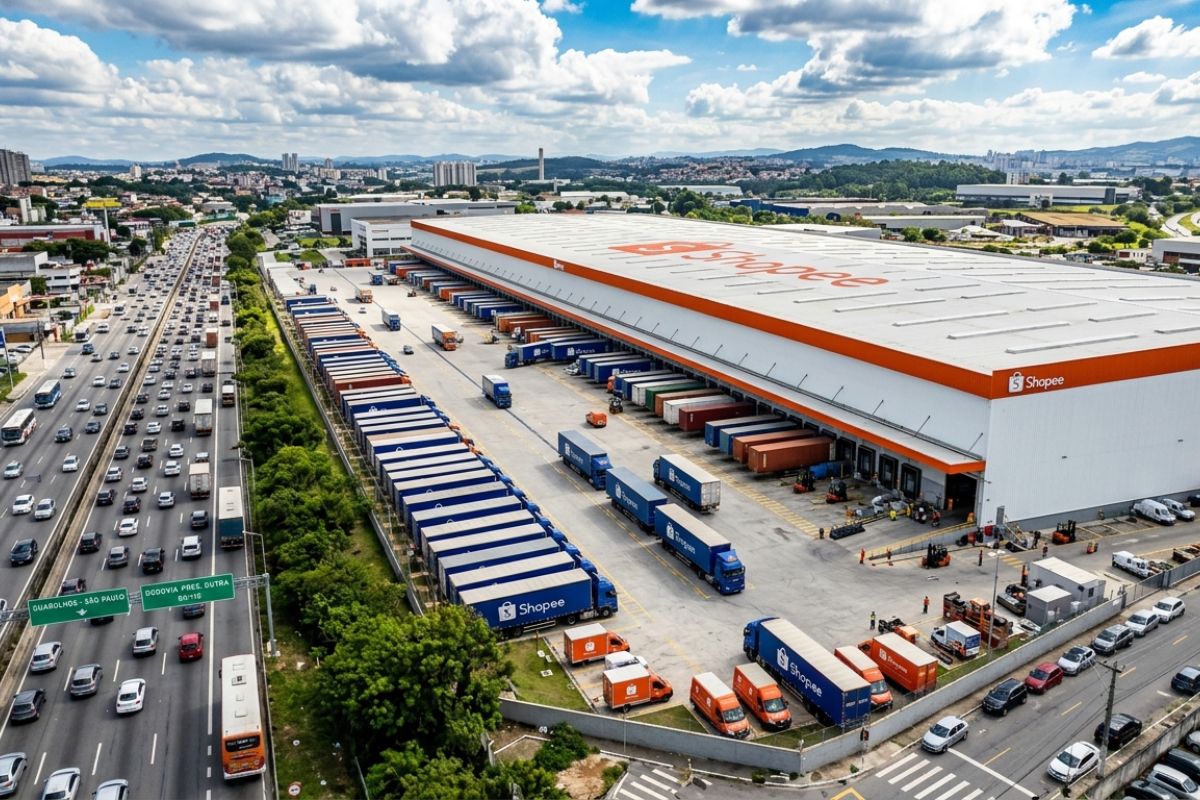
Shopee opens the largest logistics warehouse in Brazil in Guarulhos: 220,000 m² on Dutra, contract signed before construction, pays R$ 45/m² and accelerates deliveries at scale, putting pressure on Mercado Livre and Amazon.

According To The Government, The Road And Port Are Part Of Structural Works Associated With The Recent Cycle Of Economic Expansion Driven By The Oil Sector.
Guyana–Brazil Road Connection
The Corridor Links Georgetown To The Interior Of The Country, Passing Through Linden, Mabura Hill, Kurupukari, And Lethem, The City That Borders Bonfim (RR).
Today, The Overland Journey Between Georgetown And Lethem Takes An Average Of 15 Hours, Under Favorable Conditions, Largely On Unpaved Roads.
On The Brazilian Side, The Connection Links To The Bridge Over The Tacutu River, Which Integrates Lethem To Bonfim And The Highway Network Of Roraima.

Experts Say That The Continuous Paving On The Guyanese Side Is Likely To Increase The Predictability Of The Flow Of Trucks Between Boa Vista And Georgetown, Reducing Interruptions During The Rainy Season.
Port Of Palmyra And Quick Access To The Atlantic
The Road Is Connected To The Implementation Of A Multipurpose Port In Palmyra, In Northeastern Guyana.
The Project, Estimated At US$ 285 Million, Was Announced As Infrastructure Targeted At Logistic Activities, Natural Gas Operations, And Industrial Ventures.
The Government Reported That The Port Should Generate Approximately 1,000 Direct Jobs During The Construction Phase.
Currently, Cargo Coming From Northern Brazil Relies On Long Water Routes Or Travels To Ports Further South, Which Can Extend Transit Time By Weeks.
With The Full Paving Of The Road And The Operation Of The Port, Authorities Project A Reduction In This Time To About Two Days.
Works, Segments, And 50 Bridges
To Enable The Highway, The Government Divided The Project Into Four Segments That Include The Replacement Of Wooden Bridges With Concrete Structures And The Reinforcement Of Segments Vulnerable To Flooding.
The Plan Includes Approximately 50 New Or Reconstructed Bridges, Suitable For Heavy Vehicle Traffic.
One Of The Critical Points Is The Crossing Of The Essequibo River, Currently Done By Ferry In Kurupukari.
The Goal Is To Replace It With A Double-Lane Bridge, Considered By The Government Essential To Ensure Permanent Flow During The Rainy Season.
Authorities Mention Scenarios In Which A Significant Portion Of The Corridor Could Be Completed Over The Next Decade, But Emphasize That Progress Depends On Individual Deliveries, Environmental Permits, And Engineering Studies.
Linden–Mabura Hill Segment
The Linden–Mabura Hill Segment, Approximately 121 Km, Was Contracted In 2022 With Construtora Queiroz Galvão For Approximately US$ 190 Million.

The Financing Involves Resources From The Caribbean Development Bank (CDB), The United Kingdom, And The Government Of Guyana.
According To Official Statements, This Segment Is Treated As The First Paved Connection In A Modern Standard Linking The Coastal Region To The Interior.
The Latest Announced Deadline Indicates A Completion Target By October 2025.
In Parallel, The Ministry Of Public Works Is Replacing Several Bridges Between Kurupukari And Lethem, Preparing The Segment For Full Paving.
Commerce And Integration With Northern Brazil
For Brazil, The New Route Integrates With The Highway Network Of Roraima And Opens A Land Alternative To The Sea For States In The Northern Arc.
Infrastructure Technicians Assert That The Corridor Can Benefit Sectors Such As Agribusiness, Processed Foods, Construction Materials, And Fuels.
The Government Of Guyana Estimates That The Bridge Over The Tacutu Functions As Access To A Regional Market Of About 20 Million People.
The Official Expectation Is To Reduce Logistics Costs And Expand Commercial Movement, Currently Concentrated Mainly On Oil And Construction Inputs.
Economic Growth And Impact Of Oil
The Expansion Of Infrastructure Occurs Amid A Period Of Accelerated Economic Growth In Guyana.
Since 2020, The Country Has Recorded Significant Increases In GDP, Driven By Oil Production In The Stabroek Block.
In 2024, The Economy Grew 43.6%, According To Data From Guyana’s Statistical Authority.
Estimates From ExxonMobil Indicate At Least 11 Billion Barrels Equivalent Already Discovered In The Stabroek Block.
Assessments From S&P Global Estimate Around 18.7 Billion Barrels Equivalent For The Entire Offshore Basin.
Researchers Point Out That The Expansion Requires More Investments In Professional Qualification, Public Services, And Education.
Strategic Weight And Presence In The Interior
Guyana’s Authorities Assert That The Improvement Of Land Access Also Has Strategic Relevance.
The Faster Connection With The Essequibo Region, Administered By Guyana And Claimed By Venezuela, Can Facilitate The Movement Of Government And Security Teams.
The Permanent Corridor Should Also Support Oversight Activities In Areas Of Mineral And Timber Potential, As Well As Enable Public Services In Remote Communities.


Environmental Bottlenecks And Technical Challenges
The Highway And Bridge Package Is Estimated At About US$ 1 Billion. The Execution Depends On Environmental Permits, Structural Analyses, And Solutions For Segments Vulnerable To Flooding.
The Replacement Of The Kurupukari Ferry Is One Of The Points Highlighted By Project Engineers.
Authorities Recognize Operational Challenges In Areas Of Dense Forest And Unstable Soil.
Even So, Official Documents Indicate That The Linden–Mabura Hill Segment Is Proceeding, While New Bridge Contracts Continue To Be Tendered.
Evaluations From Brazilian Experts
Professor Jean Marcelo Lacerda Of The Federal University Of Tocantins (UFT) Assesses That The Road Connection Between Guyana And Brazil Tends To Increase Bilateral Trade By Reducing Travel Time And Expanding Logistics Predictability.
Lacerda Notes That The Development Of The Oil And Gas Sector Requires Counterpart Investments In Education And Technical Training.
He States That Workforce Qualification Will Be Determinant For The Economic Utilization Of The Infrastructure.
Brazilian Routes And The 48-Hour Window
For Companies In Roraima And Other States In The Amazon, The Paving Of The Georgetown–Lethem Corridor And The Port Of Palmyra May Alter Export Routes Currently Dependent On Longer Trajectories.
The Combination Of Paved Roads, New Bridges, And Deep-Water Port May Allow Shipments To Depart From Boa Vista, Cross Guyana, And Reach The Atlantic In Approximately 48 Hours.
With This Possibility, Experts Point Out That Companies In The Region Should Assess How To Reorganize Their Logistics Operations To Take Advantage Of The New Alternative To The Sea.








Tudo que faz o povo reclama se não faz reclama povo mal agradecido
Esse povo que fica comentando para que ñ ler a reportagem e também nem sabe onde fica a Guiana ,meu Deus do céu como tem gente desiformado, o lado brasileiro já é asfalto tem cabine da polícia federal e essa obra ñ é do Brasil e sim do governo da Guiana o Brasil ñ vai gastar nada porque a obra é deles e vai ser no território deles.
Enquanto isso para sair do Rio de Janeiro e chegar a Brasília são 14 pedágios, 28 na ida e volta… Uma vergonha!!