





 Portuguese
  English
  Spanish
  2 min of reading
  0 comments


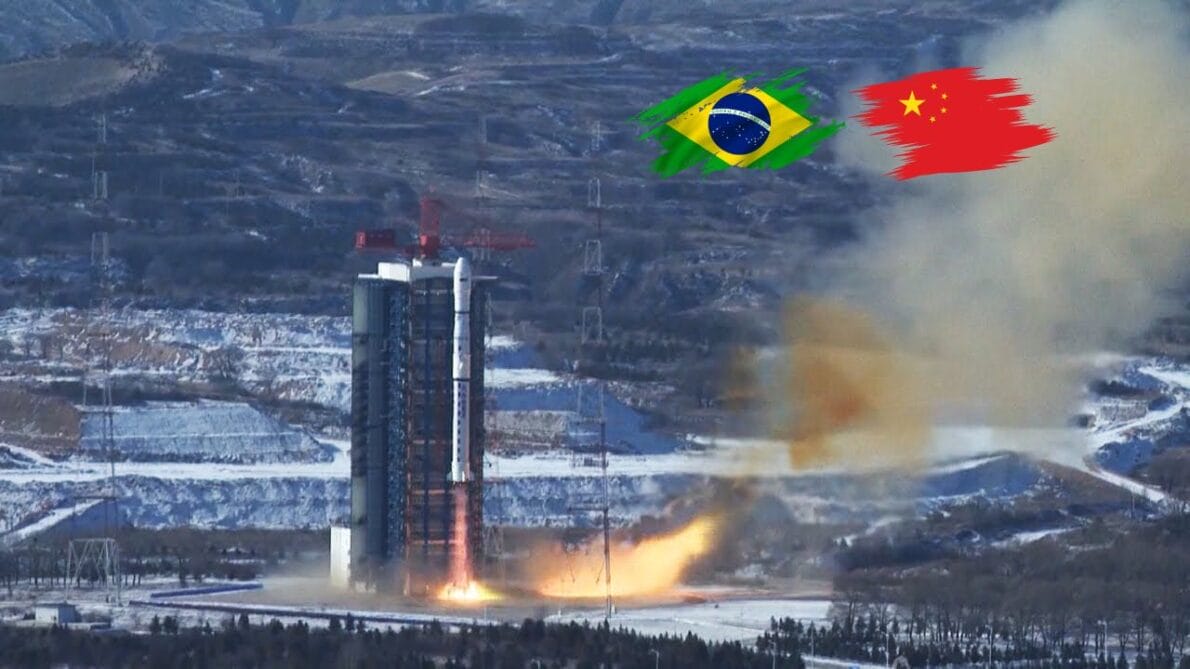
Brazil and China Sign Strategic Space Agreement, Strengthening Thirty Years of Cooperation and Boosting Technological Advances with New Innovative Projects.
Last week, Brazil and China signed a crucial agreement aimed at the development of the sector space. This partnership was formalized through the Brazilian Space Agency and the China National Space Administration. The agreement aims, among other intentions, to maintain and expand the program of earth resources satellites, known by the acronym CBERS (China-Brazil Earth Resources Satellite).
The CBERS program, a long-standing collaboration between Brazil and China, is essential for Earth observation, providing high-resolution images that are vital for various studies and applications. The cooperation between the two countries promises to further boost the Brazilian space sector, significantly contributing to its ambitions in space exploration.
Brazil and China Have More Than 30 Years of Collaboration in the Space Sector

In addition to CBERS, the agreement also includes the BINGO radiotelescope project, to be built in Paraíba, in northeastern Brazil. This telescope will allow measuring the impact of dark energy on the evolution of the universe through neutral hydrogen radiation, enabling the observation of galaxy distribution. BINGO will also detect fast radio bursts, an astrophysical phenomenon whose nature is still unknown.
-
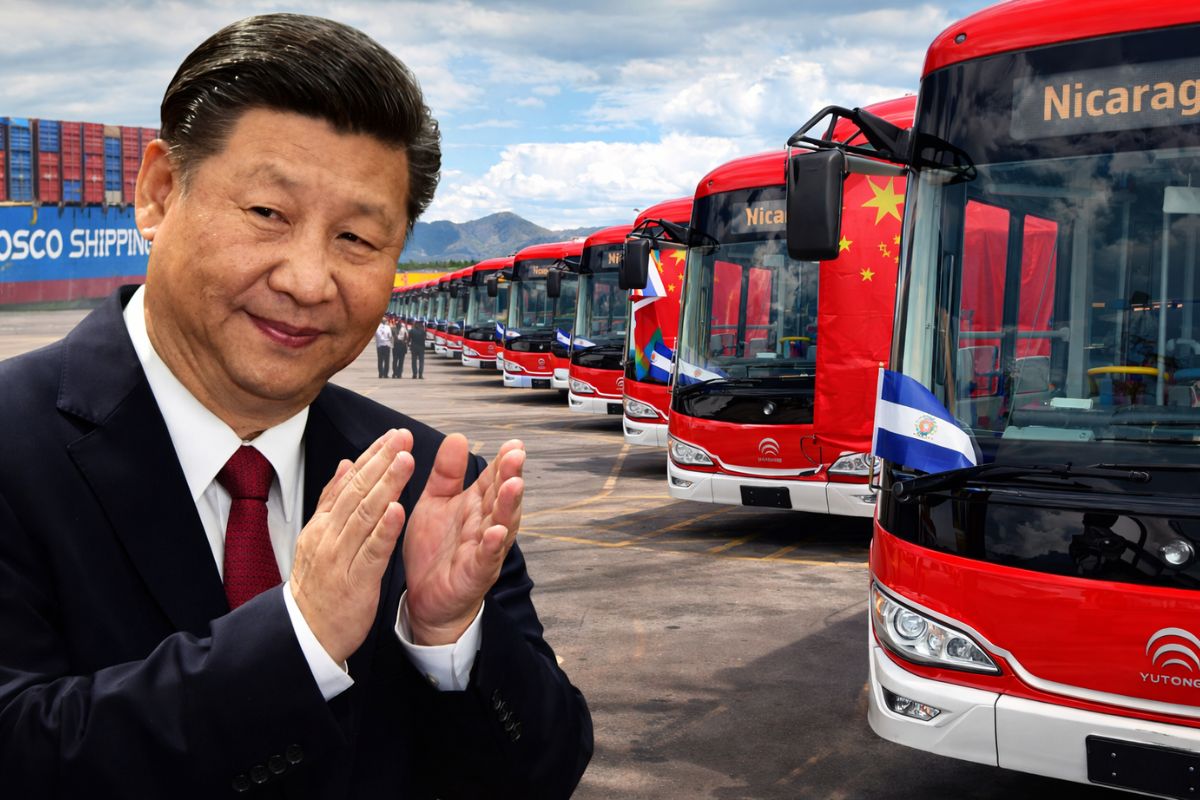
China is sending 600 state-of-the-art buses to transform Nicaragua into a benchmark for public transportation in Latin America, and the first giant batch of 180 units has already arrived in the country, surprising everyone.
-
Chinese scientists have created plants that glow in the dark using luminescent fungi, and they now say that this technology could illuminate entire cities without spending a dime on electricity.

-
USA and China compete for Brazil over resources that could be worth trillions — rare earths put the country at the center of a global dispute

-
Motorola launched the Signature with a gold seal from DxOMark, tying with the iPhone 17 Pro in camera performance, Snapdragon 8 Gen 5 that surpassed 3 million in benchmarks, and a zoom that impresses even at night.


Brazil and China have more than 30 years of collaboration in the space sector, resulting in multiple benefits and technological advances. This new agreement further strengthens the ties between the two countries and promises to open new frontiers in space exploration.
BINGO Radiotelescope Will Be Installed in the City of Aguiar, in Paraíba
Regarding BINGO, the project researchers have already published updates about this powerful equipment, which will observe parts of the universe that are currently invisible to us. Although it is Brazilian, much of the funding comes from abroad, especially from China, which has already invested about 30 million reais in the project.
The BINGO radiotelescope will be installed in the city of Aguiar, in Paraíba. Recently, researchers published articles detailing the equipment, which, despite its official name Berrion, is affectionately nicknamed BINGO. This will be the first Brazilian telescope to capture baryonic acoustic oscillations and fast radio bursts, allowing studies on dark matter and dark energy. According to Professor Élcio Falcão from the Institute of Physics at USP, dark matter acts as a “glue” in the cosmos, while dark energy remains an abstract and poorly understood concept.







Seja o primeiro a reagir!