





 Portuguese
  English
  Spanish
  8 min of reading
  0 comments


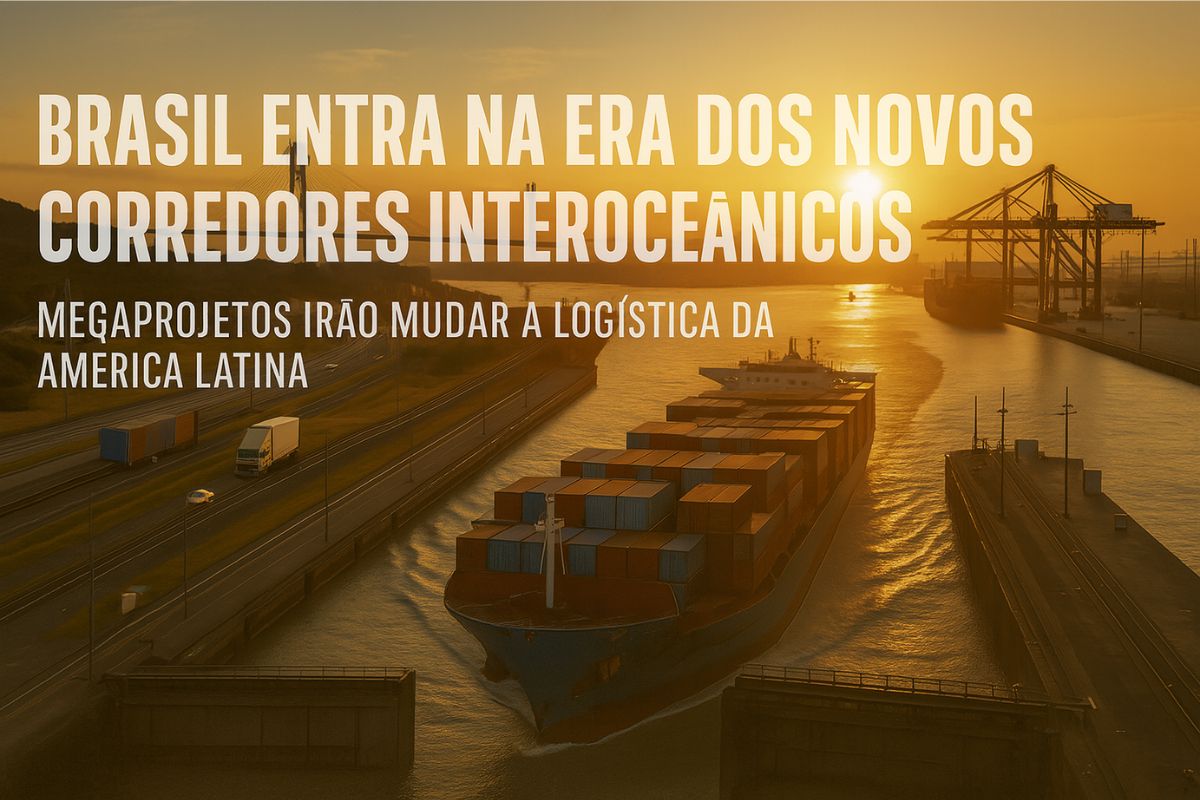
The Future of Global Trade Passes Through Brazil: New Railway with China Promises to Accelerate Exports and Reduce Logistics Costs by Up to 40%
Amid an increasingly heated trade and geopolitical dispute, China and the United States are evaluating different strategies to find alternative routes that allow the flow of goods between the Pacific and Atlantic oceans.
These initiatives stem from the operation of the consortium formed by the American investment fund BlackRock and the port operator TIL, part of the MSC group, which intends to take control of the operations of the Hong Kong multinational Hutchison Port Holdings, both at the Pacific end and the Atlantic end of the Panama Canal. The latest developments in this mega-operation have partially frustrated the US aspiration to control the Canal’s operations, putting the dominance of this strategic interoceanic transit point into question and opening up important logistical alternatives.
Meanwhile, Latin America is making significant advances in an unprecedented transformation of its logistical architecture: rail projects, bioceanic road routes, and new port facilities are reconfiguring supply chains. However, these works are associated with profound strategies that deserve careful analysis.
-
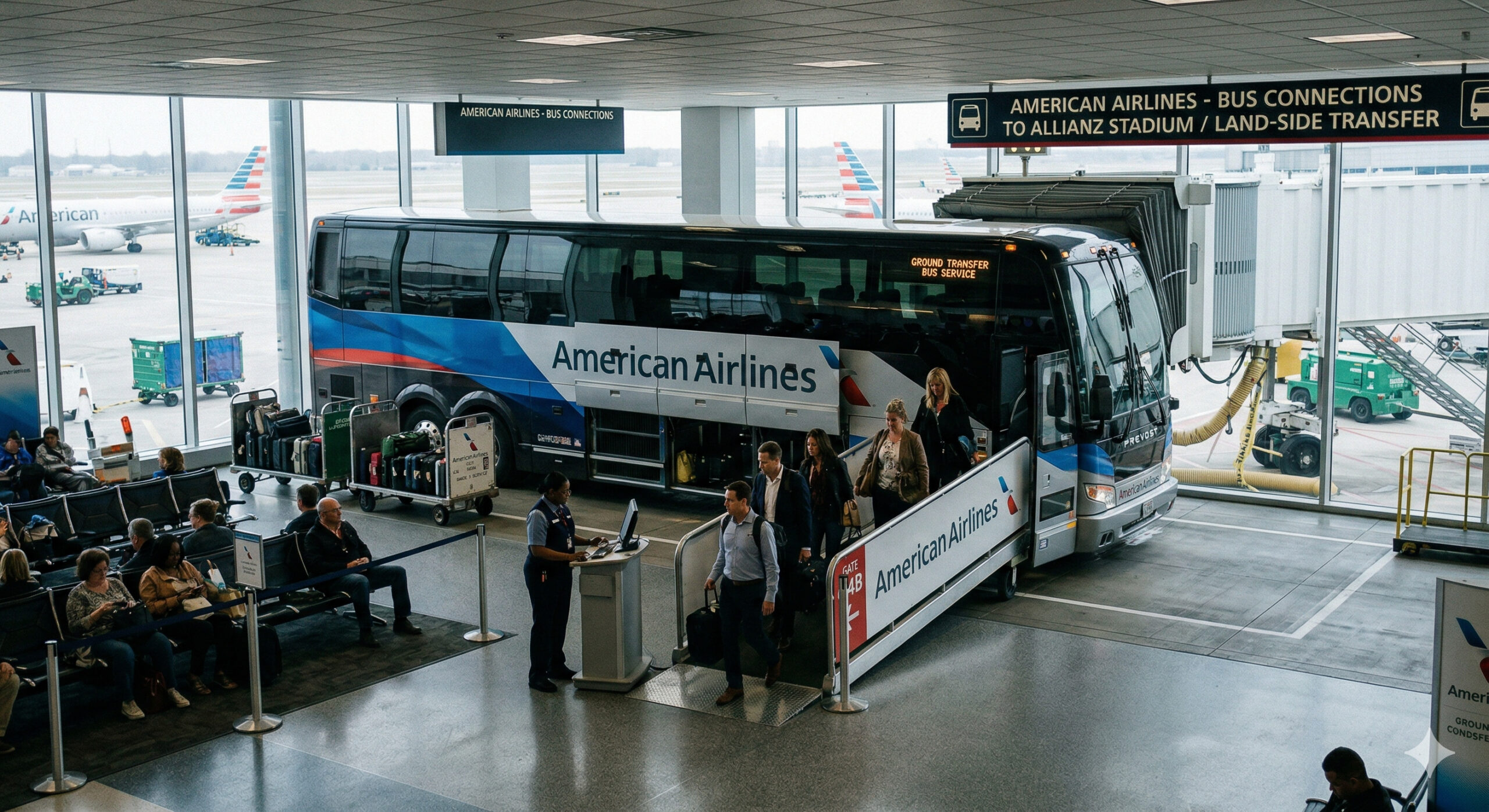
American Airlines starts selling trips as if they were flights, with check-in and baggage check at the airport, but on short routes, passengers board luxury buses connecting cities to major hubs in the U.S.
-
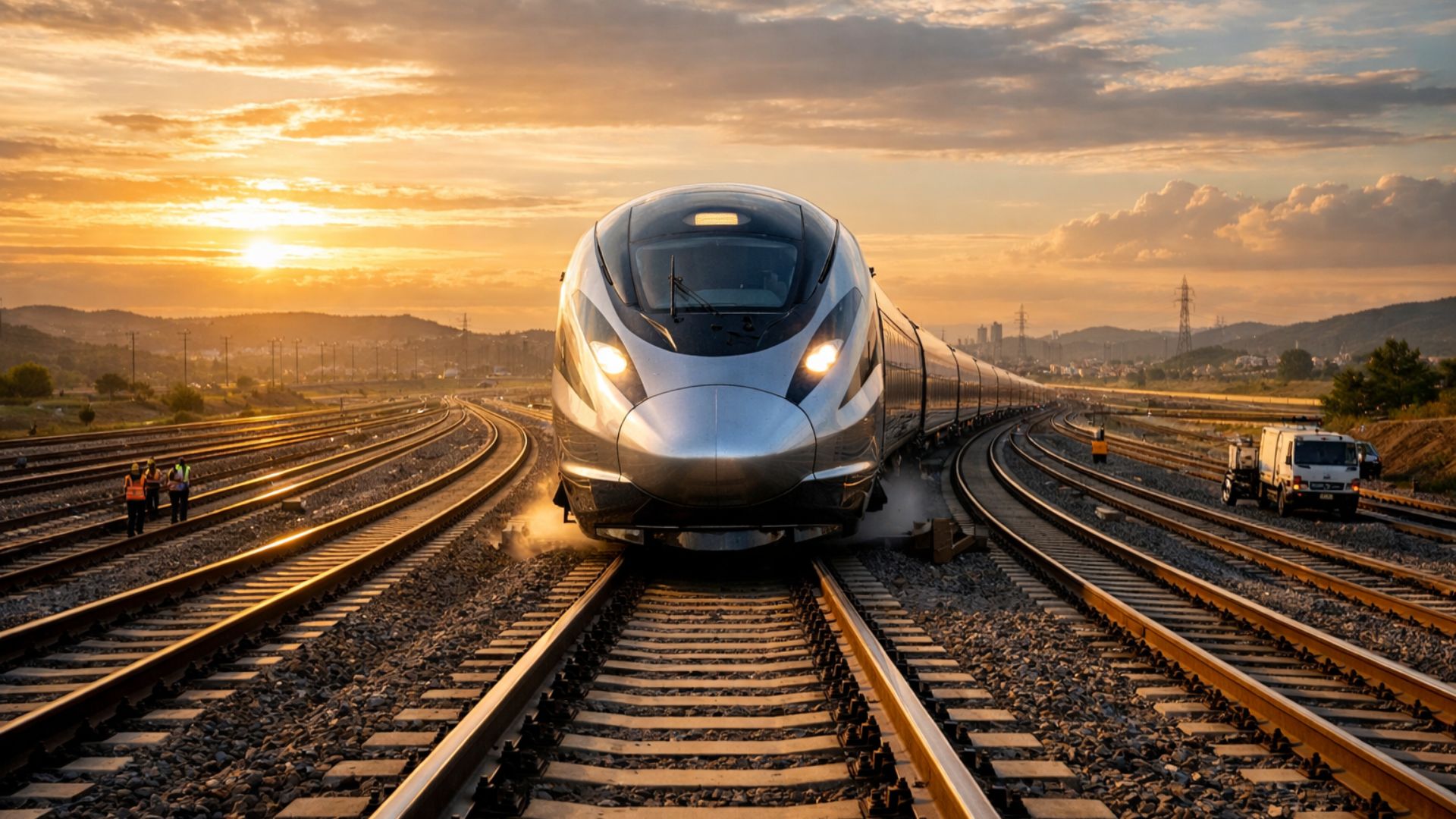
São Paulo surprises the world with a colossal railway network project that promises over 1,000 km of tracks, R$ 194 billion in investments, and 40 projects connecting the capital to the interior with fast and sustainable trains.
-
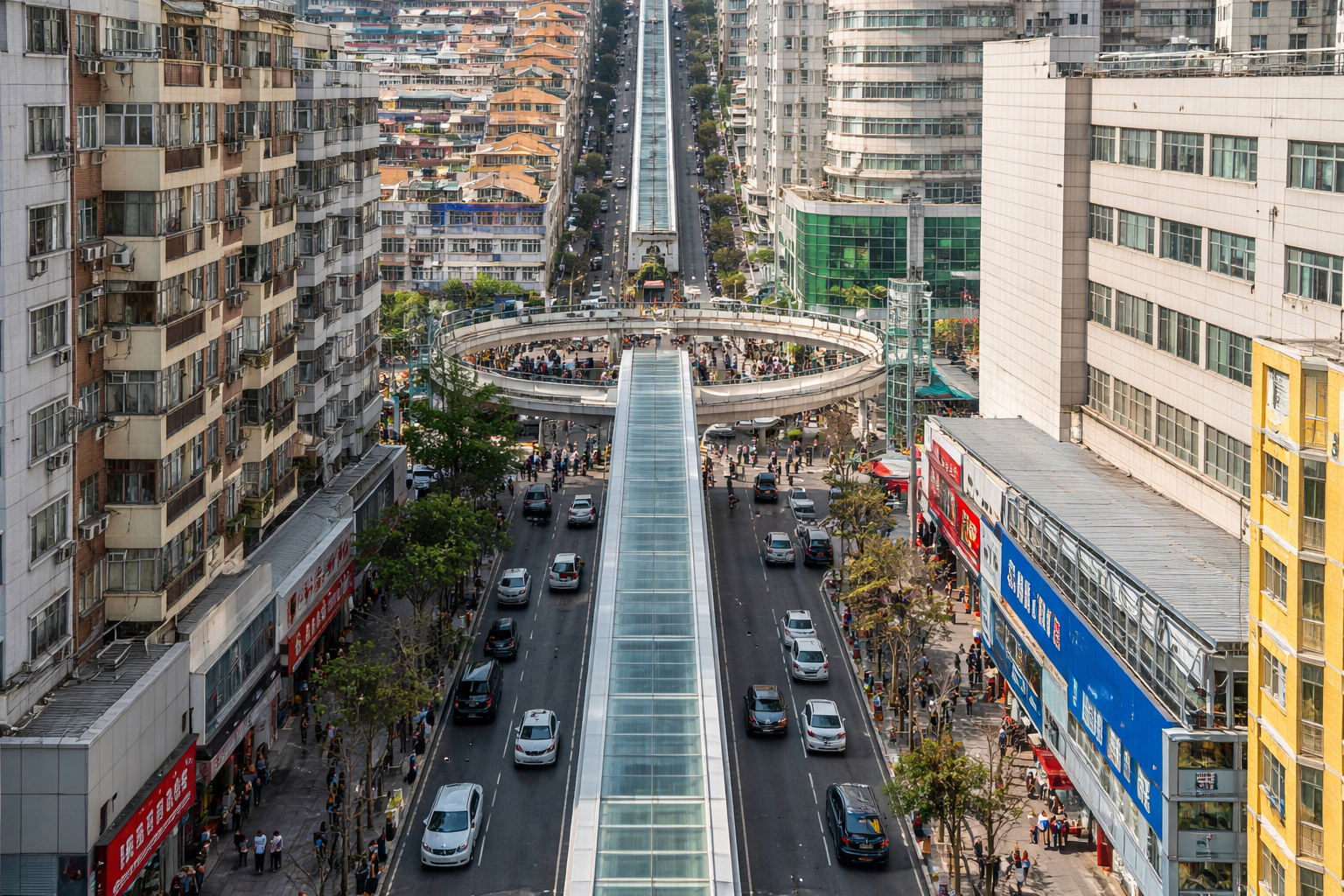
The world’s largest escalator, measuring 905 meters in China, reduces urban travel time from 1 hour to about 20 minutes and transforms mobility in mountainous regions with an engineering solution adapted to the terrain.
-
A R$ 300 million logistics giant is taking shape in Serra with over 100,000 m² and raises a question: how can this transform e-commerce and distribution in the state?

Latin America at the Center of the Geostrategic Board
Trade routes are no longer designed solely with logistics efficiency in mind — they now also serve as instruments of political and commercial influence by states. Thanks to its geographical position and growing export protagonism, Latin America has fully entered the global disputes for control of new interoceanic corridors, with multiple proposals spread across the continent.
The United States and China, the two largest economies in the world, are quietly competing for a place in the new alternative routes intended to connect the Atlantic and Pacific coasts. Logistical, port, diplomatic, and military interests overlap in these new projects.
It is essential to analyze this transformation in the global logistics map closely, including the creation of four new bioceanic routes, to understand the next steps of global supply chains. The change in control of the Panamanian terminals, the consolidation of rail corridors between Peru and Brazilian ports, the new route that strengthens collaboration among Chile, Argentina, Paraguay, and Brazil, the joint proposal between the US and Guatemala, as well as the innovative proposal that crosses the Mexican isthmus, form the main initiatives — although they are not the only ones.
Panama at the Origin of the Trade Dispute
For more than a century, the Panama Canal has been the main chokepoint in connecting the oceans. In light of recent geopolitical and trade events among the great powers, combined with the climate crisis that affected the Canal’s operations, both Beijing and Washington have begun to consider alternative solutions for interoceanic connections.
A few months ago, Hutchison Holdings announced its intention to sell its network of 43 terminals — including Balboa and Cristóbal, at both ends of the Canal — reaching an agreement with the consortium led by MSC (through TIL) and BlackRock. However, the operation was temporarily suspended. The main reason was pressure from Beijing, which viewed the transaction as a threat to its regional influence. In response, MSC started negotiations with COSCO Shipping to integrate into the consortium, thus seeking the approval of the Chinese government. According to Bloomberg, other Chinese state-owned companies, such as the conglomerate China Merchants Port Holdings, could also join the agreement.
The original plan envisioned that MSC would control the majority of the 41 global terminals, while BlackRock and its Global Infrastructure Partners (GIP) fund would hold 51% of the Panamanian terminals, leaving the remaining 49% under MSC’s control. This was interpreted by the US government as a “strategic victory,” as it prevented direct Chinese control of this key infrastructure.
However, the Panama Canal administrator, Ricaurte Vásquez, recently declared: “If there is a significant concentration of terminals operated by a single integrated company or a single shipping company, it will occur at the expense of Panama’s competitiveness and the neutrality of the Canal.”
To circumvent this impasse, it was proposed to divide the operation into two blocks: one with the Central American terminals (Panama) and another with the rest. The exclusivity period for negotiations between MSC and Hutchison expires at the end of July. If there is no agreement, the operation may be completely canceled.
The Dragon Corridor: Beijing’s Plan B

In Peru, the port of Chancay, controlled by COSCO Shipping, is advancing as the centerpiece of China’s “Plan B.” Through an alliance with Brazil, the Asian giant intends to connect the Pacific coast to the Atlantic port of Santos by railway. This would allow for a direct route between Asia and the Brazilian Atlantic coast, strengthening the transpacific-Chinese logistical axis. This megaproject, which traverses Andean and Amazonian regions, offers clear logistical advantages: reduction in time, tolls, and exposure to political or maritime tensions.
The savings in transit time can reach 10 days. It is a high-level geopolitical maneuver. The diversion of bulk (iron ore, soybeans, grains, etc.) and containerized cargoes to the Pacific not only offers a faster and cheaper alternative for South American exporters but also strengthens China’s position in global supply chains.
The port of Chancay, located 80 kilometers north of Lima, is designed to become one of the main logistics hubs in the South American Pacific. This deep-water megaport will be the first in the continent entirely planned to receive large vessels without continuous dredging. From a technical standpoint, the project includes the construction of four berths for vessels of up to 18,000 TEUs, a 1.8 km logistics tunnel connecting the operational area to logistics and customs service zones, and an expansion area of over 800 hectares. All of this will help alleviate the overload of the Port of Callao and integrate with the future railway system.
From a geopolitical perspective, the project reinforces China’s presence in South America. President Xi Jinping himself classified Chancay as the “strategic project of the Maritime Silk Road.” International analysts highlight that this point allows Beijing to project its influence over the energy and mineral corridors of the Andean-Amazonian region.
The Capricorn Bioceanic Corridor
Simultaneously, Chile, Argentina, Paraguay, and Brazil are promoting the Capricorn Bioceanic Corridor, a highway of over 2,400 km connecting the Brazilian ports of Santos and Itajaí to the Chilean ports of Antofagasta, Mejillones, and Iquique. This infrastructure, expected to be operational in 2027, promises to reduce logistics costs by up to 40%, establishing itself as the main route for agro-industrial cooperation and export in the region.
With the Capricorn Corridor, Brazil consolidates its leadership as an agro-food exporter, with a participation of 43% in Latin American exports. This land link is strategic to accelerate flows to Asia and diversify the continent’s export routes.

Paraguay will benefit from shipping its products to the sea. Sectors such as agriculture, mining, and livestock will take advantage of the corridor to reach Chilean ports quickly, and from there, the vast Asian market. It is a land alternative to traditional maritime routes, significantly reducing logistics costs. For exporters from southern Brazil and Paraguay, it is especially advantageous as it allows quicker access to the Pacific export window, with operational, freight, and time savings — in addition to the strong economic integration among the involved countries.
The Joint Proposal of Guatemala and the US
China’s bets on Chancay and the proposal for the new Capricorn corridor have stimulated a response from the United States, which goes beyond seeking greater influence in Panama. Washington’s strategy involves its ally Guatemala, which emerges as a key player in developing an alternative interoceanic corridor in its territory.
The agreement provides for the construction of a 372 km railway, highlighting the US interest in establishing a logistics route under its direct influence, connecting the new ports of San Luis (Pacific) and San Jorge (Atlantic). These will become the largest ports in Central America and will be able to accommodate container ships that, due to their size, cannot transit the Panama Canal. The estimated handling capacity is up to 9 million TEUs per year, based on current numbers from the US east coast.
This project, with mixed financing, seeks to become the new “logistics backbone” of Central America, with support from institutions such as the US International Development Finance Corporation (DFC).
The Interoceanic Corridor of the Isthmus of Tehuantepec

Mexico also has its own proposal for an interoceanic corridor. A 308 km railway connects the ports of Salina Cruz (Pacific) and Coatzacoalcos (Atlantic). Led by the Ministry of the Navy, the project offers an integrated logistics platform, connecting oceans through railways, roads, ports, and industrial zones, transforming the isthmus into a major industrial hub.
According to Octavio Sánchez Guillén, responsible for the project, the corridor will have a direct influence on the states of Veracruz, Oaxaca, Tabasco, and Chiapas, integrating the operations of the ports of Coatzacoalcos, Salina Cruz, Dos Bocas, and Puerto Chiapas.
The time savings are significant: the train would take 72 hours to link the two coasts, while the route via the Panama Canal can take 15 to 20 days. The economic impact is considerable, potentially generating around 50,000 jobs in the new industrial hubs. The expectation is that the project will be completed by 2026.
A Continent Focused on Its Logistics Development
The sale of Hutchison’s assets, Panama’s exit from the Silk Road, congestion problems, and climate impacts on the Canal suggest shifts toward countries like Chile, Brazil, Peru, Guatemala, and Mexico, which emerge as new interoceanic logistics nodes.
Latin America is being reconfigured logistically, both internally and in global connections, with modern infrastructure. Competition among powers has catalyzed investments, alliances, and alternative routes, redistributing geoeconomic power on the continent.
It is no longer just about transporting goods, but about controlling flows, establishing dependencies, and shaping the future of a continent that, due to its location and productive capacity, is more coveted than ever. Military conflicts, geopolitical pressures, and tariffs highlight the value of a Latin America that is growing with remarkable stability.
Panama Announces an Ambitious Canal Expansion Plan
In this scenario, the Canal Authorities recently presented their Master Plan 2035, which envisions investments of up to 8 billion dollars. According to administrator Ricaurte Vásquez, the plan includes port expansions, the creation of a logistics corridor, water guarantees to improve operations, the construction of an 80 km gas pipeline across the isthmus, and the reactivation of the port of Corozal, among other improvements. This is an ambitious initiative to recover the full potential of the Canal.
To accommodate the expected increase in traffic of gas carriers — which is expected to double in the next decade — a gas pipeline will be built as a viable alternative for transporting LPG from the east coast to the Pacific coast. One of the highlights of the plan is the creation of a third set of locks to enhance operational capacity and reduce waiting times for ships.
The simultaneity of investments in Panama and the advancement of new bioceanic corridors opens up options for large logistics operators to have diverse alternatives to outline their strategies.
In the next five years, we are likely to witness significant changes, propelling some logistics hubs at the expense of others — but this will be a topic for more in-depth strategic analysis.









Seja o primeiro a reagir!