





 Portuguese
  English
  Spanish
  5 min of reading
  2 comments


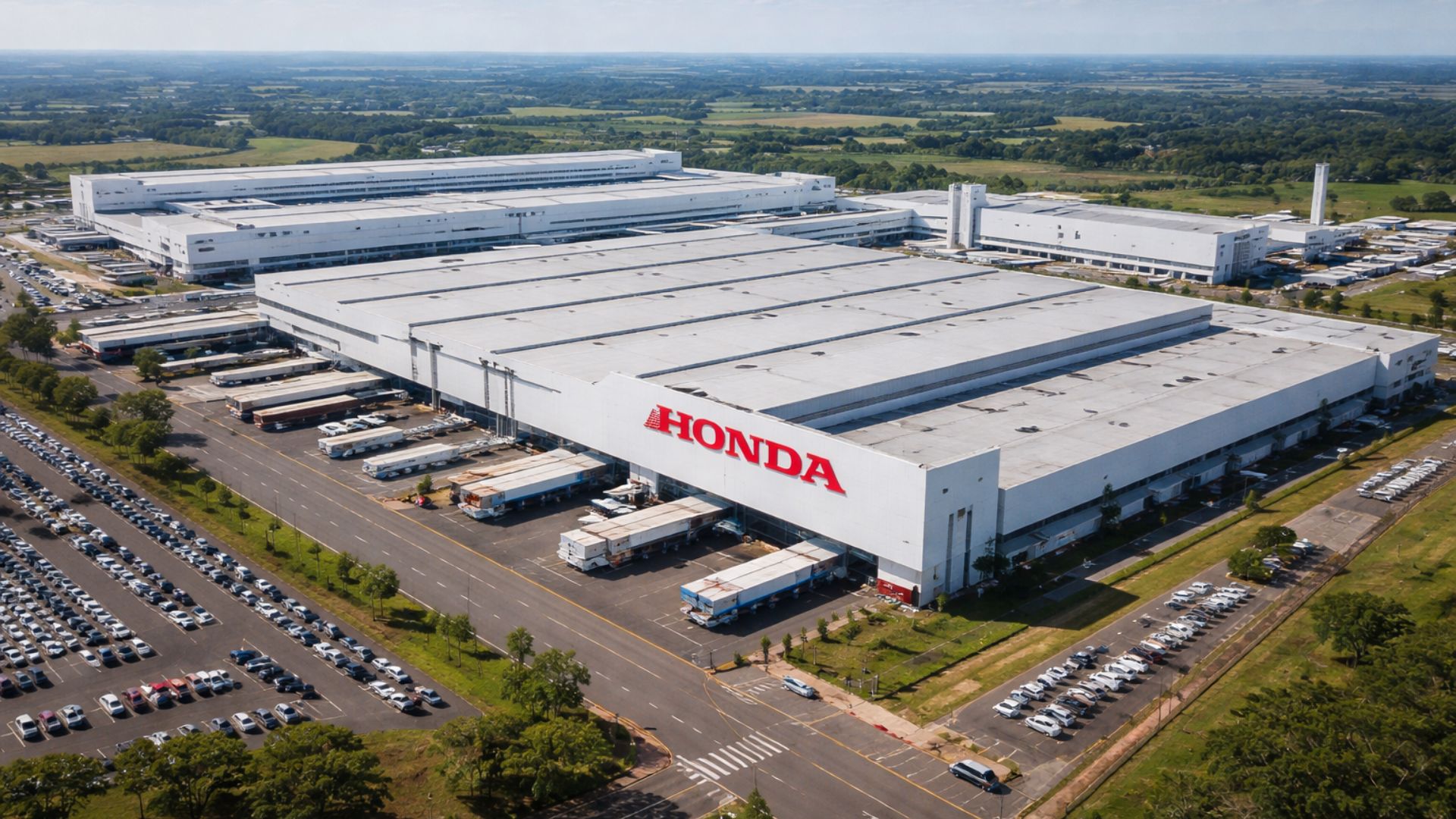


Industrial Partnership Between Honda and G-KTB Advances in the São Paulo Interior and Plans to Install a New Welding Unit Next to the Car Factory in Itirapina. Project Promises to Integrate the Production Chain, Reduce Logistics Timelines, and Strengthen the National Production of the Japanese Automaker.
The G-KTB will install a new operation next to Honda’s factory in Itirapina, in the São Paulo interior, in a move that expands industrial integration between the two companies and reorganizes part of the automaker’s supply chain in Brazil.
According to Honda, the unit will be dedicated to welding body assembly used in all vehicles produced by the brand in the country, with construction expected to start in the second half of 2026 and operations beginning in 2028.
The announcement was made by Honda itself in a statement in which the company describes the initiative as a strategic partnership aimed at gaining logistical and operational efficiency.
-
Premium Brazilian brand born during the pandemic brings fine cocoa from Bahia to Switzerland, Germany, and France, has won 9 awards, and claims to have the 2nd best milk chocolate in the world: meet Luz Cacau.
-
Júnior Friboi has just purchased one of the largest feedlots in all of Brazil, located in Goiás, with the capacity to produce 180,000 cattle per year, and the manager has already come forward to reassure employees about layoffs.
-
Pharmacy inside the supermarket: what changes now in your purchase, why medicines won’t go on the shelves, which rules remain strict, mandatory pharmacist, separate space, controlled storage, more convenience and competition in the country.
-
Ports like Santos and Paranaguá are operating at their limits and may block containers as early as 2030, warns a study by Macroinfra; bottlenecks increase costs and delays and push cargo to Rio, Salvador, Pecém, and Suape across Brazil.
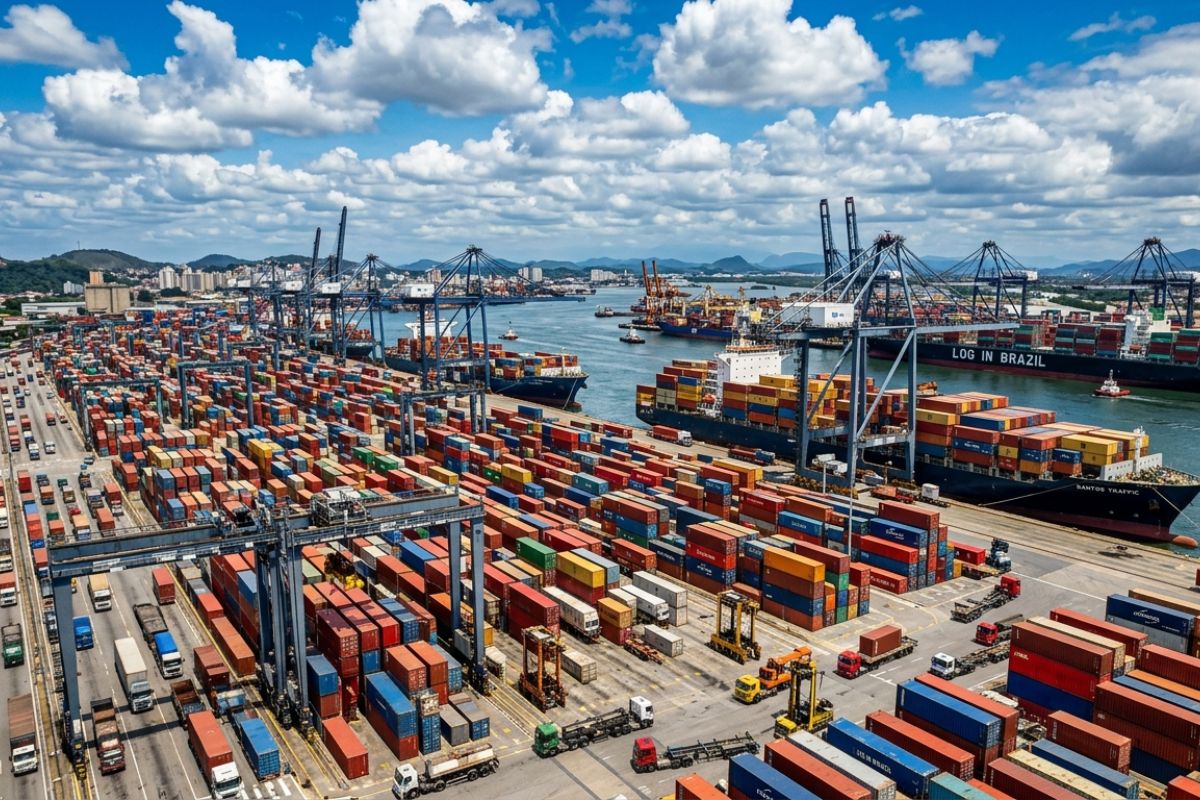

In practice, the supplier will execute this production stage in a facility adjacent to the Itirapina unit, adopting a closer arrangement between manufacturer and systems integrator, something the company sees as a way to reinforce the integration of local automotive production.
New Factory Next to Honda in Itirapina
The choice of Itirapina connects to the role the city has assumed in Honda’s operation in Brazil in recent years, following the inauguration of the new car factory in 2019.
Since 2021, according to the company, all national models have started being produced at this plant, designed to concentrate the manufacturing of the brand’s vehicles in the country with a more recent structure and a nominal capacity of 120,000 units per year.
In this context, moving the welding of body assemblies to a nearby facility tends to reduce internal relocations in the chain and shorten the time between supply and use of parts on the line.
Honda claims that the proximity between the two operations is expected to bring a reduction in delivery lead time, inventory optimization, and decreased CO₂ emissions, as well as favoring greater synchronization between supply and assembly.
Logistical Impact and Possible Effect on the Local Economy
Although the statement does not detail investment values or the square footage of the new structure, the manufacturer indicates that G-KTB’s arrival in the region is expected to produce effects on the local economy.
The company’s expectation is for a broadening of services and job creation in Itirapina and its surroundings, associated with the increased dynamism brought by a supplier positioned next to the automotive unit.
The relationship between the companies is not recent and helps explain why the operation was designed as a step toward deepening, rather than as a new approach between client and supplier.
Honda itself states that G-KTB has been following its production trajectory in Brazil since 1997, the year the automaker began manufacturing vehicles nationally, initially at the Sumaré plant, also in the state of São Paulo.
Partnership Between the Companies Started in 1997
G-KTB confirms, in its institutional presentation, that it was founded in Brazil in 1997 and that it operates in the manufacturing of stamped and welded components, now from its unit in Cabreúva, in the São Paulo interior.
The company also presents itself as the only production unit of G-TEKT in Latin America, information that reinforces the strategic importance of the Brazilian operation within the group’s industrial structure.
This history helps understand the type of component that will be at the center of the new plant planned for Itirapina, as welded body assemblies are structural parts directly linked to vehicle assembly.
By bringing this stage closer to the final factory, Honda aims to reduce the interval between the preparation of assemblies and their application in production, which tends to make the flow more predictable and the operation less dependent on larger relocations between cities.
In the statement about the partnership, Douglas Alencar, head of Development and Purchasing at Honda Automóveis do Brasil, stated that G-KTB has been with the automaker since the start of its operations in the country and that the expansion of this collaboration reflects the search for efficiency and operational excellence.
“G-KTB is a partner that has been with Honda since the beginning of our operation in Brazil. The decision to expand this collaboration reinforces not only our continuous pursuit of efficiency and operational excellence but also Honda’s commitment to the development of the country. The presence of G-KTB near our Itirapina unit strengthens the supply chain and reaffirms the importance of working with companies that grow with us and believe in the future of the national industry”, says Douglas Alencar.
Honda’s Industrial Strategy in Brazil
In addition to the immediate logistical gain, the announcement fits into a larger strategy of production densification around the Itirapina plant, currently the main automotive assembly hub for Honda in Brazil.
The unit was presented by the company as a more modern and efficient project from a productivity standpoint, with flexibility for technological updates and processes focused on sustainability as well.
Among the examples cited by the company are the use of water-based paint and industrial processes that reduce the amount of paint used in production, measures that are part of the environmental initiatives adopted by the automaker.
By choosing to bring a historic supplier to the immediate surroundings of the factory, the automaker reorganizes part of its Brazilian industrial base, now with greater physical proximity between production stages that were previously separated.
The disclosed schedule shows that the change will occur gradually, with construction starting in the second half of 2026 and operation activation in 2028, as part of a medium-term plan aimed at consolidating this new industrial configuration.




Ué , o Brasil não tava quebrado e ninguém mais queria investir aqui? kkkkkkk
O país esta QUEBRADO ..DIVIDA CHEGA N CASA DE TRILHÕES..60 D POPULAÇÃO ENDIVIDADA E AI VEM UM PTRALHA SEM MIOLO FALAR ****..NADA VER COM POLITICA EMPRESARIAL