





 Portuguese
  English
  Spanish
  6 min of reading
  0 comments


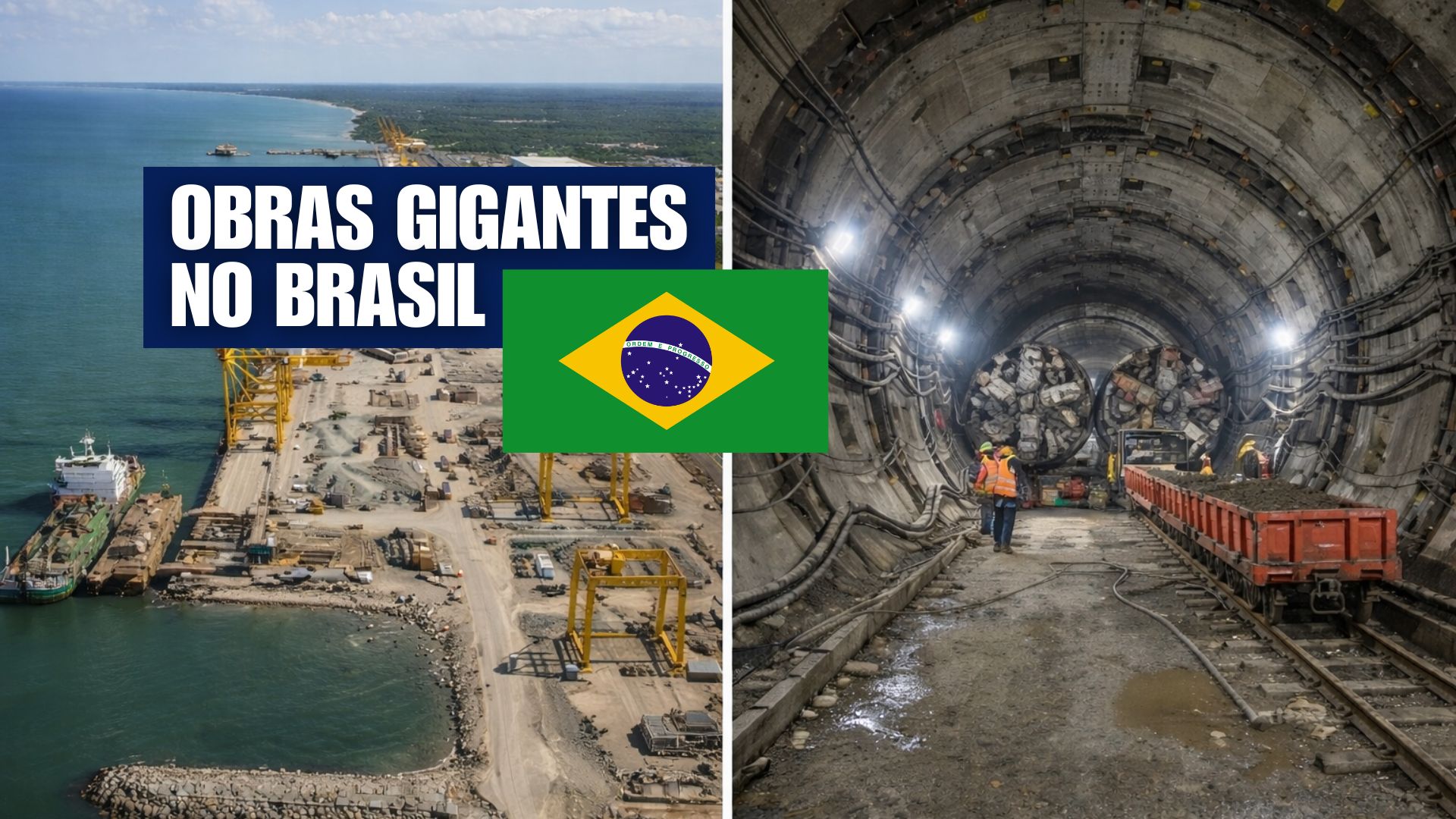
Ongoing Infrastructure Projects Expose Technical Challenges in Different Regions of the Country and Operate Under Extreme Conditions of Soil, Sea, Climate, and Urban Occupation, with Works Advancing Simultaneously to the Operation of Essential Systems and Require Rigorous Planning, Continuous Monitoring, and Coordination Between Heavy Engineering, Logistics, and Environment.
Construction sites distributed throughout the national territory remain active in contexts considered technically complex by civil engineering.
In 2026, these projects advance in areas subject to the action of the sea, the instability of the terrain, intense urban occupation, and extreme climatic regimes.
Commonly, all operate with strict schedules, environmental restrictions, and systems that require permanent monitoring to maintain safety and continuity of activities.
-
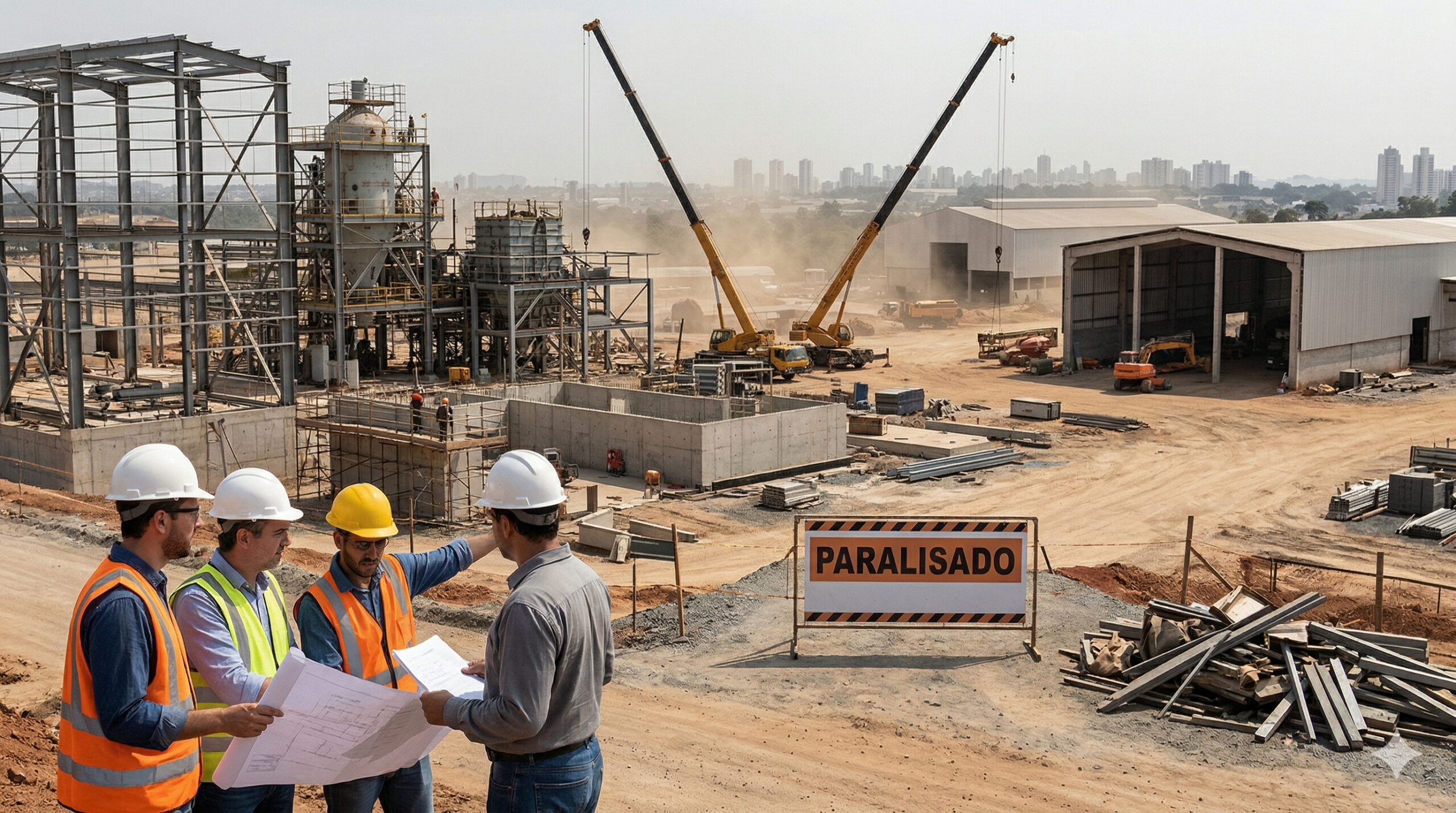
The lack of welders, electricians, and operators becomes a structural threat in 2025, with the construction industry and manufacturing already suffering from delays, cost pressures, and labor shortages in Brazil.
-
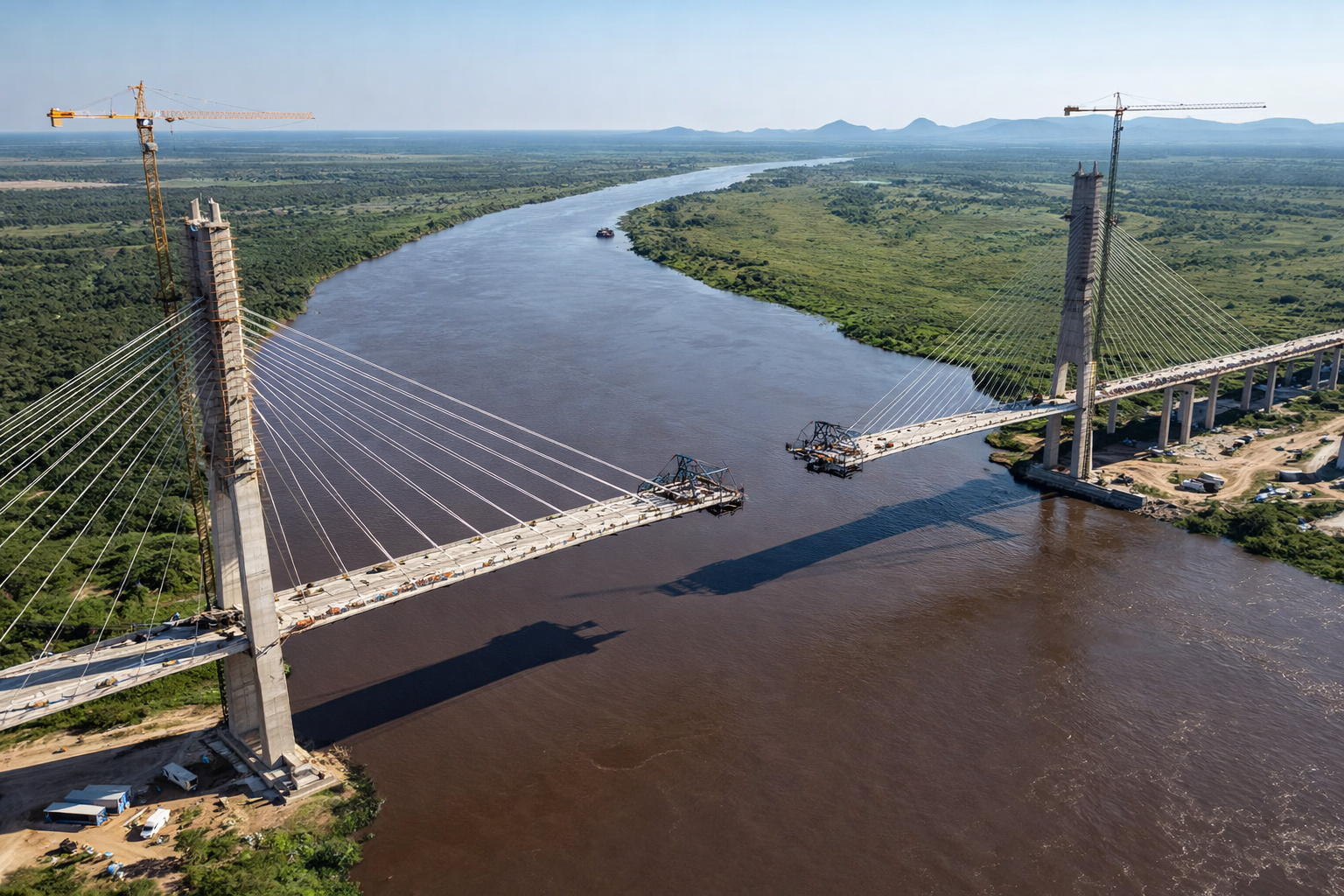
Brazil and Paraguay are just 46 meters away from a historic union on the bioceanic bridge that promises to revolutionize trade between the Atlantic and the Pacific.
-
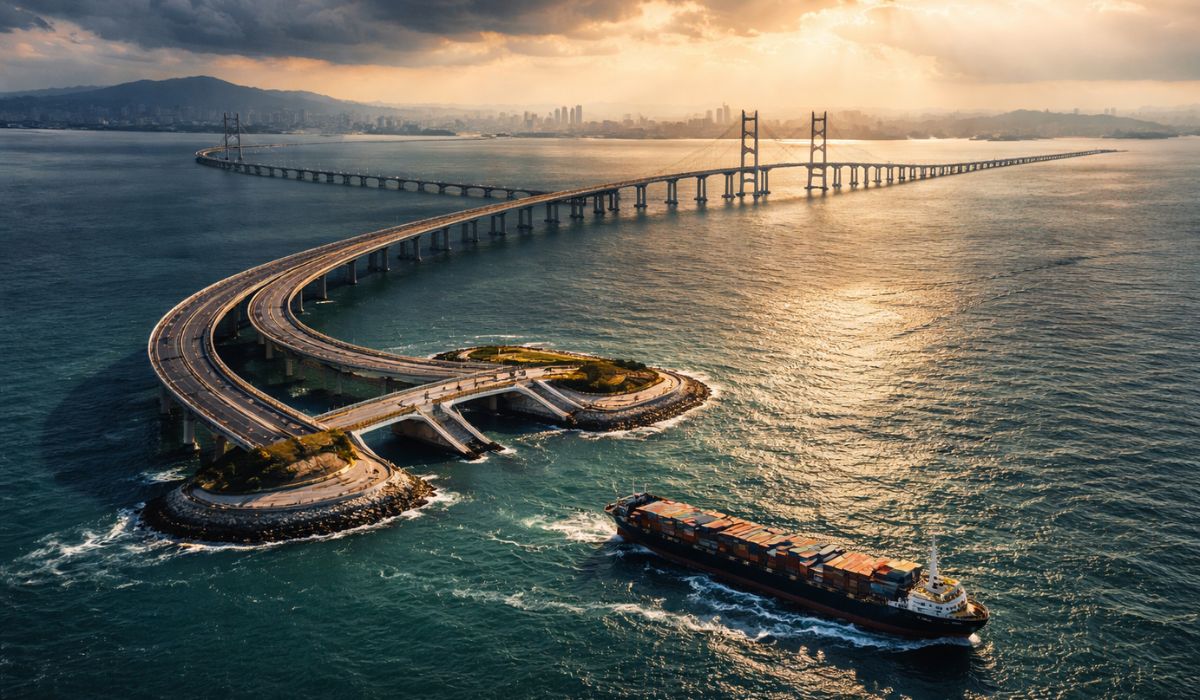
With 55 km over the sea, a cost of US$ 20 billion, and enough steel to build 60 Eiffel Towers, China’s largest project has connected Hong Kong, Zhuhai, and Macau in a colossal bridge that defies the logic of engineering.
-
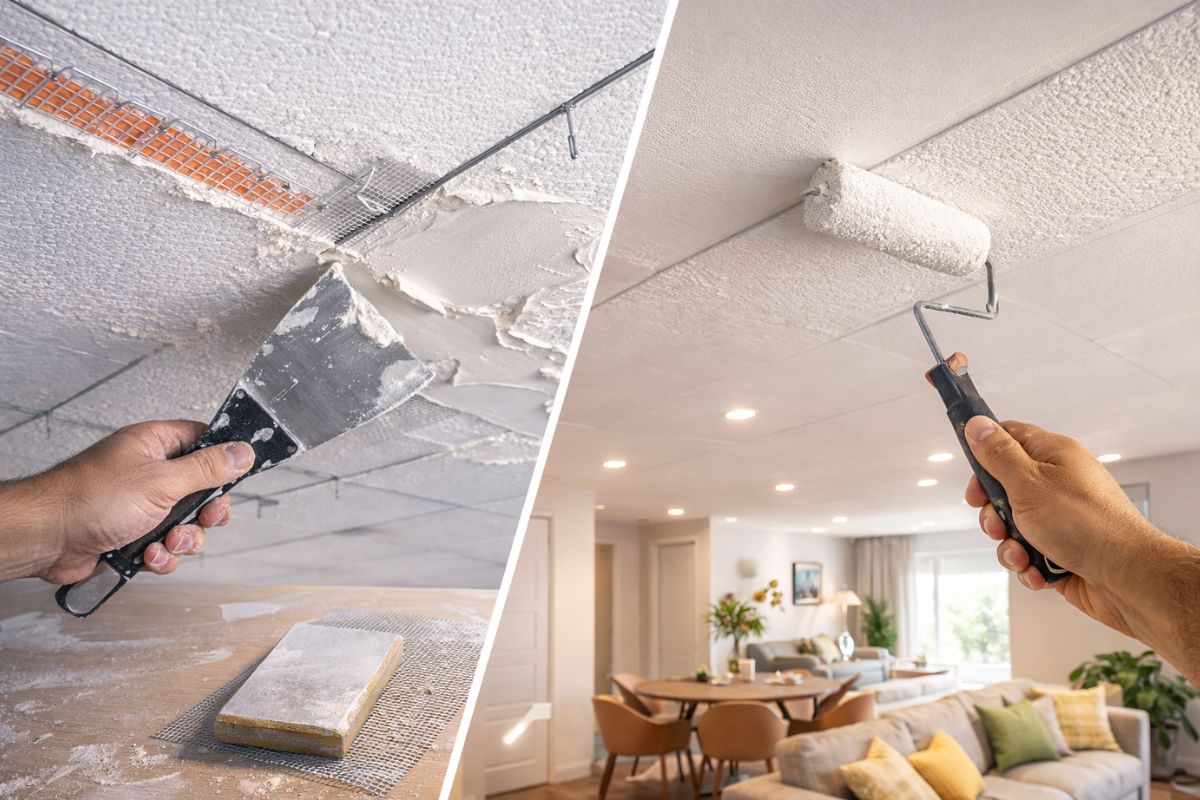
A trick with joint compound transforms a Styrofoam ceiling into a plaster-like ceiling: leveled panels, wires and mesh at the joints, sand, paint, and change the environment while spending little today.

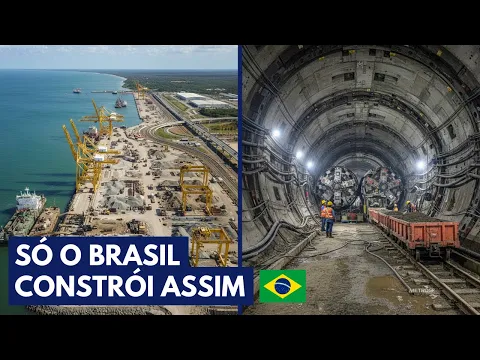
Açu Port Complex Expands Capacity with Continuous Dredging
Located on the north coast of Rio de Janeiro, the Açu Port Complex operates as a large-scale logistics and industrial hub, bringing together operational terminals and simultaneous expansion fronts.
One of the main technical requirements of the project is the maintenance of deep navigation channels, with drafts greater than 20 meters in specific areas, a necessary condition for the operation of large vessels.
To maintain these characteristics, the port relies on recurring dredging, as the natural movement of sediments and ocean currents constantly alters the canal floor.

Additionally, maritime protection structures, such as breakwaters, have been designed to reduce wave impact and ensure operational conditions in different climatic scenarios.
On land, the expansion involves the implementation of new offshore piers and the preparation of logistical retroareas for industrial terminals, storage yards, and facilities linked to the energy, mining, and oil sectors.
According to information released by the port administration, one of the main challenges lies in coordinating civil works, industrial assembly, and ongoing operations, as interferences can affect national and international logistical flows.
Line 6-Orange Enters a Critical Phase Under the City of São Paulo
In the city of São Paulo, the Line 6-Orange of the subway has entered a phase considered sensitive from a technical perspective, transitioning from heavy excavation to structural consolidation and system installation.
In 2026, the focus of the work is on the integration between permanent way, power supply, ventilation, signaling, and automation, crucial steps for future commercial operation.
The tunnels, excavated by large-diameter tunnel boring machines, traverse densely populated neighborhoods, passing under old buildings, supply networks, and existing foundations.

For this reason, the progress of the underground fronts requires continuous geotechnical monitoring, with supervision of settlements and vibrations to reduce risks to the surface.
The underground stations, in turn, are built in deep shafts opened in restricted urban areas.
This method demands special supports, early execution of covering slabs, and phased internal excavations to preserve the stability of the surroundings.
According to the official schedule released by the state government, the delivery of the line will occur gradually, which increases the complexity of coordination between civil works, testing, and the start of operation.
North Ring Road Faces Rugged Terrain and Environmental Requirements
The North Section of the Mário Covas Ring Road concentrates engineering challenges associated with rugged terrain and environmental protection areas.
Unlike other segments of the ring, this phase crosses mountains, deep valleys, and sensitive regions, where the terrain imposes limitations on the road’s implementation.
In 2026, construction continues on simultaneous fronts, including the excavation of road tunnels in rocky masses with variable geotechnical conditions.
In certain points, the presence of fractured and unstable soils requires phased construction methods and reinforced supports, accompanied by continuous monitoring.
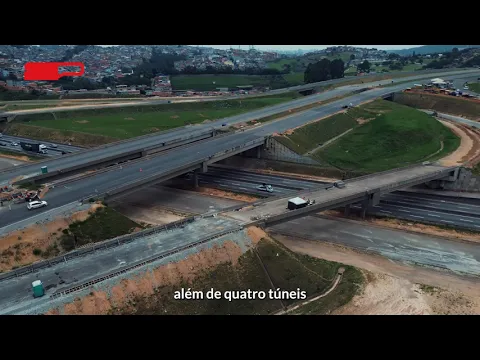

In open stretches, elevated viaducts cross sensitive areas, supported by deep foundations executed in hard-to-access locations.
At the same time, permanent drainage systems are implemented to deal with heavy rains and reduce the risk of landslides.
According to official information, the main challenge is to reconcile the execution of large-scale structures with strict environmental requirements and operational restrictions.
North-South Railway Advances in Consolidating Logistical Integration
The North-South Railway is regarded as a structural axis of national railway integration, connecting producing regions in the interior to logistical corridors and seaports.
Although sections are already in operation, the project continues in the consolidation of structural and operational phases.
In this stage, priority is given to the completion of rail yards, intermodal terminals, and signaling systems, elements that determine the flow capacity and regularity of traffic.

From an engineering standpoint, the implementation involved extensive earthworks to maintain ramps compatible with heavy freight trains.
In areas with low support capacity soils, specific geotechnical solutions were adopted, such as subgrade reinforcement and permanent drainage systems.
Another relevant component is the large railway bridges, designed to span rivers and flood-prone areas.
These structures require strict control of settlements and precise alignment of the track, essential factors for the safety and efficiency of rail transport.
São Francisco Transposition Operates with Continuous Adjustments
The São Francisco River Integration Project remains operational in 2026 and undergoes complementary works and structural adjustments.
The system consists of artificial channels, tunnels, aqueducts, reservoirs, and pumping stations responsible for transporting water over long distances.
These stations are identified by technicians as one of the most sensitive points of the infrastructure, as they operate continuously with high-power equipment.
For this reason, they undergo interventions aimed at improving energy efficiency and mechanical reinforcement, due to the natural wear associated with continuous operation.
Additionally, expansive soils, areas prone to erosion, and the need to maintain channels require constant monitoring.
The integration with state pipelines adds complexity to operations, transforming the transposition into a system that demands frequent adjustments to ensure consistency in supply.
Salvador–Itaparica Bridge Enters a Decisive Phase of Implementation
The Salvador–Itaparica Bridge ranks among the main maritime crossing projects planned in the country.
The project anticipates a total estimated length of about 12.4 kilometers, considering the bridge and access roads.
In 2026, the official expectation is for progress toward decisive implementation stages, provided the disclosed schedules are maintained.

The main technical challenge lies in the foundations in a maritime environment, executed in deep and heterogeneous sedimentary soils.
These interventions depend on special marine-embarked equipment and continuous naval logistics, influenced by tides, currents, and winds.
The superstructure includes a cable-stayed section designed to allow navigation of large vessels.
Thus, it requires extensive spans, high towers, and strict geometric control during the execution of the slabs.
The land accesses involve roadworks and drainage systems compatible with coastal dynamics.
Senna Tower Advances as a Large-Scale Vertical Project
In Balneário Camboriú, the Senna Tower was presented as a residential project exceeding 500 meters in height.
In 2026, the site focuses on preparatory activities and initial execution stages, according to information released by the project managers.
Construction in a coastal area imposes challenges associated with low-resistance soils, high water table, and influence of the marine environment.
To address these conditions, the project foresees deep foundations and strict control of differential settlements.
The superstructure utilizes solutions aimed at resisting horizontal forces caused by wind.
Aerodynamic studies and vibration control devices are part of the technical set of the building.
The execution occurs in planned vertical cycles, which depend on the coordination of forms, reinforcements, concreting, and material logistics.
Itaipu Maintains Operations with Ongoing Modernization Programs
The Itaipu Hydroelectric Plant continues to operate in 2026 as one of the main assets of the Brazilian electric system.
Although it is not under construction, the plant undergoes ongoing maintenance and modernization programs for electromechanical and control systems.
The dam and associated structures concentrate large volumes of concrete designed to contain the Paraná River.
Therefore, they require permanent monitoring of structural behavior. The powerhouse, which houses multiple generating units, operates under high loads and demands strict control of vibrations and temperature.
The spillway, designed to dissipate large volumes of water during flood events, is also subject to constant monitoring.
As projects advance simultaneously in open sea, urban underground, and continental-scale systems, how has Brazilian engineering structured the management of these risks to ensure deadlines, safety, and continuous operation?








-

-

-

-

11 pessoas reagiram a isso.