





 Portuguese
  English
  Spanish
  5 min of reading
  1 comment


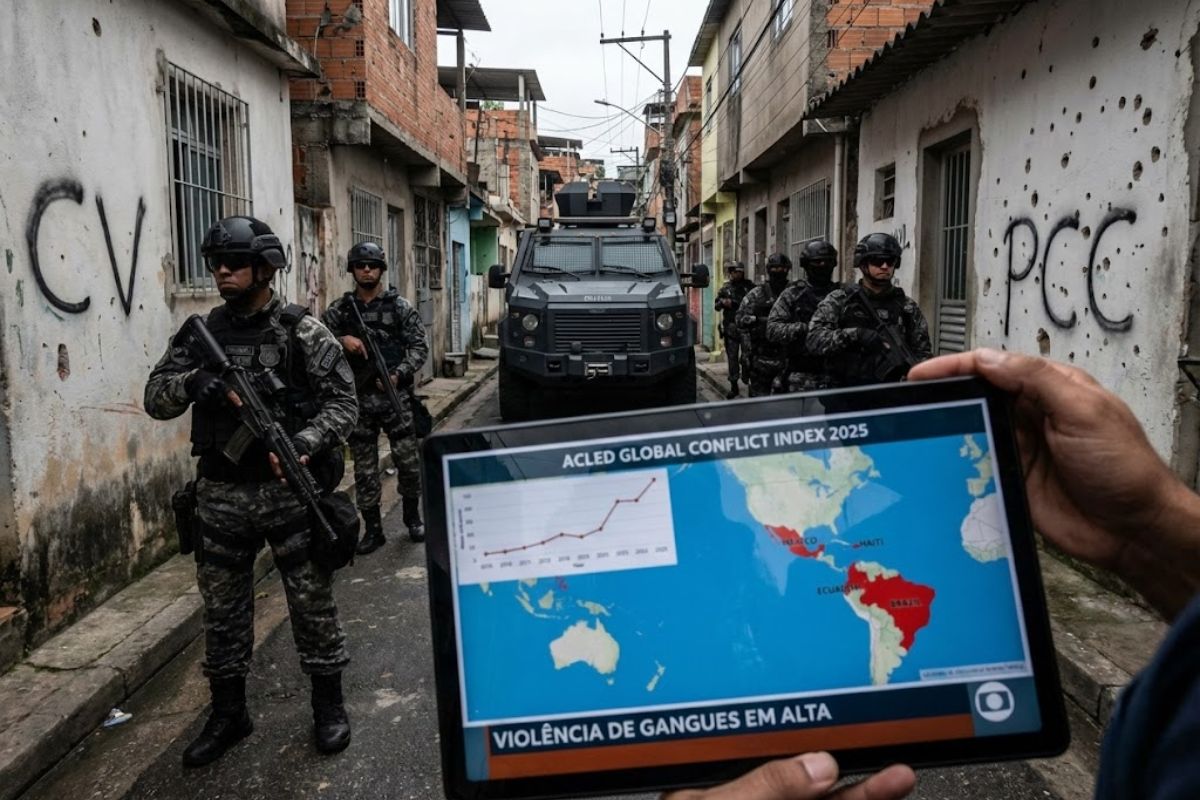


Most Dangerous Countries in the World in 2025, According to ACLED, Places Brazil in 7th Position and Brings the Country Closer to Warfare Scenarios Like Palestine, Syria, and Myanmar, Alongside Mexico, Ecuador, and Haiti, with Gangs, Lethal Mega-Operations, and Criticism of Militarization in Latin America, Amid Regional Pressure.
Brazil ranked 7th in the index that lists the most dangerous countries in the world in 2025, released by the NGO ACLED on 12/12/2025, and now shares the top 10 with Palestine, Myanmar, and Syria. The study correlates mortality, danger to civilians, geographical extent of conflicts, and the number of armed groups.
In Latin America, the report places Mexico at 4th, Ecuador at 6th, Brazil at 7th, and Haiti at 8th, linking the positions to territorial disputes among gangs and the recurrent use of state force. In October 2025, an operation in Rio against the Comando Vermelho left over 120 dead; in Haiti, instability lingers since the assassination of Jovenel Moïse in 2021.
How ACLED Compiles the Ranking and What the Index Measures

ACLED (Armed Conflict Event Location and Data Project) organizes the index based on four indicators: mortality, danger to civilians, geographical extent of conflicts, and the number of armed groups.
-
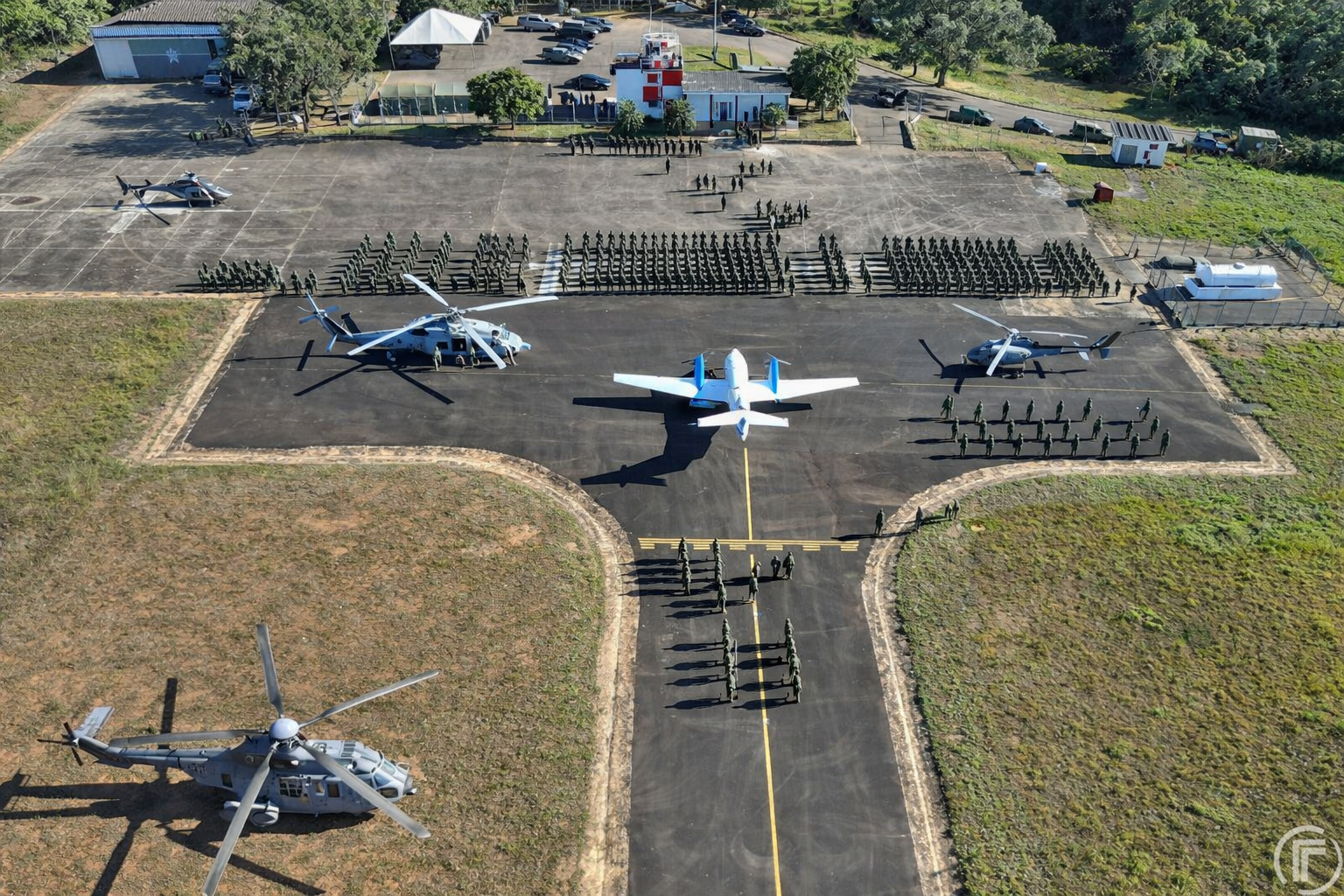
Furnas Airport is handed over to the Navy and becomes a strategic base with complete military operations, attack drones, and international mobilization at Furnas Lake.
-
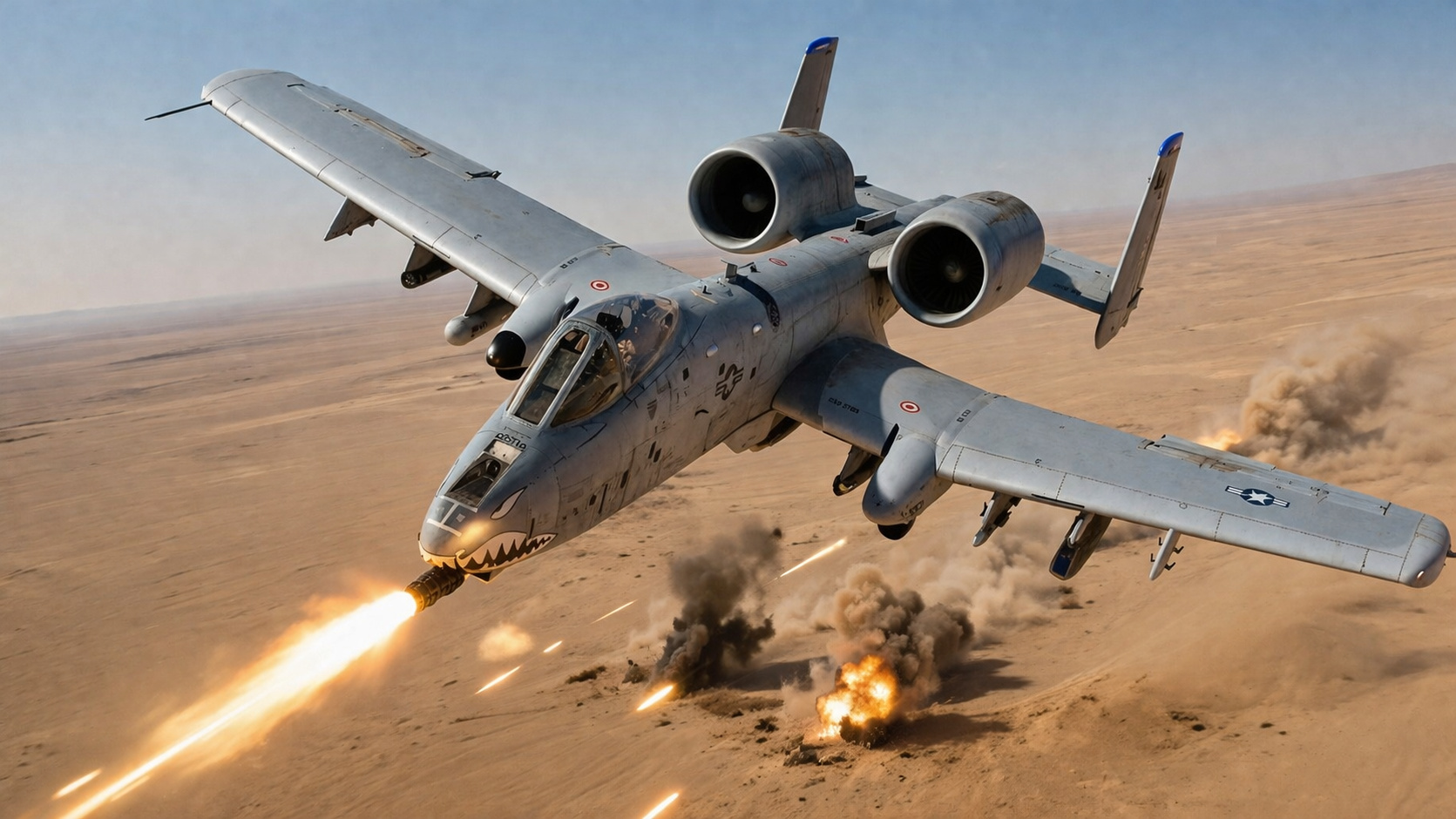
Few people know, but “mega burst” attacks from the A-10 in the Middle East are intriguing analysts and even experienced former pilots of the U.S. Air Force.
-
Manufactured in Brazil and exported to Saudi Arabia and Malaysia, the ASTROS system is renamed as Fogos in 2026, gaining AI, cruise missiles with a range of 300 km, and air defense costing R$ 3.4 billion, transforming a launcher from the 1980s into the most ambitious multidomain platform in Latin America.
-
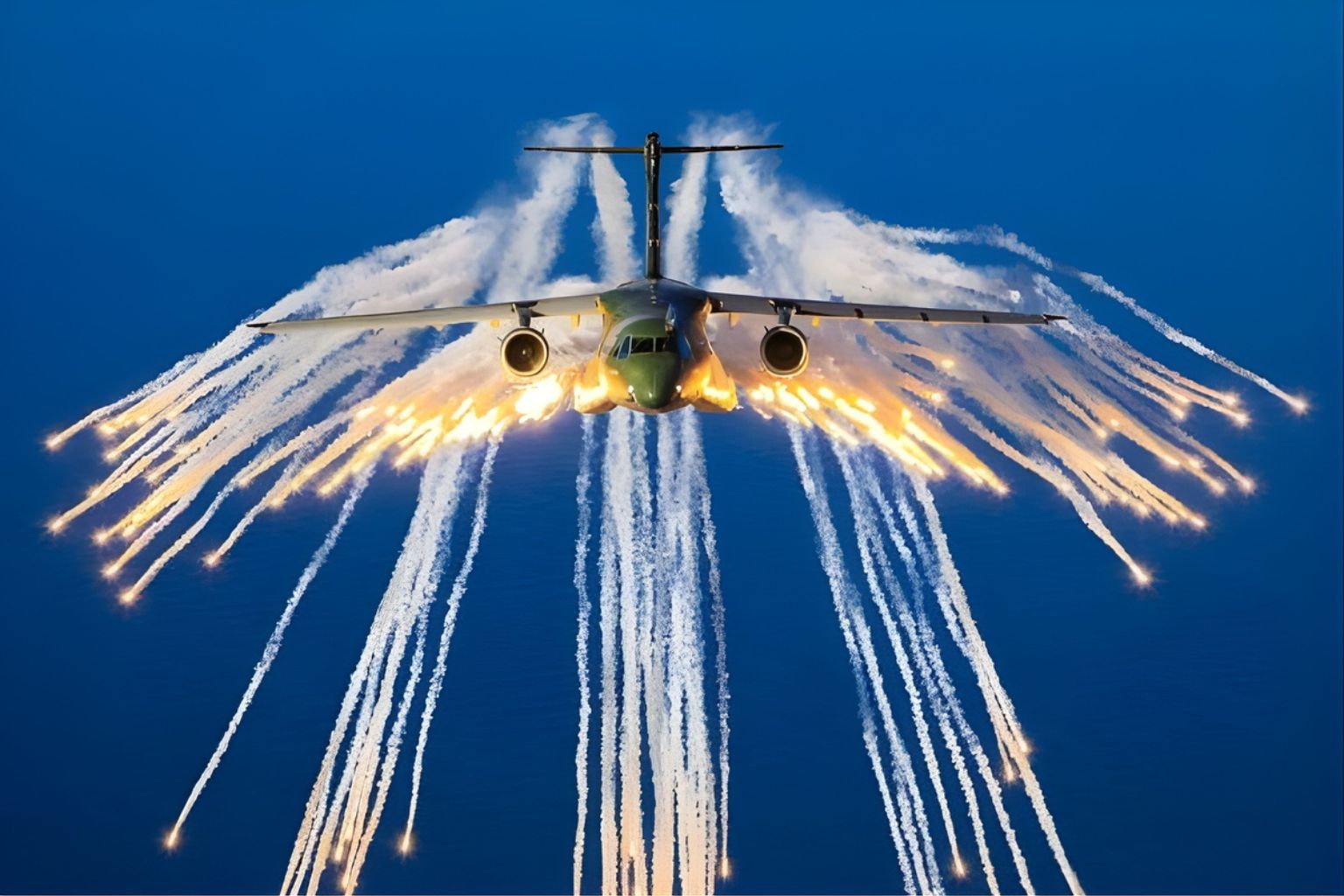
The largest military aircraft ever produced in Brazil, the KC-390 Millennium can carry up to 26 tons, refuel fighter jets in flight, and has already been exported to Europe and Asia, placing the country in the select group that designs and sells large military aircraft worldwide.

The central reading of the report is that violence in Latin America has increased, but with different drivers per country.
In the cut of most dangerous countries in the world in 2025, the presence of Mexico, Ecuador, Brazil, and Haiti in the top 10 is treated as a sign of consolidation and expansion of armed actors, with direct impacts on civilians and local governance.
Brazil in 7th Place and the Weight of Gangs and Lethal Operations

Brazil ranks 7th in the ACLED ranking for most dangerous countries in the world in 2025, and the report associates the result with the action of gangs that compete for control of large areas.
The text notes that, in October 2025, a police operation in Rio de Janeiro against the Comando Vermelho resulted in over 120 deaths.
This data is presented in the context of mega-operations and the lethal escalation as a security response.
The combination of territorial disputes and high-impact actions is treated as an element sustaining Brazil’s position in the top 10.
Mexico in 4th, Dispute in Sinaloa and Violence Against Politicians
Mexico occupies 4th place, the same as in 2024, trailing Palestine, Myanmar, and Syria.
ACLED attributes part of the increase in violent incidents to the internal war in the Sinaloa Cartel following the arrest of Ismael “El Mayo” Zambada in July 2024 in the United States, where he claims to have been tricked by Joaquín Guzmán López, son of Joaquín “El Chapo” Guzmán.
The organization states that this conflict has reshaped criminal dynamics in several states and is likely to continue fueling violence in new areas.
In August 2025, CNN reported that the number of homicides in Sinaloa surged by 400% in the year following Zambada’s capture.
The report also highlights violence against politicians and public officials, with a record of 360 incidents in the last year, including mention of the assassination of Carlos Manzo, mayor of Uruapan, in Michoacán.
Ecuador in 6th and Leap of 36 Positions with Over 3,600 Deaths
Ecuador ranks 6th in the ACLED indicator for 2025, after climbing 36 positions compared to 2024.
The report points to a significant increase in violence levels due to clashes between local criminal groups and warns of historical records.
ACLED states that gang-related violence has already resulted in the deaths of over 3,600 people and that the homicide rate may be the highest in Latin America for the third consecutive year.
The document lists three factors: dispute between Los Lobos and Los Choneros, fragmentation of gangs after the arrest, death, or exile of leaders, and the growing relevance of the country in regional and transnational drug trafficking amid a continuous increase in cocaine production.
Haiti in 8th, Instability Since 2021 and Multinational Force of 5,000
Haiti appears in 8th place in the ranking and is described as a case where gangs take advantage of political instability to gain ground.
The report links this context to the period following the assassination of President Jovenel Moïse in 2021.
According to ACLED, gang activity is concentrated in Port-au-Prince but is spreading to other areas.
In response, the UN Security Council approved the creation of a new multinational force, composed of over 5,000 people, aimed at suppressing these groups.
Militarization as a Response and the Short-Term Warning Without Lasting Effect
Sandra Pellegrini, senior analyst at ACLED for Latin America and the Caribbean, assesses that increasing military or police presence on the streets may reduce violent events in the short term, but does not sustain a long-lasting decline.
The analysis presented by CNN is that, in the medium and long term, militarization may fragment criminal groups, amplify disputes, and elevate the risk of abuses by state forces.
The report describes an unfavorable political scenario for strategy revision, as “zero tolerance” policies usually have social support and there is pressure from the United States for measures against drug traffickers and other criminal groups.
Pellegrini states that the trend of militarization precedes Donald Trump’s second term, citing previous experiences such as El Salvador, Honduras, and Trinidad and Tobago, which declared a state of emergency the previous year.
Ranking of the 10 Most Dangerous Countries in the World in 2025, According to ACLED
The list presented in ACLED’s report for most dangerous countries in the world in 2025 is as follows, with variations from 2024 when noted:
Palestine, same position as 2024
Myanmar, same position as 2024
Syria, same position as 2024
Mexico, same position as 2024
Nigeria, same position as 2024
Ecuador, rose 36 positions compared to 2024
Brazil, fell 1 position compared to 2024
Haiti, rose 3 positions compared to 2024
Sudan, same position as 2024
Pakistan, rose 2 positions compared to 2024
0.8 Reality Checkpoint
What is explicitly in the base:
ACLED’s methodology with four indicators, the top 10 and the positions of Mexico, Ecuador, Brazil, and Haiti, changes relative to 2024, Zambada’s arrest in July 2024, the 400% data in Sinaloa cited by CNN, the 360 incidents against politicians in Mexico, the over 3,600 deaths linked to gangs in Ecuador, the operation in Rio in October with over 120 deaths, the Haitian instability since 2021, and the multinational force of over 5,000.
What is not in the base: official responses from the governments contacted by CNN and operational details of the mentioned police actions, as well as the numbers cited.
The cut of most dangerous countries in the world in 2025 places Brazil in the same ranking as war zones and reinforces a troubling diagnosis for the region: gangs and territorial disputes coexist with forceful responses that may produce immediate effects, but without guaranteeing sustained violence reduction.
The indicator synthesizes risk to civilians, geographical expansion of conflict, and the multiplication of armed groups as warning signs.
Do you agree that militarization, as it has been used, worsens the scenario of the most dangerous countries in the world in 2025 or is it still the only viable response in the short term?









ACLED are an ok source. Not great but not terrible, just a few too many holes in their methodology.
The middle of a list that’s otherwise mostly passable doesn’t look right i.e. the odd preponderance of countries from a relatively safe continental region. Haiti aside (bizarrely also rated as the least violent of the 4), none of the other 3 are anywhere near the world’s 10 most violent countries.
It should look like this:
• Afghanistan
• Central African Republic
• Haiti
• Libya
• Palestinian Territories
• Somalia
• Sudan
• Syria
• Ukraine
• Yemen
At city-level the same kind of countries populate the list. Gaza City, Khartoum, Port-au-Prince and so forth.
Source: Independent security risk assessors 2026 (i.e. Global Guardian, State Department etc.)