





 Portuguese
  English
  Spanish
  6 min of reading
  0 comments


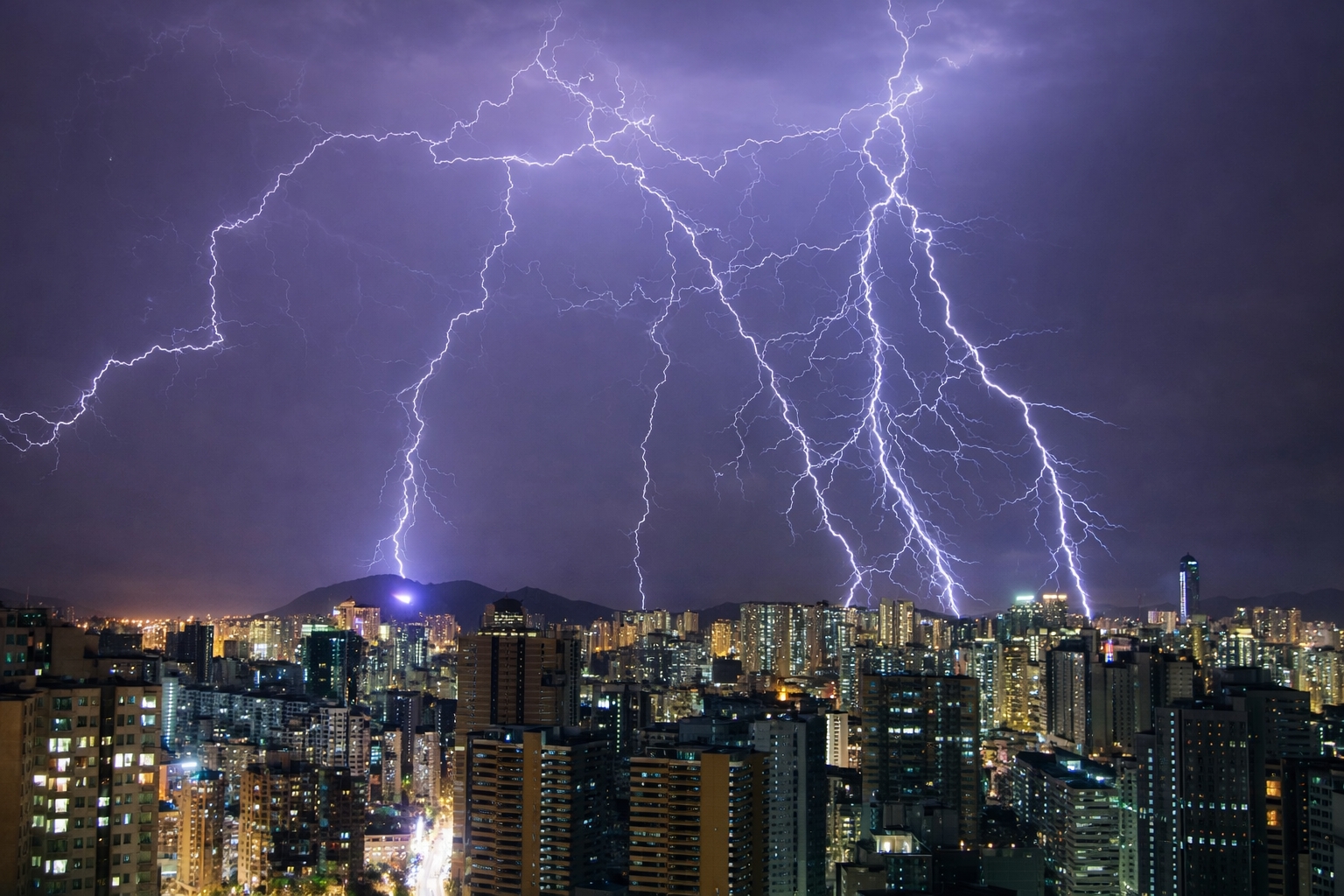
Understand Why Brazil Concentrates So Many Lightning Strikes, Who Suffers the Most Impacts, and How to Reduce the Danger During Storms.
The Brazil is the country with the most lightning strikes in the world, with 77.8 million lightning discharges every year. This volume helps explain why accidents happen repeatedly and why the damages can range from burns to serious failures in power grids.
Another concerning statistic relates to incidents with people: at least 300 Brazilians are struck each year. One in every three accidents is fatal, and between 2000 and 2019 lightning caused an average of 110 deaths per year, totaling 2,194 deaths over two decades.
Christ the Redeemer Is Struck an Average of Six Times a Year

The saying that lightning never strikes twice in the same place does not hold true. The Christ the Redeemer is struck an average of six times a year, and there are cases of repeat incidents involving the same person.
-
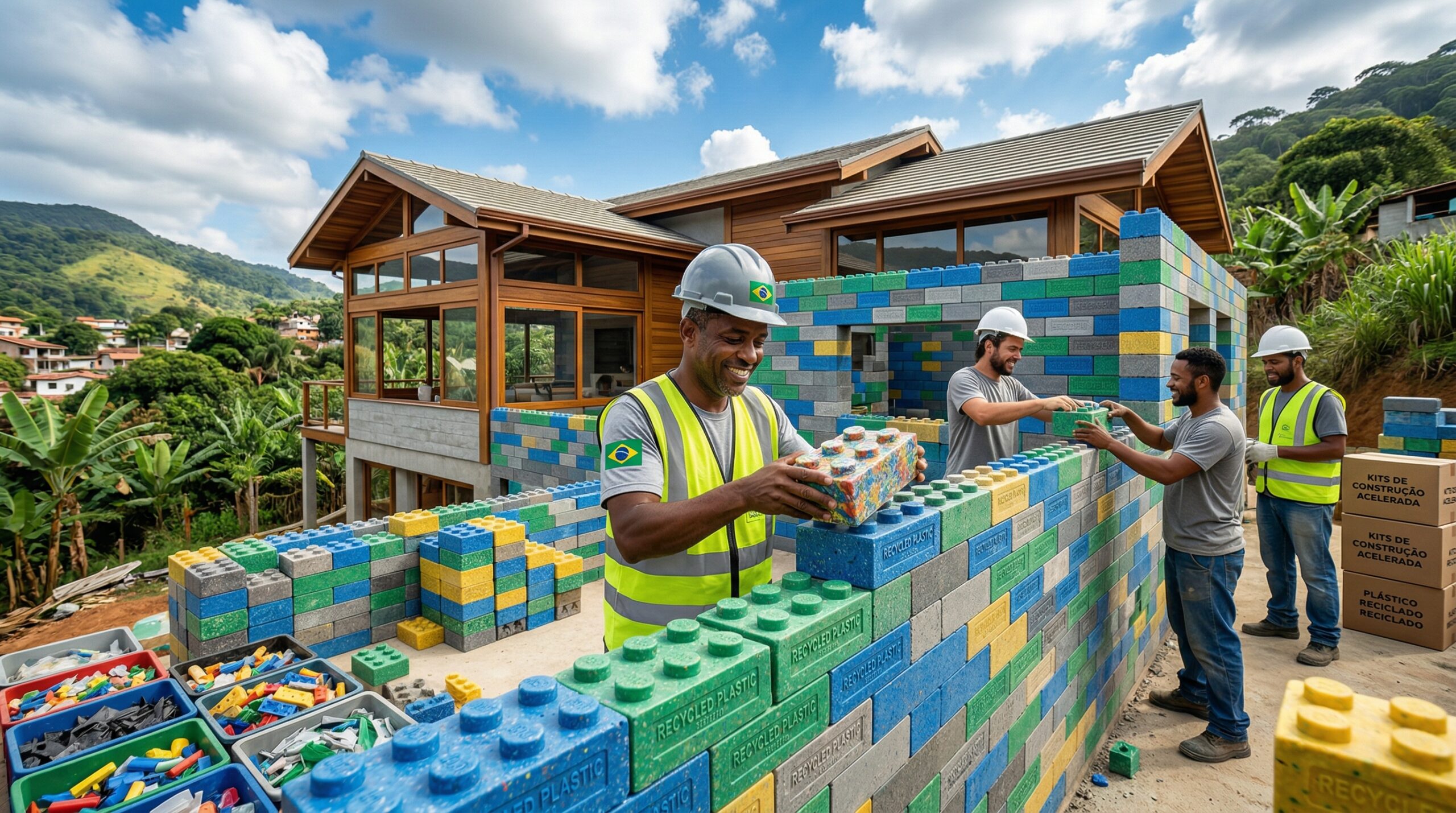
Made with recycled plastic, a Lego-inspired brick builds a 180 m² house in 15 days, providing thermal comfort, preventing moisture, and turning waste into income, kits, and accelerated construction in the country.
-
A robot with a silicone face and 26 facial motors learns to move its lips accurately by observing its own reflection like a child, then analyzes hours of videos on YouTube to reproduce how humans speak and sing, now articulating words in several languages, has already recorded a music album generated by AI, and is beginning to cross the uncanny valley that causes people to reject almost human robots.

-
Iron foundry in Senegal reveals a pile of 100 tons of slag, 35 furnace bases, and a rare technique that has remained stable for centuries.

-
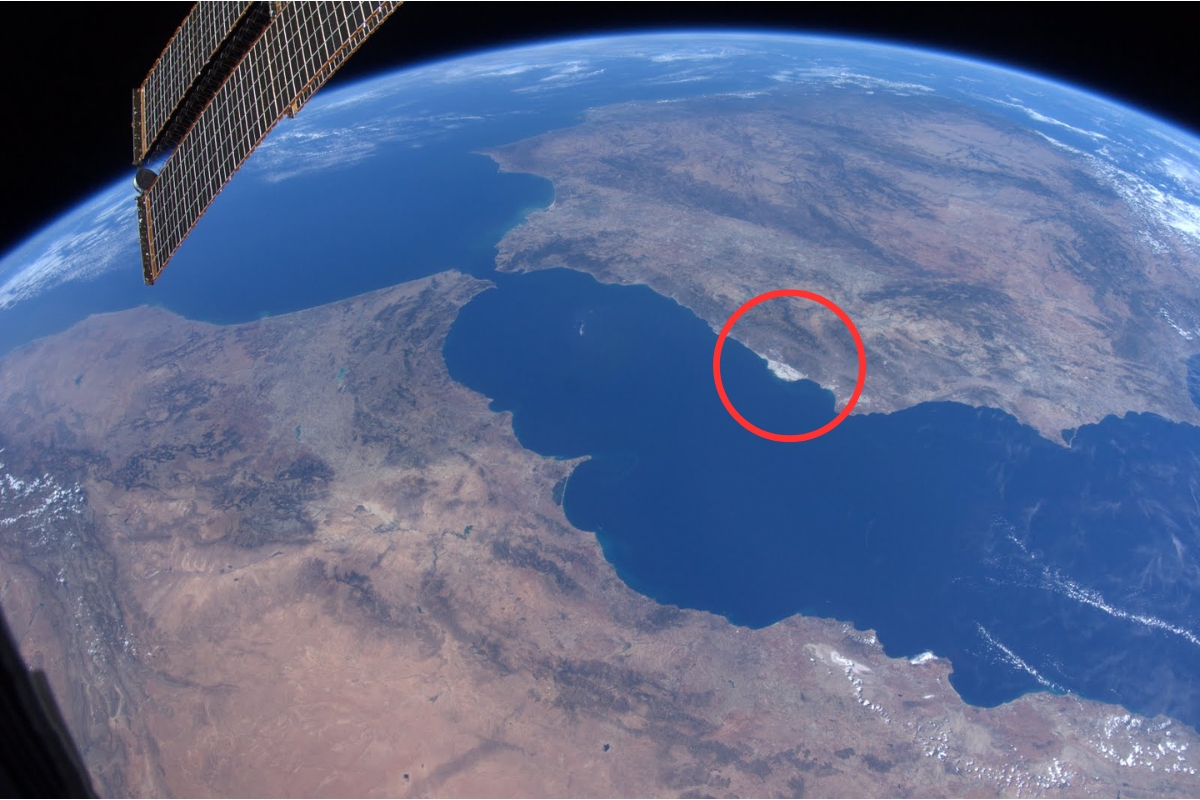
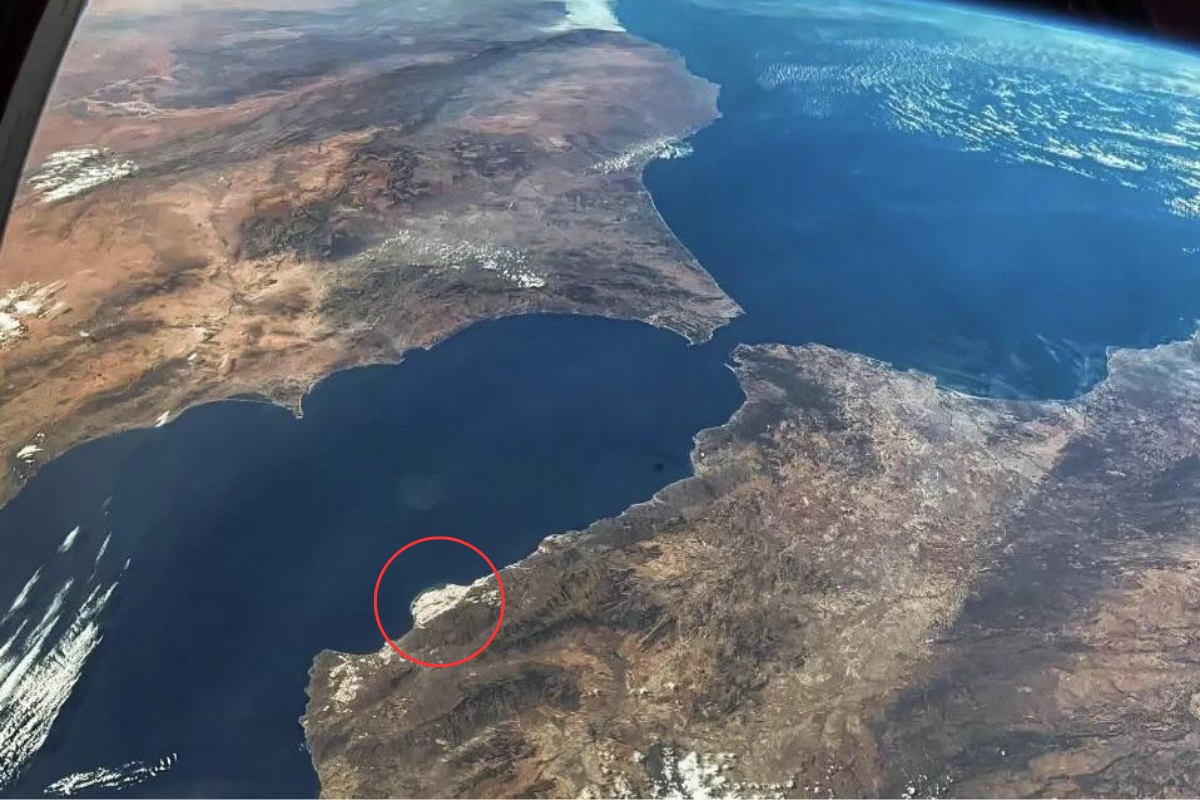
The only man-made structure in the world that can be clearly seen from space is not the pyramids of Egypt nor the Great Wall of China.

Neide Maria Cardoso, 58, lives in Piraquara, near Curitiba, in PR, and was struck twice. The first incident occurred in 1967, when she was 7 years old, inside her house, near an electrical outlet.
The discharge entered through the electrical network, melted the plug, and struck her right ear. The result was permanent hearing loss, demonstrating how a lightning strike can cause damage even without directly hitting the person.
What Changes in Practice When Lightning Strikes Someone More Than Once
The second incident involving Neide was on the eve of Carnival in 2009, in a warehouse where she was preparing for a party. The house was 700 meters from the location, and the aim was to return before the rain began.
She described impact on her back, falling, trembling hands, a feeling of being stuck to the floor, and teeth breaking in her mouth. The consequences included burns from her back to her heels, melted sandals, and fillings that came loose.
There was also partial memory loss for at least three months and the need for therapy for years. This incident reinforces that the risk is not limited to the moment of the lightning strike, as trauma can last a long time.
What Are the Rules, Deadlines, and Risk Conditions in Brazil
The concentration of lightning is related to location and the size of the territory. The Brazil is the largest tropical country on the planet, and the tropics have a climate more susceptible to storms.
The survey points to a clear profile of higher vulnerability: 82% of the victims are men, and the age group of 20 to 29years accounts for 26% of the deaths. One in four accidents involves people in rural areas working outdoors in agribusiness activities.
The second most dangerous place to be struck by lightning is inside the home. Victims were in their homes 21% of the time, and in the North and Northeast regions, cases at home exceed deaths while working in the fields.
How the Lightning Path Works Inside the House
When lightning strikes near the electrical network, it brutally reinforces the current already passing through the wire. This extra current can travel through the wiring and reach the outlets, increasing the risk for those in the environment.
The lightning rod helps redirect the discharge to the ground, reducing the chance of the excessive electricity reaching the outlets and, consequently, the bodies of the residents. The idea is similar to diverting water to prevent overflow.
The problem is that protective structures are not always available, particularly in poorer regions or those far from urban centers. In these areas, electrical and telephone networks tend to be less secure.
Points of Attention and Common Questions About Dangerous Locations
The records show patterns of what the victims were doing at the moment of the accident. In rural or open areas, there were 33% of the cases, with 52% working in agriculture outdoors, 18% playing soccer, and 30% in other situations, such as vacant lots, landfills, and cemeteries.
Inside homes, the total was 21%. From this group, 12% were near windows and doors, 10% were on the phone, 5% were near devices connected to electricity, and 73% were engaged in unidentified activities.
There are also occurrences under trees, with 9% of the deaths. In this group, 55% were hiding from the rain, 9% were picking fruits, and 36% were walking in outdoor areas with trees, such as parks and gardens.
Near bodies of water, the total was also 9%. From this group, 37% were on the beach sand, on boardwalks, or by the riverbank, 27% were fishing, 16% were boating, 10% were in the sea, and 9% were in rivers, reservoirs, waterfalls, or pools. The other cases fall into 28% as others.
What Happens in the Sky Until the Flash Appears
A cloud is basically made up of water, with droplets of H2O and ice crystals suspended in the atmosphere. The cloud of the cumulonimbus type, common in summer storms, is over 10 km tall from base to top.
At the base, warmer and closer to the ground, the water remains liquid. At the top, colder, it freezes, and the movement of warm air rising and cold air descending creates a constant cycle of rising and falling water and ice inside the cloud.
The friction between small crystals and larger hailstones electrically charges the ice. After the collisions, the particles that descend usually carry negative charges, leaving the base of the cloud negatively charged and pushing charges to the ground, which becomes positive.
When the tension overcomes the air’s insulation, the flow of electrons can drop from up to 20 km in height in one hundredth of a second. It remains invisible until about 100 m from the ground, and the flash appears when the circuit closes with an object on the surface, such as a tree.
At that moment, the current heats the air to temperatures in the range of 30,000 °C. The air expands rapidly and generates thunder, which arrives after the flash because sound is slower than light.
What Could Happen From Now On With Climate and Technology
The chance of surviving after being directly struck by lightning is practically nil, and the described cases were indirect. The risks include cardiac arrest and burns that can also affect internal organs.
There are weaker lightning strikes with electric currents of 2,000 amperes, at least 80 times that of an electric shower. There are also discharges that can reach 200,000 amperes, cited as being up to 8,000 times that of a shower.
The chance of someone being directly struck is one in a million. In an open area for half an hour under a typical storm, the number increases to 1 in 10,000, and in more intense storms, it can reach 1 in 1,000.
How Lightning Monitoring and Alerts Work

The Atmospheric Electricity Group, known as Elat, operates a network of 110 sensors spread across the country. The system maps the incidence of discharges with a margin of error of 1 km, indicating where there are more lightning strikes and their intensity.
There is a forecast of gaining precision with sensors aboard two satellites, allowing mapping of over 90% of the lightning strikes that fall in Brazil. Since 2015, monitoring also includes electrical discharges inside the clouds.
This monitoring allows for identifying with up to 15 minutes of advance warning whether a lightning strike will occur or if there is a high chance of it happening. In the future, it may be possible to send alerts to high-risk areas, reducing deaths and damage to electronic equipment.






-

-

-

6 pessoas reagiram a isso.