





 Portuguese
  English
  Spanish
  4 min of reading
  0 comments


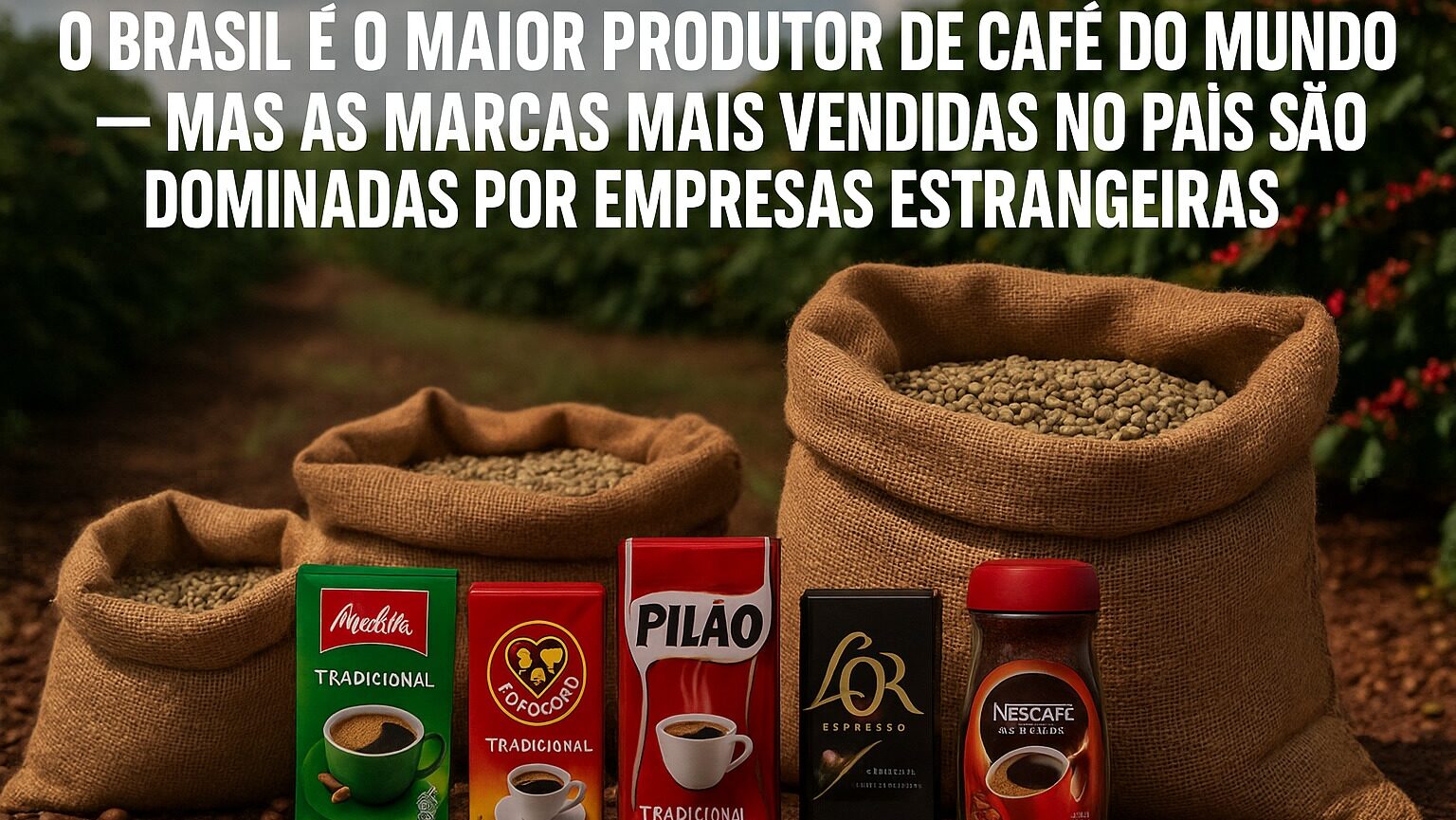
Multinationals Control A Large Portion Of The Most Consumed Brands In Brazil, Even With The Country Leading The Global Coffee Production And Export
Brazil is the largest coffee producer in the world and supplies both the external and internal markets. Despite this, according to G1, many brands consumed daily by Brazilians are not controlled by national companies.
This reality draws attention because, even with the abundance of the raw material, large multinationals dominate the shelves of supermarkets.
Foreign Brands In Daily Life
Café Pilão is one example. According to an article published by G1, the brand belongs to the Dutch JDE Peet’s, which was acquired this week by the American Keurig Dr Pepper.
-
Historic bankruptcy of Centauro shocks the market, and the century-old company puts more than 500,000 products, machines, and complete infrastructure up for online auction.

-
New shoe factory in Ceará is expected to create 400 jobs and strengthen the local economy.
-
No one imagined it, but a mixture of sawdust with a mineral that fights fires surprises scientists with a result that changes the course of fire-resistant construction.

-
From empty land to a high-end house, wooden construction uses a lightweight system, metal structure for the foundation, ventilated ceramic cladding, and special windows to create an efficient and comfortable living space throughout the year.

Other companies also control popular names, such as Melitta, 3 Corações, Café Brasileiro, Café do Ponto, and Caboclo.
The Swiss Nestlé, responsible for Nescafé and Nespresso, further reinforces the foreign presence in the sector.
This participation is not recent. It comes from decades of investments and acquisitions, shaping the current market.
To understand the scenario, g1 spoke with Celírio Inácio, Executive Director of the Brazilian Coffee Industry Association (Abic).
Who Controls Coffee In Brazil
According to data from Abic, based on Nielsen, four companies concentrate 55.6% of the coffee market in Brazil. They are: 3 Corações, JDE Peet’s, Melitta, and Nestlé. Additionally, the Brazilian Camil has gained ground in recent years.
3 Corações leads the market. The company is a joint venture between the Brazilian São Miguel Holding and the Israeli Strauss, with equal participation.
It controls brands such as Café Brasileiro, Iguaçu, and Santa Clara, in addition to its own 3 Corações, and maintains nine factories spread across the country.
JDE Peet’s holds the second position. The company entered Brazil in 1998 and today owns brands like Café Pilão, L’OR, Café do Ponto, Café Pelé, and Caboclo. With four factories, it has consolidated its presence in various regions.
In third place is Melitta. The German company arrived in Brazil in 1968, initially manufacturing coffee filters. Only in 1980 did it start selling its own coffee. Today, it has four factories and remains strong in the market.
Nestlé appears in fourth place. The Swiss multinational has been present since 1921 and launched Nescafé in Brazil in the 1950s. Today, it leads the capsule segment with the Nespresso brand. For the coffee sector, it maintains a factory in the country.
Finally, Camil represents the national strength. Traditional in the food sector, it entered the coffee market in 2021. With a factory in Varginha (MG), it controls the brands Bom Dia, Seleto, and União.
How Multinationals Arrived
Abic explains that the entry of multinationals was gradual. Nestlé and Melitta, for example, established themselves in the country with other products and only later invested in coffee.
The Dutch JDE Peet’s arrived in the late 1990s by acquiring already known brands, such as Café do Ponto and Pilão.
The case of the Israeli Strauss Group is similar. The company entered Brazil in 2000 by acquiring Café Três Corações.
Five years later, it formed a partnership with São Miguel Holding, owner of the Santa Clara coffee, creating the 3 Corações group.
This movement coincided with the expansion of supermarkets in the country in the 1990s and 2000s. Large chains helped bring previously regional brands to different states, increasing visibility and consumption.
“Until then, the coffee market was regional and homegrown. With supermarkets, brands became nationally known,” explained Celírio.
Why Brazil Attracts Investment
The coffee sector in Brazil attracts multinationals because it brings together three factors: large internal revenue, sales volume, and ease of access to raw materials.
The structure of the market and the availability of beans create a favorable environment for new investments and expansion of already established brands.
Coffee Remains Brazilian
Despite foreign control, the coffee consumed in the country is 100% national, in the case of roasted and ground coffee. According to Abic, about 22 million sacks are destined for internal consumption.
Companies buy the beans from producers or cooperatives and carry out the selection to ensure the standard of each brand.
Then, the coffee goes through the industrialization process at the factories before reaching the shelves. “Companies need to have multiple sources of purchase to maintain the standard of each type of coffee. It’s a highly competitive market,” concluded Celírio.
With information from G1.








Seja o primeiro a reagir!