





 Portuguese
  English
  Spanish
  4 min of reading
  9 comments





Foreign Direct Investment in Brazil Plummets in 2025 to US$ 33.8B. Country Loses Ground and is Already Behind Mexico and India in the Global Race for Capital.
The most recent report from the Central Bank and data consolidated by UNCTAD (United Nations Conference on Trade and Development) confirm news that hit the financial market like a bomb: Foreign Direct Investment (FDI) in Brazil plunged in 2025, accumulating only US$ 33.8 billion in the first half, a 10.7% drop compared to the same period in 2024.
With this result, Brazil not only lost dynamism but also fell behind Mexico and India in the global race for international capital, raising a red flag about the attractiveness of the national economy.
What Are Foreign Direct Investments


FDI is regarded as “long-term money,” the kind that truly transforms the economy. Unlike speculative flows that enter and exit quickly, foreign direct investment finances factories, infrastructure, technology, agribusiness, and services. It is the capital that generates jobs, income, and the transfer of knowledge.
-
After nearly 30 bids and competition among industry giants, a Spanish company purchases one of the largest airports in Brazil for almost R$ 3 billion and takes over the management of Galeão in a concession that will last until 2039.

-
The Federal Revenue Service now automatically cross-references everything you declare with data from banks, credit cards, brokerage firms, and insurance companies, and any discrepancy between your income and your expenses triggers an alert in seconds.

-
Amid global tensions, Brazil blocks the United States’ proposal at the WTO and paves the way for a trade crisis and possible retaliations.

-
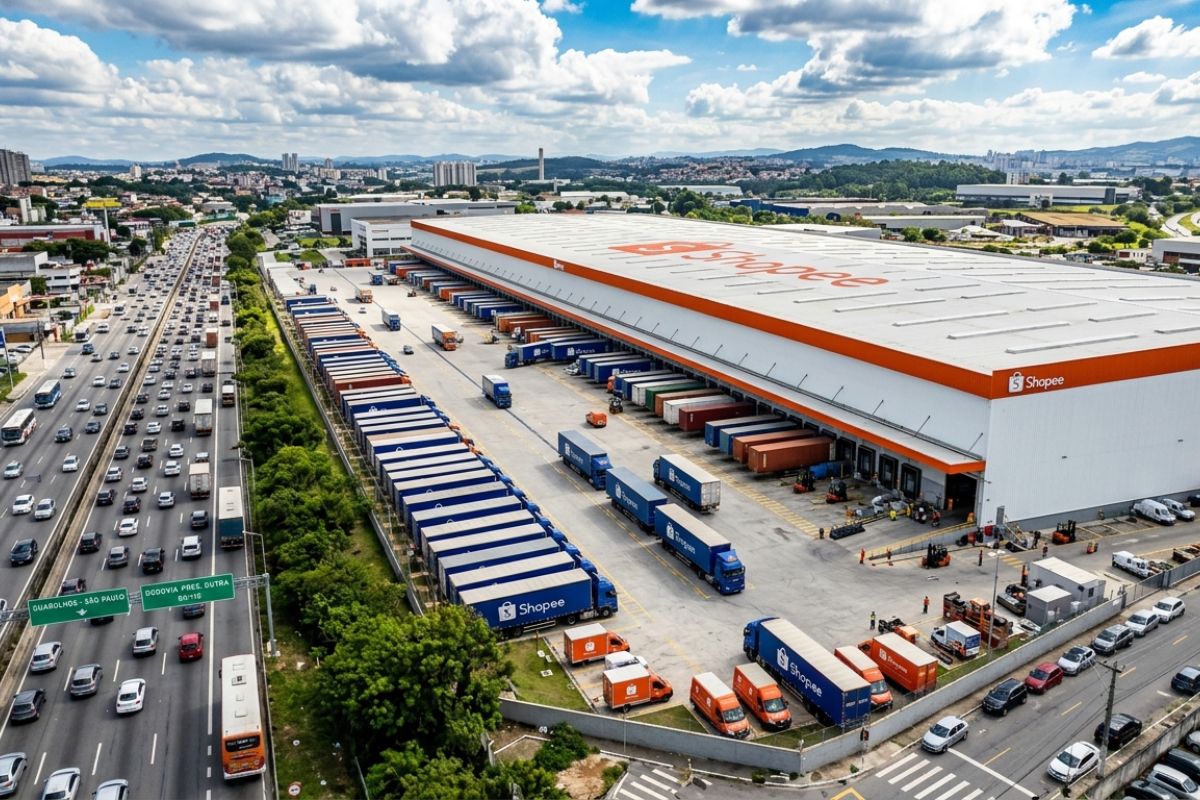
Shopee opens the largest logistics warehouse in Brazil in Guarulhos: 220,000 m² on Dutra, contract signed before construction, pays R$ 45/m² and accelerates deliveries at scale, putting pressure on Mercado Livre and Amazon.

When this flow declines, it means that multinational companies are reconsidering their expansion plans in the country, choosing to allocate resources to other destinations deemed safer or more profitable.
The Drop that Worries
Brazil had been experiencing a period of relative stability in this indicator, attracting between US$ 60 and 70 billion annually in recent years. But in 2025, the pace fell to levels not seen since 2021, during the pandemic.
Meanwhile, direct competitors advanced:
- Mexico attracted over US$ 36 billion in the same period, driven by nearshoring, a trend of American companies transferring their supply chains from Asia to nearby countries.
- India broke records by receiving over US$ 70 billion in 2025, consolidating itself as a preferred destination for technology, clean energy, and manufacturing.
The contrast is painful for Brazil: while neighbors and global competitors advance, the country is losing ground in an increasingly competitive market.
The Reasons for the Flight of Productive Capital
Experts point to a combination of factors that explain the loss of attractiveness:
- Uncertain fiscal scenario: with public debt projected at 84% of GDP by 2028, investors fear tax increases and instability.
- Bureaucracy and legal insecurity: slow processes and constant regulatory changes discourage long-term projects.
- Aggressive global competition: countries like Mexico and India offer packages of tax incentives and superior logistical infrastructure.
- Exchange rate and political volatility: institutional instability and recurring crises undermine confidence.
In practice, the message from investors is clear: there are safer and more lucrative options outside Brazil.
The Impact on the Brazilian Economy
The drop in FDI directly affects growth potential. Fewer factories, less investment in energy, fewer skilled jobs.
The risk is that the country enters a spiral of low growth, unable to compete globally in strategic sectors such as technology and green industry.
According to the National Confederation of Industry (CNI), for every US$ 1 billion in foreign direct investment, Brazil generates between 25,000 and 40,000 formal jobs. By losing US$ 10 billion compared to the previous year, the country may be missing out on up to 400,000 job vacancies.
The Contrast with Mexico and India
Mexico has surfed the wave of nearshoring, turning its proximity to the United States into a strategic advantage.
Investors who previously bet on China now prefer to open Mexican factories, taking advantage of lower transportation costs and robust trade agreements.
India, on the other hand, has become the new favorite destination for technology, semiconductors, and renewable energy companies. With a young workforce, aggressive incentive policies, and a giant internal market, the country has solidified its position as the “new China.”
Brazil, for its part, still lacks a structured plan to attract capital. Fiscal uncertainties, lack of competitive infrastructure, and political instability push investors away.
Risk of Losing Global Relevance and What Needs to Be Done
The alert in 2025 is not just conjunctural: it points to a structural risk. If Brazil does not take action, it may consolidate its image as a secondary economy on the global chessboard.
OECD studies indicate that, by 2030, more than 60% of the global FDI flow will be directed to Asian countries. Without reforms and a more predictable business environment, Brazil risks watching most of the productive capital escape to competitors.
Analysts and entrepreneurs advocate for some urgent measures:
- Comprehensive tax reform, simplifying taxes and providing legal certainty.
- Aggressive package of concessions and privatizations to modernize ports, highways, and railroads.
- Strategic green agenda, leveraging leadership in renewable energy to attract sustainable industries.
- Institutional stability, reducing political noise that disorients investors.
Brazil has unique comparative advantages — natural resources, clean energy matrix, robust consumer market. But without organization, these riches do not translate into concrete investments.
Brazil in the Rearview Mirror of the Global Race
The 2025 report is a wake-up call. Brazil, once the preferred destination for investors in Latin America, now watches as Mexico takes the lead and India solidifies as an emerging giant.
The loss of US$ 10 billion in investments in just one semester is more than a statistic: it is a direct message that confidence is at risk.
If nothing changes, the country may solidify its image as a high-risk economy, unable to retain capital and generate quality jobs. The crossroads is set: either Brazil reacts with reforms and stability, or it will remain a spectator in a world that moves forward without waiting.









Investimento estrangeiro cresce no Brasil com novos aportes, diz BC | CNN Brasil
O investimento caiu por causa do desgoverno
A proposta é sempre a mesma. Privatizar, entregar riquezas e tirar direitos dos mais humildes. Parece que a Faria Lima ainda não aprendeu a lição que terno, sapatenis, e prédio bonito não deixa dinheiro de drogas dinheiro limpo.