





 Portuguese
  English
  Spanish
  4 min of reading
  43 comments


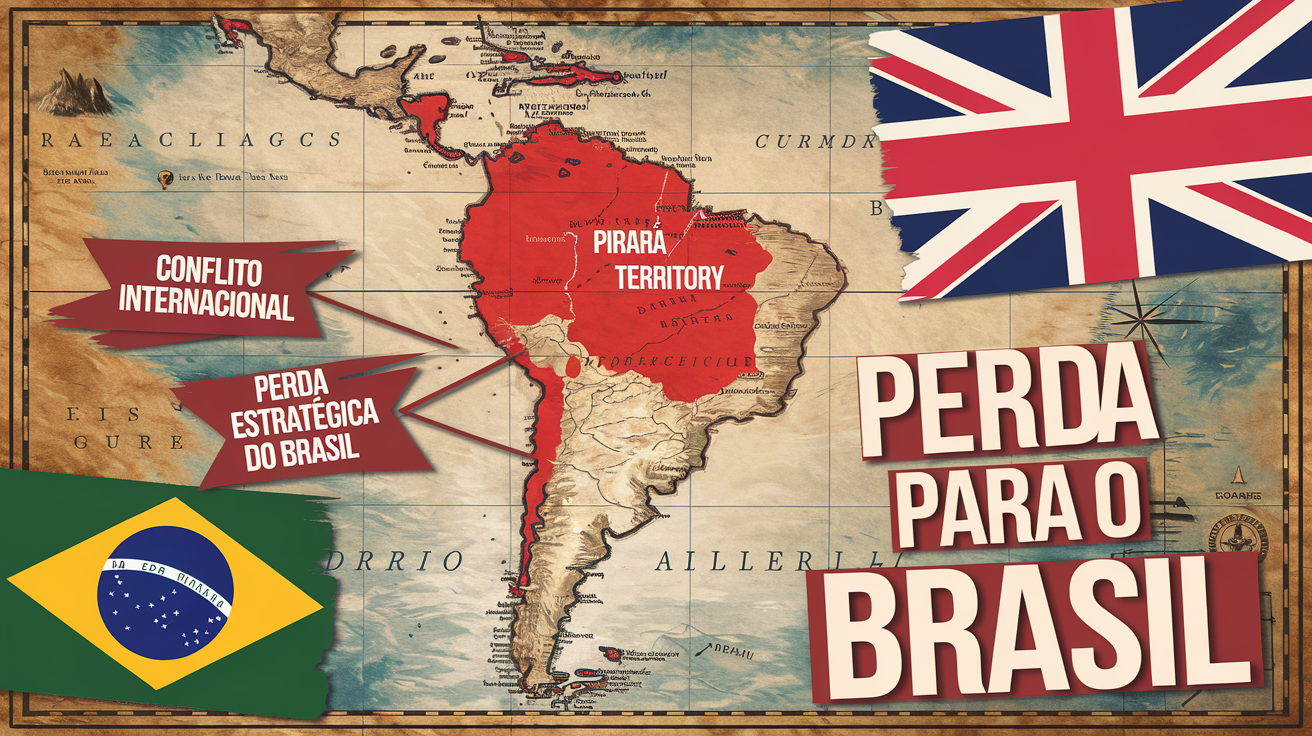


In A Historical Conflict, Brazil Lost The Territory Of Pirara To The United Kingdom, Revealing The Limitations Of Its Diplomacy In The Face Of Imperialism. The Region, Strategic For Trade And Access To The Caribbean, Is An Example Of How International Decisions Shaped South American Borders And Still Impact Geopolitical Relations. An Essential Reflection For Contemporary Brazil.
Behind a story of treaties, international disputes, and colonial strategies, Brazil carries a loss that still resonates in the South American geopolitics.
At the center of this narrative is the territory of Pirara, an area of 33,000 square kilometers that, besides being comparable in size to the state of Alagoas, offered a strategic outlet to the Caribbean Sea via the Essequibo River.
However, in an unequal clash against the United Kingdom, Brazil saw its sovereignty over this region disappear in an episode that exposes the tensions of European imperialism on the American continent.
-
He started running at 66 years old, broke records at 82, and is now a subject of study for having a metabolic age comparable to that of a 20-year-old, in a case that is intriguing scientists and inspiring the world.

-
Oldest tree on the planet reappears after 130 years of searches: Wattieza, 385 million years old, was 10 meters tall and had no leaves or seeds; Gilboa fossils in New York solved the mystery in 2007.

-
A 48-square-meter house assembled in hours with 4,000 bricks made of recycled plastic that does not absorb moisture, has natural thermal insulation, and costs less than 90,000 reais in a complete kit.

-
Luciano Hang revealed that Havan’s air fleet has already accumulated more than 20,000 landings, 10,000 flight hours, and 6 million kilometers traveled, and he says that without the planes, the company would never have grown so quickly.


What led to this defeat? How does the impact of this dispute shape Brazilian diplomacy to this day?
The Beginning of The Dispute Over Pirara
The controversy surrounding Pirara dates back to the 18th century, when the territory was governed by Portugal, in accordance with the Treaty of Santo Ildefonso, signed in 1777 between Portugal and Spain.
After Brazilian independence, sovereignty over the region was transferred to Brazil, but challenges began to emerge in the early 19th century.
The arrival of British missionaries in the 1830s marked a turning point.
According to historical records, these missionaries not only introduced Christianity to the indigenous peoples of the region but also expanded local British influence, weakening the Brazilian position.
The presence of British military forces, coupled with the absence of a robust occupation by Brazil, paved the way for a territorial claim.
Additionally, the United Kingdom invested in converting indigenous people to Christianity as a geopolitical strategy, establishing schools and churches that diluted Brazilian influence.
International Arbitration and The Unfavorable Outcome
After years of growing tensions, the issue of Pirara was brought to an international tribunal in 1904.
King Victor Emmanuel III of Italy was chosen as the arbitrator of the dispute, a decision that would later be subject to criticism and suspicion.
Even with an extensive dossier of evidence presented by Brazil, including historical maps and documents confirming possession of the territory, the arbitration favored the British.
The result granted the United Kingdom about 60% of the disputed area, ensuring access to the Amazon basin and consolidating its influence over the region.
According to historians, the decision of the Italian king may have been influenced by a negative bias against Brazil, reinforcing the perception of bias in the judgment.
Consequences for Brazil and South America
The loss of Pirara was not only a geopolitical setback but also a strategic and economic blow to Brazil.
With access to the Essequibo River, the country could have established a direct trade route to the Caribbean Sea, strengthening its position in international trade.
Moreover, the episode exposed the fragilities of Brazilian diplomacy and military power at the time, showing how the country was unprepared to deal with well-structured colonial powers.
The arbitration in Paris, which defined the borders between British Guiana (now Guyana) and Venezuela, also followed a similar pattern, favoring British interests and generating regional tensions.
To this day, Venezuela maintains a territorial claim over Guyana, a dispute that has roots in the same imperial dynamics that affected Brazil.
Lessons From The Past for The Present
The history of Pirara offers important lessons about the need to protect national sovereignty through robust diplomacy and a strategic presence in border regions.
The Brazil of that time, lacking a significant military apparatus or a consolidated political presence in the region, was unable to resist British advances.
The impact of European imperialism in South America was not limited to territorial loss. It shaped current borders and perpetuated inequalities that still affect international relations on the continent.
For Brazil, the memory of Pirara is a reminder of the importance of learning from past mistakes to build a more effective diplomacy in the future.
The Legacy of Pirara
Today, Pirara remains a mark of historical reflection. Its loss highlighted the limitations of a young country facing the expansionist ambitions of an imperial power.
At the same time, it exposed how decisions made in international tribunals can be influenced by external interests.
Brazil still deals with territorial issues and diplomatic challenges that hark back to that era.
Protecting its sovereignty and ensuring territorial integrity remain strategic priorities for the country, especially in an international scenario where alliances and disputes are in constant evolution.
The history of Pirara is more than just an episode of the past; it is a warning for the future. How can Brazil prepare to face new territorial disputes in an increasingly interconnected and competitive world?







Sempre tem que haver um religiosos em todos os crimes e ladroagem para enganar e cometer os piores absurdos do planeta Terra.
No continente africano e asiáticos sofreram nas mãos das potência, primeiro entrava os religiosos depois as ações militares.
No território do Havaí, primeiro foram os missionários religiosos e depois o poder militar para derrubar o rei do Havaí e em 1959 foi transformado no estado 51 dos Estados Unidos. Mas existem complexo de vira-lata que vivem torcendo para os estados unidos da América dominar o mundo.
Sorte para quem vive lá. Pertencer a uma potência mais organizada e justa.
O Brasil, desde sempre, foi alvo da ganância e desrespeito por parte de outros povos e nações que visavam não só depredar o patrimônio natural brasileiro como também, tomar posse dos seus bens justificando o ato sob o slogan: IMPERIALISMO! De qualquer modo, não é sensato mexer neste vespeiro. O importante é, como disse o jornalista que escreveu essa matéria, que a diplomacia brasileira deva ficar atenta afim de evitar mais prejuízos que venham afetar o contorno geopolítico atualmente estabelecido, podendo ensejar perdas aos anseios econômicos do país. Acorda Brasil! A China está vindo contudo!