





 Portuguese
  English
  Spanish
  3 min of reading
  0 comments


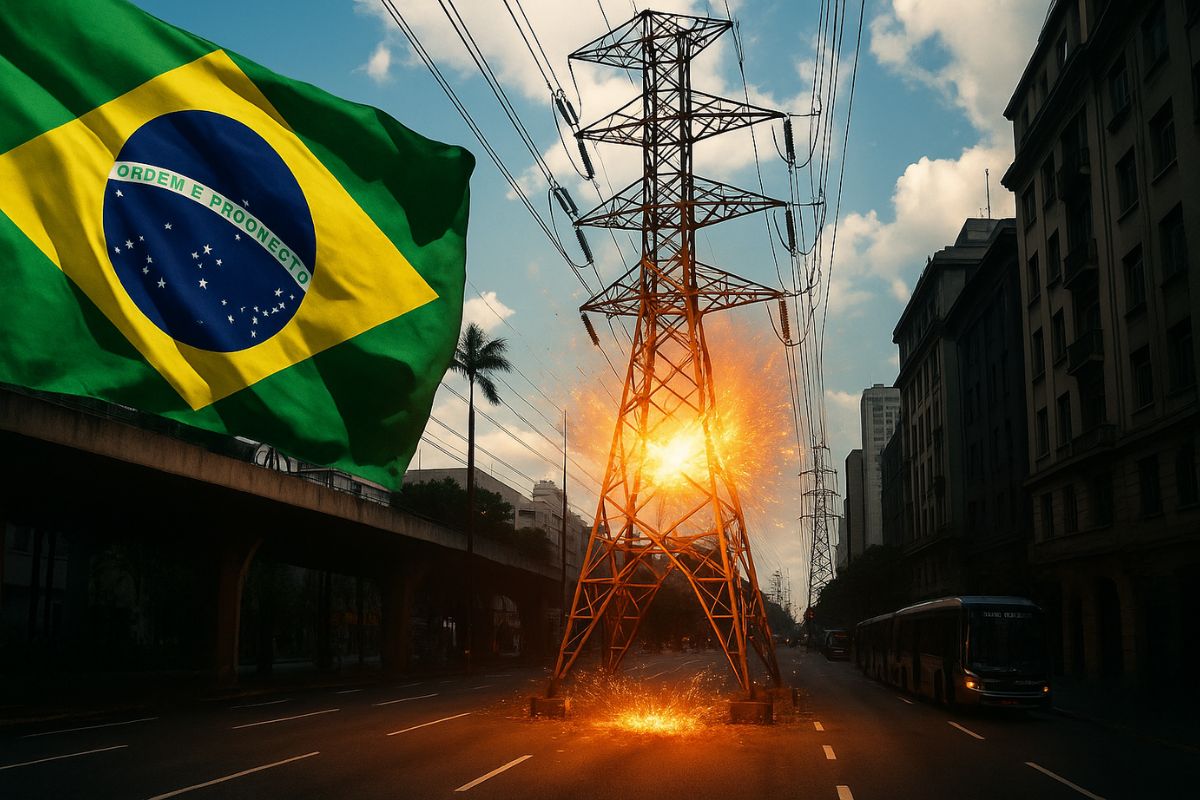
Interruption in the National Interconnected System Caused Simultaneous Blackouts in Southeast, North, Northeast, and Midwest Regions, Affecting Capitals and Airports.
A failure in the National Interconnected System (SIN) caused a simultaneous blackout in at least ten Brazilian states early this Tuesday. The power cut affected entire regions and left capitals such as São Paulo, Rio de Janeiro, and Recife partially in the dark for up to an hour, according to local utility companies and reports from residents.
According to initial information, the blackout was recorded between 2 AM and 3:30 AM, affecting networks in the Southeast, North, Northeast, and Midwest. The failure caused disruptions at airports, hospitals, and urban roads, as well as a large volume of complaints on social media.
Affected States and Duration
Reports of power outages came from São Paulo, Rio de Janeiro, Pernambuco, Bahia, Amazonas, Minas Gerais, Santa Catarina, Goiás, Rio Grande do Norte, and the Federal District.
-
How an innovative city combines high technology, well-being, and sustainability to become the largest reference in clean energy on the planet.
-
Couple buys 1846 church in ruins for R$ 660,000, invests R$ 3.2 million in renovations, transforms it into a millionaire mansion, and even preserved a historic cemetery with over 300 graves.

-
He started running at 66 years old, broke records at 82, and is now a subject of study for having a metabolic age comparable to that of a 20-year-old, in a case that is intriguing scientists and inspiring the world.

-
Oldest tree on the planet reappears after 130 years of searches: Wattieza, 385 million years old, was 10 meters tall and had no leaves or seeds; Gilboa fossils in New York solved the mystery in 2007.


In some areas, the power returned in about 30 minutes; in others, normalization took up to an hour.
In São Paulo, neighborhoods in the northern and eastern zones were affected. In Rio de Janeiro, Santos Dumont Airport operated in the dark, with emergency lights activated in the boarding areas.
In the Northeast, capitals such as Salvador and Recife also faced instability.
The simultaneous interruption indicates a problem of national origin, linked to the electrical interconnection system.
What Is the National Interconnected System
The SIN (National Interconnected System) is a network that connects almost all the generation and transmission of energy in the country.
This structure ensures balance between supply and demand in different regions, allowing, for example, the North to send energy to the Southeast during dry periods.
When a large-scale failure occurs, the network tries to balance itself automatically, isolating the most affected areas.
This mechanism, called “systemic protection,” prevents a total collapse of the national electric generation, but can cause simultaneous blackouts in several states, as happened this morning.
Immediate Impacts and Reactions
During the blackout, users reported problems with cell phones, traffic lights, and internet systems. In some cities, trains and subways were halted for several minutes.
Hospitals and condominiums activated emergency generators, and teams from utility companies were called in during the early hours of the morning to assess the origin of the problem.
On social media, the topic quickly became one of the most discussed in the country.
Messages of disbelief, memes, and criticisms of the electrical system dominated the platforms, with reports from people who woke up without power, without air conditioning, and without internet access.
History of Failures in the Electrical System
This is not the first time the National Interconnected System has faced large-scale incidents.
In 2023, a problem in a transmission line in the northern part of the country caused blackouts in 25 states and the Federal District, highlighting the vulnerability of the national electrical infrastructure.
Experts emphasize that the balance of the SIN depends on constant monitoring, as small fluctuations can quickly propagate and cause widespread blackouts.
This Tuesday’s event reinforces the need for investments in protection systems, automation, and energy storage, capable of reducing the impact of sudden failures.
What Is Known So Far
So far, the exact cause of the failure has not been disclosed. Technicians from the National Electric System Operator (ONS) are working to determine the point of origin and containment measures.
The government is expected to release a preliminary report later this week, with information about the event and the most affected regions.
In the meantime, utility companies state that power supply was fully restored in the early hours of the morning, with no structural damage to the network.
However, the causes and the real extent of the blackout are still under technical analysis.
Were you affected by the simultaneous blackout this morning? What was the situation in your city regarding power, internet, and transportation? We want to hear from those who experienced the incident firsthand and find out if you trust the stability of the Brazilian electrical system. Share your thoughts in the comments.







-

-

2 pessoas reagiram a isso.