





 Portuguese
  English
  Spanish
  5 min of reading
  1 comment


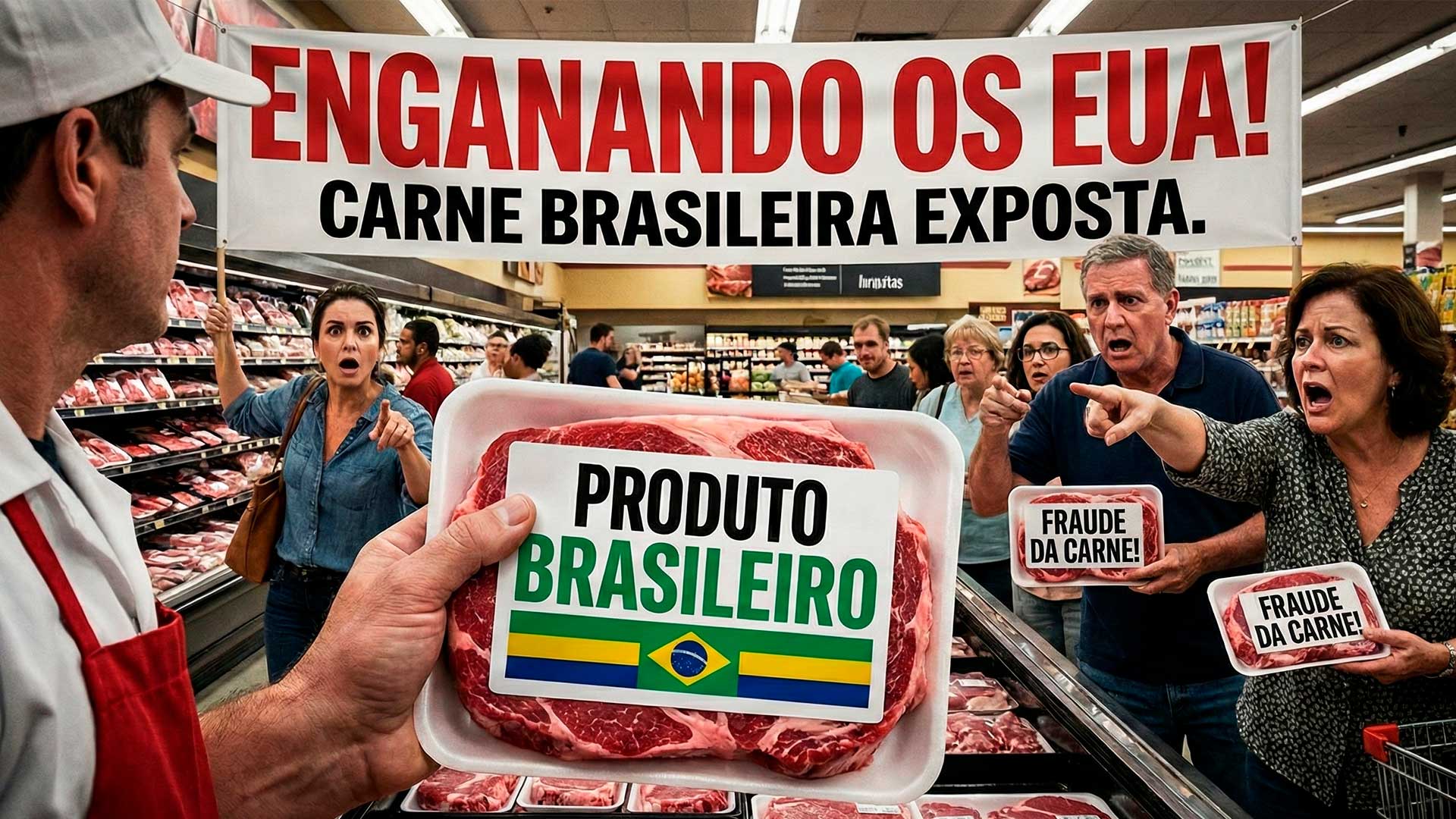


Debate on Imports Gained Momentum with Increased Volumes and Dispute for Transparency in Origin, While USDA and FSIS Became Targets for Demands for Changes
The entry of imported Brazilian beef into the U.S. market has returned to the center of debate in the North American livestock sector, with accusations that the current method of inspection and labeling confuses consumers at the time of purchase.
Agricultural leaders and industry representatives advocate for a reform of federal rules to strengthen reinspection upon arrival in the country and to require a more explicit identification of the product as imported, even when there is processing in U.S. territory.
The issue gained visibility after an analysis published in Beef Magazine by journalist Clint Peck, who describes the mobilization of ranchers and processors around a campaign for “truth and transparency” in the inspection and labeling system.
-
The institute that trained the greatest aerospace engineers in Brazil has just opened its first campus outside São Paulo after 75 years: ITA Ceará will have R$ 445 million, new courses in energy and systems, and classes are expected to start in 2027.

-
Luciano Hang, owner of Havan, goes to Juiz de Fora after the tragedy in February, brings R$ 1 million, hands out R$ 2,000 cards, and donates up to R$ 15,000 to victims in the region.

-
The Brazilian passport allows legal residence in dozens of countries without the need for a prior visa, and most Brazilians are unaware that they can apply for residency directly upon arriving in nations in South America, Africa, and even Europe.

-
Petrobras sends a message to Brazilian truck drivers after fuel collapse and reveals plan to have 100% domestic diesel.


The central argument from critics is that consumers may see official seals and broad interpretations of labeling such as “Product of the USA” and mistakenly conclude that they are purchasing domestically sourced meat.
What U.S. Ranchers Are Asking the USDA and Congress
One of the most cited faces in the mobilization is rancher Patrick Robinette from North Carolina, a grass-fed beef producer and also the owner of a USDA-inspected plant, according to Beef Magazine.
He asserts that the discussion would not be “against imports,” but rather in favor of a stricter enforcement of what organizers point to as a requirement for 100% reinspections of shipments entering the U.S., with physical checks and unambiguous identification of the product as foreign.
The campaign, which gained traction on social media, also seeks to attract political attention in Washington, with requests for legislators to review administrative decisions that may have relaxed controls over the past decades.
How Reinspection of Imported Meat Works and Why There Is Discrepancy
In the United States, the importation of beef depends on the exporting country having a system deemed equivalent to the U.S. one, following audits and reviews conducted by the Food Safety and Inspection Service, FSIS.
Upon entering U.S. territory, shipments undergo reinspections at authorized facilities, including verification of certification, compliance of labels, and general conditions of the product.
According to technical reports from the U.S. Congress, this step involves visual inspection of all shipments to check appearance and condition, in addition to documentation and labeling verification, while more detailed physical inspections and sampling may occur more selectively.
This is precisely where the dispute lies. Ranchers advocating for reform argue that a more “risk-based” model has created loopholes and reduced the predictability of control, while the government tends to maintain that the combination of equivalence audits and reinspections upon entry maintains sanitary standards.
Even when the debate is framed in terms of safety, the key point that mobilizes the base is trust. For critics, if the consumer does not clearly understand what is imported and what is domestic, the system fails in transparency, even if the product is suitable for consumption.
Labeling Product of the USA and Substantial Transformation at the Center of the Controversy
Another focus of pressure lies in the rules that historically allowed imported products to carry claims like “Product of the USA” after certain types of processing in U.S. territory, such as grinding, repackaging, or additional steps in the chain.
The criticism is that the concept of “substantial transformation” can be interpreted too broadly, creating a “gray area” that, in practice, favors packaging that sounds domestic to an average consumer.
This scenario began to change in the regulatory landscape. The USDA finalized a federal rule tightening the voluntary use of origin claims like “Product of USA” and “Made in the USA,” requiring that the product be derived from animals born, raised, slaughtered, and processed in the United States to bear these labels, with compliance date set for January 1, 2026.
For groups linked to livestock, the change is seen as a step forward, but it does not resolve everything. They argue that there is still confusion generated by official inspection seals and stamps, which inform about sanitary control but may be interpreted as synonymous with national origin.
Why the Debate Has Gained Momentum Now and What the Next Steps Might Be
The backdrop is a booming import market with Brazil gaining ground. USDA data shows that from January to July 2025, imports of beef from Brazil totaled 810.3 million pounds, up 91% from the same period in 2024, increasing the country’s share of the total imports in that timeframe.
In the same report, the USDA also points out that although the volume in July dropped to about 69 million pounds, the context of 2025 was marked by fluctuations and strong debate over competitiveness, including mention of tariff measures that affected the attractiveness of Brazilian products in the market.
From the Brazilian side, sector entities often highlight that access to the North American market depends on strict requirements and recognition of sanitary equivalence, in addition to audits and controls in the exporting country. Still, the current clash is less about “whether imports can happen” and more about “how the consumer understands what they are purchasing.”
In the political backrooms, the trend is that the topic will divide into two narratives. One emphasizes the right to information and clear labeling; the other sees the risk of the agenda becoming, in practice, an instrument of economic protection at a time of pressure on prices, margins, and competition for shelf space.
If the USDA and FSIS agree to reconsider protocols and guidelines, the change could range from technical adjustments in reinspections and labeling to broader revisions, as advocated by groups calling for investigations and reinterpretations of historical decisions.
In the end, the question that remains is simple and uncomfortable: does the label today provide enough information or mislead the consumer when the meat is imported?
Leave a comment with your opinion: do you think imported meat should carry a more explicit warning on the packaging, or is this just disguised protectionism to hold back competition on price?










Tudo mimimi e choro protecionista. A carne Brasileira é excelente. O cara que chora por intervenção do ESTADO ou é doente ou quer privilégio. Eles não tem, nem de longe, nem com tudo que já fizeram contra o agro e a pecuária Brasileira, condição de competir. O **** aqui é criado a pasto e de excelente qualidade. Eles não tem nosso clima, nossa vastidão e pastos tão bons. O pecuarista Brasileiro é um forte, leva o ESTADO nas costas, paga mais impostos, recebe menos e produz mais. Nosso agro e pecuária são os melhores e mais injustiçados do mundo. Quando estive lá fiz questão de consumir nossa carne. E o preço lá é bem maior do que aqui.