





 Portuguese
  English
  Spanish
  5 min of reading
  33 comments





Guarujá, on the coast of São Paulo, initiates a project to bury all electrical and telecommunications wiring, aiming to modernize urban space, reduce accident risks, and eliminate visual pollution from public roads.
The City Hall of Guarujá, on the coast of São Paulo, has sanctioned a law that mandates the underground installation of all electrical and telecommunications wiring in the municipality.
The text was signed by Mayor Farid Madi (Podemos) on October 31 and published in the Official Gazette on the 6th.
The rule applies to all utilities and service providers, including electricity, telephone, internet, cable TV, and fiber optic providers.
-
These living root bridges and ladders are over 700 years old and help indigenous people survive in one of the rainiest regions in the world.

-
From sertanejo star to international investor: Ana Castela invests millions in a mansion in the USA, creates a themed accommodation in Orlando, and shows that the “boiadeira” also wants to grow away from the stage.

-
The 10 most stunning motorhomes in the world: a $3 million trailer with a rooftop nightclub and garage for a Ferrari, “palaces on wheels” with Italian marble, private cinema, and five-star hotel luxury for billionaires.

-
Trump wanted to spend $400 million on the White House, but the courts prohibited the million-dollar construction.


What Changes on the Streets and in Services
With the new rule, existing overhead networks must be gradually replaced by underground cables, and new infrastructure projects will have to be executed underground.
According to the city hall, the goal is to reduce the risk of accidents, thefts, and outages on rainy or windy days, in addition to reducing visual pollution in public roads.
The administration reported that the process will begin in the central area of Guarujá, and then be expanded to the entire urban perimeter.
The detailed schedule will depend on technical regulations, which will define the compatibility of the works with other infrastructure services, such as paving, drainage, and public lighting.
Deadlines and Responsibilities of Companies
Concessionaires will have between two and five years to complete the replacement of overhead networks with underground ones.
The variation in deadlines will depend on the technical complexity of each section.
New developments will have to follow underground parameters from the outset.
Supervision will be the responsibility of the municipal government in conjunction with the companies involved.
The city hall has up to 180 days to publish a decree regulating execution criteria, safety, and compatibility between networks.
Envisaged Penalties
The violation of the law will result in a fine of R$ 4,630.00, equivalent to 1,000 Municipal Fiscal Units (UFM), an amount that will be doubled in case of recurrence.
The aim is to ensure adherence to deadlines and prevent the maintenance of overhead wiring in violation of the legislation.
Origin and Justifications of the Proposal
The project is authored by Councilman Alexandre Alves Moreira (PDT).
In his justification, the legislator states that the change will allow for better organization of urban space, with gains in safety and visual preservation.
He also argued that the measure represents “an initiative that combines technology, sustainability, and quality of life.”
Upon sanctioning the law, Mayor Farid Madi stated that the city seeks “a new urban era, with fewer wires, more safety, and greater environmental care.”
According to the municipal administration, the adoption of underground cabling reduces failures caused by winds, salinity, and falling branches, factors that are frequent in areas close to the sea.
Expected Urban and Economic Impacts
The city hall forecasts that the measure will bring better visual order and appreciation of tourist and commercial areas, as it will eliminate visible wires on facades and intersections.
Urban infrastructure experts say that underground wiring projects can reduce the need for emergency maintenance and increase the durability of networks, although they require a higher initial investment and more complex works.
For the commerce and services sector, the expectation is for a reduction in outages and greater stability in energy and internet supply.
Technicians in the field assess that the standardization of underground ducts and boxes facilitates repairs and enhances operational safety, provided there is joint planning among concessionaires.
Costs and Execution Stages
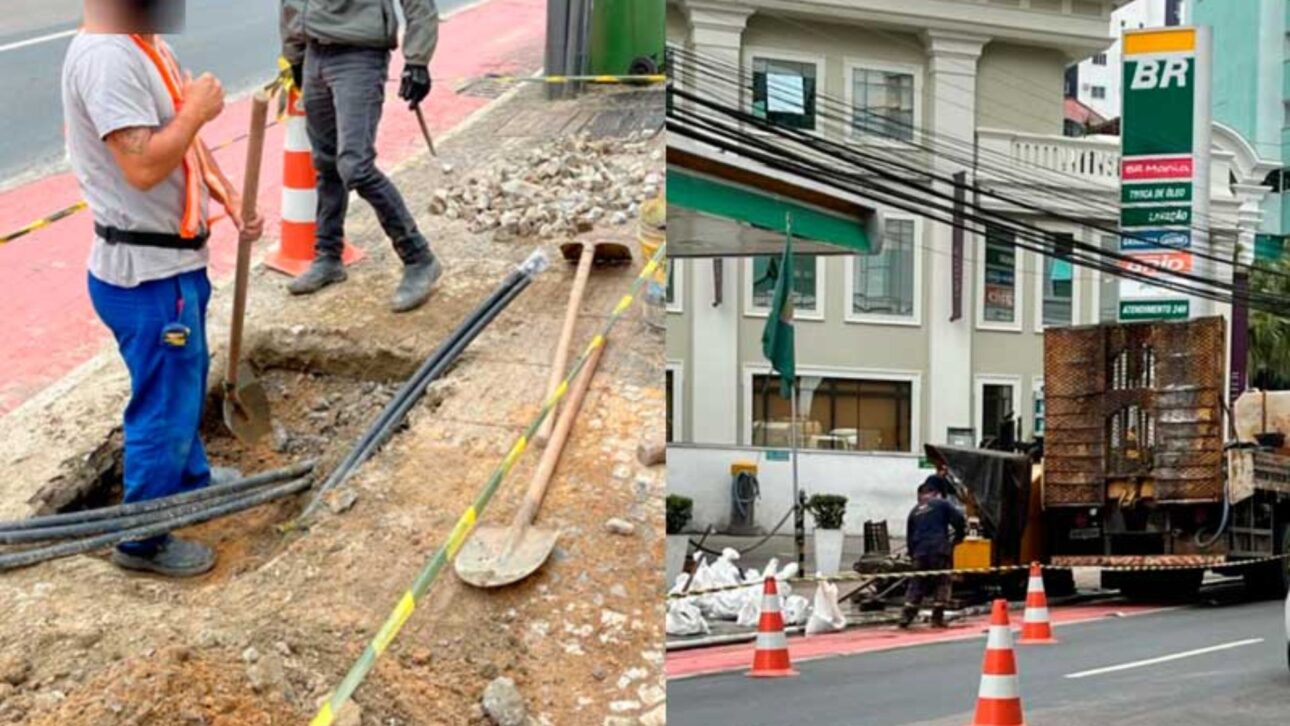
The implementation of the underground system requires detailed projects, excavations, and the restoration of sidewalks and pavement.
According to engineers consulted by specialized media, costs vary according to network density and soil type, but tend to decrease with joint planning between companies.
The municipal regulation will define width and depth of trenches, materials used, and standards for signaling the works.
Although underground wiring demands a higher investment, technical studies point out that it reduces long-term maintenance costs due to suffering less damage in climatic events.
The city hall reported that there are currently no estimated values for the total investment, which will be defined after the publication of the regulatory decree.
Planning and Transition Phase
During the transition period, the city will undergo phase-by-phase works, with the installation of underground ducts, gradual transfer of cables, and removal of poles in completed areas.
The city hall intends to require communication plans from the concessionaires to inform residents and merchants about interventions and possible temporary closures.
The Executive also plans to create standardized maintenance protocols, with georeferenced registration and identification of ducts to avoid improper perforations.
In regions with a high water table, the works must follow drenage and anti-corrosive protection criteria, according to national technical standards.
Experiences from Other Cities and External References
Similar underground wiring models are already underway in cities such as São Paulo, Curitiba, and Florianópolis, mainly in tourist and central areas.
In urban centers in Europe and the United States, this structure is predominant in historical and commercial regions.
Experts emphasize that the success of the model depends on integrated planning, continuous supervision, and feasible deadlines for network adaptation.
Next Steps and Law Regulation
With the law already in effect, the municipality has up to six months to issue the decree that will detail the schedule and technical standards for execution.
Concessionaires will need to submit compliance plans and their own schedules.
Supervision will be shared between municipal departments and the companies involved.
The law places Guarujá among the Brazilian cities seeking to modernize urban infrastructure and reduce environmental impacts through the reorganization of networks.







nossa estou maravilhada com essa mudança, que venha o mais rapido dessa troca para por tudo no subterranio, porque nao aguento mais uma prova na onde eu moro , DEUS sabe o por que , eu orei muito por mudança em VICENTE DE CARVALHO, estou orando pelo meu prefeito farid mad ?
Tem que fazer bem feito, sem contar que pra fazer reparo da trabalho ainda mais se tratando de áreas com fauna silvestre
Tempo de reparo de um cabo de internet aéreo: 30 minutos. Tempo de reparo de um cabo de internet subterrâneo porque a retroescavadeira cavou no lugar errado: 1 ou 2 dias até refazer a infra pra passagem do cabo. Se quem ficar sem internet não se importar, tudo bem.