





 Portuguese
  English
  Spanish
  5 min of reading
  4 comments




Brazilian Company Leads Cockpit of the Largest Freight Aircraft in the World, Designed to Transport Giant Cargo and Revolutionize Global Logistics.
National engineering reaches a new level with the participation of the Brazilian company Akaer in the development of the largest freight aircraft ever designed in the history of aviation.
The official announcement of Akaer’s selection was made this Tuesday, during the traditional Paris Air Show, marking Brazil’s definitive entry into a select group of countries involved in global-scale aeronautical projects.
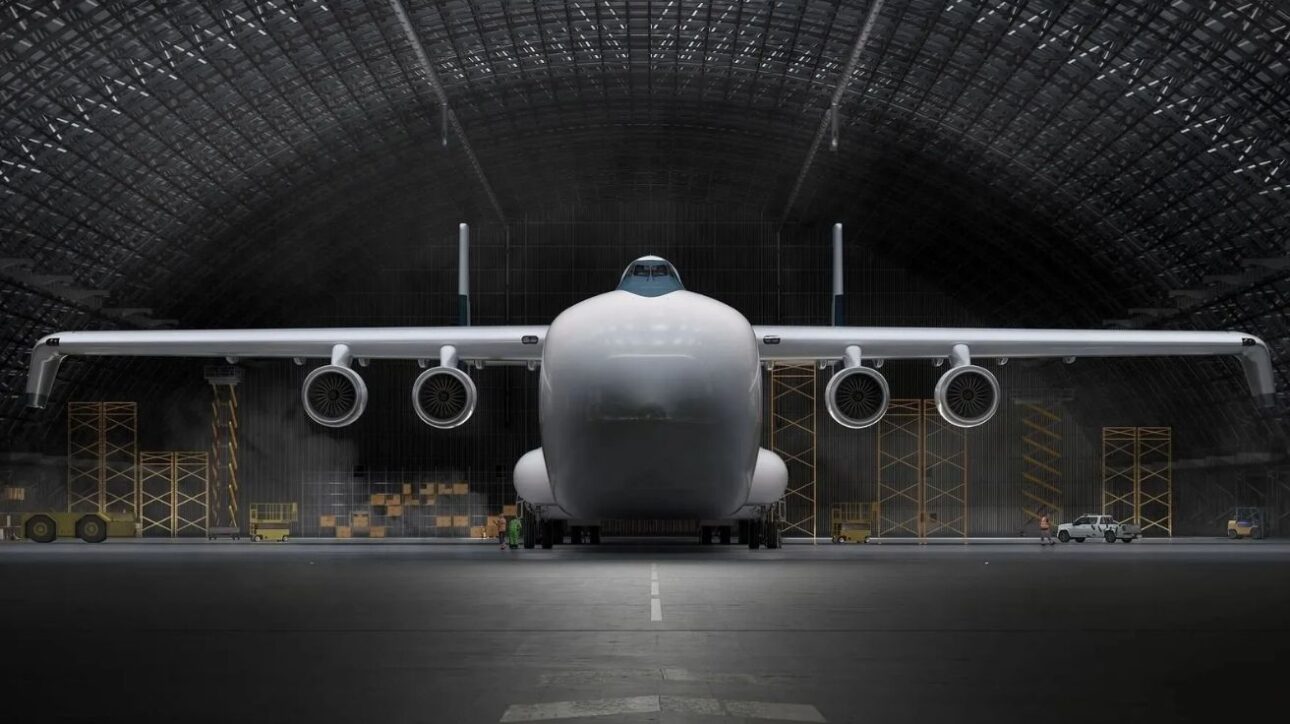
The challenge is led by a team of Brazilian engineers who will be responsible for creating the pressurized cockpit of the WindRunner, an aircraft that promises to transform the global logistics landscape.
-
79-year-old woman challenges limits, visits 193 countries in the world after 56 years of planning and reveals the behind-the-scenes of a global journey that few have managed to accomplish.

-
These are the drivers who may stop paying tolls on highways in a project that promises to reduce costs for those who live from transportation in Brazil.

-
Mercado Livre “opens the vault” and announces a record investment of R$ 57 billion in Brazil in 2026, a value 50% higher than the previous year, with an expansion plan that includes 14 new logistics centers, totaling 42 units in the country and hiring an additional 10,000 employees.

-
How investment in technology can revolutionize the national economy and enhance industrial gains, according to a study that highlights the direct impact on productivity, innovation, and wealth retention within Brazil.

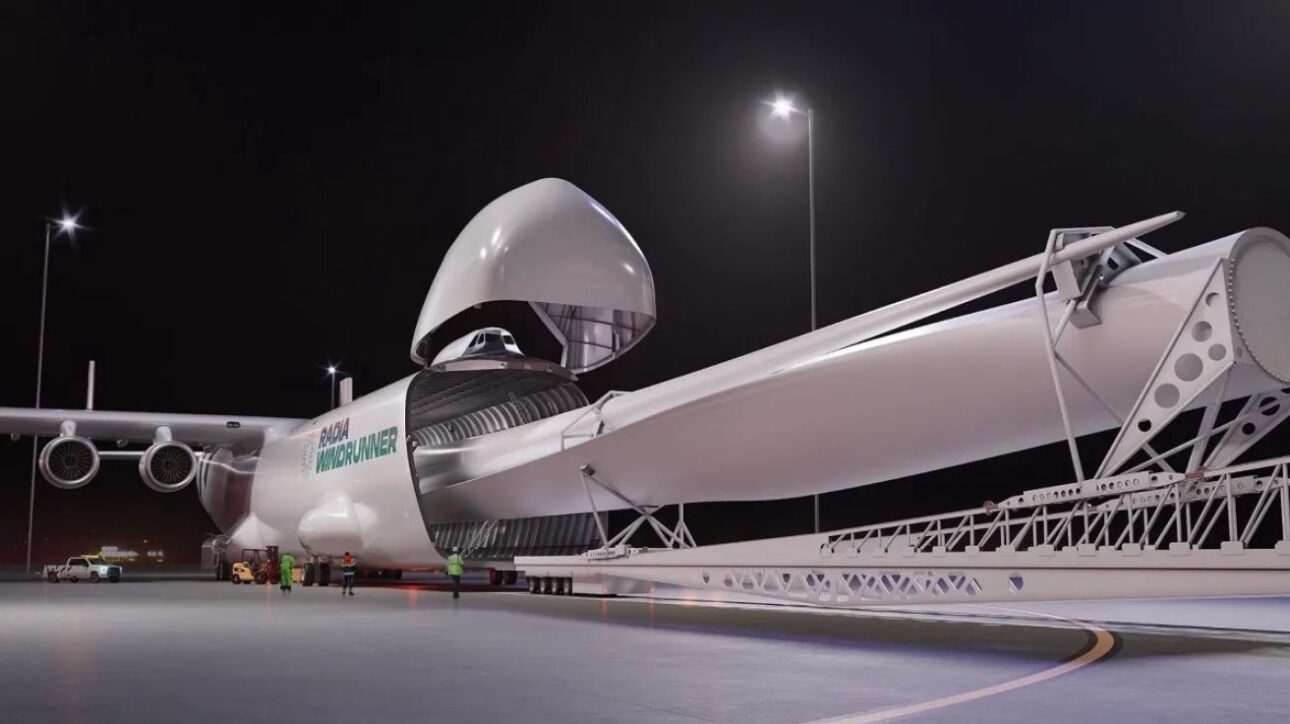
The project, conducted by Radia, a North American energy sector company, aims to solve bottlenecks in the transportation of large industrial components, such as wind turbine blades, which can exceed 100 meters in length.
The cockpit designed by Akaer will primarily ensure the safety of the crew and preserve the integrity of the aircraft’s critical systems under any weather conditions.
To this end, cutting-edge technology will be employed, including advanced environmental control and pressurization systems.
This safe and controlled environment will be crucial for both long-duration flights and landings in remote areas, where the WindRunner is expected to operate frequently.
Akaer Leads Innovation in Cargo Aviation
Akaer, based in São José dos Campos (SP), was selected to lead the development of the cockpit due to its international recognition for competence in high-complexity projects and technological innovation.
According to Cesar Silva, president of the company, participation in the project represents recognition of the technical excellence built over decades of work in the aerospace sector.
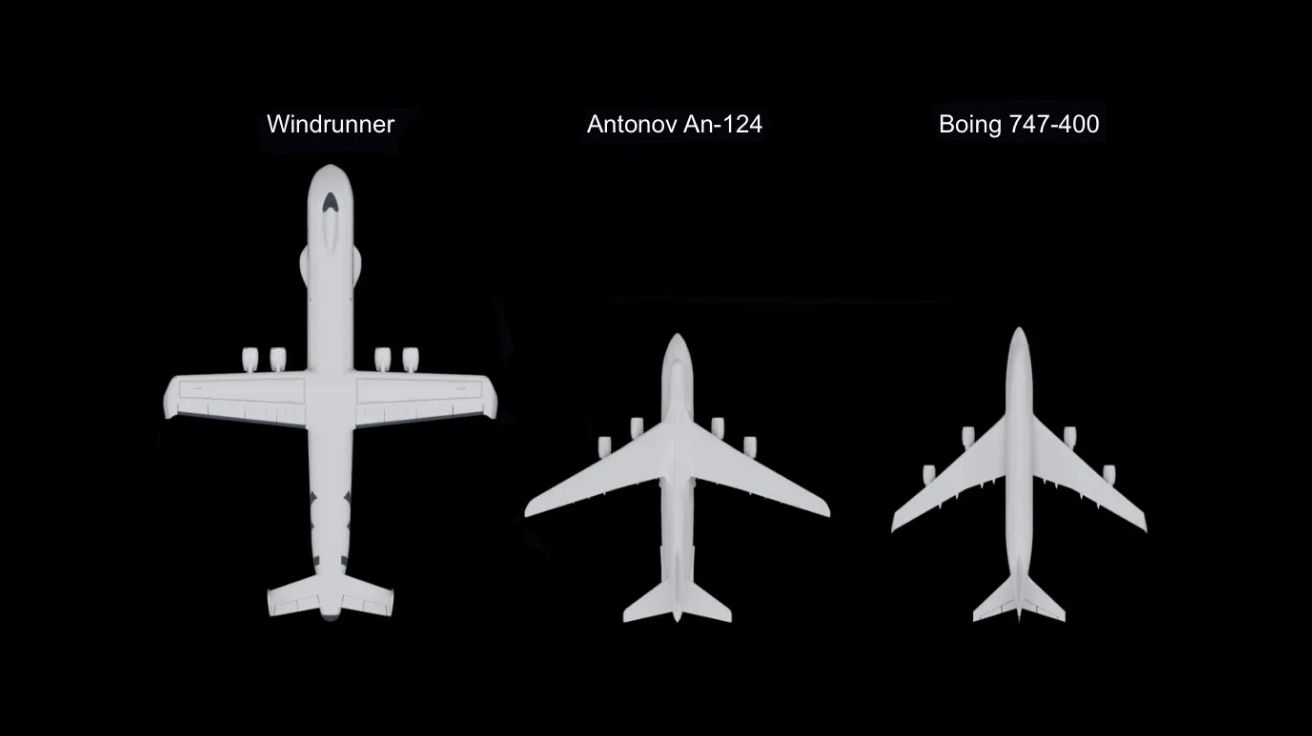
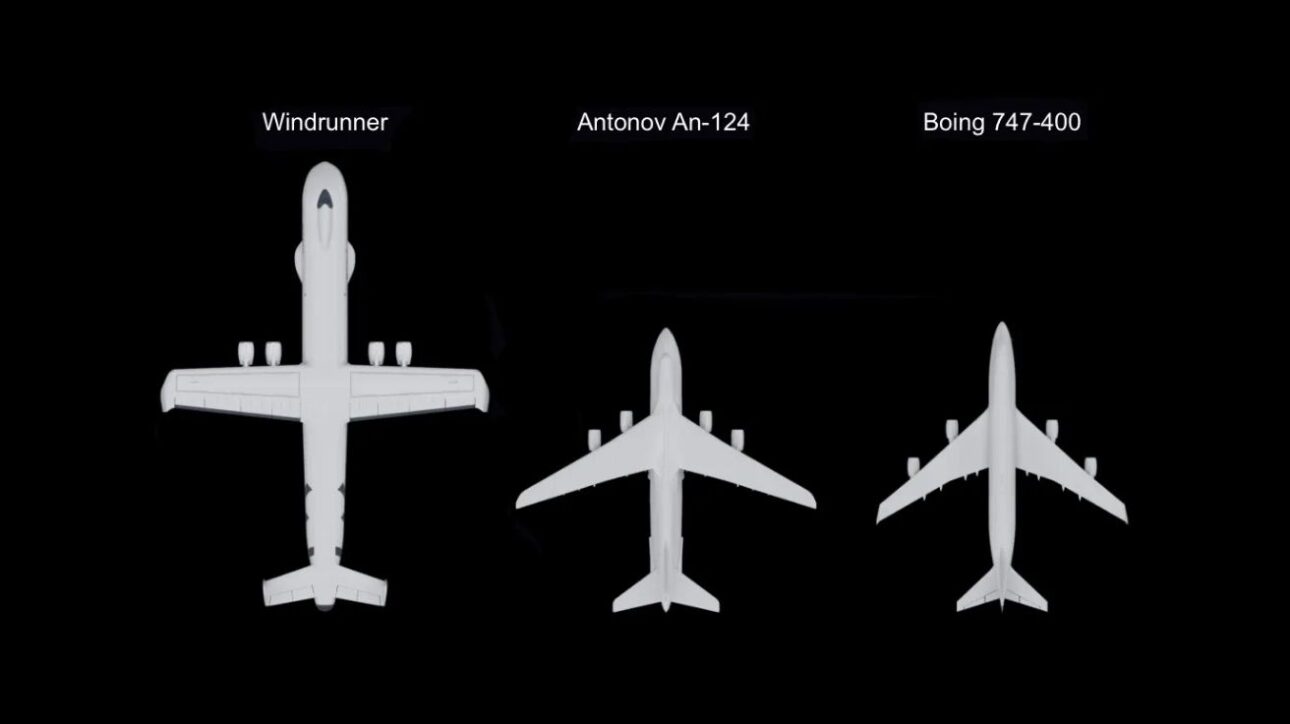
With an impressive 108 meters in length and a wingspan of 80 meters, the WindRunner will be capable of transporting up to 80 tons of cargo.
This places it well above the dimensions of traditional military freighters and even the Boeing 747, an aircraft that for years symbolized the pinnacle of large-volume transport.
The expectation is that the WindRunner will operate on unpaved or unpaved runways with a minimum length of 1,800 meters, which enhances access to isolated regions and reduces dependence on sophisticated airport infrastructure.
WindRunner: New Benchmark for Wind Energy
One of the main objectives of the project is to enable the efficient transport of giant components used in next-generation wind turbines, essential for the expansion of clean energy on a global scale.
The WindRunner was designed from the beginning to accommodate wind blades that exceed the length of the largest existing towers, overcoming logistical challenges that currently limit the growth of wind farms in areas distant from major centers.
Radia, responsible for the WindRunner project, was founded in 2016 by rocket scientist Mark Lundstrom, a graduate of the Massachusetts Institute of Technology (MIT).
The company emerged with the purpose of combining aerospace solutions with the energy transition, aiming to accelerate the adoption of renewable energy sources on a large scale.
In recent years, Radia raised hundreds of millions of dollars in investments, reaching a market valuation of US$ 1 billion, according to recent data from PitchBook.
Potential for Global Logistical Transformation
In addition to wind energy, the WindRunner is expected to meet transportation demands for satellites, special vehicles, military equipment, and other large items, becoming a key player in logistics chains that require flexibility and capacity for high-value and oversized loads.
The uniqueness of the WindRunner lies, above all, in the proposal to economically enable the installation of wind turbines with towers up to 90 meters taller than the current average, which enhances the reach and power of the equipment.
According to Radia’s estimates, this innovation could reduce the cost of generated energy by up to 35% and increase supply stability by 20%, two fundamental factors for the competitiveness of clean energy against other sources.
Brazilian Protagonism in Global Projects
The advancement of this project is a direct result of the growth of the renewable energy sector, which requires unprecedented logistical solutions to overcome obstacles in the transport of large components.
The choice of Akaer to lead a fundamental part of this development highlights the strategic role of Brazil in the aerospace technology landscape, with a direct impact on the renewable energy sector and the future of cargo aviation.
Another notable aspect is the potential for operation in remote areas, enabling direct deliveries to locations without traditional airport infrastructure.
This represents a revolution for industries that depend on efficient logistics, such as the construction of wind farms in hard-to-reach regions, contributing to the diversification of the energy matrix and generating skilled jobs in different parts of the world.
Brazil at the Forefront of Aviation and Clean Energy
By combining technological innovation with a strategic focus on sustainability, the WindRunner positions itself as a symbol of a new era of aviation and industrial logistics.
The involvement of Brazilian engineering in this context broadens opportunities for professionals in the sector and reinforces the national protagonism in high-complexity initiatives.
Brazil’s presence in the development of the largest freight aircraft in the world not only highlights the country’s technical capacity but also paves the way for new international partnerships and boosts knowledge exchange with centers of excellence in aviation and clean energy.
In the face of such ambitious challenges, will other Brazilian companies follow the same path and carve out a space in projects that define the future of the global industry?






Independente de qualquer comentário questionando que a empresa é tcncamente americana, parabenizo o Brasil e toda equipe envolvida nesse projeto, isso define ao meu ver, a capacidade e a determinação dos profissionais envolvidos neste significativo projeto, com votos de pleno sucesso parabenizo a todos da equipe.
O editor não conhece e nem pesquisou nada a respeito. O Antonov 124 é capaz de transportar mais de 150 toneladas
Só não gostei do nome, preferia algo em português, nem que fosse “corre ventos” mesmo
A empresa é americana. Os brasileiros participam do projeto, mas a aeronave é, tecnicamente, americana…