





 Portuguese
  English
  Spanish
  4 min of reading
  0 comments


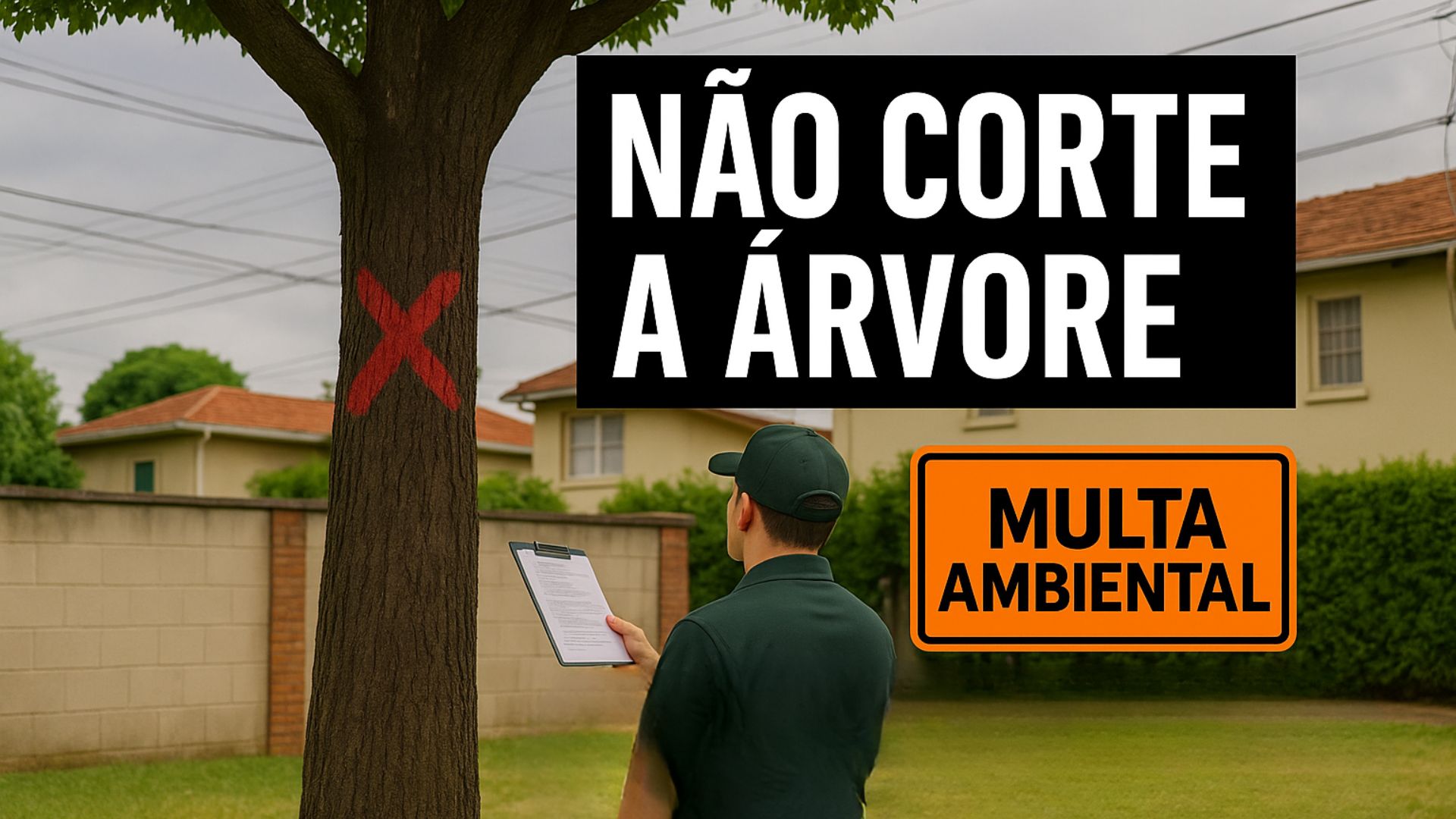
Inspection Identifies Cutting of Native Species and Citation Generates Administrative Process. Case May Be Forwarded to MP-SP According to Legal Provisions.
A resident was fined R$ 1,8 thousand after cutting down native trees in a common area of the so-called State Farm, in São Paulo.
The citation occurred after an environmental inspection identified specimens of farinha-seca and amendoim-bravo cut down without authorization.
The case will proceed through the environmental administrative processes and may be sent to the Public Prosecutor’s Office of São Paulo (MP-SP), according to applicable legal provisions for such situations.
-
The institute that trained the greatest aerospace engineers in Brazil has just opened its first campus outside São Paulo after 75 years: ITA Ceará will have R$ 445 million, new courses in energy and systems, and classes are expected to start in 2027.

-
Luciano Hang, owner of Havan, goes to Juiz de Fora after the tragedy in February, brings R$ 1 million, hands out R$ 2,000 cards, and donates up to R$ 15,000 to victims in the region.

-
The Brazilian passport allows legal residence in dozens of countries without the need for a prior visa, and most Brazilians are unaware that they can apply for residency directly upon arriving in nations in South America, Africa, and even Europe.

-
Petrobras sends a message to Brazilian truck drivers after fuel collapse and reveals plan to have 100% domestic diesel.


Inspection and Cutting of Native Trees
According to the infraction report, teams responsible for environmental monitoring intensified inspections at the State Farm.
In one of these actions, agents surveyed common use areas and found recent traces of vegetation suppression.
At the inspected location, one tree of the farinha-seca species and two of the amendoim-bravo variety were identified as having been cut down.
The trunks were deposited in a collective area without any record of environmental authorization.
No licensing documents were presented at the time of inspection.
The inspectors noted that the timber material was separated and ready for removal, an element considered in classifying the administrative infraction for cutting native vegetation without a license.
Characteristics and Relevance of Native Species
The farinha-seca is a native tree of South America, found in regions of Mata Atlântica and Cerrado.
Technical publications describe the species as medium to large in size, commonly used in environmental recovery efforts.
The amendoim-bravo, name used for species such as Pterogyne nitens, is found in Brazilian biomes, including the Mata Atlântica.
Botanical documents indicate that the species is used in reforestation and vegetation restoration programs.
As native species, suppression typically depends on prior authorization from the competent environmental authority, a requirement established in federal, state, and, in some cases, municipal legislation.
Permitted Cutting and Seizure of Wood
During the inspection, agents located the individual responsible for the area where the cutting occurred.
The woman admitted to having cut the trees.
She stated that she was unaware that the species were native and, for that reason, did not seek environmental authorization.
The wood found on site was seized, and the resident received a fine of R$ 1,8 thousand, according to administrative provisions.
The disposal of the material will be determined after the process concludes.
Legal Basis and Environmental Procedures
The Law 9.605/1998 and the Decree 6.514/2008 regulate administrative infractions and sanctions applicable to the suppression of native vegetation without authorization.
The penalties include warnings, simple fines, daily fines, seizure of products, and suspension of activities.
Specialists in environmental legislation explain that, in the administrative sphere, liability is tied to the infraction defined in the regulation, regardless of the intent of the cited individual.
Thus, claims of ignorance about the nature of the species or the requirement for a license generally do not exempt an individual from administrative sanctions.
Each process, however, undergoes specific evaluation, with the possibility of presenting defenses and appeals.
Administrative Procedure and Possible Analysis by MP-SP
After the citation, the case will follow the environmental administrative process, which may result in maintaining, reducing, or annulling the fine, according to an analysis of the information presented.
The inspection report may be forwarded to the MP-SP, which will evaluate whether there are sufficient elements for opening an investigation or potential criminal action based on the Environmental Crimes Law.
The decision will depend on the legal analysis conducted by the prosecutorial body.
Inspection Actions and Guidance for Rural Residents
State and municipal environmental agencies inform in public statements that monitoring operations are often intensified in areas with a history of irregular vegetation suppression or pressure on native remnants.
The State Farm, being a large and commonly used area, has undergone frequent inspections of this kind.
Technicians linked to rural assistance entities state that guidance actions can help reduce citations, especially among residents of small properties, where there is often a lack of awareness about the rules regarding the management of native species.
With the continuation of inspections and requirements for authorization for cutting down native trees, to what extent are rural residents likely to seek more information about the applicable regulations for using vegetation on their properties?









Seja o primeiro a reagir!