





 Portuguese
  English
  Spanish
  6 min of reading
  2 comments


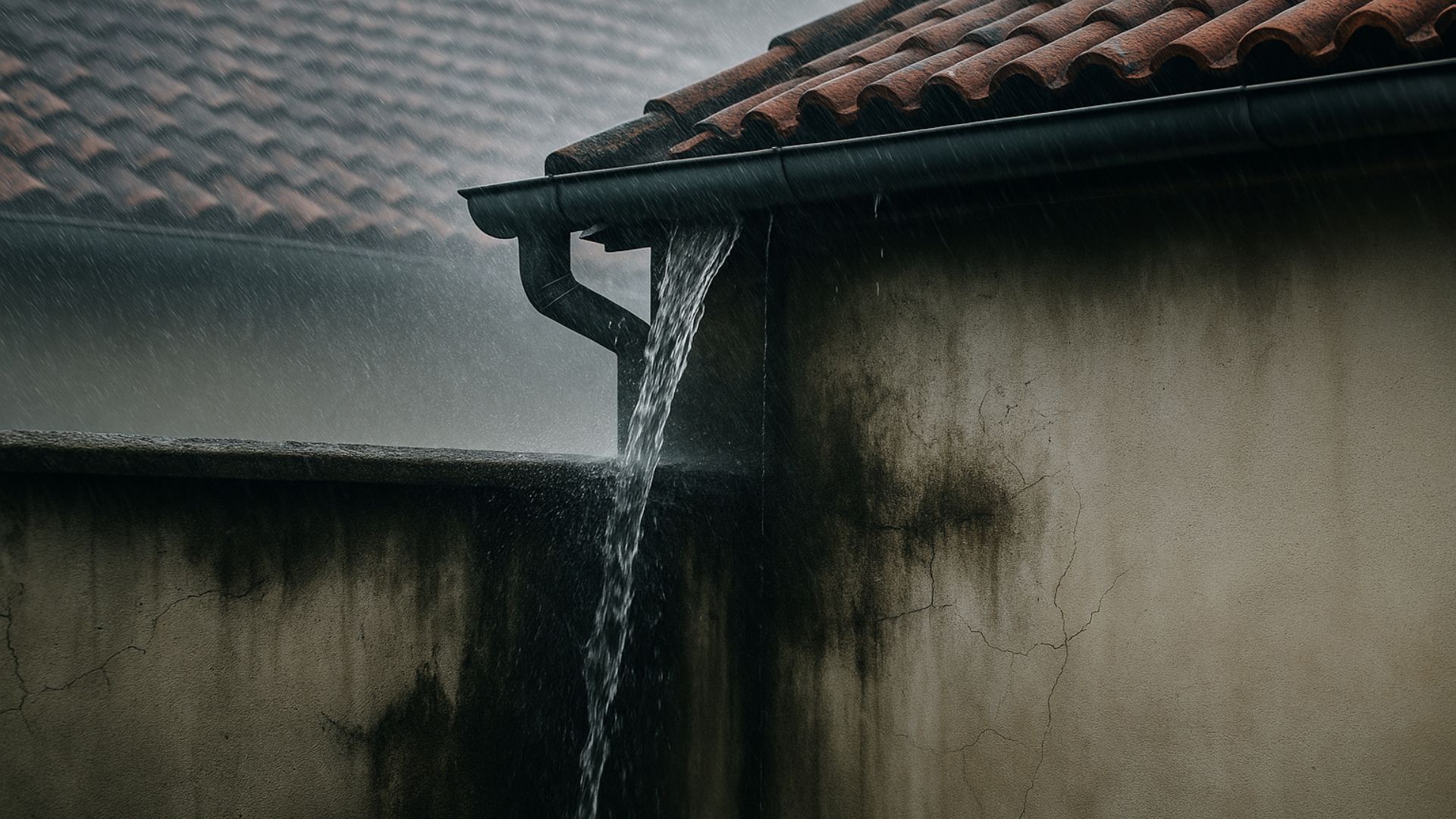


The Brazilian Legislation Prevents Properties from Discharging Rainwater Directly onto the Adjacent Land, Creating Obligations for Adaptation and Possible Compensations, Even When the Practice Has Been Happening for Years, and the Issue Generates Frequent Conflicts in Urban Areas.
The Brazilian civil legislation prohibits property owners from directing rainwater from the roof to the neighboring land through gutters, eaves, or drip lines, even if this situation has been occurring for many years.
According to the rule, the owner of the property that causes the irregular discharge may be required to adapt the construction and, if there is proven damage, to pay compensation to the affected neighbor.
Norms of the Civil Code Regarding Rainwater
The starting point is in Article 1,300 of the Civil Code, which imposes on the owner the duty to build in such a way as to prevent roofs and terraces from discharging water onto the neighboring building.
-
With over 14 million baskets of earth moved, an ancient North American metropolis built a monumental pyramid of 30 meters and established a city with 20,000 inhabitants nearly a thousand years ago.

-
A 1,900-year-old treasure emerges from a Roman house destroyed by fire and sealed since antiquity in Romania, with coins and metals fused among the ashes.

-
The Brazilian colonial city that stopped in time and shares territory with a rocket launch base.

-
79-year-old woman challenges limits, visits 193 countries in the world after 56 years of planning and reveals the behind-the-scenes of a global journey that few have managed to accomplish.


In other words, the law does not only discuss the source of the water but also the way it is released onto the adjacent property.
This regulation is articulated with Articles 1,288 and 1,289, which address the relationship between properties located at different levels.
Article 1,288 determines that the building situated at a lower level must receive the water that, due to the natural slope of the land, flows from the upper building.
At the same time, it makes it clear that the owner of the upper property cannot worsen this situation through works that concentrate or increase the water flow.
Article 1,289 addresses situations where water is artificially directed to the upper property, or collected there, later reaching the lower building.
In these cases, the owner of the affected property may demand the diversion of the water flow or compensation for the damages they demonstrate.
The legislation, therefore, differentiates between water that descends naturally and water that reaches the neighbor by human action.
Common Conflicts with Gutters, Eaves, and Urban Roofs
In urban centers, the problem frequently arises with roofs built on the property line between houses.
When there are not enough gutters or when the roof is constructed with a slope directed straight toward the adjacent lot, rainwater can fall in large volumes onto the neighboring land, affecting circulation areas, walls, backyards, and buildings.


Even when there are gutters, the conflict arises if the drainage system discharges the collected volume directly into the neighboring property.
In these circumstances, it is not uncommon for localized flooding, infiltrations in walls and floors, deterioration of coatings, mold, structural damage, and damage to movable property to occur.
The prevailing interpretation of the courts directly applies Article 1,300: the immediate discharge of roof water onto the neighboring property is prohibited.
The required technical solution usually involves the adaptation of the work, with the installation or correction of continuous gutters and downspouts that direct the flow back into the property of the responsible party, observing, when present, the internal drainage system or the authorized connection to the public road, according to municipal regulations.
Why Time Does Not Legitimize Irregular Discharge
The mere fact that the irregular discharge has occurred for a long time does not transform the conduct into something permitted.
The Civil Code does not foresee a situation where the direct discharge of water onto a neighbor becomes legitimate merely by the passage of years.
The neighborhood legislation seeks to prevent human works from consolidating situations that aggravate the natural condition of the neighboring property.
When the neighbor shows that they have suffered damages, the case is also analyzed in light of the general norms of civil liability.
In this analysis, two types of obligation may arise: to correct the construction to end the problem and to compensate for the losses that are proven.
Difference Between Natural Water and Water Aggravated by Human Activity
The obligation of the lower building to receive natural waters does not authorize the owner of the upper property to carry out works that intensify the volume, speed, or concentration of the flow towards the lower land.
The law protects the pre-existing balance between lots.
Thus, what already flowed diffusely due to the slope of the land must remain within that standard.
In contrast, any alteration resulting from human intervention—such as the expansion of impermeable areas, construction of new roofs, or replacement of gardens with slabs or rigid pavements—must be contained and managed within the property limits of those who carried out the intervention.
In legal disputes, this distinction is decisive.
Renovations that significantly increase drainage to the neighbor are often classified as undue aggravation of the natural condition, a situation that justifies a judicial order to adapt the work and, when applicable, repair the damages caused.
Condominium Rules and Municipal Legislation
In building condominiums, the condominium convention and internal regulations often detail the appropriate way to capture and conduct rainwater.
These norms usually require the installation of gutters, downspouts, and defined discharge points, both in the autonomous units and in common areas, in addition to imposing periodic maintenance of drainage systems.
In subdivisions and neighborhoods, municipal legislation regarding works and standards comes into play.
These local acts, in many municipalities, bring technical requirements for connection to public rainwater galleries, for the construction of retention or detention boxes, and for devices aimed at reducing the volume discharged onto the roadway during heavy rain periods.
Although they vary from one city to another, these norms align with the Civil Code’s objective of discouraging the discharge of water directly onto the neighboring property.
Proof of the Problem and Measures Taken in Litigation
In practice, the proof of irregular discharge usually relies on objective elements.
Photographs taken on rainy days, videos showing water falling directly onto the neighboring property, records of infiltrations, and reports issued by qualified professionals help demonstrate the water’s path and link the damage to the construction of the originating property.
In less complex situations, the technical correction is relatively simple: repositioning gutters, changing the slope of the roof, or installing new downspouts that direct drainage to internal points of the property.
When there are chronic infiltrations, structural compromise, or suspicion of broader damages, a more detailed expert assessment may be required to identify the water entry points and quantify the damage.
Before resorting to the Judiciary, many property owners choose to send an extrajudicial notification to the neighbor, indicating the prohibition of Article 1,300 and explaining the difference between natural water and artificially directed water, as provided in Articles 1,288 and 1,289.
In several cases, simple regularization of the drainage system resolves the conflict and avoids ongoing damage, without prolonged strain on the neighborhood.
When there is no agreement, the legal action typically combines a request for an obligation to act, for the responsible party to adapt the work, along with a request for compensation for the proven material damages and, in some cases, for moral damages, depending on the circumstances analyzed by the judge.
Slope, Debris, and Additional Impacts
In areas with steep slopes, the combined reading of the Civil Code and municipal drainage standards is important to avoid misinterpretations.
The fact that the lower land must receive natural waters does not authorize the installation of gutters or pipes that discharge concentrated jets at the property line, increasing the impact on the neighbor.
What the law allows is diffuse drainage resulting from the local geography, not the deliberate channeling of water into the adjacent lot.
The same reasoning applies to new constructions: expansions of covered areas, creation of platbands, changing tiles, or alterations that modify the behavior of rain on the construction require designs that contain and direct the water within the property’s perimeter.
There are also situations where, in addition to the volume of water, the flow begins to carry leaves, soil, sand, construction debris, or other waste to the neighboring property.
Even if the financial damage is not yet quantified, the direct and concentrated discharge indicates irregularity and authorizes the demand for adaptation of the work.
If the neighbor proves damages to structures, movable property, or health impacts, the discussion advances to the analysis of the causal link and the extent of compensation, without negating the need to correct the source of the problem.
In light of these rules, how do you evaluate the manner in which roofs, gutters, and drainage works have been executed in your neighborhood: do people have an understanding that the law prohibits discharging rainwater directly onto the neighboring land, even when this has been occurring for many years?







Mesmo que não cheguei a me formar de advogado, entre os anos 1998 e 2000, cursei tres anos na faculdade de direito e uma das primeiras materias que tivemos já no primeiro ano, foi a primeira parte do “Direito Romano”. Os romanos há mais de 2000 anos atras os romanos já contemplavam ordenamentos jurídicos regulamentando a proibição do despejo da agua do telhado no quintal do vizinho.
UM PROBLEMA DE SÉCULOS E SÓ AGORA A LEI PROÍBE.