





 Portuguese
  English
  Spanish
  4 min of reading
  5 comments


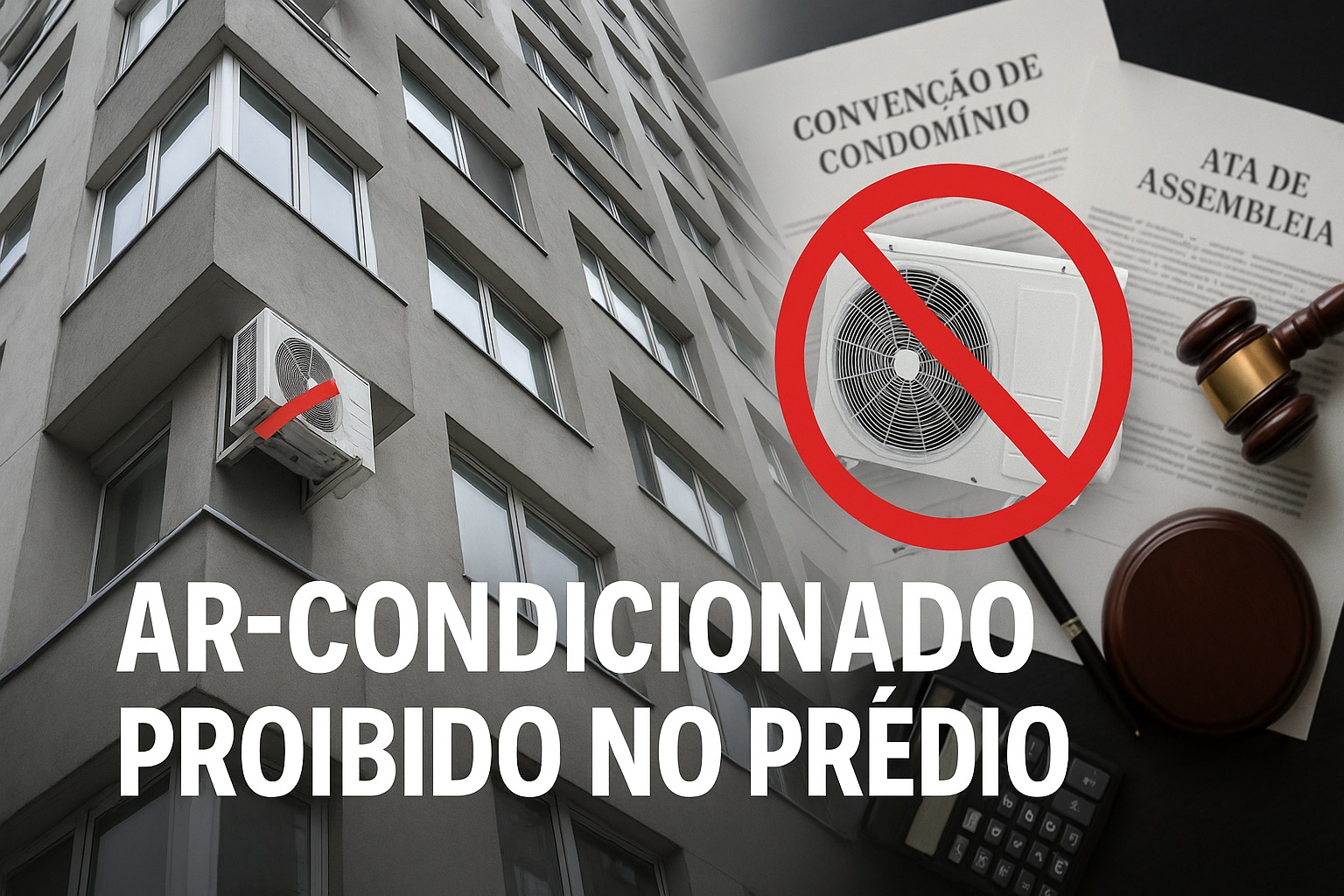


Law Prohibits Installation of Air Conditioning Without Authorization in Apartments, and Court Decisions Confirm That Only the Assembly Can Allow Structural Changes.
Law Prohibits Installation of Air Conditioning: Although it may seem like a common, quick, and routine adaptation, the installation of air conditioning within an apartment cannot be done freely. In recent years, a series of court decisions have consolidated the understanding that the placement of the device, especially when it involves holes, ducts, or exposure of condensers — is subject to what is determined by Article 1,336 of the Civil Code, a provision that establishes the obligations of the condominium owner and protects the integrity of the building’s external areas.
According to the article, no resident may alter the shape, color, or structure of the external parts of the condominium without authorization. This includes balconies, porches, windows, frames, and any visible element of the facade. Since most air conditioning installations require air discharge, piping, and positioning of the condenser towards the outside, the courts have understood that the intervention characterizes alteration of the facade and, therefore, can only occur with formal approval from the assembly.
What the Law Really Requires: It Is Not Total Prohibition, But Mandatory Authorization
The Civil Code does not prevent residents from having air conditioning. What it determines is that any modification that interferes with the aesthetics or external integrity of the building needs to be authorized by the condominium. This means that:
-
The noise law will no longer be in effect at 10 PM starting in June with a new rule valid during the 2026 World Cup.

-
The Chamber opens a debate on driver’s licenses at 16 years old as part of a reform that includes around 270 proposals to change the Brazilian Traffic Code and may redesign rules for licensing, enforcement, and circulation in the country.

-
The new Civil Code could revolutionize marriages in Brazil with “express divorce” and changes that could exclude spouses from inheritance.

-
Banco do Brasil sues famous influencer for million-dollar debt and intensifies debate on delinquency, risks of seizure, and direct impact on Gkay’s credibility.


- it is not enough to informally ask the property manager for permission;
- it is not enough to notify the caretaker;
- it is not enough to install because “other neighbors have already installed.”
The rule requires approval in assembly generally with qualified quorum, which may vary according to the internal regulations of the condominium. In many cases, installation is only permitted if everyone follows a previously defined visual standard.
This requirement has a legal basis, and recent decisions reinforce that non-compliance may result in fines, removal orders, and liability for damages.
Why Installation Affects the Facade, According to the Courts
Changing the facade is not limited to the color of the wall. Jurisprudence understands that “facade” is everything that composes the external appearance of the building. Thus, altering any of these items constitutes a violation of Article 1,336:
- installing a condenser on external walls;
- cutting part of the masonry to pass pipes;
- placing external units in visible locations;
- opening new holes in the frames or sills.
State courts, such as TJ-SP, TJ-PR, and TJ-MG, have already required the compulsory removal of devices installed without approval, even when they had been functioning for months. The justification is always the same: aesthetic standardization and architectural preservation.
Real Cases Judged Recently Show That the Rule Is Getting Stricter
The decisions accumulated over the last few years show a clear trend toward tightening:
- The Court of Justice of São Paulo ruled that residents must remove devices installed without authorization for being considered “a break in architectural aesthetics.”
- The Court of Justice of Paraná recognized that even the incorrect positioning of the condenser causes sufficient visual impact to justify prohibition.
- The Court of Justice of Minas Gerais reinforced that internal condominium rules must prevail when there is a risk of irregular standardization or infiltration associated with the installation.
These decisions have a multiplying effect: more property managers now require standardized projects, technical reports, and formal voting before allowing any equipment.
The Importance of the Assembly: Where the Change Is Really Decided
It is in the assembly that residents decide:
- whether installation will be allowed;
- where the condenser will be installed;
- what type of support, ducts, and piping will be authorized;
- whether a technical project will be required;
- whether the building will adopt a single standard to avoid “visual pollution.”
Without this voting, the installation becomes automatically irregular even if previous residents have done something similar in the past.
In many newer condominiums, architectural plans already include shafts, niches, and technical areas for air conditioning, but in older buildings this rarely exists.
Risks of Ignoring the Rule: Fines, Removal, and Civil Liability
Residents who install equipment without authorization may face:
- condominium fine;
- court order for immediate removal;
- reimbursement for structural damages;
- liability for infiltrations and noise;
- prohibition of use until regularization.
Property managers and administrators warn that the device can compromise:
- waterproofing of the walls;
- thermal performance of the facade;
- stability of the masonry from improper holes;
- lifespan of the electrical installations.
Therefore, the norm plays a role not only aesthetically but also structurally and for safety.
Installation Is Possible, but Depends on the Law and the Decision of the Condominium
The rule is clear: there is no absolute prohibition, but there is prohibition without authorization. Installation can only occur with formal approval from the assembly and adherence to the technical standard defined by the condominium.
The legislation protects the building as an architectural ensemble and prevents improvisations that could cause damages, infiltrations, disruption of visual harmony, or conflicts among neighbors.
For the resident, the best path is simple: follow the legal procedures, obtain approval, and ensure that the equipment is installed within the technical standards and aesthetics of the building.










Sou Técnico Projetista Vidraceiro, minha opinião é que o Conselho Administrativo, não pode negar aquisição de Aparelho de Ar condicionado ao condômino e sim aprovar projeto padrão para viabilizar aos interessados!
Simples assim !!!🇧🇷
Sou Técnico Projetista Vidraceiro, minha opinião é que o Conselho Administrativo, não pode negar Aparelho de Ar condicionado para maior conforto do condômino e sim aprovar um projeto padrão para viabilizar aos interessados !
Simples assim !!!🇧🇷
Instalar ar condicionado do lado externo, eu também concordo, mas na sacada, kakakaka! É uma lei feita por quem nunca morou em um apartamento.