





 Portuguese
  English
  Spanish
  5 min of reading
  12 comments


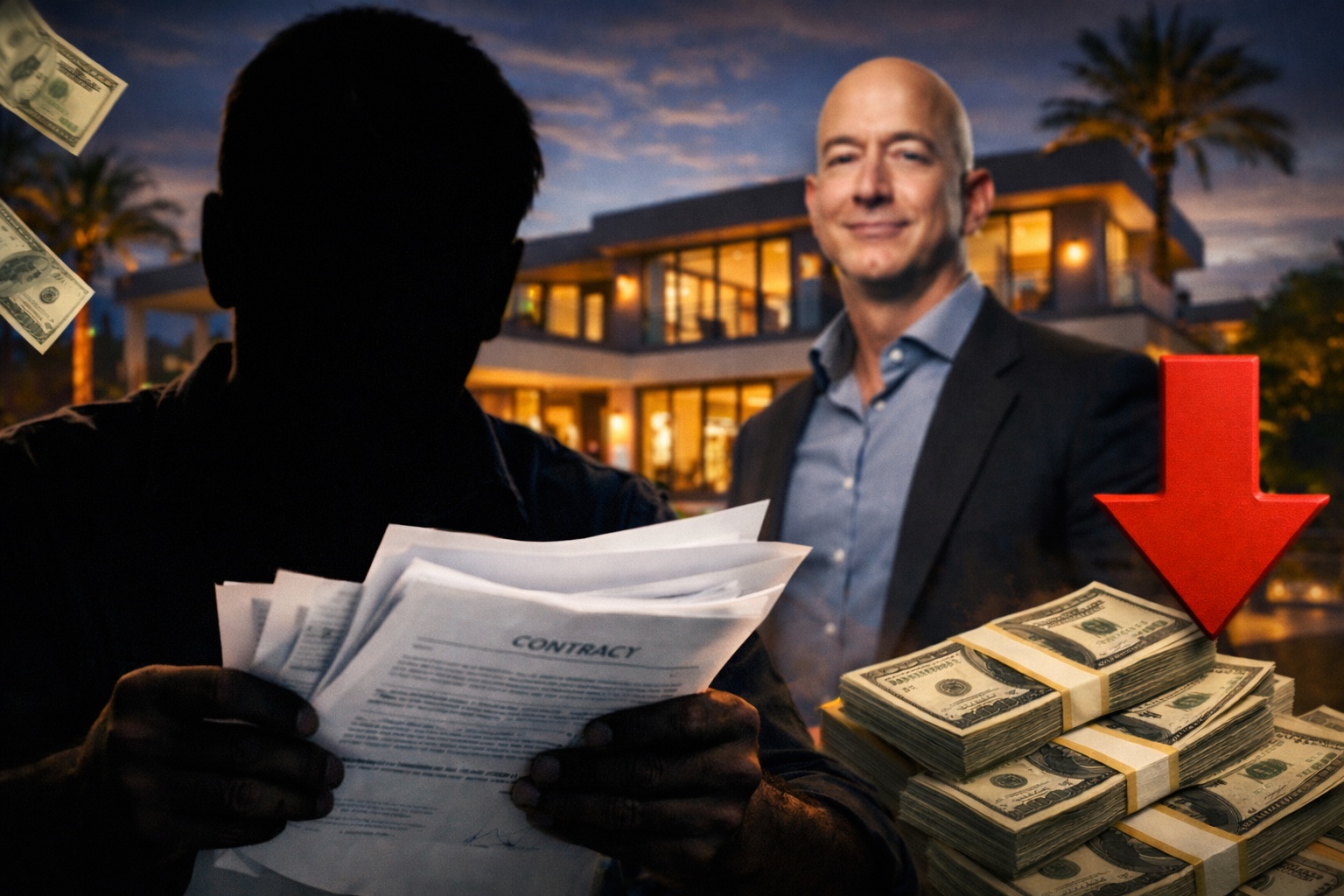


Brazilian Sells Mansion For US$ 79 Million Without Knowing Buyer Was Jeff Bezos, Alleges Loss Of US$ 6 Million And Sues Broker In The US.
Few people imagine that a high-end real estate sale, surrounded by contracts, lawyers, and confidentiality clauses, could still end in a million-dollar surprise. That’s exactly what happened when a Brazilian businessman sold a luxury mansion in one of the most exclusive areas of the United States and only discovered later that the final buyer was Jeff Bezos, founder of Amazon and one of the richest men in the world.
The Brazilian businessman Leo Kryss, co-founder of TecToy, sued real estate brokers in the US after selling a mansion in Miami for US$ 79 million (approximately R$ 446 million in 2024) to Jeff Bezos, claiming they hid the identity of the Amazon billionaire to secure a discount of US$ 6 million.
The revelation transformed an apparently ordinary negotiation into a legal battle that is now underway in Florida’s courts.
-
How an innovative city combines high technology, well-being, and sustainability to become the largest reference in clean energy on the planet.
-
Couple buys 1846 church in ruins for R$ 660,000, invests R$ 3.2 million in renovations, transforms it into a millionaire mansion, and even preserved a historic cemetery with over 300 graves.

-
He started running at 66 years old, broke records at 82, and is now a subject of study for having a metabolic age comparable to that of a 20-year-old, in a case that is intriguing scientists and inspiring the world.

-
Oldest tree on the planet reappears after 130 years of searches: Wattieza, 385 million years old, was 10 meters tall and had no leaves or seeds; Gilboa fossils in New York solved the mystery in 2007.


The central point of the case is not the absolute value of the sale, but what may have been lost along the way. The seller claims he granted a significant discount during the negotiation and that if he had known who was really behind the purchase, he would never have agreed to lower the price. The alleged loss amounts to about US$ 6 million, a figure substantial enough to turn a closed deal into a lengthy legal dispute.
Where The Mansion Is Located And Why It Is Worth Hundreds Of Millions


The sold property is located in Indian Creek Island, in the Miami Beach area of Florida. The area is internationally known as the “Billionaires’ Bunker,” due to having a limited number of residences, private security, and a neighborhood comprised of executives, investors, and global magnates.
It is an artificial island with strict access control, top-notch infrastructure, and direct sea views. Mansions in the area often exceed tens of millions of dollars, not only due to size or finish but because of territorial exclusivity. The property in question had multiple bedrooms, leisure areas, privileged views, and standards compatible with Florida’s ultra-luxury market.
The Million-Dollar Negotiation And The Discount Granted
According to the documents cited in the lawsuit, the mansion was initially valued at around US$ 85 million. However, during negotiations, the seller accepted a final offer of approximately US$ 79 million, granting a discount of about US$ 6 million from the expected value.

Up to this point, the deal followed the usual script for high-value transactions: lengthy negotiations, representation by specialized brokers, and the use of legal structures to maintain buyer anonymity. The problem, according to the Brazilian businessman, arises precisely here.
He claims he directly questioned the responsible broker about who was behind the offer and was informed that it was not Jeff Bezos. Trusting this response, he decided to close the deal with the discount. Only after the sale was completed did he discover that the final buyer was the founder of Amazon.
The Late Discovery And The Seller’s Reaction
Upon learning the identity of the buyer, the seller claims he realized he had negotiated under disadvantage. The central argument is simple: the financial power and the history of real estate purchases by Jeff Bezos would indicate a much greater payment capacity, which could have supported a higher price or, at the very least, eliminated the need for a discount.
This realization led the businessman to assert that there was a serious lack of transparency on the part of the brokerage and the involved broker. For him, the omission or denial of the buyer’s identity directly interfered with his economic decision, causing measurable financial harm.
The Lawsuit And Accusations Against The Brokerage
The lawsuit was filed in the Miami-Dade County court in the United States against the real estate agency responsible for the transaction and the broker who mediated the sale. The lawsuit accuses the defendants of violating basic fiduciary duties, particularly the duty of loyalty and providing clear information to the client.
At the heart of the dispute is the thesis that, even in confidential transactions, the broker could not provide false or misleading information when directly questioned by the seller. The Brazilian businessman argues that the response he received was crucial for accepting the final amount.
Another point raised in the lawsuit is the commission received by the brokerage, estimated at several million dollars, which reinforces the claim that the intermediary benefited financially from the quick closure of the deal, even at a possible loss to the client.
Secrecy, Anonymity, And The Limits In The Luxury Market
The case has reignited a sensitive debate in the high-end real estate market: how far does the buyer’s right to anonymity extend, and where does the broker’s duty to inform begin? In negotiations involving billionaires, funds, and holdings, the use of intermediary companies is common and legal.
However, experts point out that there is a fine line between preserving the buyer’s privacy and leading the seller to a decision based on incorrect information. It is this line that the American justice system will have to evaluate in the process.
The outcome of the case could create relevant precedents for future transactions of this type, especially in markets where ultra-wealthy buyers typically acquire properties through structures that conceal their identity until the deal’s closure.
Jeff Bezos And The Real Estate Expansion In Miami
Jeff Bezos has been expanding his real estate presence in South Florida in recent years, acquiring high-end properties in the Miami area. These purchases are part of a strategic personal and business relocation, capitalizing on tax benefits and local real estate appreciation.
The acquisition of the Brazilian businessman’s mansion adds to other properties purchased by the billionaire in the same area, reinforcing Bezos’s interest in establishing a permanent presence in Indian Creek. This context strengthens the seller’s thesis that the buyer’s identity would have significant weight in negotiating the price.
A Closed Deal That Is Still Far From Finished
Although the sale of the mansion has been completed and the property has changed hands, the case is far from over. The legal dispute is expected to drag on for months or years, involving analysis of contracts, communications between the parties, and testimony about what was said during the negotiation.
In the end, the story goes beyond a mansion or a million-dollar discount. It exposes how, even at the top of the global real estate market, decisions can be shaped by incomplete information and how trust in intermediaries continues to be a critical factor in high-risk financial transactions.
The question that remains is straightforward: to what extent does secrecy protect the buyer and when does it start to cost too much for the seller?







Só mais um brasileiro querendo vender a caipirinha cara porque é pra gringo. Deveria ser ele o processo por querer mudar o preço de acordo com o cliente, por discriminação. A mentalidade média do brasileiro me entristece.
Interessante que quer vender , o comprador já está no anonimato para exatamente não levar a venda a questões mesquinhas de egos, dinheiro não é problema. Acredito que querem aparecer no noticiário. São estrelinhas
Não interessa o comprador, O QUE VALE É QUE O VENDEDOR ACEITOU A PROPOSTA E ACABOU. NÃO VENDEU??? JÁ RECEBEU??? NÃO VAI GANHAR NADA NA JUSTIÇA. SÓ PORQUÊ SOUBE QUE O COMPRADOR É UM BILIONÁRIO, AI QUER VOLTAR ATRÁS, JÁ ERA OLHÃO GRANDE. NÃO É ILEGAL O COMPRADOR FICAR EM SIGILO.